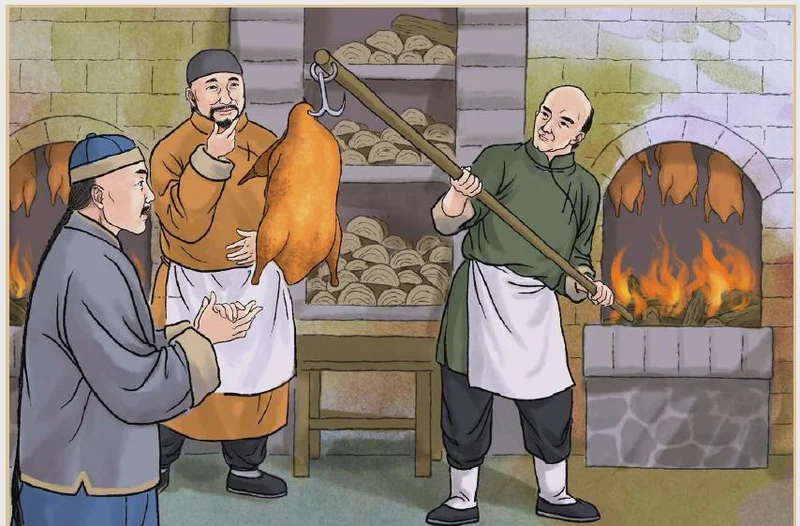
An illustration of traditional Peking Duck preparation, showing ducks roasted in a brick oven and chefs managing the roasting tools, highlighting the historic craftsmanship behind the dish.
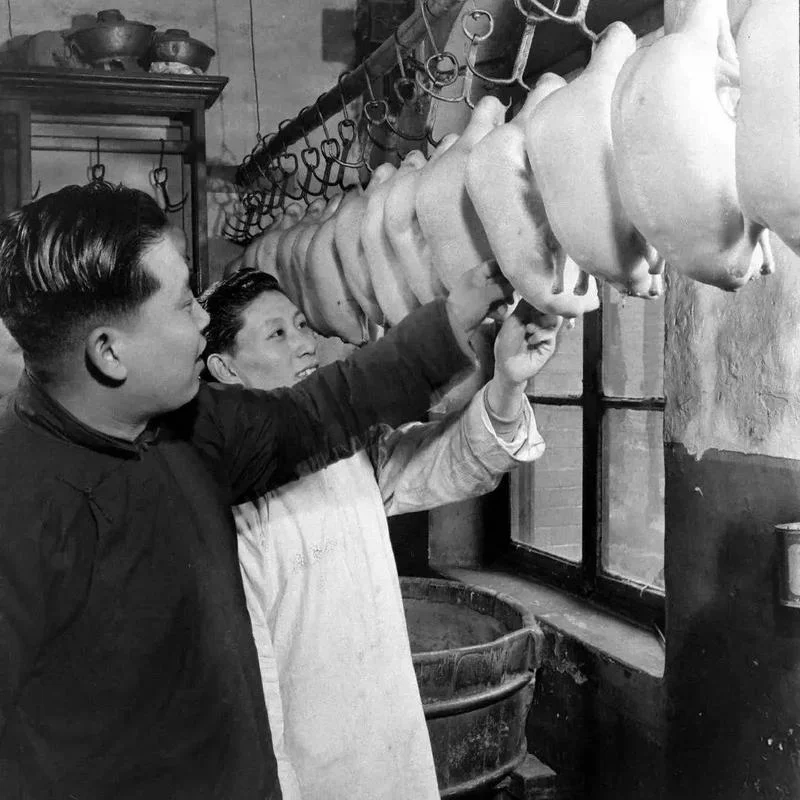
A historical photograph of Peking Duck preparation, featuring rows of air-dried ducks hung in a workshop, demonstrating the essential pre-roasting process that creates the dish’s signature crispy skin.
Peking Duck is widely recognized today as one of China’s most famous dishes, but few travelers know the long and fascinating history behind it. The story of Peking Duck stretches back nearly 700 years, evolving alongside China’s dynastic changes, cultural shifts, and modern culinary trends.
The earliest ancestor of Peking Duck appeared during the Yuan Dynasty. Records describe a dish called “shaoyazi,” or roasted duck, prepared for the imperial court. The ducks used were known for their rich flavor and tenderness, characteristics still associated with modern Peking Duck.
The Ming Dynasty marked an important turning point. When the capital moved to Beijing, the dish gained prominence in the imperial kitchens. It was during this period that chefs refined the roasting technique, developing the famous glossy, crispy skin. Historical documents mention that roasted duck became a favorite among emperors, scholars, and royal guests.
By the Qing Dynasty, Peking Duck had become deeply embedded in palace cuisine. The cooks of the Qing court perfected the carving method, producing thin slices of skin and meat that are still the standard today. The dish began to symbolize refinement, hospitality, and the sophistication of northern Chinese cooking.
In the 19th century, Peking Duck finally entered the public dining scene. Famous restaurants such as Quanjude and Bianyifang began serving the dish to locals and travelers. Quanjude introduced the open-oven roasting method using fruitwood, while Bianyifang preserved the closed-oven style. These two traditions still coexist, giving modern diners distinctive flavor options.
In the 20th century, Peking Duck gained international fame. Foreign diplomats, writers, and political leaders who visited Beijing were often served Peking Duck as an introduction to Chinese cuisine. The dish became a cultural ambassador, representing Chinese hospitality and culinary excellence.
Today, Peking Duck is not only a beloved local specialty but also a global icon. Restaurants in cities such as New York, London, and Singapore serve their own versions, though many travelers say the authentic experience can only be found in Beijing.
The dish’s long journey—from imperial delicacy to worldwide phenomenon—reflects the evolution of Chinese cuisine and Beijing’s cultural importance. Understanding this history gives travelers a deeper appreciation for every slice of crispy skin and tender meat they enjoy.
Comments (0)