History of Peking Duck: From Court Cooking to Beijing Restaurants
A historically careful guide to Peking Duck, tracing roast duck from court cooking and Beijing restaurant traditions to hanging ovens, closed ovens, carving, and modern dining.
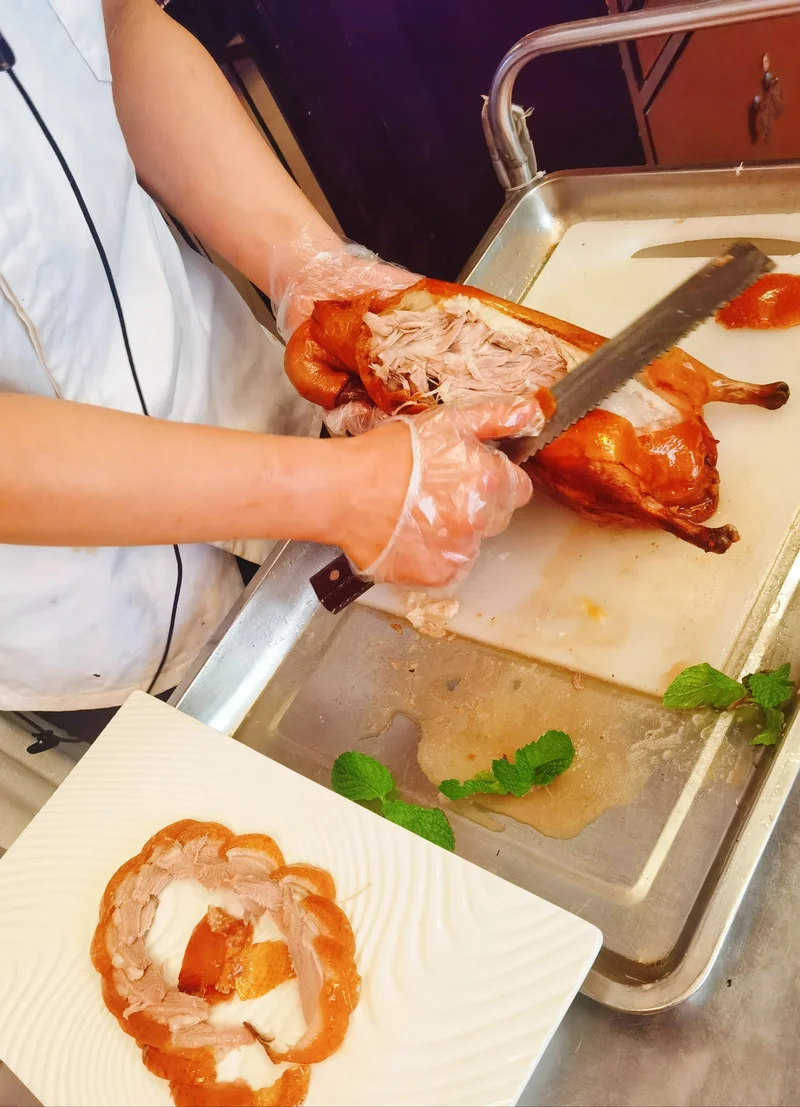
A guide to Peking Duck carving in Beijing, explaining skin-first slices, balanced meat cuts, table service, duck frame options, and what diners should notice.
Peking Duck carving is not just restaurant theater. The way the duck is sliced determines how much crisp skin, fat, and meat each bite contains. A carefully carved duck tastes lighter, warmer, and more balanced than a poorly sliced one, even when both ducks came from the same oven.
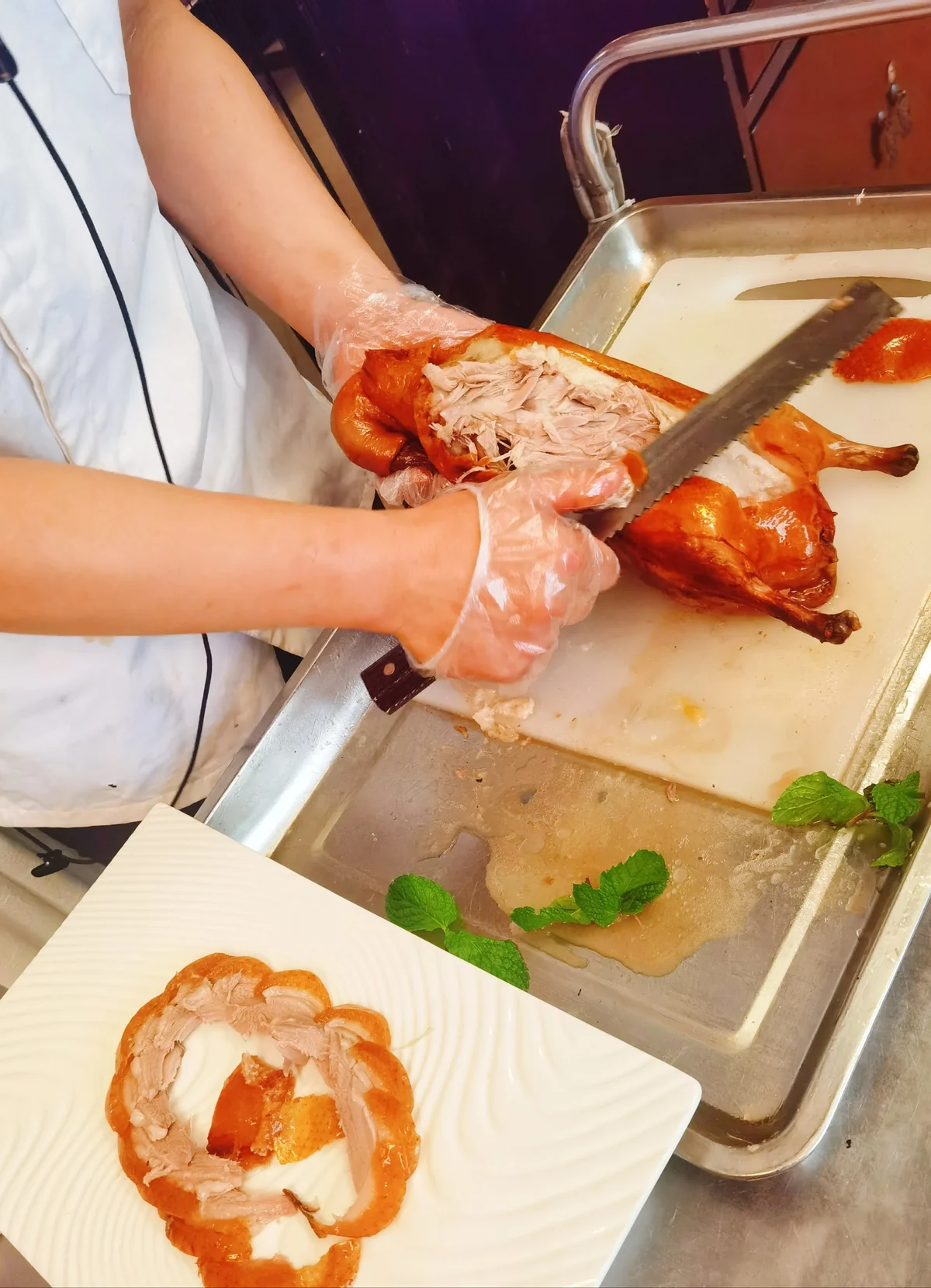
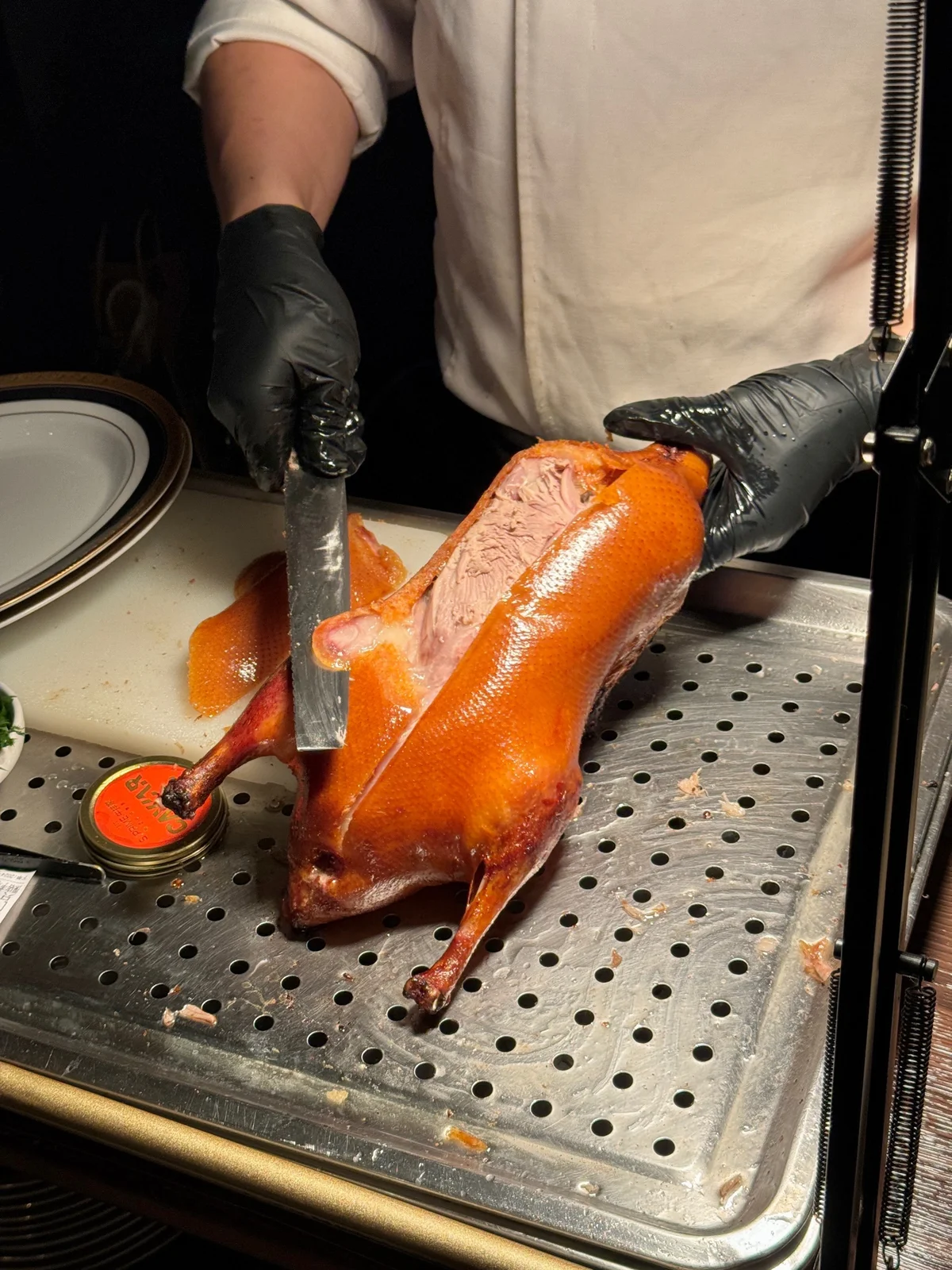
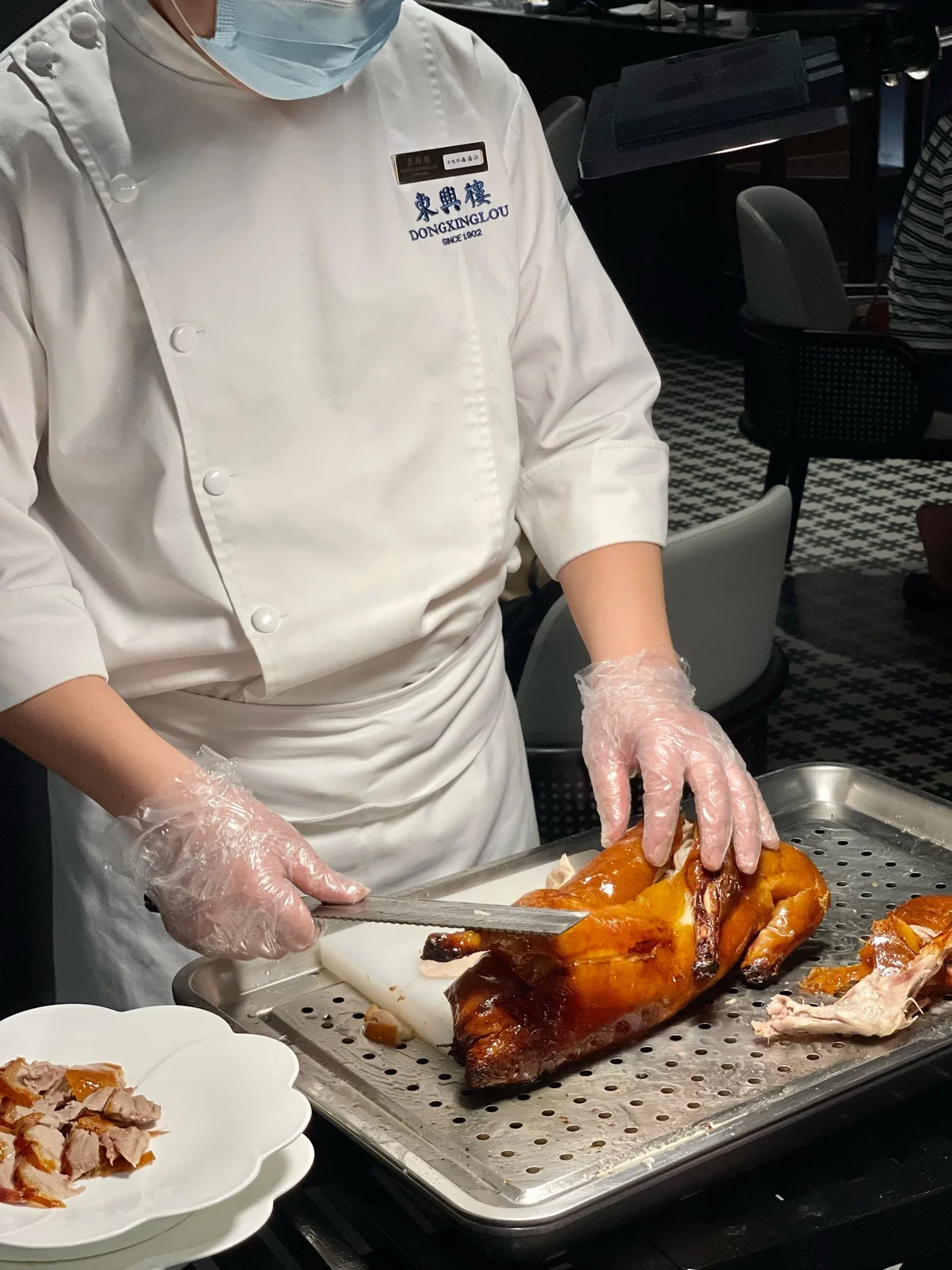
Table carving lets diners see the whole duck before it becomes wrappers and plates. It also protects timing. The skin is best soon after roasting, so a skilled carver moves quickly, keeping the duck hot while creating pieces that fit naturally into pancakes.
The performance matters, but it should serve the food. Watch whether the chef cuts cleanly rather than sawing roughly. The slices should look deliberate, not shredded or random.
Many restaurants begin with especially crisp skin pieces from prized parts of the duck. These may be served plain or with a little sugar. This first bite tells you whether the skin is thin, aromatic, and crisp without tasting burnt or greasy.
If the skin is already soft at this stage, the wraps will probably feel heavy. If it is hard and dry, the duck may have been over-roasted or held too long.
The main slices should carry skin and meat together. Too much fat makes the wrap clumsy. Too much lean meat makes it dry. The ideal piece has enough skin to give aroma and enough meat to make the bite satisfying, while still folding cleanly inside a pancake.
Uniformity matters because everyone at the table should get a comparable experience. If one person receives mostly skin and another receives dry meat scraps, the carving has failed the meal.
Carving controls the skin-to-meat ratio, but it also controls temperature. Hot slices release roast aroma when they meet the pancake and sauce. Cold slices taste fattier and flatter. This is why fast, precise service can make the same duck feel cleaner and more elegant.
The frame is part of the value of a whole duck. Restaurants may use it for soup, salt-and-pepper bones, or another preparation. Soup is better when you want a lighter finish; fried bones are better for a larger group that wants a crisp savory snack.
For the full dish overview, start with Peking Duck in Beijing. To understand why oven style and drying matter, read why Peking Duck tastes different in Beijing.
This guide is original editorial content. The links below were used for factual cross-checking, restaurant context, dish history, and dining terminology; they are not copied source text.
Comments (0)