History of Peking Duck: From Court Cooking to Beijing Restaurants
A historically careful guide to Peking Duck, tracing roast duck from court cooking and Beijing restaurant traditions to hanging ovens, closed ovens, carving, and modern dining.
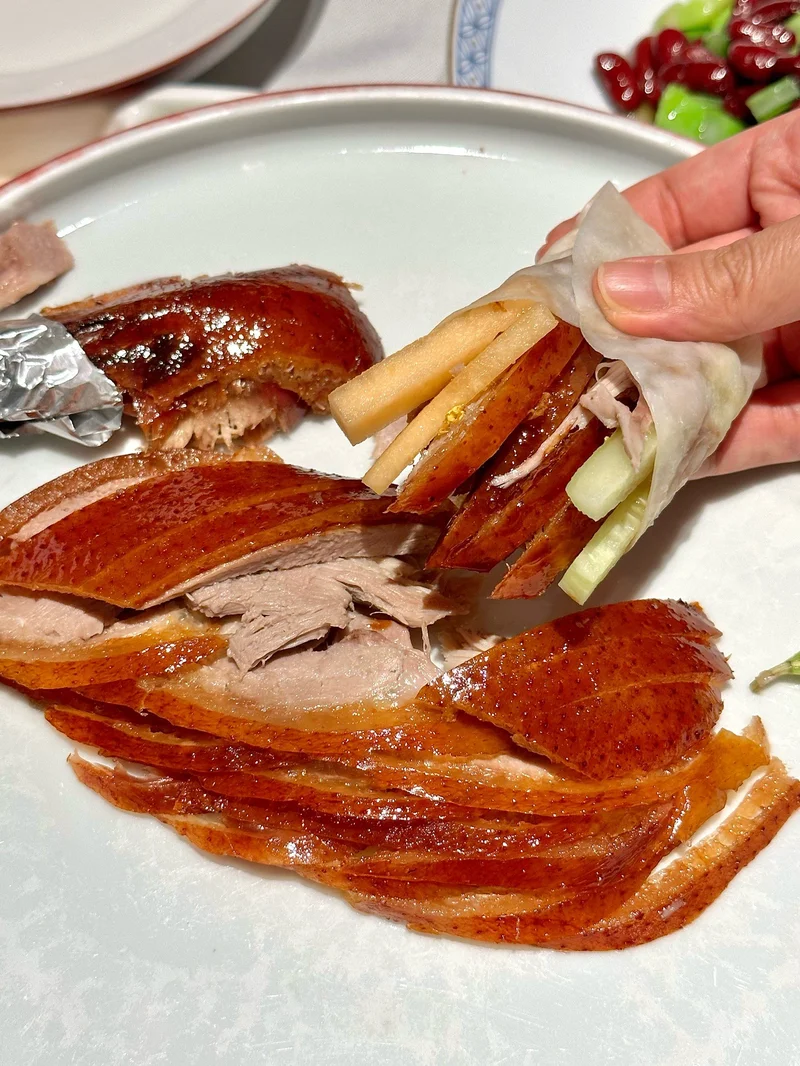
A step-by-step guide to eating Peking Duck in Beijing, including crisp skin, pancake wrapping, sweet bean sauce, scallion, cucumber, duck frame options, and table etiquette.
Eating Peking Duck well is not complicated, but the order matters. The goal is to keep the duck at the center: crisp skin, warm pancake, a small amount of sauce, and enough fresh scallion or cucumber to balance the richness. When first-timers use too much sauce or stuff the pancake too full, the wrap becomes heavy and the roast flavor disappears.
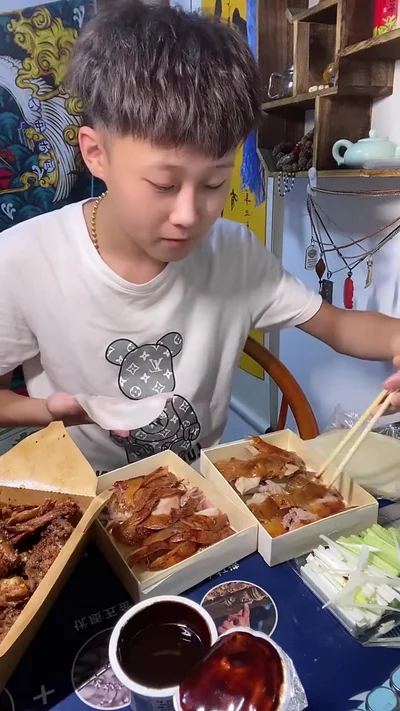
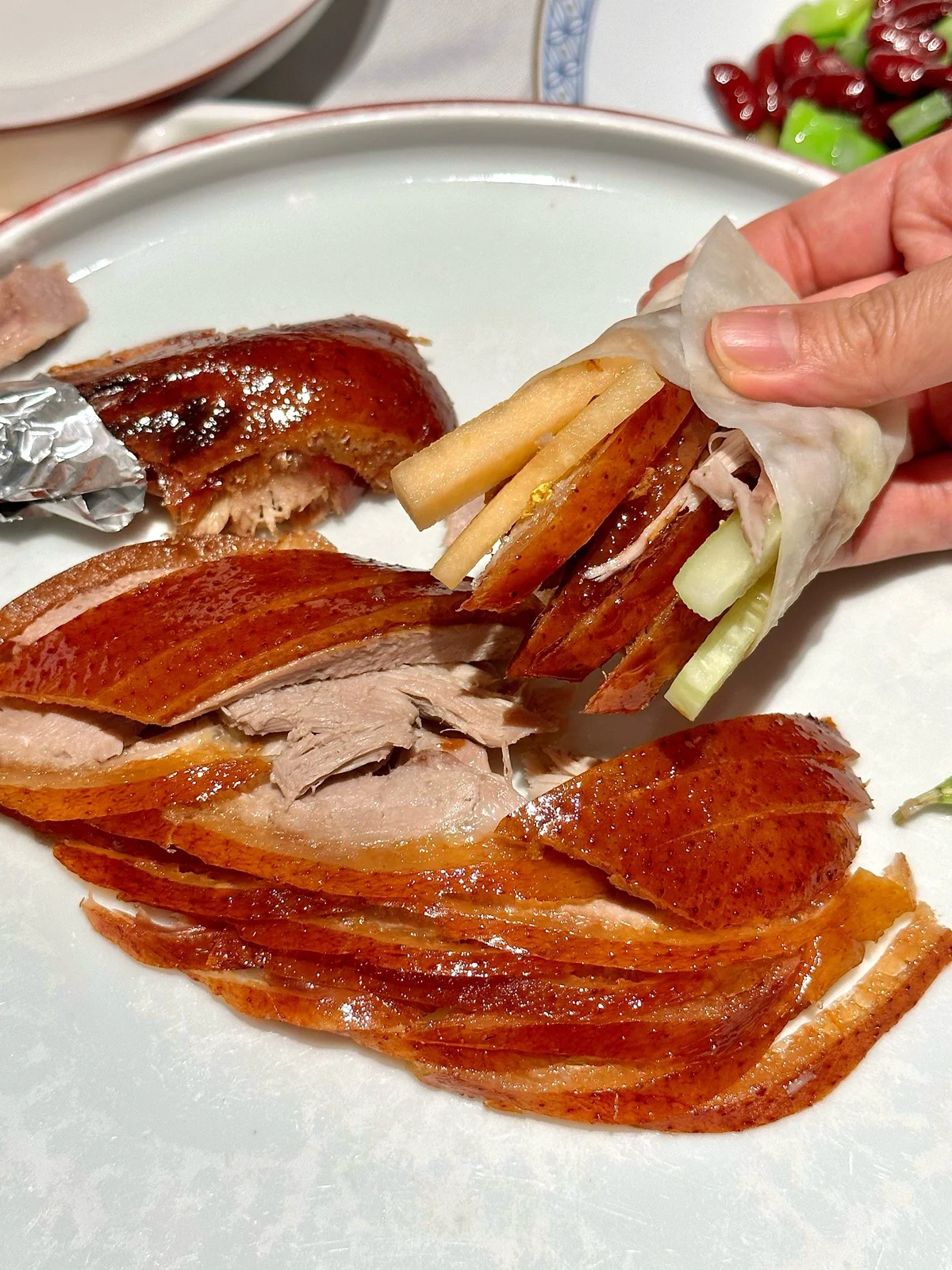
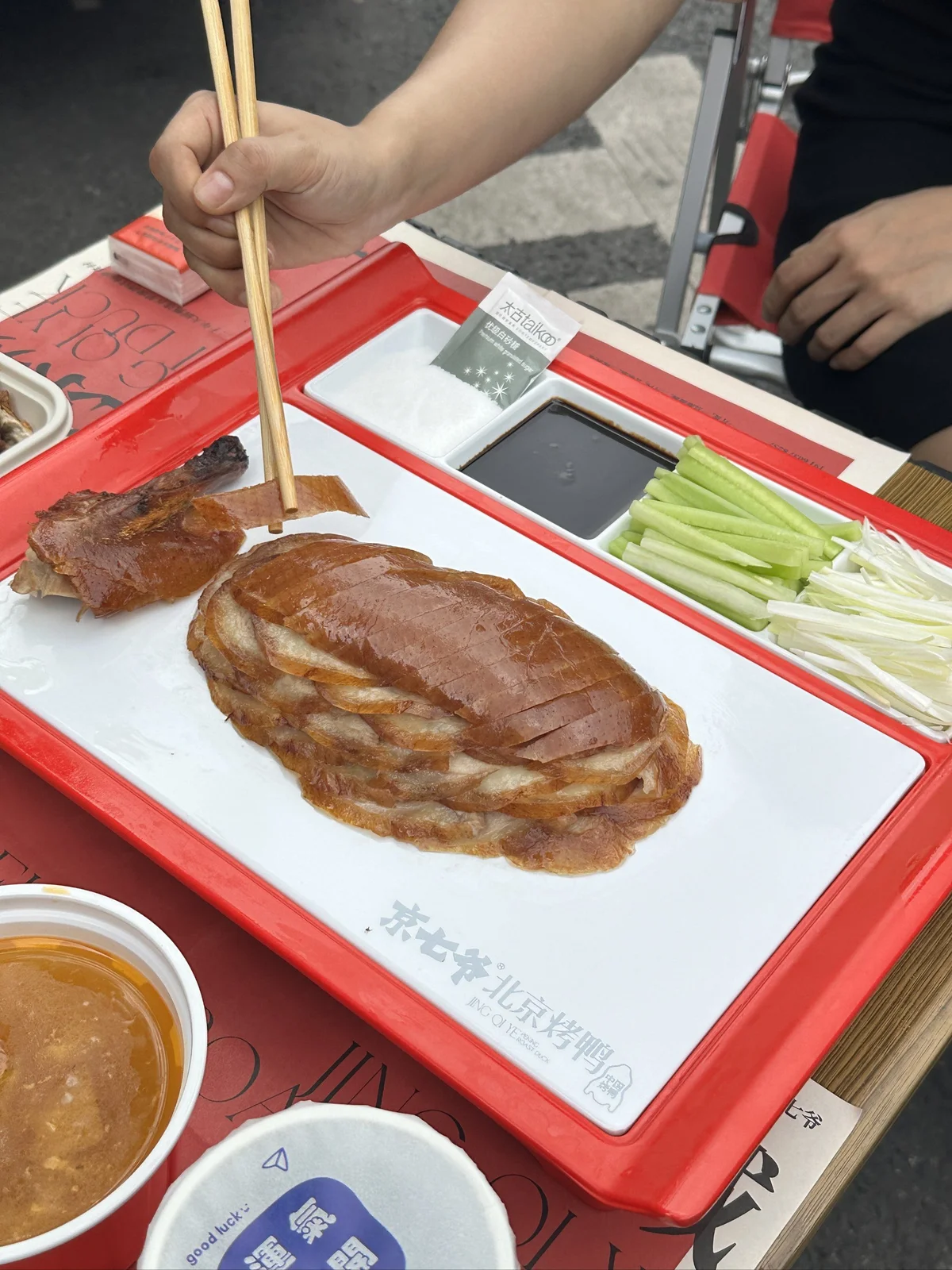
Many Beijing restaurants begin with a few prized pieces of crisp skin. Some diners dip these pieces lightly in sugar, while others eat them plain. This step is not meant to turn the dish into dessert. It lets you notice the aroma, clean fat, and texture before the richer pancake wraps begin.
If the skin tastes greasy, leathery, or cold at this stage, the rest of the meal will probably feel less balanced. Good skin should be thin, fragrant, and crisp without tasting burnt.
Sweet bean sauce is concentrated. Spread a small line on the pancake rather than coating the whole wrapper. The sauce should support the duck with fermented sweetness and salt, not hide the skin and meat. If you are unsure, start with less sauce and adjust on the second wrap.
The best wrap is compact. It should be easy to lift, easy to bite, and not dripping with sauce. If the pancake tears, you may be overfilling it or the wrapper may be too cold.
Good carving gives you slices that fit naturally into a pancake. Some pieces should show skin and meat together; some restaurants separate skin-first slices. If the slices are uneven, too thick, or mostly lean meat, the wrap can become dry. For more detail, see the Peking Duck carving guide.
After the main carving, the remaining duck frame may be prepared as soup, salt-and-pepper bones, or another side dish. Soup is lighter and useful if you ordered rich dishes. Fried bones are better for a group that wants something crisp and savory after the wraps.
A balanced duck meal usually needs a cold appetizer, one green vegetable, and maybe a soup. Avoid ordering too many fried or sauced meat dishes. If you want a broader Beijing meal, pair duck with a small noodle or snack dish rather than another heavy centerpiece.
To understand why one restaurant's duck tastes different from another, read why Peking Duck tastes different in Beijing. If you are still choosing where to eat, start with the Peking Duck restaurant comparison.
This guide is original editorial content. The links below were used for factual cross-checking, restaurant context, dish history, and dining terminology; they are not copied source text.
Comments (0)