History of Peking Duck: From Court Cooking to Beijing Restaurants
A historically careful guide to Peking Duck, tracing roast duck from court cooking and Beijing restaurant traditions to hanging ovens, closed ovens, carving, and modern dining.
An explanation of why Peking Duck tastes different in Beijing, covering duck preparation, air drying, maltose glaze, hanging ovens, closed ovens, fruitwood, carving, and serving t…
Peking Duck tastes different in Beijing because the dish depends on many linked details. The duck matters, but so do skin preparation, air drying, glaze, oven style, fuel, carving, pancake temperature, and how fast the slices reach the table. When any part of that chain is weak, the meal becomes ordinary.
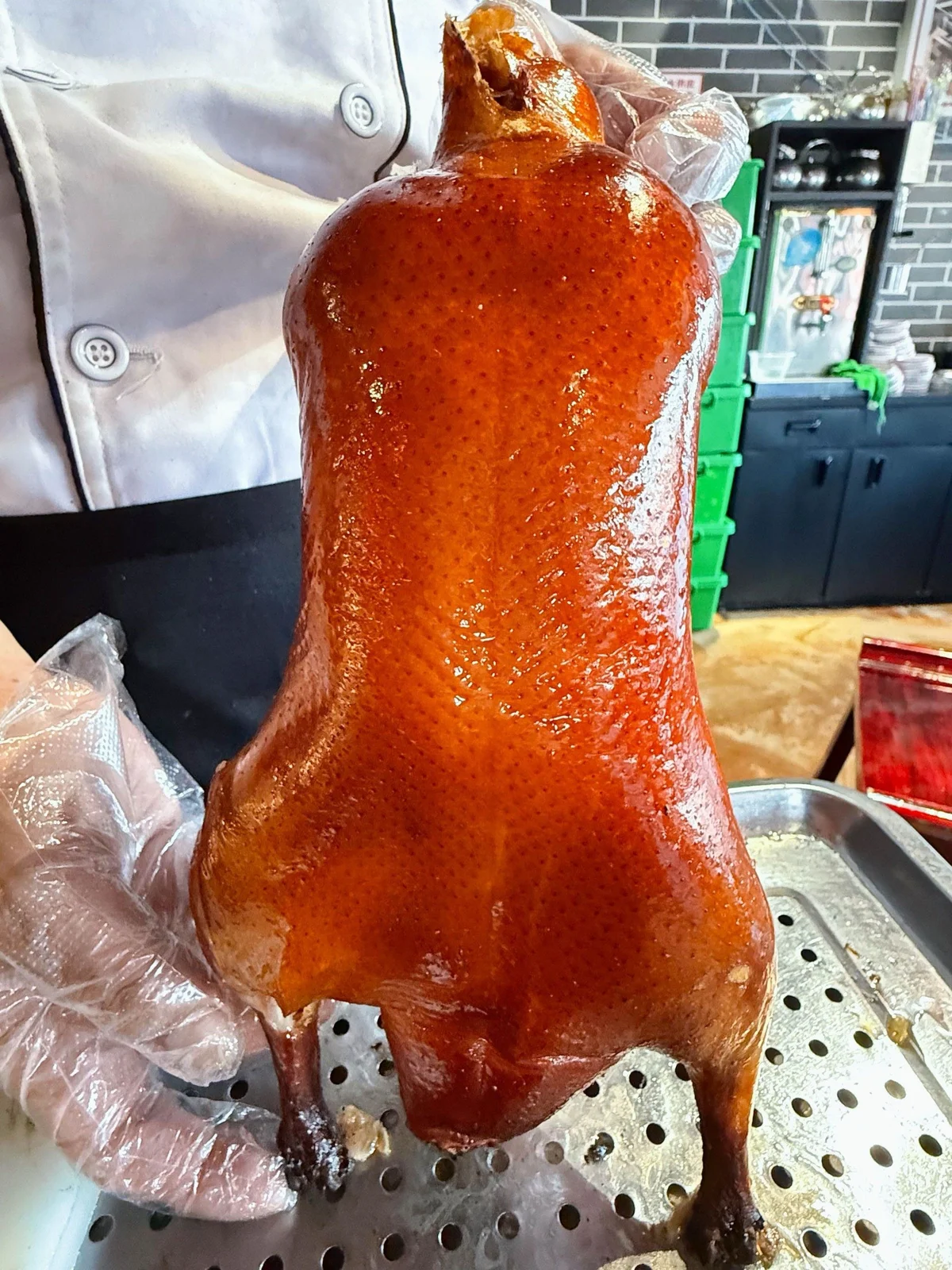
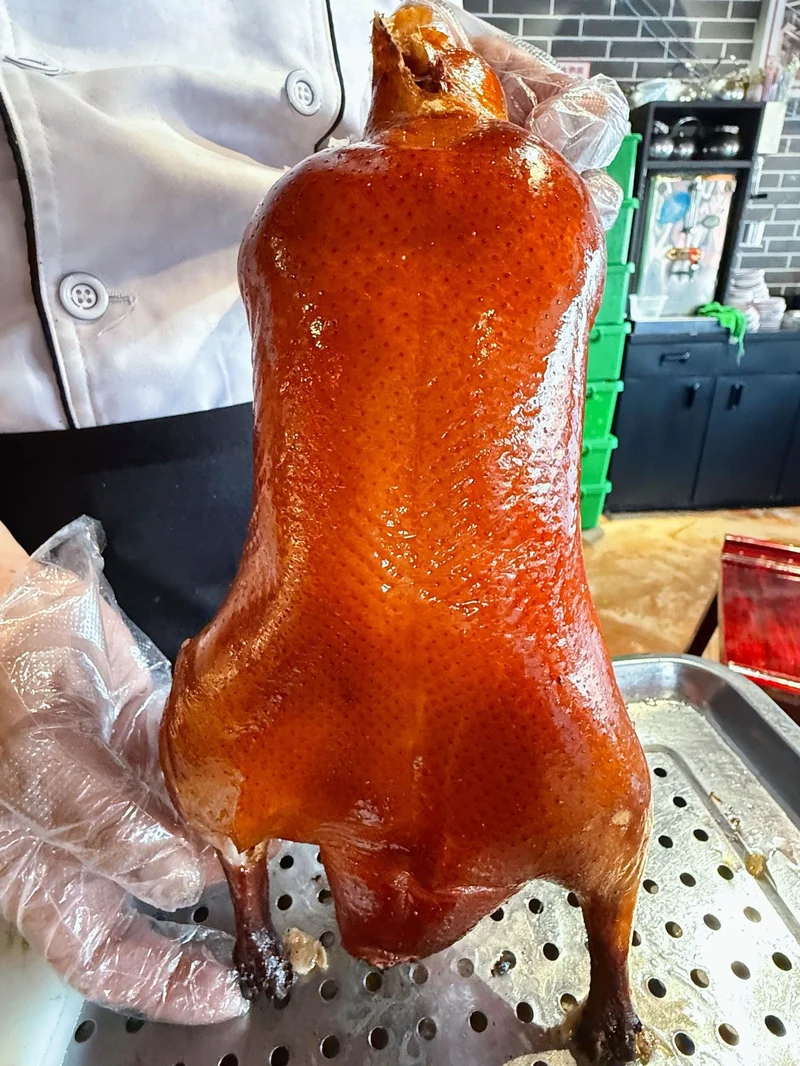
Before roasting, the skin must be separated from the body, tightened, scalded, coated, and dried. Official descriptions of the Quanjude craft mention steps such as blowing air under the skin, coating with maltose syrup, and further air-drying. These steps help the skin color evenly and crisp during roasting.
This is why rushed duck can look shiny but taste soft. If the surface has not dried properly, the skin steams instead of crisping.
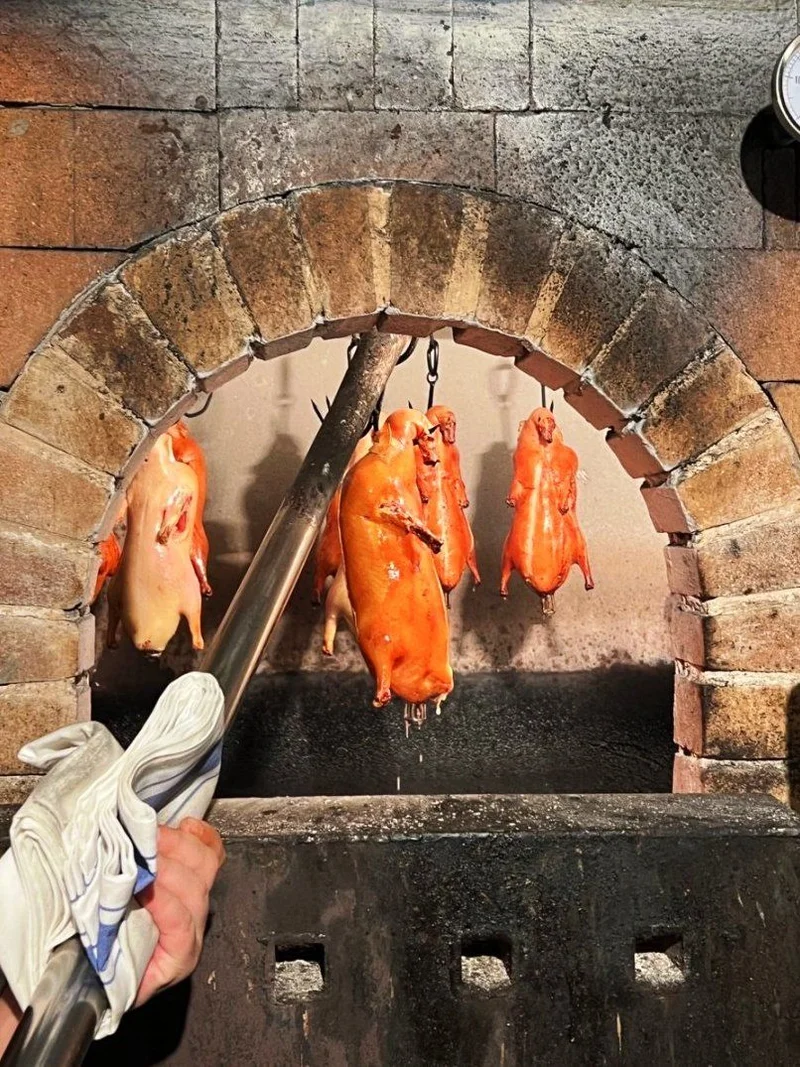
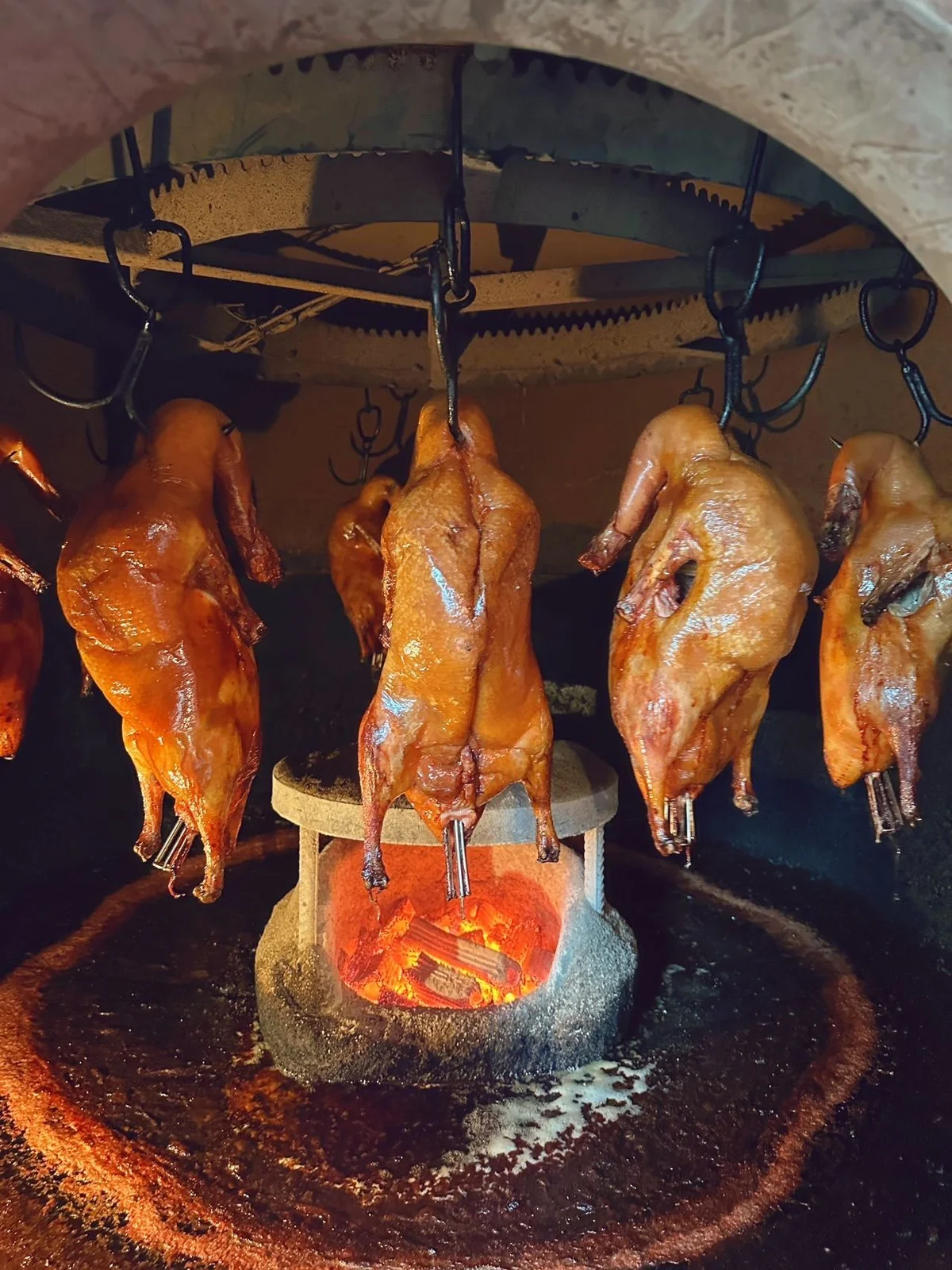
Beijing's two major roast duck traditions produce different results. In a hanging oven, the duck roasts upright near an open flame, often with fruitwood. This can create a more direct roast aroma and dramatic skin. In a closed oven, the duck cooks with retained heat after the stove has been heated, creating a gentler style associated with Bianyifang.
Neither label guarantees quality. A skilled closed-oven roast can be excellent; a careless hanging-oven roast can be disappointing. Use oven style as context, not as a ranking system.
Many Beijing roast duck descriptions mention fruitwood such as jujube, pear, apple, or other hardwoods. The purpose is subtle fragrance, not heavy smoke. A good duck should still taste like duck, with a warm roast aroma around the skin.
Even a perfectly roasted duck can lose its best texture if it sits too long. Skin cools quickly, pancakes stiffen, and fat begins to feel heavier. This is why strong restaurants coordinate roasting, carving, pancakes, sauce, and condiments as one service sequence.
When comparing restaurants, notice whether the duck arrives hot, whether the carver works efficiently, and whether the pancakes are warm. Those details explain more than online rankings.
Sweet bean sauce, scallion, and cucumber are not decoration. They balance fat, salt, sweetness, and freshness. Used lightly, they make the wrap taste cleaner. Used heavily, they cover the duck and make every bite taste the same.
In good Beijing restaurants, the dish is designed around immediate service. The duck is roasted for crisp skin, carved for the right ratio, and eaten in thin wheat pancakes that do not overwhelm the meat. Outside Beijing, some restaurants reproduce the wrapping style but not the full preparation chain, which is one reason the result can feel different.
For restaurant choice, see where to eat Peking Duck in Beijing. For hands-on table technique, read how to eat Peking Duck.
This guide is original editorial content. The links below were used for factual cross-checking, restaurant context, dish history, and dining terminology; they are not copied source text.
Comments (0)