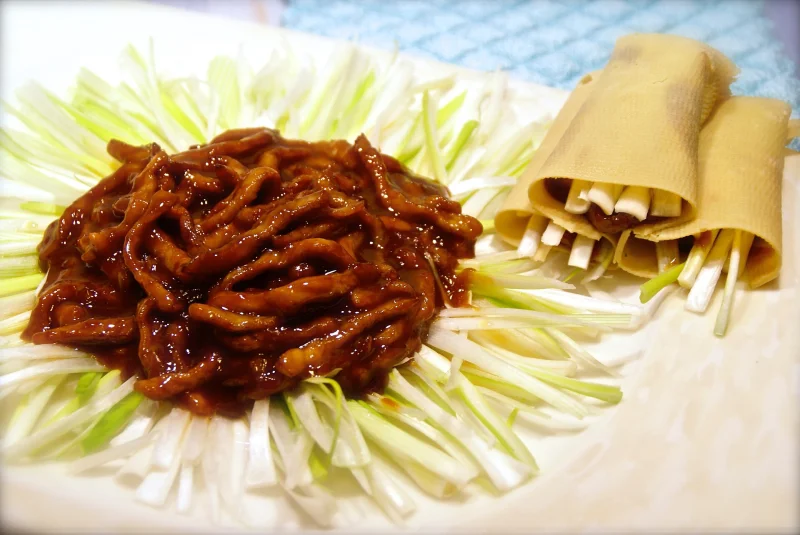
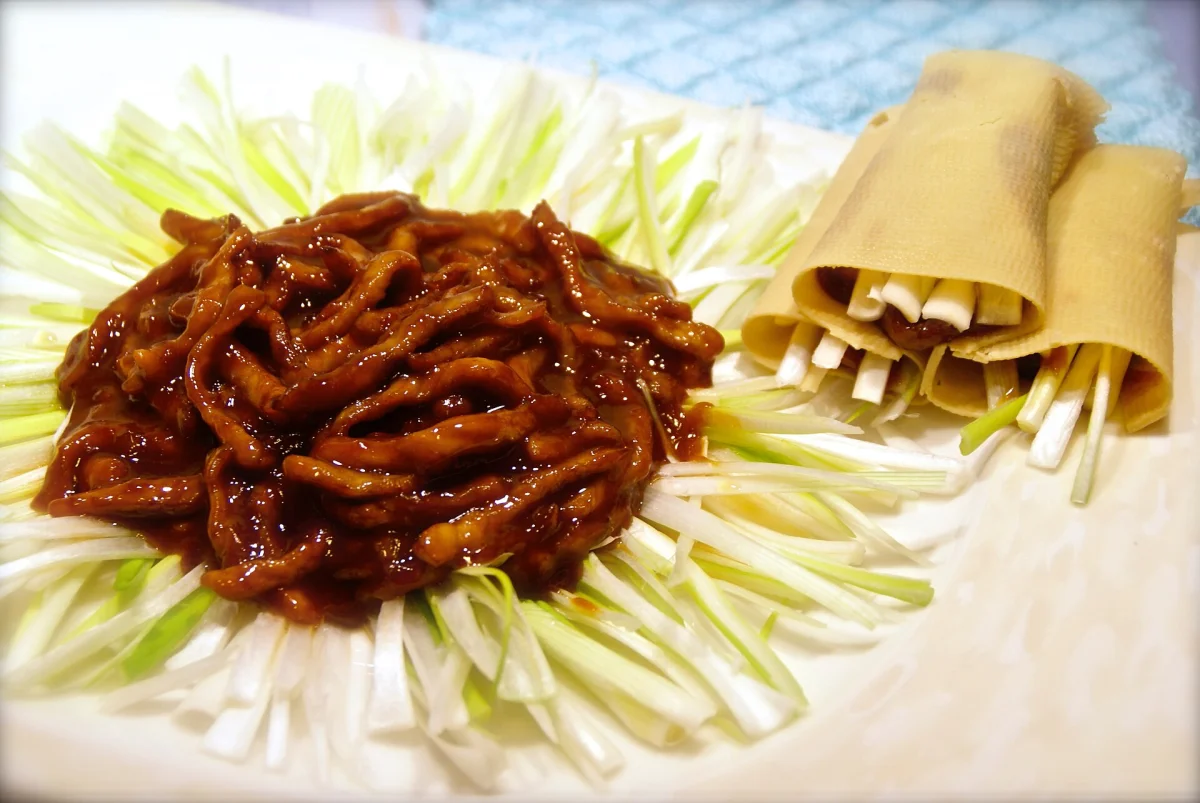
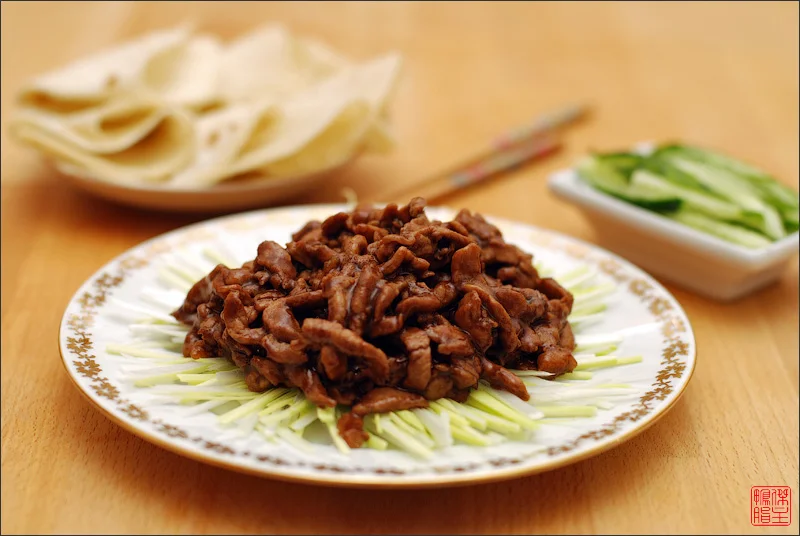
Jing jiang rou si (京酱肉丝) is a Beijing-style dish of fine pork strips coated in a glossy sweet bean sauce, then eaten with fresh scallion and a thin tofu-skin sheet. It is often translated as shredded pork in sweet bean sauce, but the name alone misses the point: the contrast between warm, savoury-sweet pork and cool, crisp scallion is what makes the plate work. The tofu skin is not merely garnish. It turns a sauced stir-fry into a small hand-held wrap that the table assembles as it eats.
Dish Photos
Why it belongs on a Beijing table
Official Beijing Tourism material identifies the dish as a traditional Beijing flavour while also noting its connection with Shandong cooking technique. That overlap is worth preserving. It is a Beijing restaurant classic, but not a reason to claim that every element has a single, isolated origin. The most useful way to understand it is through the finished dish: tender pork, fragrant sweet bean sauce, scallion, and tofu skin in one bite.
The four parts to notice
- Pork strips: they should be cut fine and stay tender, not thick, dry, or ragged.
- Sweet bean sauce: the sauce should cling to the pork in an even coat. It is rich and slightly sweet, but it should not pool in the bottom of the plate.
- Scallion: raw julienned scallion gives lift, crispness, and a clean allium bite against the sauce.
- Tofu skin: the soft sheets hold a small portion of pork and scallion without turning the dish into a heavy pancake.
How to build one wrap
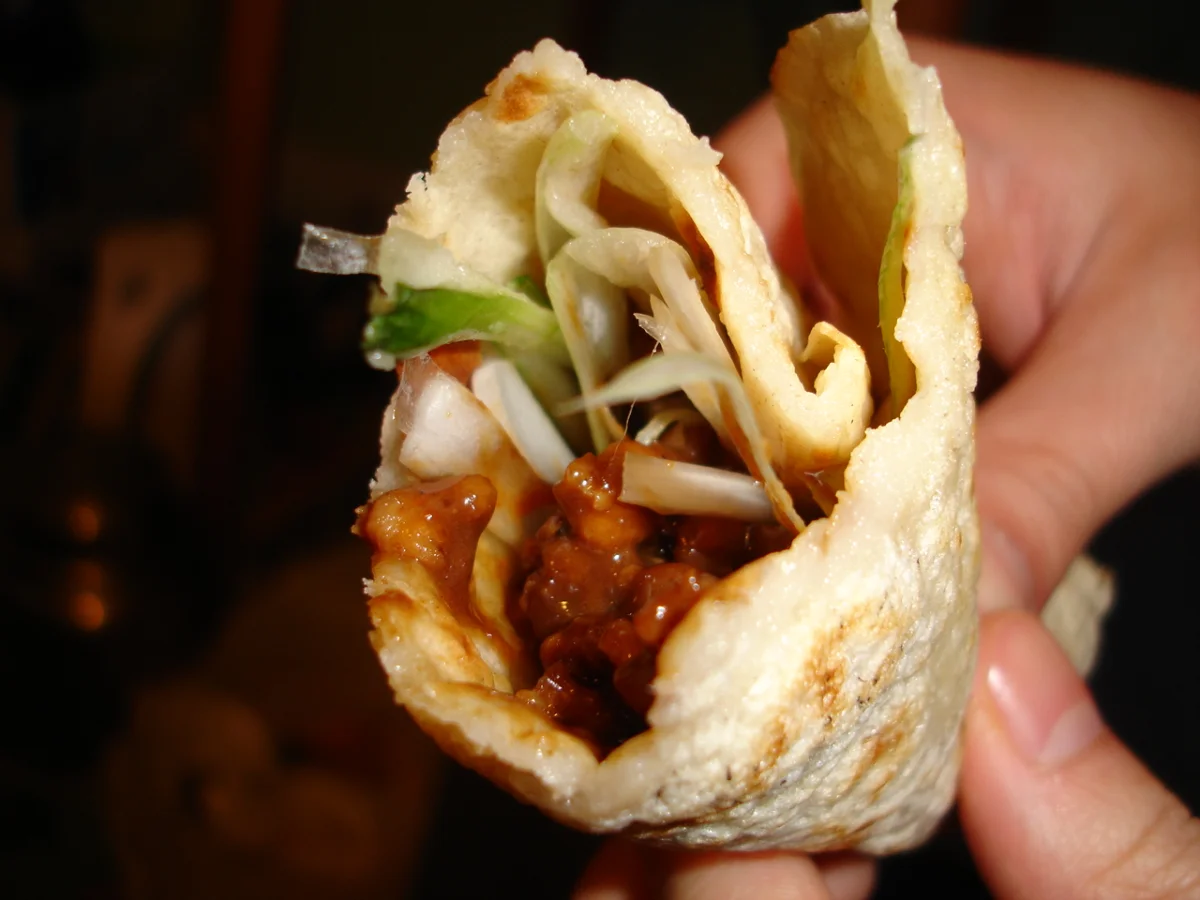
Lay a tofu-skin sheet flat, add a small bundle of scallion, then place a modest amount of pork on top. Fold the sheet around the filling and eat it while the pork is warm and the scallion still crisp. Overfilling makes the sheet tear and buries the scallion; a smaller wrap gives the better contrast.
The dish is sometimes compared with the pancake course of Peking Duck, but the comparison has limits. Duck pancakes usually foreground crisp skin, carved meat, cucumber, and sauce. Jing jiang rou si is a stir-fry with a sauce-coated pork filling, and its raw scallion is more than a condiment. Treat them as two different Beijing wrap formats rather than substitutes.
What a good plate looks like
The pork should look glazed rather than flooded. A well-made plate has separate, tender strands and sauce that is deep brown but not burnt or sticky in lumps. The scallion should be freshly cut and plentiful enough to balance the sweet bean paste. If the tofu skin has dried at the edges, ask for it to be served promptly rather than leaving it uncovered for the whole meal.
Ordering it in a larger meal
Jing jiang rou si works best as one composed dish among lighter vegetables, a soup, or a shared staple. Because the sauce is concentrated, it is not necessary to order several other sweet, dark-sauced meat dishes at the same time. Let the scallion and tofu skin provide contrast, then add something clean and vegetable-led if the table needs another texture.
It is also a useful first Beijing dish for diners who want a familiar entry point without choosing a generic stir-fry. The plate has a clear structure, is easy to share, and shows how sauce, wheat or bean products, and raw aromatics can be balanced at the table.
Sources
- Beijing Tourism food library: Old Beijing Jing Jiang Rou Si
- Beijing Tourism: a classic Beijing dish of pork and sweet bean sauce
- Beijing Tourism: tofu-skin and scallion serving method
Photo credits
- Jing jiang rou si with scallion and tofu skin by xyzx124, CC BY-SA 4.0.
- Jing Jiang Rou Si wrap by gigijin, CC BY-SA 2.0.
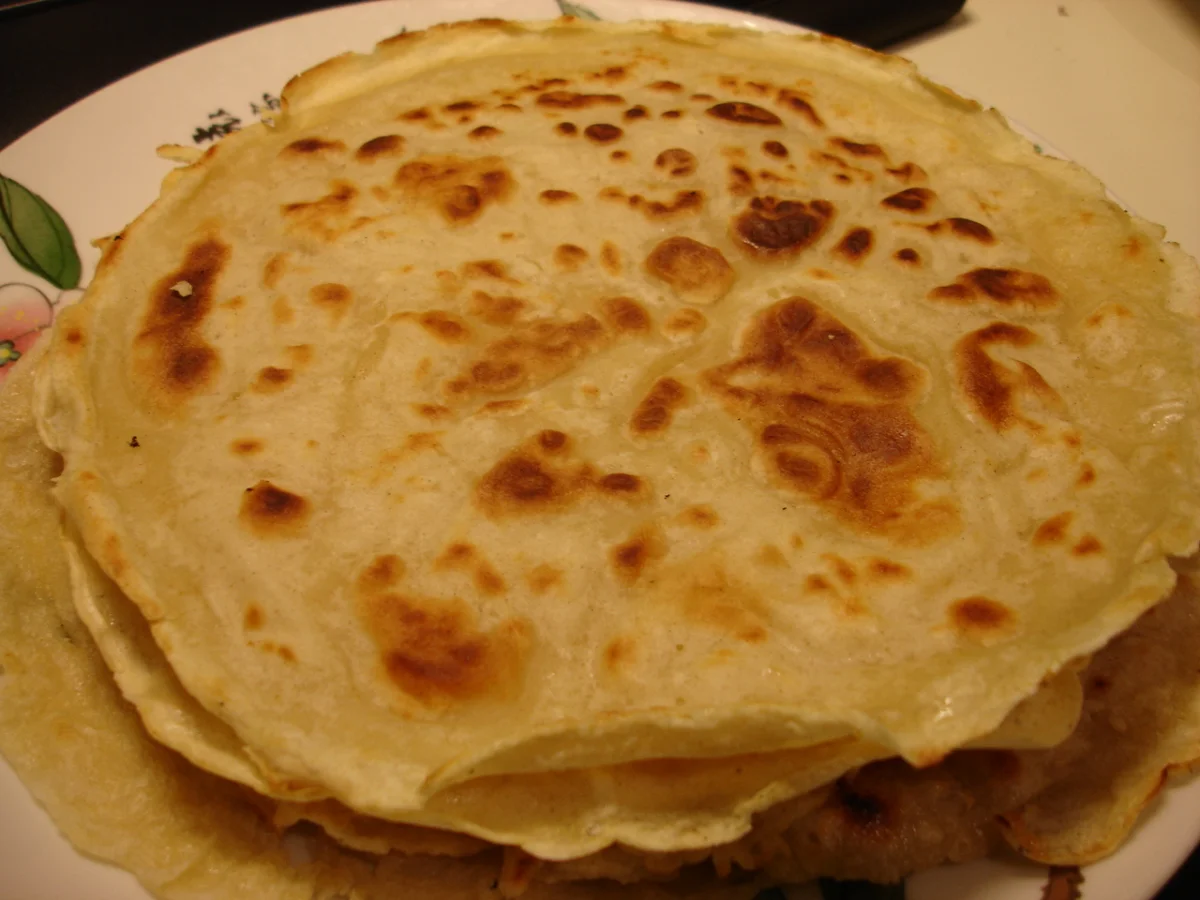
- Thin pancakes served with Jing Jiang Rou Si by gigijin, CC BY-SA 2.0.
- Jing jiang rou si plated with scallion by Dmitry Zhuravlev, CC BY-SA 3.0.
Comments (0)