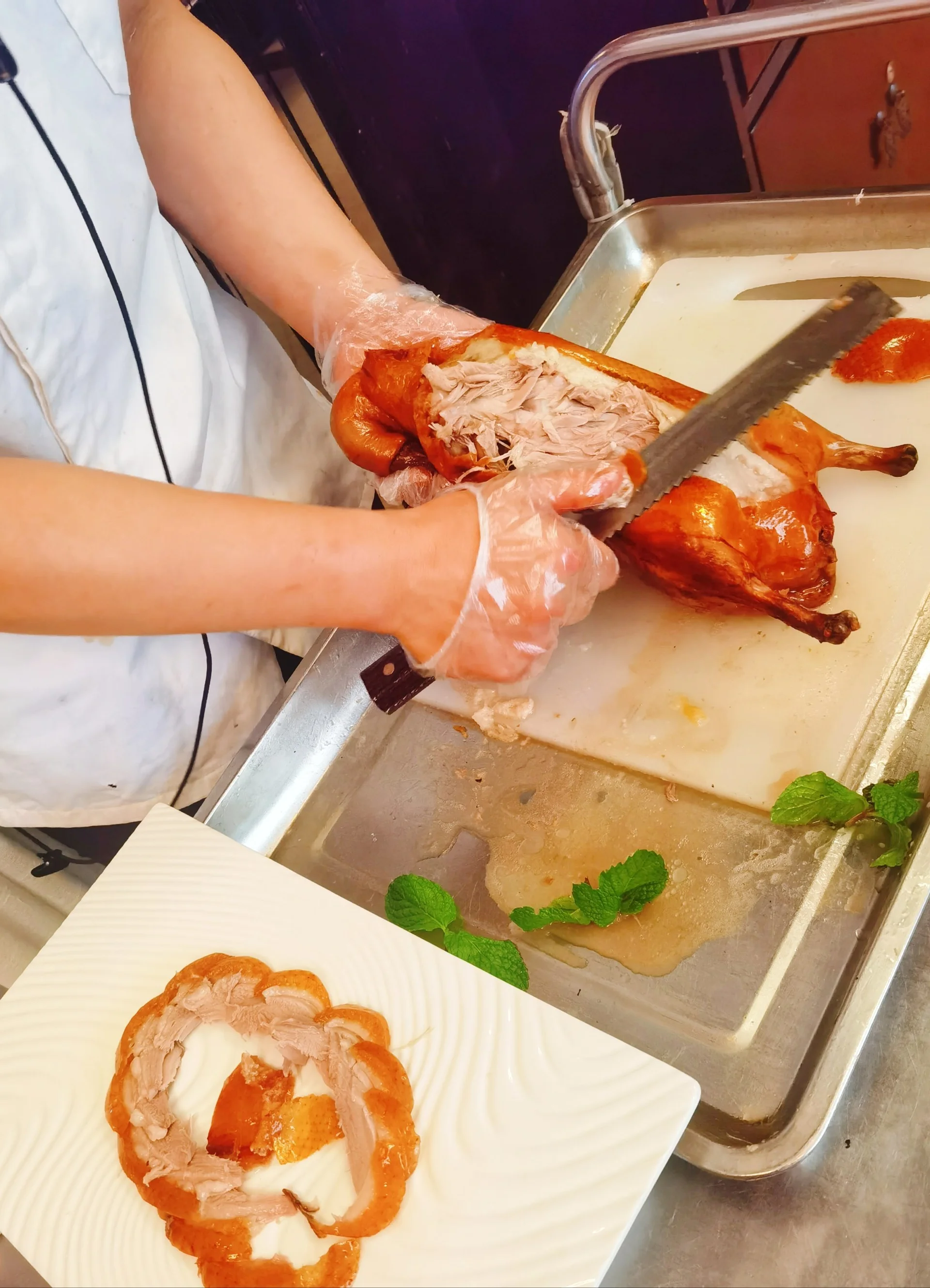
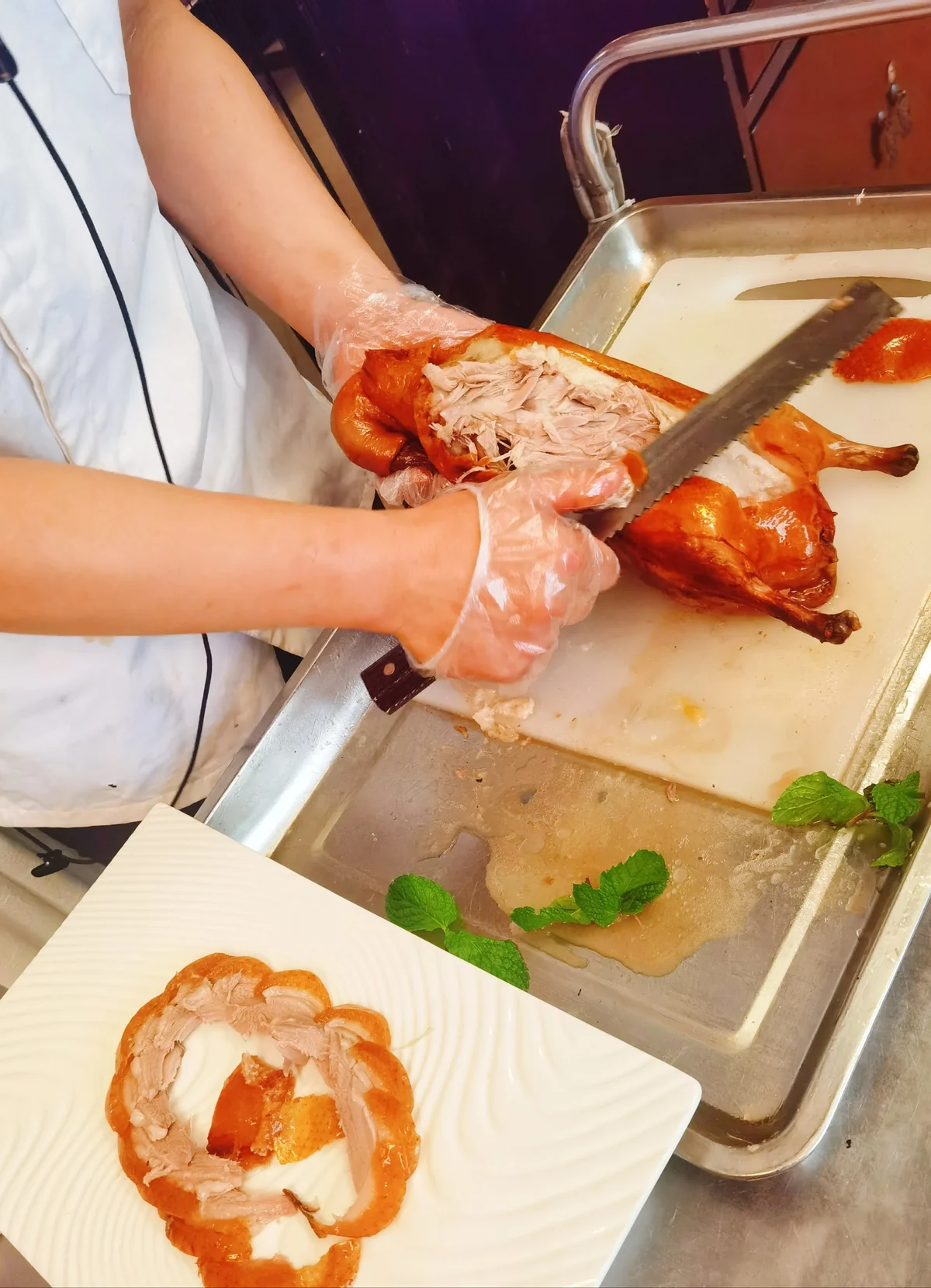
Carving Peking Duck to separate crispy skin and tender meat for serving.
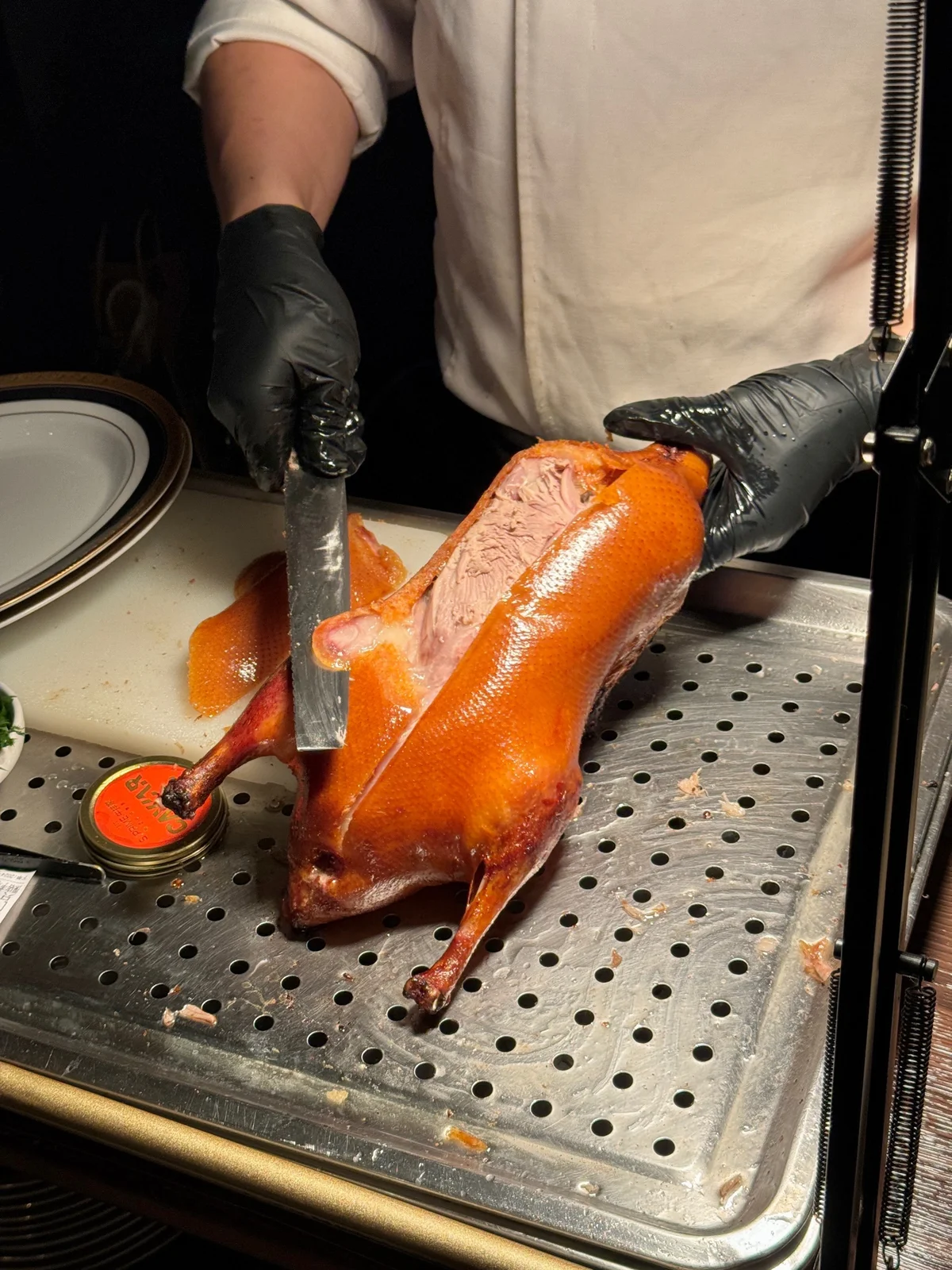
Precise slicing of Peking Duck to create uniform pieces with crisp skin.
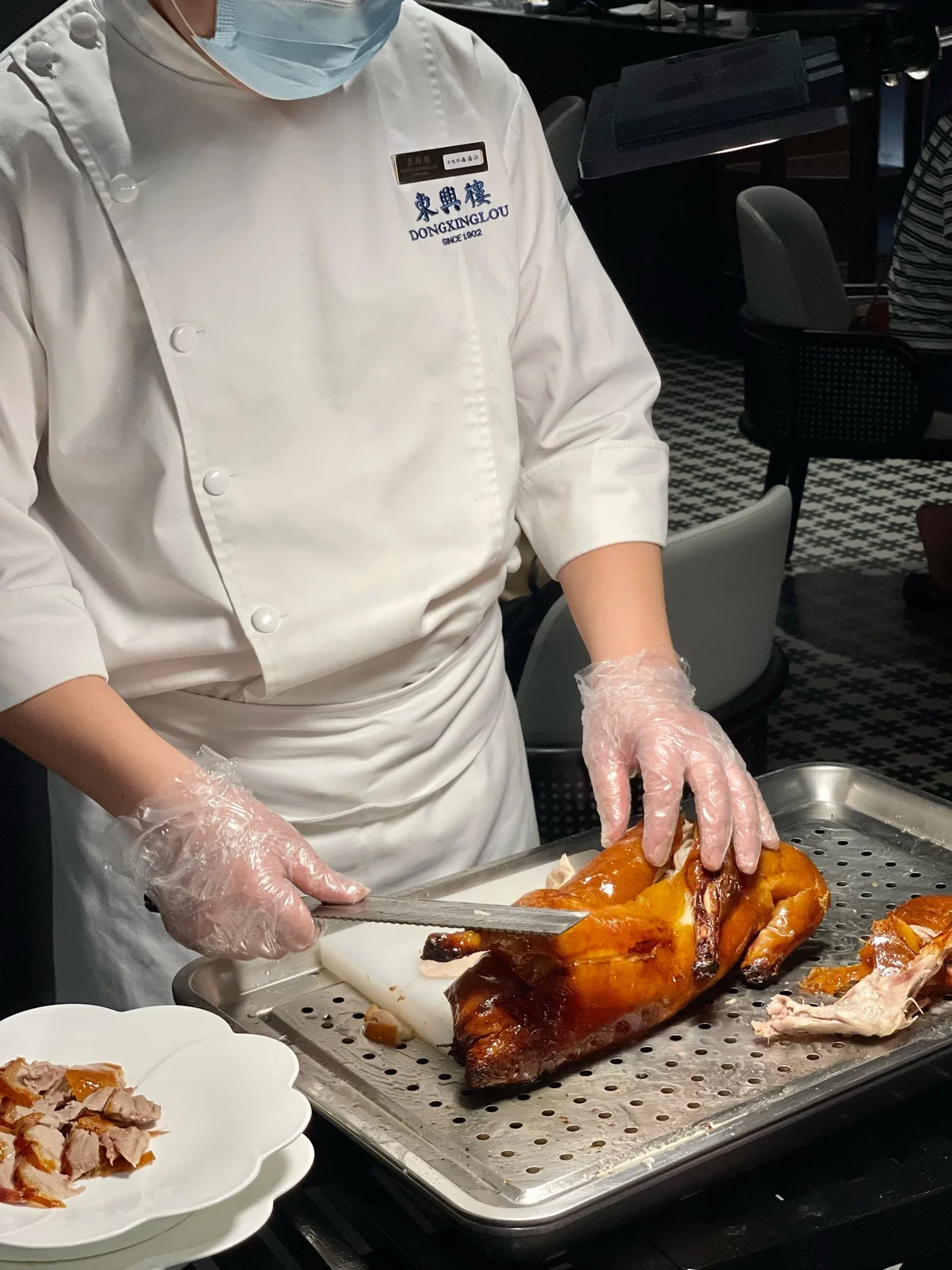
Chef carving whole Peking Duck at Dongxinglou to prepare thin, even slices.
The carving of Peking Duck is one of the most distinctive culinary arts in Beijing. More than just slicing meat, it is a performance, a skill, and a tradition that reflects centuries of refinement. The moment a chef wheels a whole roasted duck to the table and begins carving is a highlight of the dining experience, especially for first-time visitors.
A professional Peking Duck chef undergoes months of training to master the technique. The ideal slice includes both crispy skin and tender meat, cut thin enough to create a balanced bite yet thick enough to maintain texture. The chef typically makes more than one hundred precise cuts, each stroke controlled to produce even, aesthetic pieces.
The process begins with the skin. The chef removes several pure-skin slices from the top of the duck, where the crispness is at its peak. These pieces are often dipped in sugar as a traditional treat. Next, the chef carves mixed pieces containing both skin and meat. These slices are used for wrapping in pancakes and represent the heart of the dish.
The carving angle matters greatly. By slicing diagonally, chefs maximize the surface area of each piece, allowing diners to enjoy the crispness of the skin alongside the juiciness of the meat. The knife must be razor-sharp and handled steadily, ensuring smooth cuts without tearing the skin.
Every restaurant has its own carving style. Some carve the duck into exactly 108 slices, referencing historical customs. Others focus on showcasing the duck’s natural beauty through varied shapes and textures. In high-end restaurants, carving is treated almost like a performance art, with chefs demonstrating exceptional speed, accuracy, and elegance.
Once the carving is complete, the chef arranges the slices neatly on a plate. The presentation reflects the importance of visual harmony in Chinese cuisine. The result is not only delicious but also aesthetically pleasing.
Understanding the art of carving adds depth to the appreciation of Peking Duck. It is more than food; it is a craft shaped by history, skill, and cultural pride. Watching the carving process allows diners to connect with the traditions that make Peking Duck one of Beijing’s most beloved culinary treasures.
Comments (0)