Lamb spine hotpot, or yang xiezi, is not only about the bones that arrive first. The real meal develops in stages: you eat the braised lamb spine, let the broth grow richer, then add vegetables, tofu, noodles, and other items that absorb the flavor. If you order everything at once, the table becomes crowded and the broth loses focus.
This guide explains what to add after the bones, how dipping sauce works with lamb spine hotpot, and how to pace the meal in a Beijing restaurant. If you are new to the dish itself, start with our main Lamb Spine Hotpot in Beijing guide, then come back here when you want to order a fuller table without wasting food.
Start with the lamb spine before adding too much
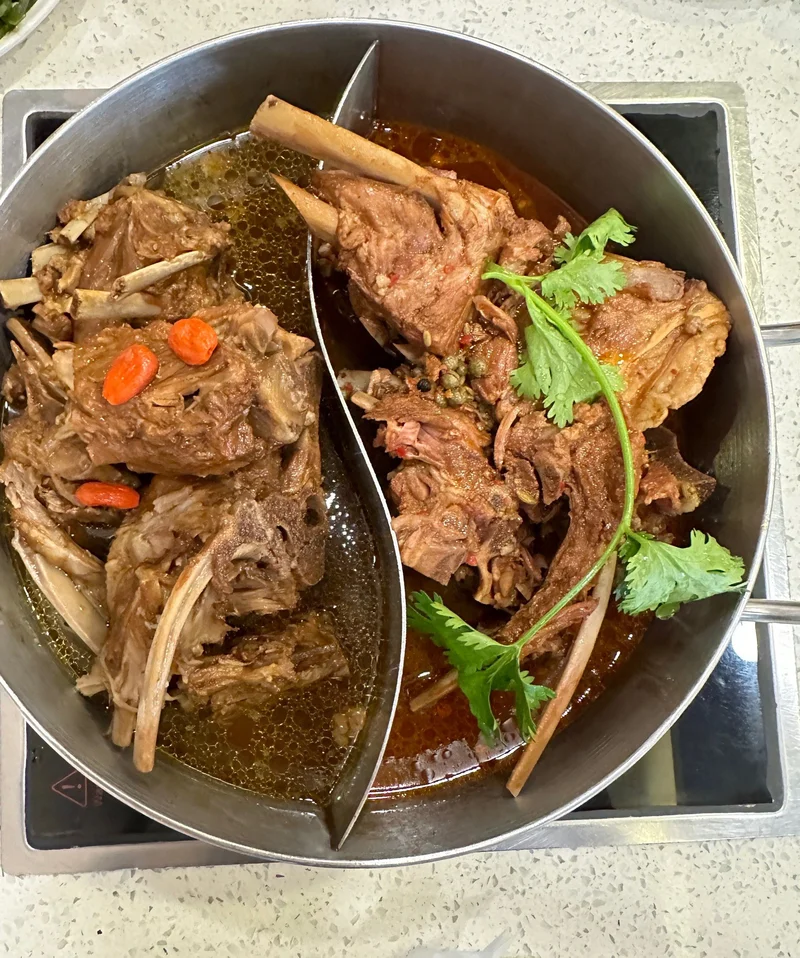
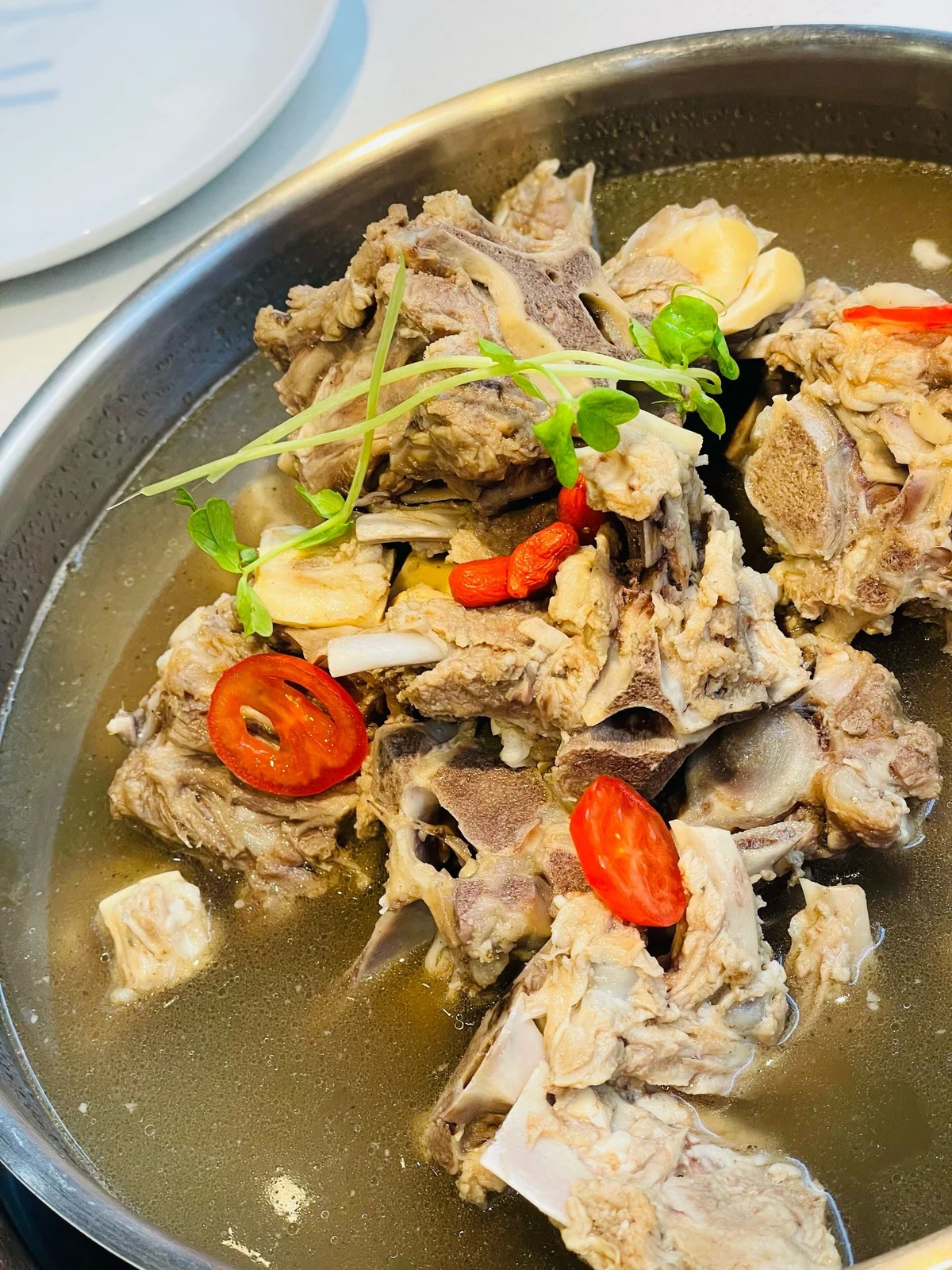
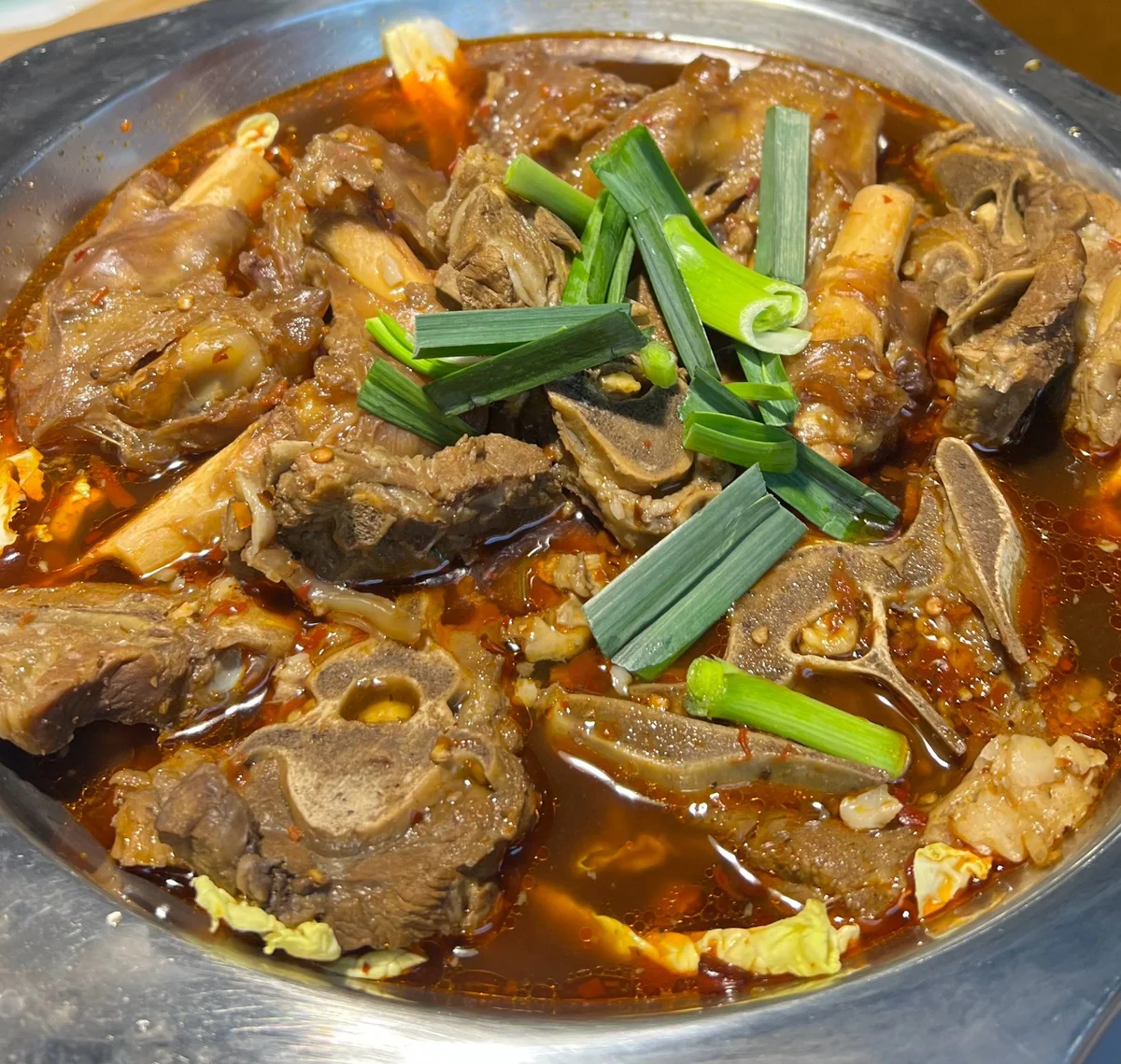
The first stage should belong to the bones. Lamb spine hotpot is usually served with meaty vertebrae that have already been cooked until the meat is tender. The broth may be clear, soy-braised, spicy, or a divided pot, but the early flavor is built around lamb, aromatics, and marrow-rich bones.
Before adding vegetables or noodles, eat several pieces of lamb and taste the broth. This tells you how salty, spicy, and rich the pot already is. A heavy broth needs lighter add-ins. A clear broth can handle stronger vegetables or tofu later. If you need help comparing broth styles, see our clear vs spicy lamb spine hotpot broth guide.
Dipping sauce: useful, but not always necessary
Beijing lamb spine hotpot is different from instant-boiled mutton. With shuan yangrou, sesame paste sauce is almost central to the meal. With yang xiezi, the bones and broth already carry a lot of flavor, so dipping sauce is optional and should not bury the lamb.
A light sesame paste sauce, garlic, cilantro, scallions, or a little chili oil can work well if the meat tastes mild. If the pot is already strongly braised or spicy, use less sauce. The goal is to add fragrance, not turn every bite into the same salty paste. For broader hotpot sauce context, compare our Beijing hotpot dipping sauce guide.
Best vegetables to add after the bones
Leafy greens are usually best after the broth has picked up lamb flavor. Napa cabbage, lettuce leaves, chrysanthemum greens, spinach, or similar greens soften quickly and help balance the richness of the bones. Add them in small batches so they do not overcook or water down the pot.
Root vegetables and mushrooms can go in earlier than delicate greens. Potato slices, lotus root, white radish, enoki mushrooms, or shiitake can absorb broth and make the meal more filling. In a spicy or soy-braised pot, these items become especially satisfying because they carry the sauce without adding more meat.
Tofu, bean products, and frozen tofu
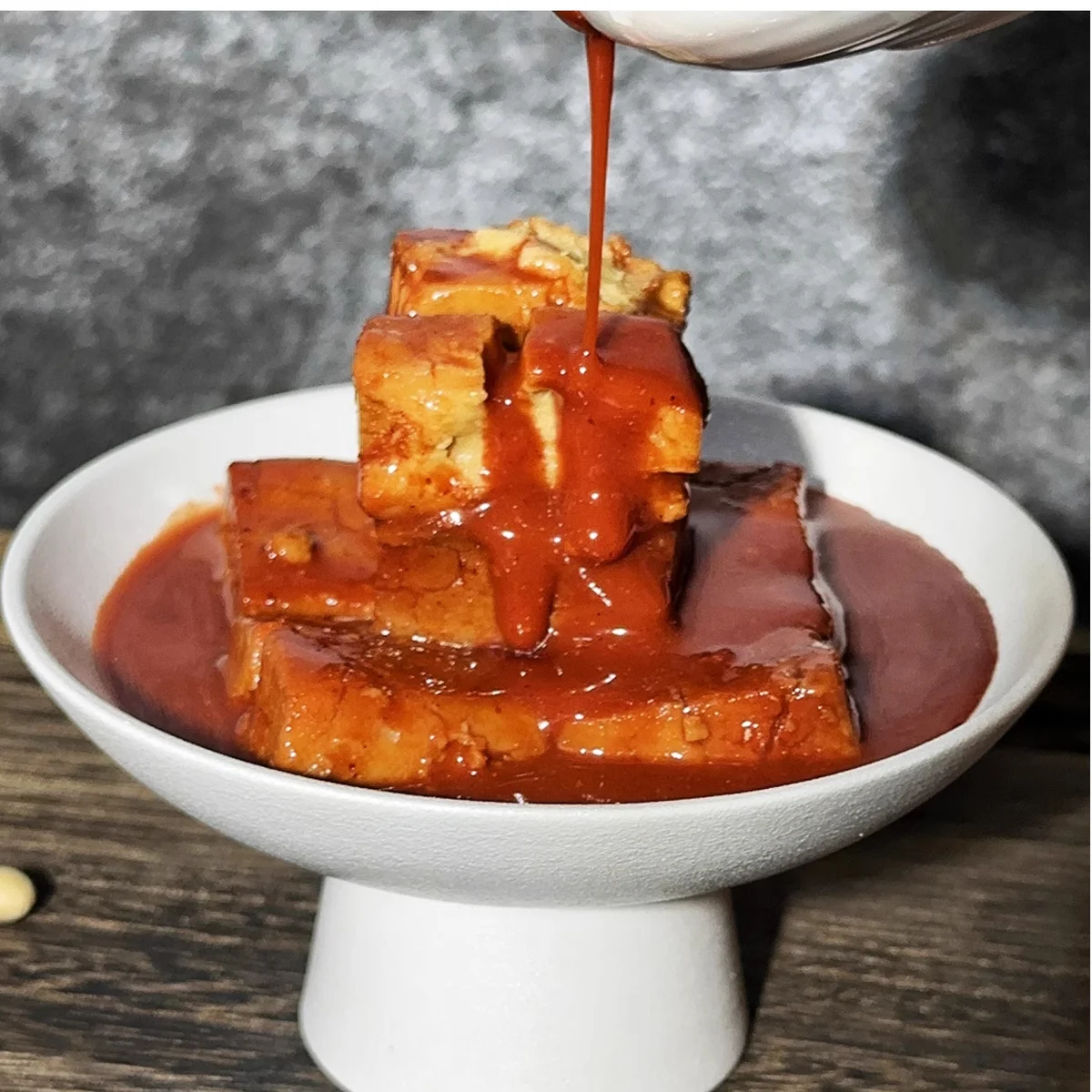
Tofu works well in lamb spine hotpot because it soaks up broth without making the table feel heavier. Firm tofu, fried tofu puffs, tofu skin, and frozen tofu all behave differently. Tofu puffs absorb liquid quickly, while frozen tofu has a sponge-like texture that holds broth inside.
Add bean products after the first round of lamb, not at the very beginning. If they sit too long, they can break apart or dominate the surface of the pot. They are best when the broth is already flavorful but still clean enough to taste the bean product itself.
Noodles should usually come near the end
Noodles are one of the most satisfying endings to a lamb spine hotpot meal, but they should not go in too early. Once noodles enter the pot, they thicken the broth, absorb salt, and make the remaining soup feel heavier. This is good at the end and annoying at the beginning.
Hand-pulled noodles, potato noodles, glass noodles, or instant-style noodles can all appear depending on the restaurant. If the pot is spicy, noodles become a strong final course. If the pot is clear, noodles let you taste the lamb broth more directly. Either way, save them until most bones and vegetables are finished.
What not to add too early
Avoid adding delicate greens, noodles, and very absorbent tofu products too early. They can collapse, cloud the broth, or take over the pot before the lamb spine has done its job. Also avoid ordering too many meat add-ons unless the table is large. Lamb spine hotpot is already meat-heavy.
If you want extra protein, order one focused add-on rather than several. Sliced lamb, meatballs, or tripe can work, but they change the meal from a bone-focused hotpot into a general hotpot spread. That is not wrong, but it can make the original dish less clear.
How to pace a Beijing lamb spine hotpot meal
A practical order is simple: lamb spine first, mushrooms and root vegetables second, tofu and bean products third, leafy greens fourth, noodles last. This order keeps the broth useful for the whole meal and prevents the table from becoming messy too early.
In a group, let one person manage the pot instead of everyone dropping items in at random. Lamb spine hotpot rewards patience. The broth changes over time, and each stage should taste a little different from the last. That pacing is part of why the dish works so well in cold weather.
How much should you order?
For two people, a lamb spine pot plus two or three add-ins is often enough. For four people, add more vegetables, one tofu item, and one noodle or starch at the end. If you also order cold dishes or snacks, reduce the hotpot add-ins. The bones look dramatic, but they are also filling because eating them takes time.
Do not judge the amount only by the number of plates. A single plate of noodles or tofu can expand in the broth and become more substantial than it looks. When in doubt, start with fewer add-ins and order more later.
First-timer ordering plan
If this is your first yang xiezi meal in Beijing, order a medium lamb spine pot, one mushroom or root vegetable, one tofu product, one leafy green, and noodles at the end. Keep the dipping sauce light. Taste the broth before adding anything. Eat slowly enough to notice how the pot changes.
This approach gives you the core experience without turning the meal into a generic hotpot order. You get the bones, the broth, the vegetables, and the final noodles, but the lamb spine remains the center of the table.
References
For broader official context on Beijing dining culture and seasonal local foods, see Beijing Municipal Government: Beijing through foreigners' lens and Visit Beijing: Beijing food culture.
Comments (0)