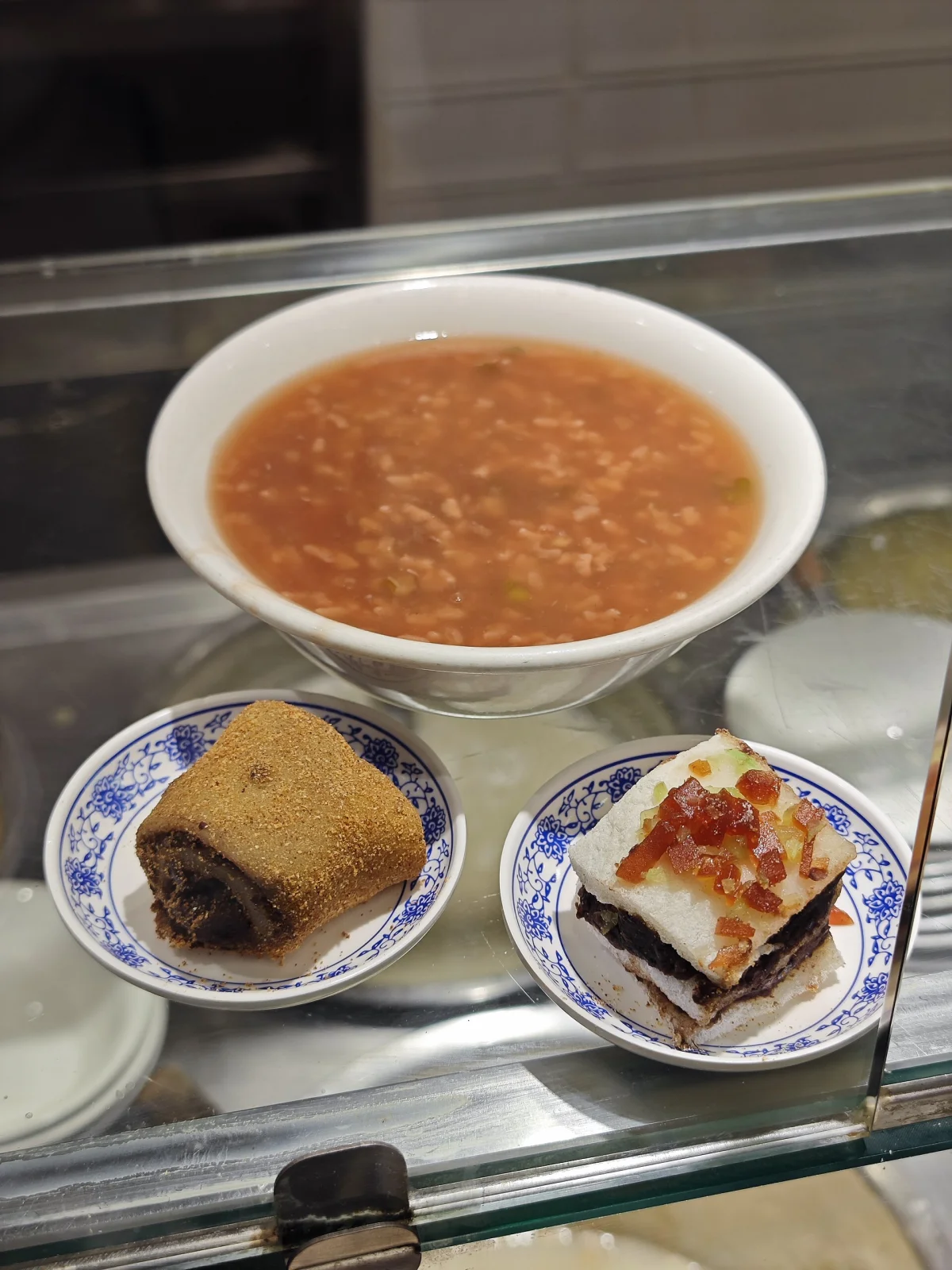
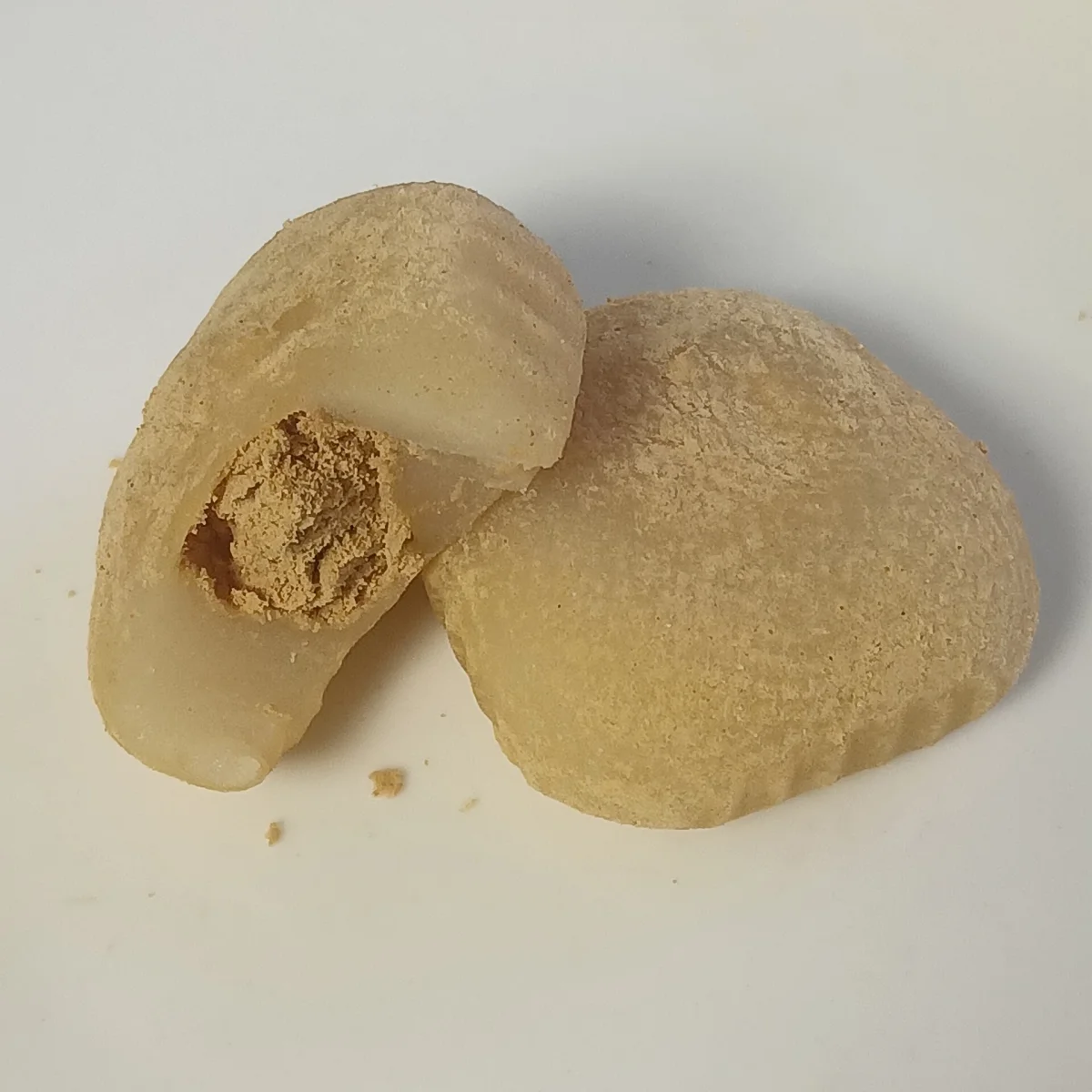
Aiwowo and Lvdagun are often placed side by side at Beijing snack counters, and both are soft, sweet, and rice-based. But they are not interchangeable. Aiwowo is usually a smooth white round with a filling hidden inside; Lvdagun is a cut roll whose unmistakable toasted soybean-flour coating announces itself before the first bite.
The quickest visual difference
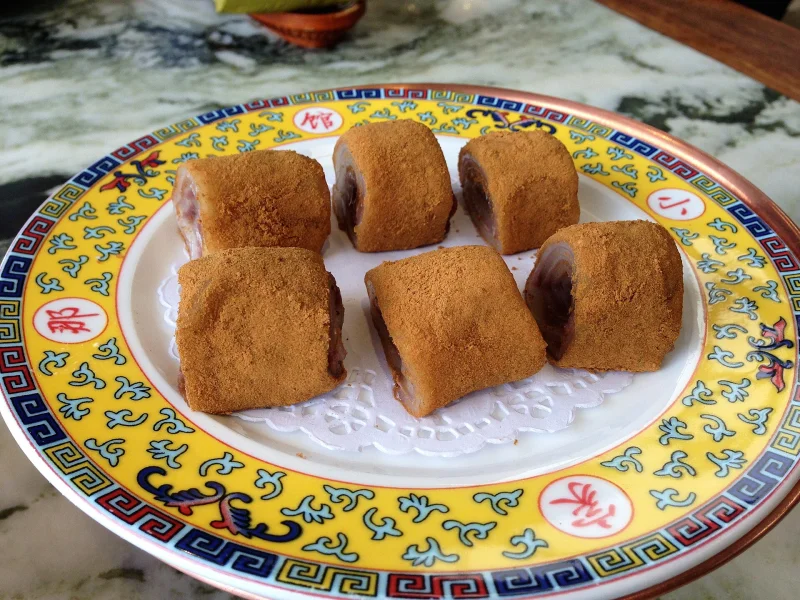
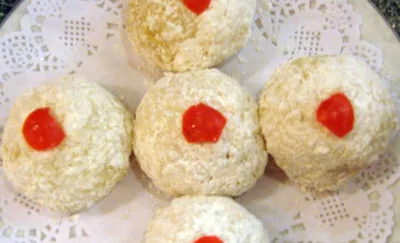
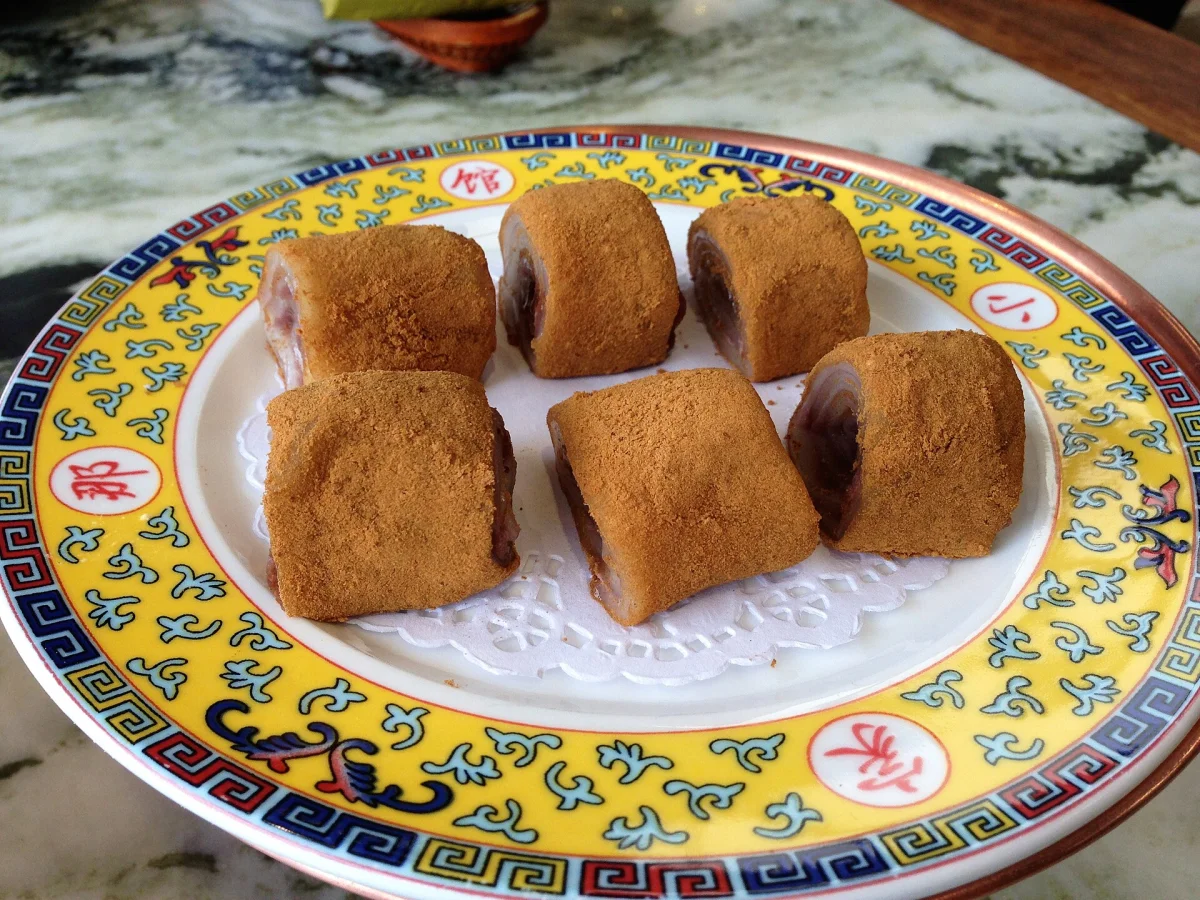
Look at the outside first. Aiwowo is normally pale, rounded, and smooth, sometimes with a small coloured garnish. Beijing Tourism describes it as a white, soft, sweet halal-style glutinous-rice snack with sesame in the traditional construction. Lvdagun is usually cut into short rolls or squares and dusted in yellow-beige soybean flour. The flour is not decorative: it is the source of its roasted-bean fragrance and the reason the snack has its famous name.
That makes the simplest first-time rule easy: choose Aiwowo when you want a cleaner rice texture and a hidden sweet centre; choose Lvdagun when you want a stronger toasted-soybean aroma and visible layers.
Rice base, coating, and filling
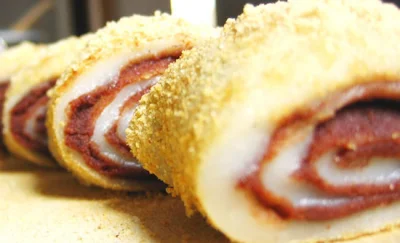
Both snacks use a soft, sticky grain-based dough, but traditional Lvdagun descriptions give more prominence to yellow millet dough, while many contemporary shop versions use glutinous rice. Beijing Tourism notes that the finished roll is coated in toasted soybean flour and commonly filled with red bean paste or, in some versions, brown sugar. The key feature is therefore the outer bean flour and the rolled construction, not one single modern dough formula.
Aiwowo is formed more like a small filled ball. Its filling can vary by shop, so the label matters. Sesame appears in the historic description, while other sweet fillings are common in modern counters. Neither snack should be judged by colour alone: the best clue is the combination of shape, outer coating, and the way the filling is enclosed.
Texture and sweetness
Aiwowo tends to feel cool, soft, and restrained. Lvdagun is also soft and sticky, but the dry soybean flour adds a slightly powdery surface and a nutty aroma. A red-bean or brown-sugar filling gives Lvdagun a deeper, more direct sweetness; Aiwowo often reads lighter at first, then reveals its filling.
For visitors who find rich desserts tiring, order one piece of each rather than a full box. The comparison works best when tasted back to back with plain tea. A crisp sweet such as tanghulu is a very different experience: its main contrast comes from a hard sugar shell, not from sticky rice or bean flour.
How to order at a Beijing snack counter
- Ask which filling is inside Aiwowo: the exterior does not reliably reveal the centre.
- Look for an even soybean-flour coat on Lvdagun: it should smell roasted and look dry rather than wet or clumped.
- Buy small quantities: both are best understood as fresh counter snacks, not as a large dessert course.
- Use the two together as a comparison: Aiwowo shows the smoother side of Beijing sweet rice snacks, while Lvdagun adds a bean-flour aroma and rolled layers.
Why both belong in Beijing food culture
These snacks make more sense in a city known for specialist counters than in a restaurant dessert menu. Beijing Tourism lists Lvdagun among the city’s traditional snacks, and its explanation of the name comes from the final roll through soybean flour. Together with Aiwowo, it shows how a simple grain dough can become two very different Beijing sweets through shape, coating, and filling.
References
Photo credits
Comments (0)