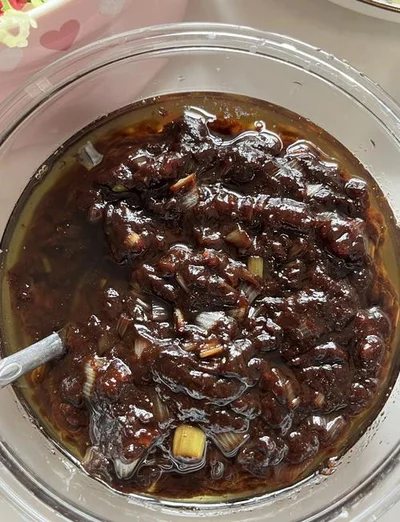
Beijing fermented soybean paste used for Zhajiang Noodles, showing its dark, rich, and aromatic texture after frying.
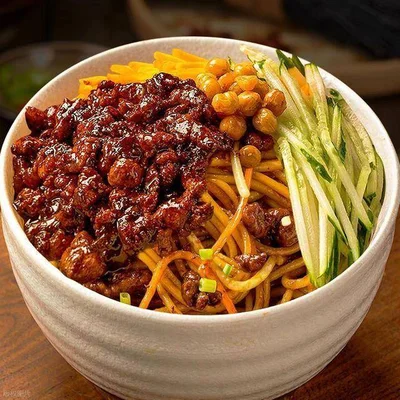
A bowl of Beijing Zhajiang Noodles topped with rich fried soybean paste, shredded cucumber, carrots, and crispy soybeans.
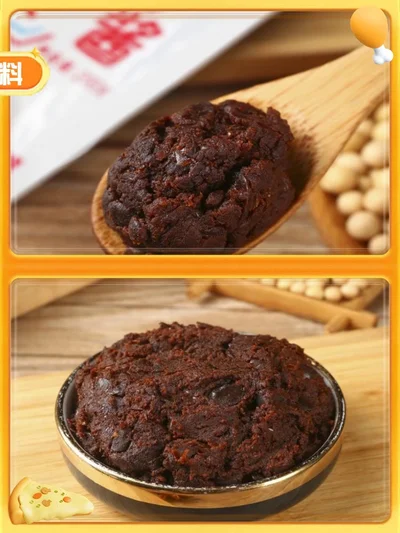
Traditional Beijing fermented soybean paste blocks, the key ingredient that gives Zhajiang Noodles their bold flavor.
Beijing’s fermented soybean paste, known locally as “huangjiang,” is the key ingredient that shapes the flavor of Zhajiang Noodles. Its taste is bold, salty, and deeply aromatic, a result of a traditional fermentation process that has been passed down for generations.
The paste is made from yellow soybeans mixed with flour, then aged in large earthen jars for months. Natural microbes break down the soybeans, producing complex umami flavors. This fermentation is what gives Beijing-style Zhajiang its darker color and stronger taste compared to sauces used in Tianjin or Northeast China.
When fried with pork, the paste becomes aromatic and oily, forming a rich sauce that coats every noodle. Beijing locals often say that “good Zhajiang comes from good paste,” emphasizing the importance of quality ingredients.
Even today, many traditional Beijing markets still sell freshly made soybean paste in buckets. Local families prefer these unprocessed pastes because they maintain a deeper, earthier flavor closer to old Beijing cooking traditions.
Understanding the soybean paste is essential to understanding Zhajiang Noodles — its flavor, its aroma, and its cultural significance.
Comments (0)