Homemade Zhajiang Noodles are less about strict restaurant plating and more about family balance. One household may use more yellow soybean paste, another may soften the sauce with sweet bean sauce, and another may set out a large tray of toppings so everyone can build a bowl. The common goal is the same: a savory fried paste, chewy noodles, and crisp vegetables.
Start With the Sauce
The sauce is the part that takes patience. Beijing home cooks commonly fry yellow soybean paste with diced pork or pork belly, sometimes adding sweet bean sauce for roundness. Scallion, ginger, garlic, or cooking wine may be used to build aroma. The paste needs slow heat and frequent stirring so it becomes glossy without burning.
Visit Beijing's official description of Old Beijing zhajiangmian emphasizes the importance of frying the sauce until the oil separates and the sauce becomes concentrated. That is the difference between a raw-tasting paste and a sauce that can season a whole bowl of noodles.
Use Pork for Aroma, Not Just Meat
Diced pork belly or pork with some fat gives the sauce body. Lean meat alone can taste dry. As the paste fries, the pork fat carries aroma and helps the sauce cling to noodles. The finished sauce should be rich, but not greasy.
Choose the Right Noodles
Hand-cut or sturdy wheat noodles are ideal. They should be springy enough to survive thorough mixing. If noodles are too soft, the bowl becomes muddy. If they are too thin, the sauce can overwhelm them. Drain well before adding sauce, especially if using hot noodles.
Prepare the Toppings Late
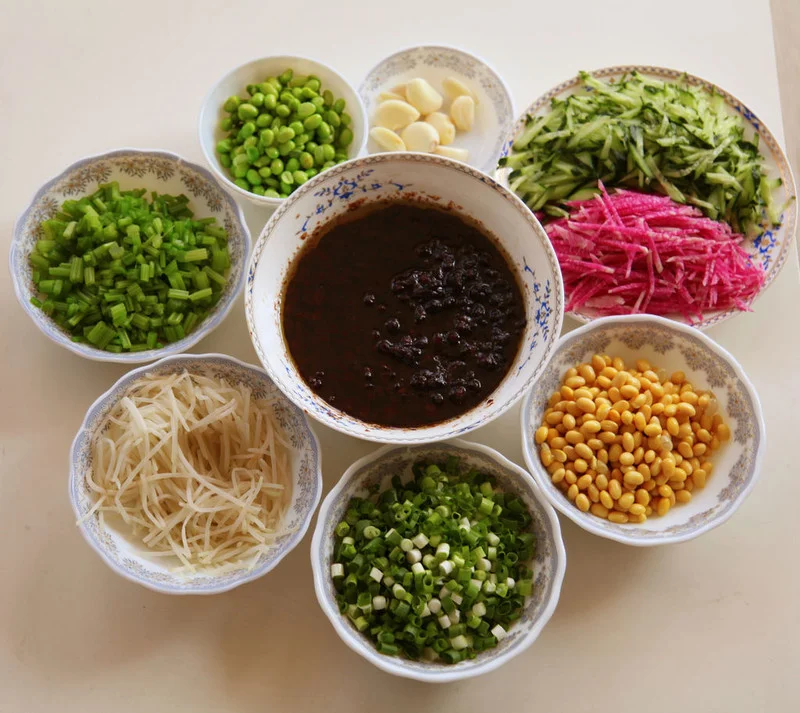
Common home toppings include cucumber, radish, bean sprouts, soybeans, cabbage, celery, garlic, and seasonal greens. Cut crisp toppings close to serving time. Blanch bean sprouts or cabbage briefly, then cool them so they do not become limp.
Serve Family-Style
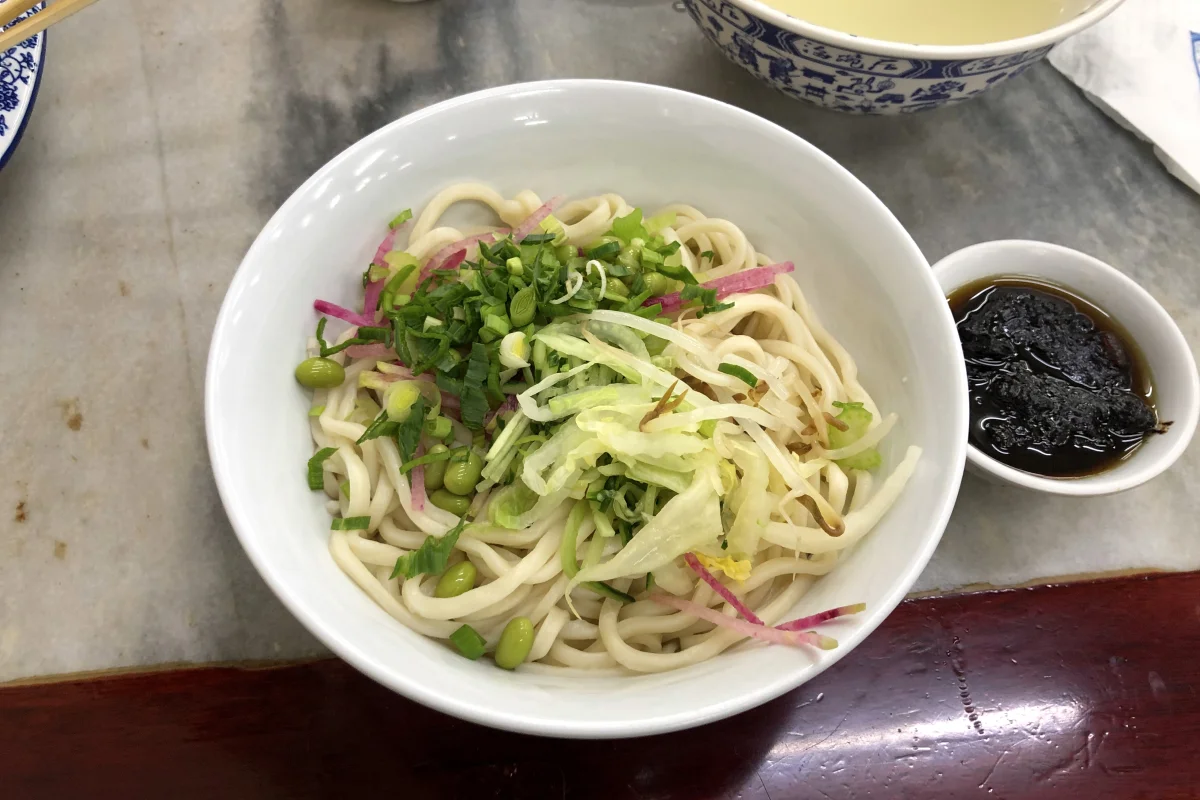
A very Beijing way to serve zhajiangmian is to put noodles, sauce, and toppings on the table separately. Each person mixes according to taste. Some want extra sauce; others want more cucumber or radish. This is why the dish works so well at home: it is structured but flexible.
Make-Ahead Advice
The sauce can be cooked ahead and reheated gently. It often tastes deeper after resting. Toppings should not be prepared too early because the fresh crunch is part of the dish. Noodles are best cooked close to serving time.
Common Mistakes
- Burning the paste instead of frying it slowly.
- Adding too much sauce before tasting.
- Skipping fresh toppings.
- Cooking noodles too soft.
- Making the dish sugary when it should be savory and fermented.
How to Adjust the Bowl
If the bowl tastes too salty, add more noodles and toppings rather than sugar. If it tastes flat, the sauce may need more frying time next round. If it tastes heavy, use more cucumber, radish, or bean sprouts. Homemade zhajiangmian is forgiving because the table can correct the bowl.
Related Guides
For the main dish overview, start with Zhajiang Noodles in Beijing. For ingredient details, read Beijing soybean paste and zhajiang sauce.
References and Further Reading
This guide is original editorial content. The links below were used for factual cross-checking, official dish context, ingredient notes, and dining terminology; they are not copied source text.
Photo credit:Noodles with diced meat soybean paste before stirring by N509FZ, via Wikimedia Commons (CC BY-SA 4.0).
Comments (0)