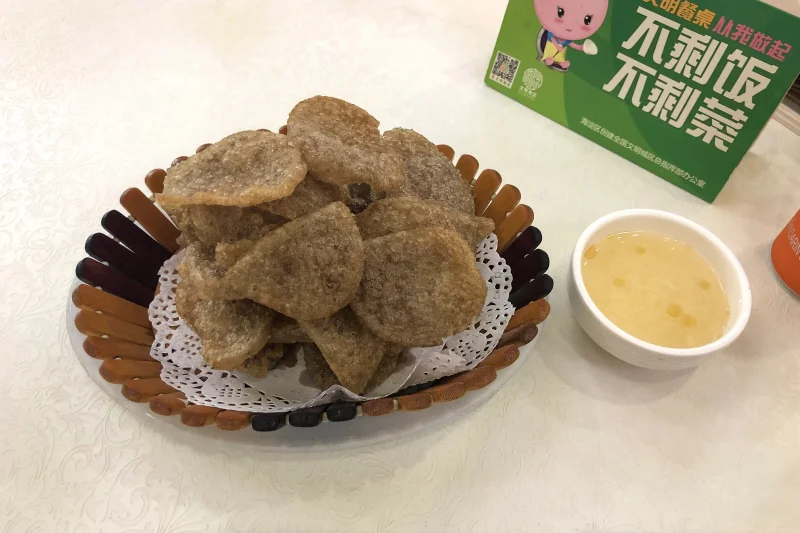
Fried guanchang is an old-Beijing snack built around contrast: thin slices should be hot and crisp at the edges, a little springy in the middle, and brightened by a salty garlic-water dip. The English word “sausage” can be misleading here. In the modern snack-shop version, the central experience is the starch texture and the pan-fried surface, not a meaty link like a Western sausage.
Dish Photos
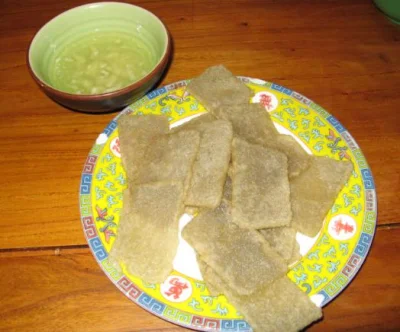
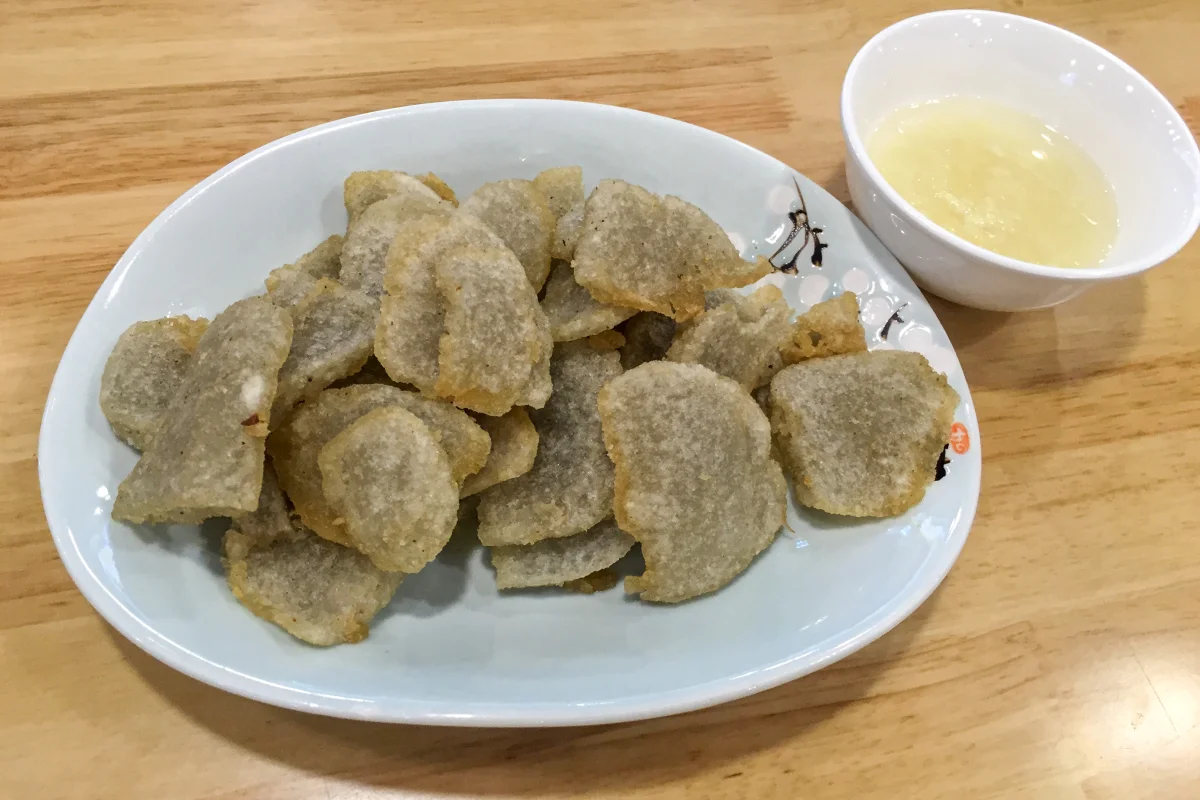
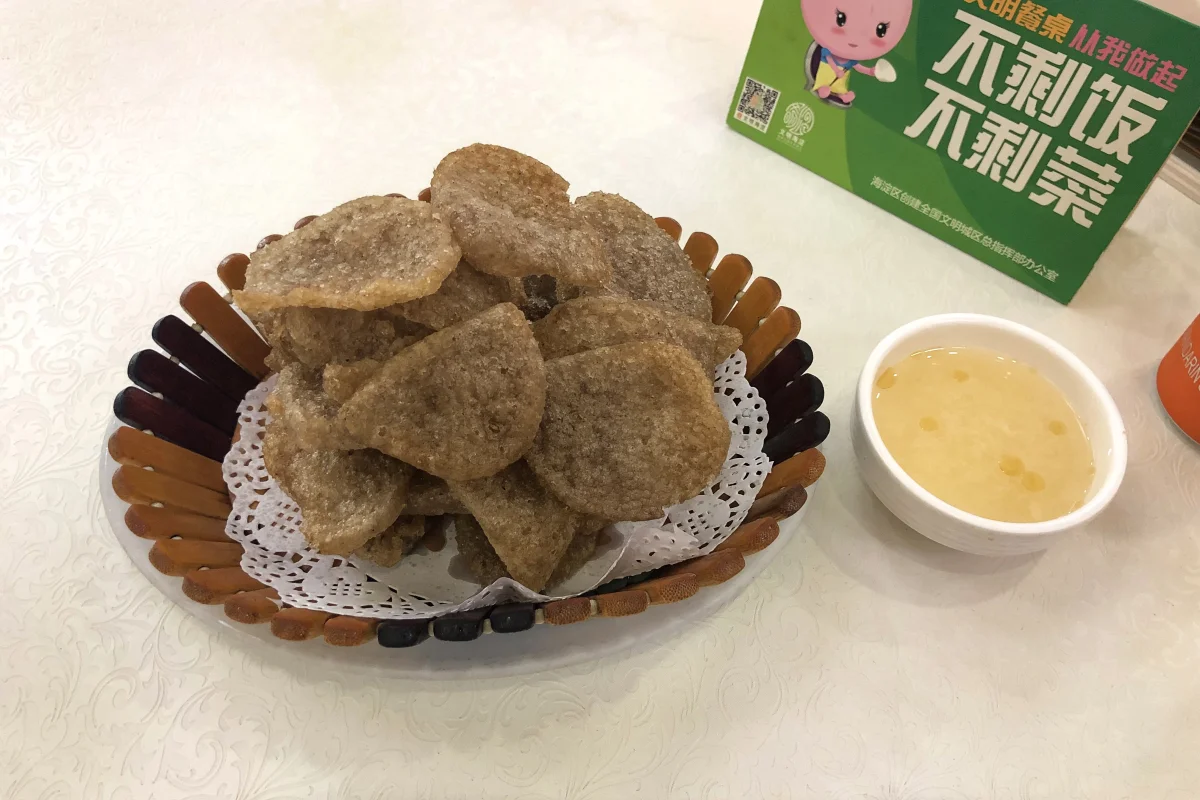
For a first order, do not expect a large main course. Guanchang is usually better treated as a shared hot plate or one element of a snack stop. It is most interesting in the first few minutes after frying, before the surface loses its brittle edge.
What is in fried guanchang?
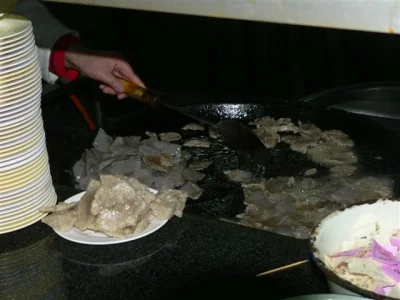
Beijing Tourism describes the current common form as a long starch sausage made with mung-bean starch and seasonings, while older versions and recipes have differed over time. That is why it is more accurate to judge the plate in front of you than to insist every shop uses one historical formula. The finished snack is cut into slices, cooked on a flat pan until both sides bubble and crisp, and served hot with garlic water.
The result should not be dry all the way through. A good piece has a browned, slightly blistered face and a softer center that still holds together. If the middle is cold or overly rubbery, it has either been held too long or has not reached the balance the dish needs.
Garlic water is the essential contrast
Garlic water is thinner and more direct than a thick dipping sauce. It brings salt, raw-garlic pungency, and moisture to a snack that otherwise leans toasted and starchy. Start with a small dip or drizzle. Soaking every piece at once can soften the fried surface before you have tasted its texture.
Different counters may make the garlic mixture milder or sharper, so there is no universal amount. The useful goal is simple: the garlic should wake up the slice, not erase the fried aroma. Ask for a little extra on the side if you want to adjust rather than committing the whole plate.
How to tell whether a plate is freshly fried
- Look for uneven browning: small bubbles and browned edges are more useful signals than a perfectly uniform colour.
- Listen for a slight crackle: the first bite should have some crispness before the center turns soft.
- Eat it hot: this is not a snack that improves after a long wait on the table.
- Use the dip gradually: it is there to balance the starch, not to turn the plate into soup.
How to order it in a Beijing snack stop
One plate is enough for a first tasting, particularly if you are also ordering a bowl, a bun, or another wheat snack. Fried guanchang works as a contrast to softer foods, but it is not interchangeable with every item in an old-Beijing snack shop. Chaogan is a thick, garlic-forward offal stew; luzhu huoshao is a deeper braised bowl with bread and tofu. Guanchang is the crisp, pan-fried plate in that group.
If you would like the sauce separately, suan shui ling fang means “garlic water on the side.” You can also simply point to the small bowl and ask for a little more after tasting. Those are preference cues, not rules: shops vary in how they serve and season the plate.
Sources and photo credits
Food context: Beijing Tourism: fried guanchang; Beijing Tourism: stories behind Beijing snacks.
Photos: 用心阁 and Studyzy, CC BY-SA 3.0; N509FZ, CC BY-SA 4.0; 用心阁, CC BY-SA 3.0; N509FZ, CC BY-SA 4.0.
Comments (0)