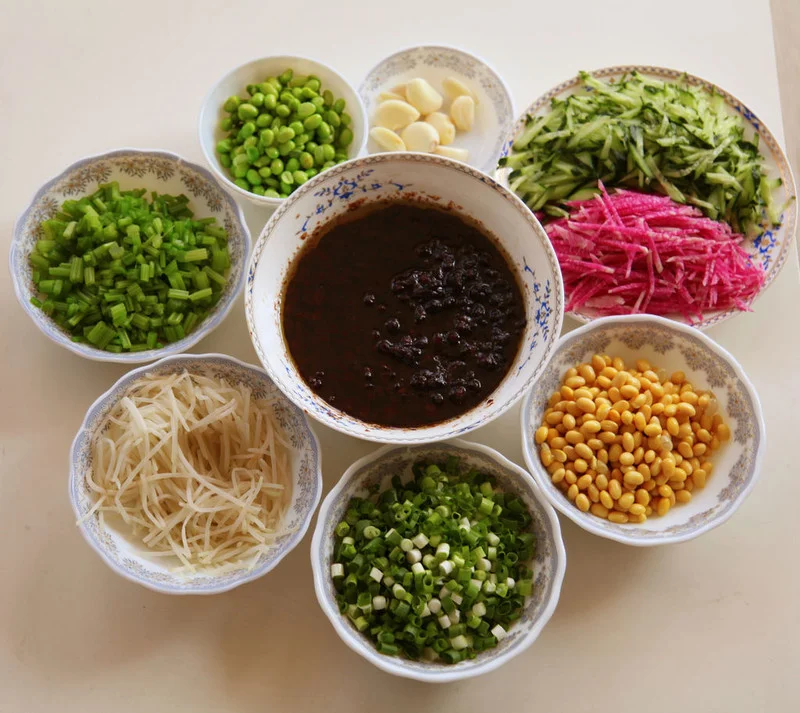
Ingredients for Beijing Zhajiang Noodles, including fried soybean paste, shredded cucumber, radish, bean sprouts, scallions, garlic, green beans, and yellow soybeans.
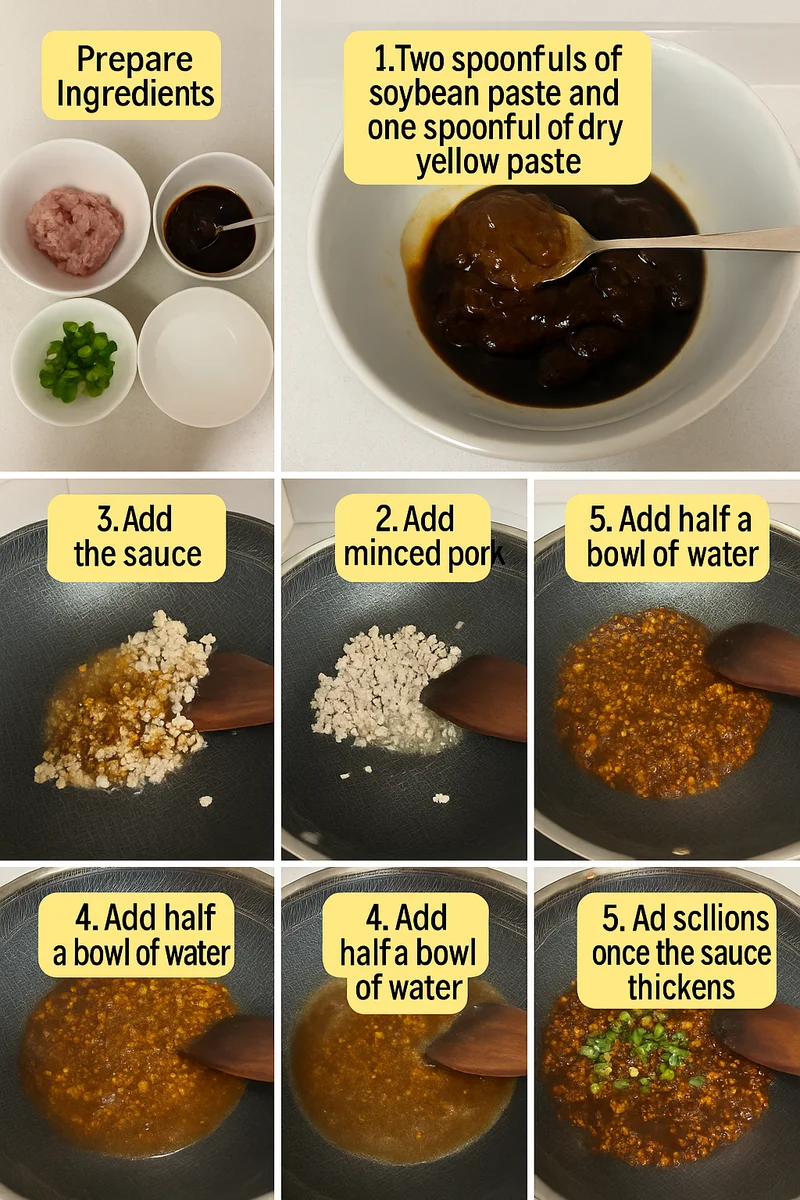
For many Beijingers, the most authentic version of Zhajiang Noodles is not found in restaurants but in their own home kitchens. Home-style Zhajiang Noodles reflect the personality of each household — the choice of soybean paste, the balance of pork and fat, the preferred noodle thickness, and of course, the variety of fresh toppings.
The sauce is always the foundation. Most families use fermented yellow soybean paste but add small adjustments: some mix in sweet bean paste for a milder flavor, while others add a spoon of sugar to round out the saltiness. Pork belly is commonly used, chopped rather than minced, allowing the fat to slowly melt during frying.
A traditional household technique is “two-step frying.” First, the pork is fried until slightly golden. Then, the soybean paste is added and cooked over low heat for at least 20–30 minutes, stirred frequently to prevent sticking. The goal is to achieve a glossy, fragrant, deeply savory sauce.
Noodles are often handmade on weekends or holidays. Dough is kneaded hard, rested, and rolled into thick sheets before being cut into firm strips. These homemade noodles provide a superior chew, matching the strength of the sauce.
Toppings are prepared right before eating to ensure freshness. Each family has its favorites — classic options include cucumbers, radish, scallions, bean sprouts, and green beans. Some households even add seasonal vegetables like lettuce or celery.
Home-style Zhajiang Noodles highlight the comforting simplicity of Beijing cooking — strong flavors, fresh produce, and the warmth of family traditions.
Comments (0)