Men ding rou bing makes more sense when you see it as part of a Beijing snack meal rather than as a stand-alone novelty. It is rich, hot, and built around beef or lamb, wheat dough, and a browned griddle crust. In the right setting, it is balanced by something plain, warm, or acidic: a light porridge, a simple soup, pickles, or vinegar on the table.
The dish is often described as a traditional Beijing halal snack. That does not mean every old Beijing food is halal, or that every halal snack shop makes men ding rou bing. It means the pie belongs to a real set of Beijing food traditions in which beef and lamb, wheat snacks, careful preparation, and modest counter-service meals meet.
What “halal snack culture” means here
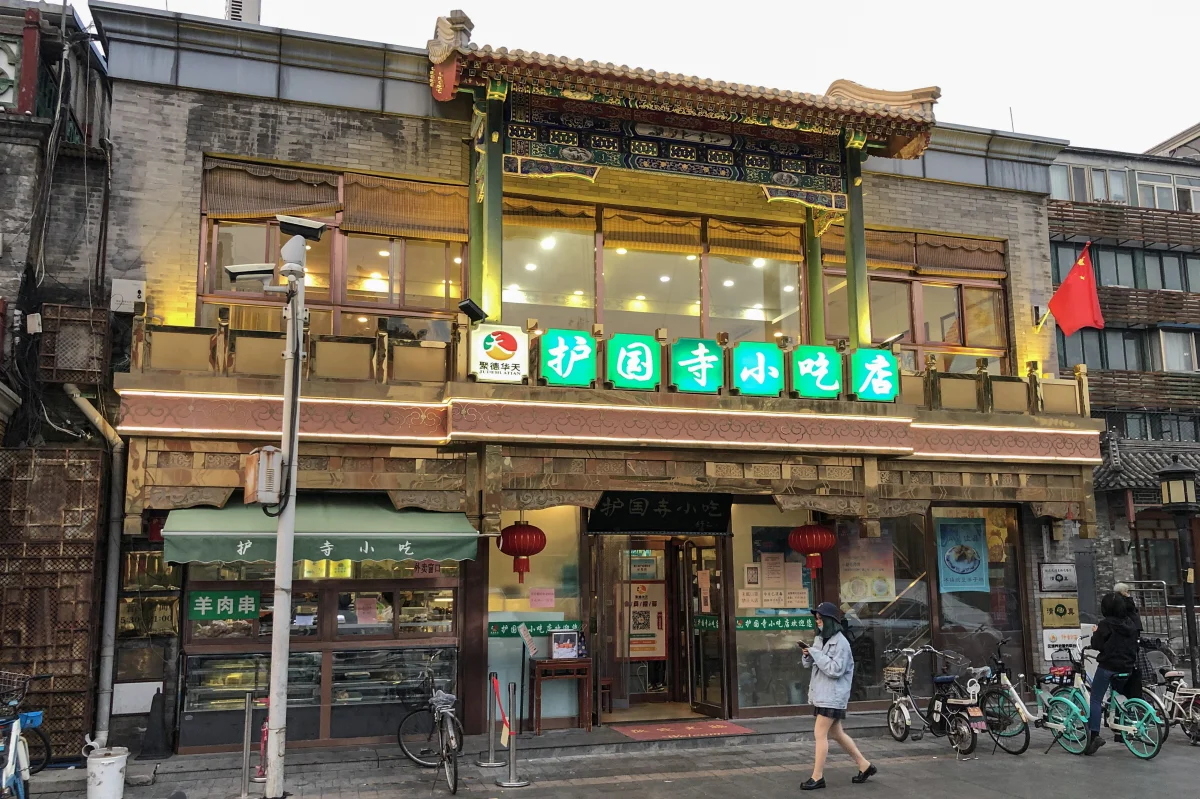
In Beijing, halal food traditions include everything from beef and lamb dishes to breads, pastries, breakfast foods, and small snack-shop meals. The city’s official English guide describes Huguosi Snacks as a time-honored brand with more than 100 varieties of halal snacks. That scale helps explain why it is not useful to reduce the tradition to one pie or one restaurant.
Men ding rou bing has a particular role inside that wider world. It is meat-forward and filling, with a compact shape that makes it easy to order as part of a table rather than as a full banquet dish. The pie’s classic association with beef and scallion also makes it a natural fit beside other Beijing Muslim food traditions.
Niujie is context, not a menu guarantee
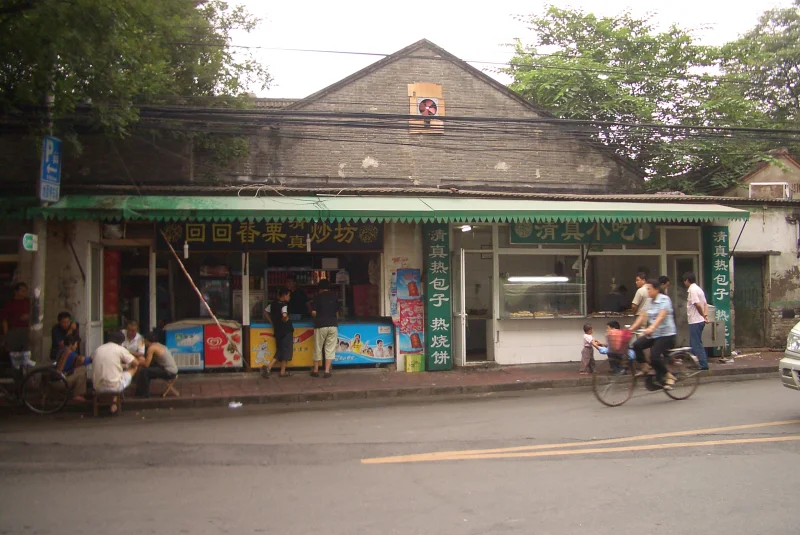
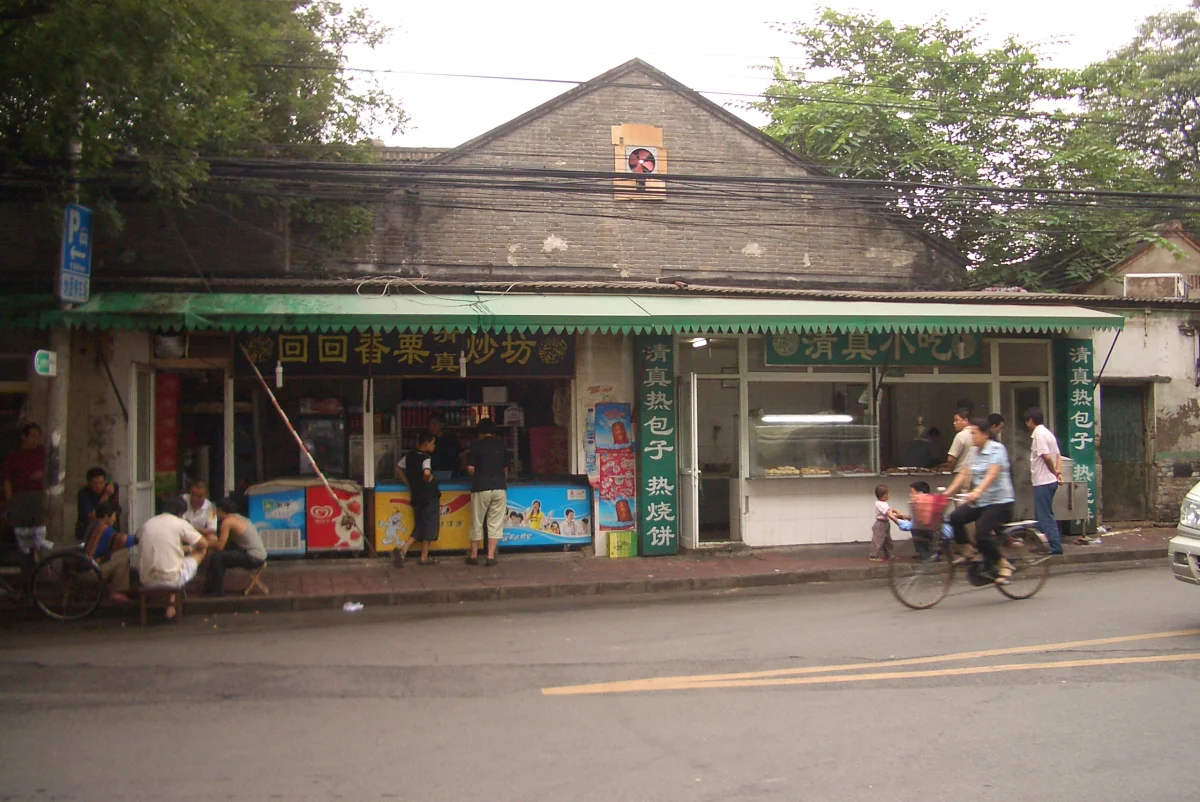
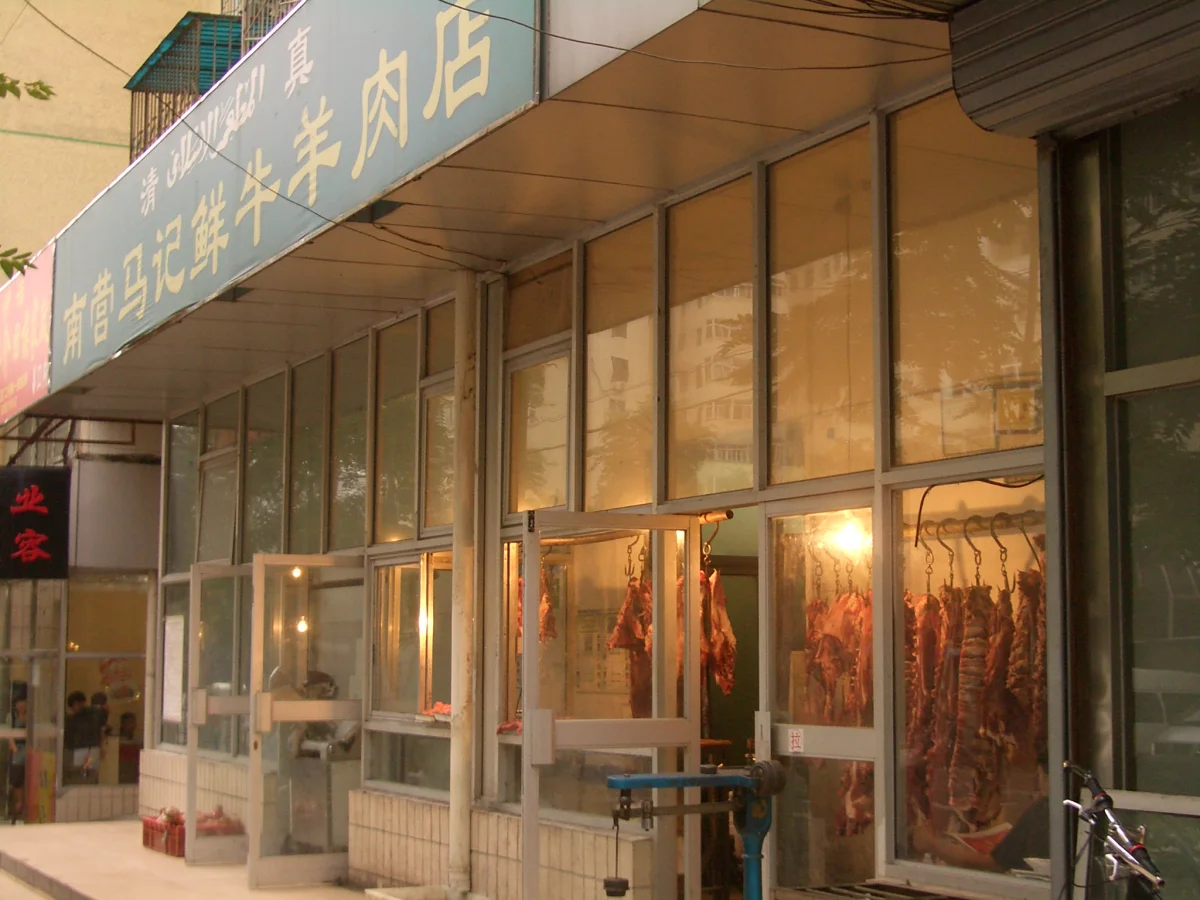
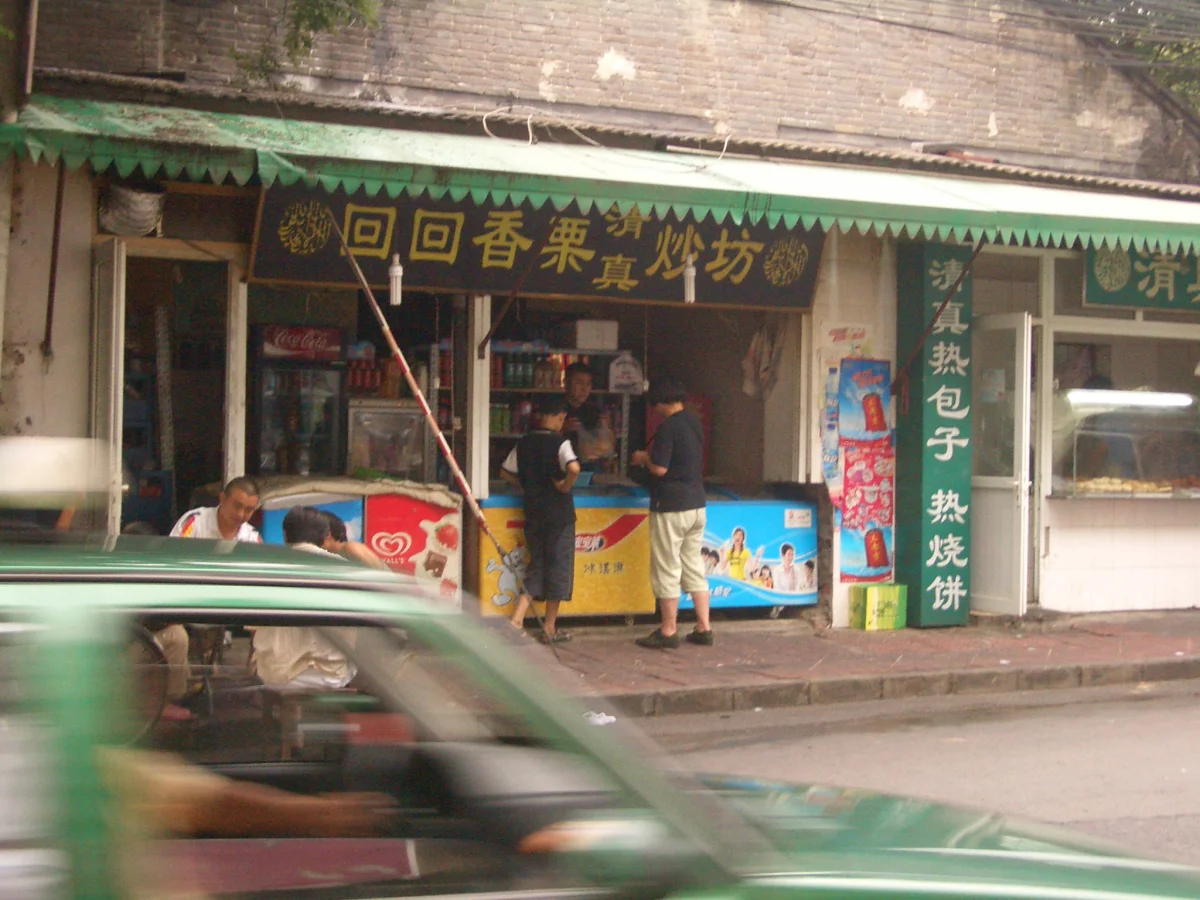
Niujie is one of Beijing’s best-known Muslim neighborhoods, with halal restaurants, butcher shops, markets, and long-running food businesses. It is a useful place to understand the wider food culture around beef, lamb, and wheat-based snacks. It should not be treated as a promise that every storefront serves the same dishes or that every shop offers men ding rou bing on a given day.
For a visitor, the value is orientation. A snack meal in this part of Beijing can be built around one substantial item, then softened with a drink, porridge, soup, or a less rich side. That is a more realistic way to eat than ordering several dense wheat-and-meat foods at once.
Huguosi shows the breadth of Beijing snacks
Huguosi is another useful reference point because the official city guide identifies it as a time-honored Beijing halal snack brand. Its significance is breadth: sweet snacks, savory bites, breakfast foods, and other small dishes can share one food culture without tasting alike.
Men ding rou bing is not a substitute for douzhir, jiaoquan, or a sweet pastry. It is the rich, griddled end of a much larger snack vocabulary. That contrast is why a meal that includes the pie often benefits from something mild and liquid rather than another heavy fried item.
Build a balanced snack-shop meal
Start with one fresh pie. Add vinegar rather than a thick sauce, then choose one balancing item. Beijing Tourism’s discussion of men ding rou bing specifically pairs the hot, juicy pie with porridge as a way to ease its richness. The exact porridge or soup will vary by shop, but the principle is reliable: warm, plain, and lightly seasoned is better than stacking more fat and flour.
If you are sharing, a useful order is one or two pies, one light side, and one simple bowl. Save other rich dishes such as baodu or luzhu huoshao for another stop unless the group is large. This leaves room to notice what makes the pie distinct.
Why vinegar belongs on the table
Vinegar is not decoration. A small dip cuts through the fat in the meat filling and brings the wheat crust back into focus. It also lets you pace the meal: one bite plain, one lightly dipped, then a sip of porridge or soup before the next bite.
Chili oil can be enjoyable, but it should not be the default first move. If the pie is well made, the beef or lamb, scallion, browned dough, and hot juices should be clear without rescue from a strong condiment.
Eat it fresh, but do not rush the first bite
A fresh pie is one of the most practical signs of a good snack-shop experience. The crust still has structure, the filling is hot, and the fat has not begun to firm. At the same time, the center can be hot enough to burn your mouth. Bite near the edge or let steam escape before committing to a larger bite.
That small pause is part of eating the dish well. The pie is meant to be hot, but it is not meant to be hurried. Once it cools too far, the contrast between crust and filling weakens.
What this pie adds to a Beijing food itinerary
Peking Duck is a shared restaurant occasion; jianbing is a fast breakfast ritual; zhajiang noodles is a bowl-and-toppings meal. Men ding rou bing offers something else: a compact, savory, freshly griddled snack that connects northern wheat cooking with Beijing’s Muslim food traditions.
Its value is not that it must become the only thing you eat in Niujie or Huguosi. Its value is that it gives you a concrete way to taste the city’s balance of dough, meat, heat, and simple accompaniments. Order it fresh, keep the rest of the table light, and let the pie be the focus.
References
Photo credits:Niujie halal restaurants by Vmenkov (CC BY-SA); Niujie halal butcher by Vmenkov (CC BY-SA); Huguosi Snacks Restaurant by N509FZ (CC BY-SA 4.0); Niujie halal snack shop by Vmenkov (CC BY-SA).
Comments (0)