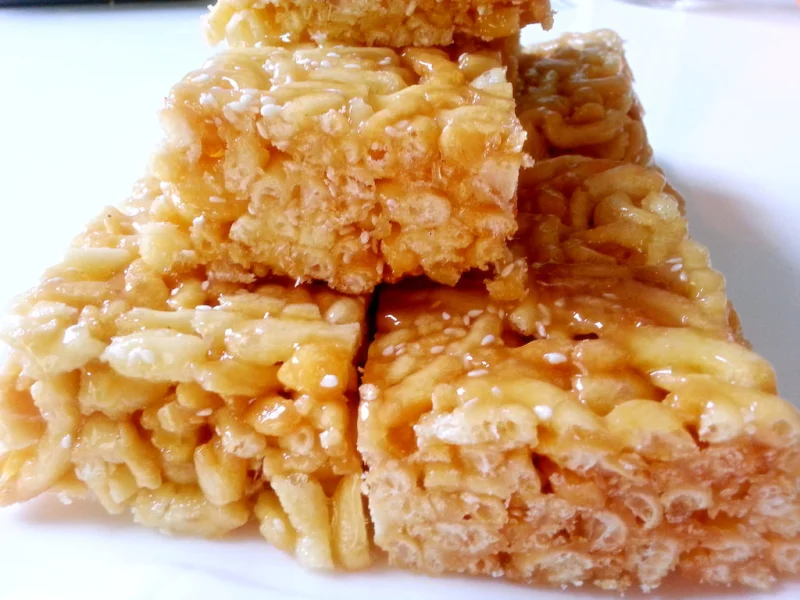
Saqima looks simple: fried strands pressed into a sweet square. Its ingredient list is less predictable than its shape. Wheat and egg are common to many Beijing-style versions, while milk, cream, honey, sesame, peanuts, tree nuts, seeds, raisins, and hawthorn can depend on the recipe. For travellers managing an allergy, vegetarian diet, or vegan diet, the useful habit is to check the specific piece or package rather than treating every item labelled saqima as the same product.
The short answer: what is usually in saqima?
A widely documented Beijing method starts with wheat flour and egg. The dough is cut into fine strips, fried, and bound with a cooked syrup before it is pressed and cut. Beijing Tourism describes older formulations involving white flour, rock sugar, and cream, while its account of a modern white saqima includes egg, flour, hawthorn cake, raisins, white sesame, and melon seeds. Another official Beijing recipe uses flour, egg, milk powder, yeast, starch, sugar, maltose, and raisins.
Those examples establish a family resemblance, not one universal formula. A plain-looking pale square may still contain egg or dairy. A dark or fruit-studded bar may use a different syrup, oil, decoration, or factory formulation. For the texture and freshness cues that distinguish the pastry itself, start with our main Beijing saqima guide.
Wheat and gluten: the strands are the first clue
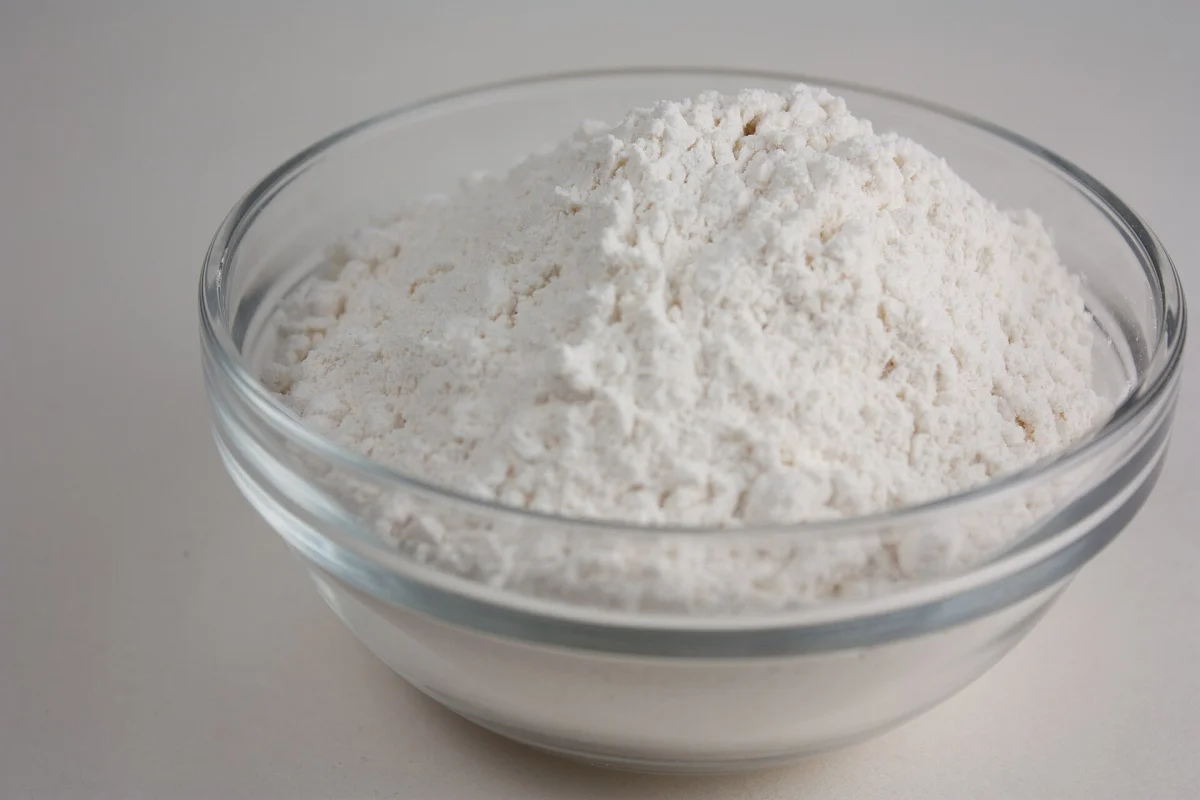
Traditional saqima is built from fried dough strands, and the documented Beijing versions use wheat flour. That means it should not be assumed gluten-free merely because the finished square resembles a puffed-rice bar. Rice may appear in comparisons, translations, or other sweets on the same counter, but the visible saqima strands are ordinarily wheat dough unless the manufacturer explicitly states otherwise.
On a packaged product, look for 小麦粉 (xiaomai fen, wheat flour) or 面粉 (mianfen, flour) in the ingredient list. A gluten-free claim must be checked on the exact package; the product name alone is not enough. At a loose pastry counter, ask:
这个沙琪玛是用小麦面粉做的吗?
Zhe ge shaqima shi yong xiaomai mianfen zuo de ma?
Is this saqima made with wheat flour?
Egg is common, even when it is not visible
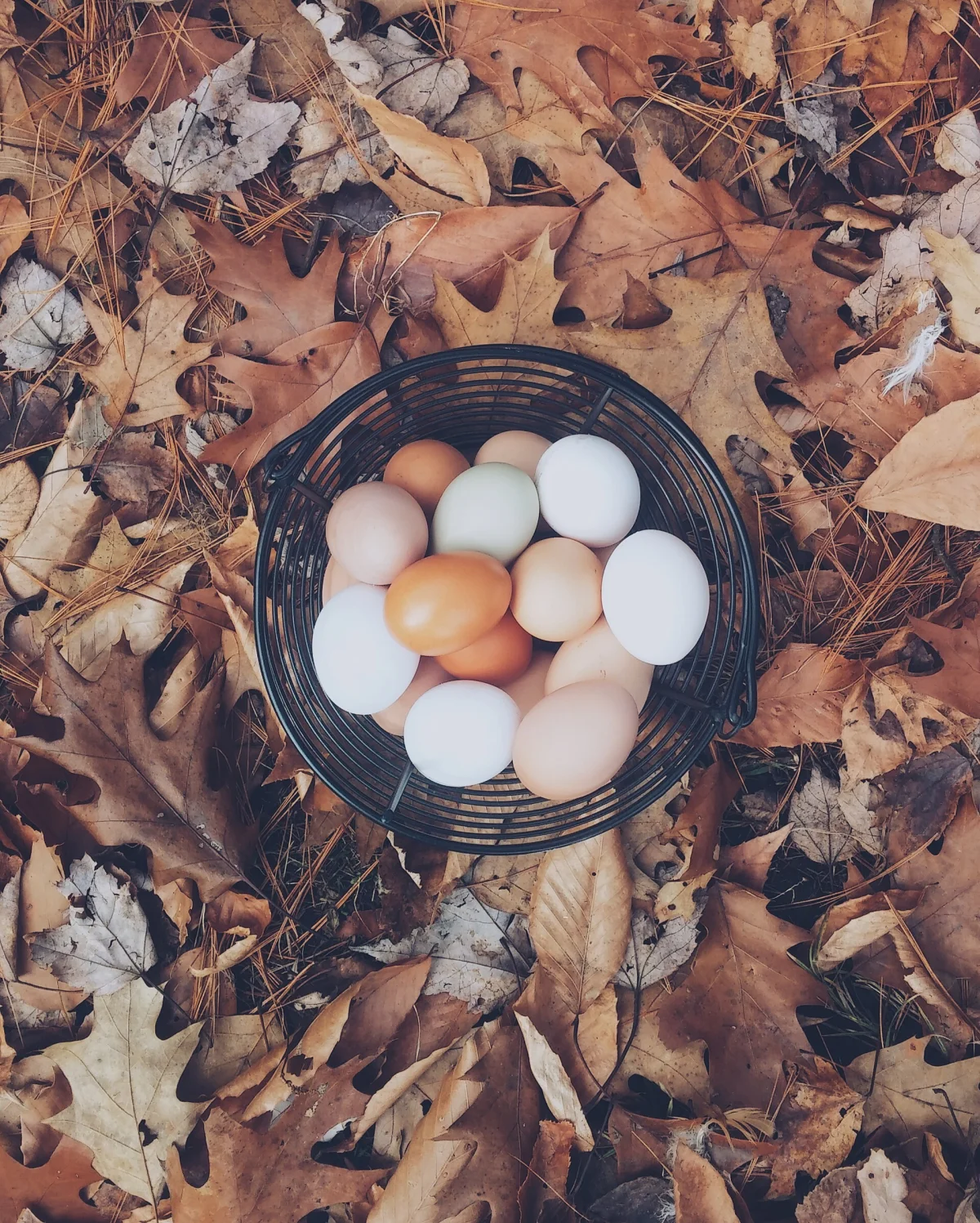
Egg helps create the dough structure and lightness associated with many saqima recipes. It disappears into the strands during mixing and frying, so neither colour nor surface decoration can confirm whether it is present. Official Beijing descriptions repeatedly pair egg with flour in the base dough.
For an egg allergy, do not rely on a staff member calling a piece “plain”. In a pastry-shop context, “plain” normally distinguishes it from fruit, nut, or flavoured versions; it does not necessarily mean egg-free. Ask 里面有鸡蛋吗? (Li mian you jidan ma?, “Does it contain egg?”) and check the packaged ingredient list for 鸡蛋, 蛋液, or other egg terms.
Milk, cream, and milk powder vary by recipe
Dairy is one of the ingredients that makes blanket answers unreliable. Historical descriptions mention cream, and a modern Beijing Tourism recipe includes milk powder. Other saqima can be made without an obvious dairy ingredient. Pale colour, a soft bite, or a honey aroma does not prove either case.
Useful label terms include 牛奶 (milk), 奶粉 (milk powder), 乳粉 (milk powder), 奶油 (cream or butter, depending on context), and 黄油 (butter). At a counter, ask 有牛奶、奶粉或奶油吗? (You niunai, naifen huo naiyou ma?, “Does it contain milk, milk powder, or cream?”). If dairy avoidance is medically important, request the package or manufacturer information rather than accepting a visual guess.
Sesame, peanuts, nuts, and seeds are toppings, ingredients, and cross-contact risks
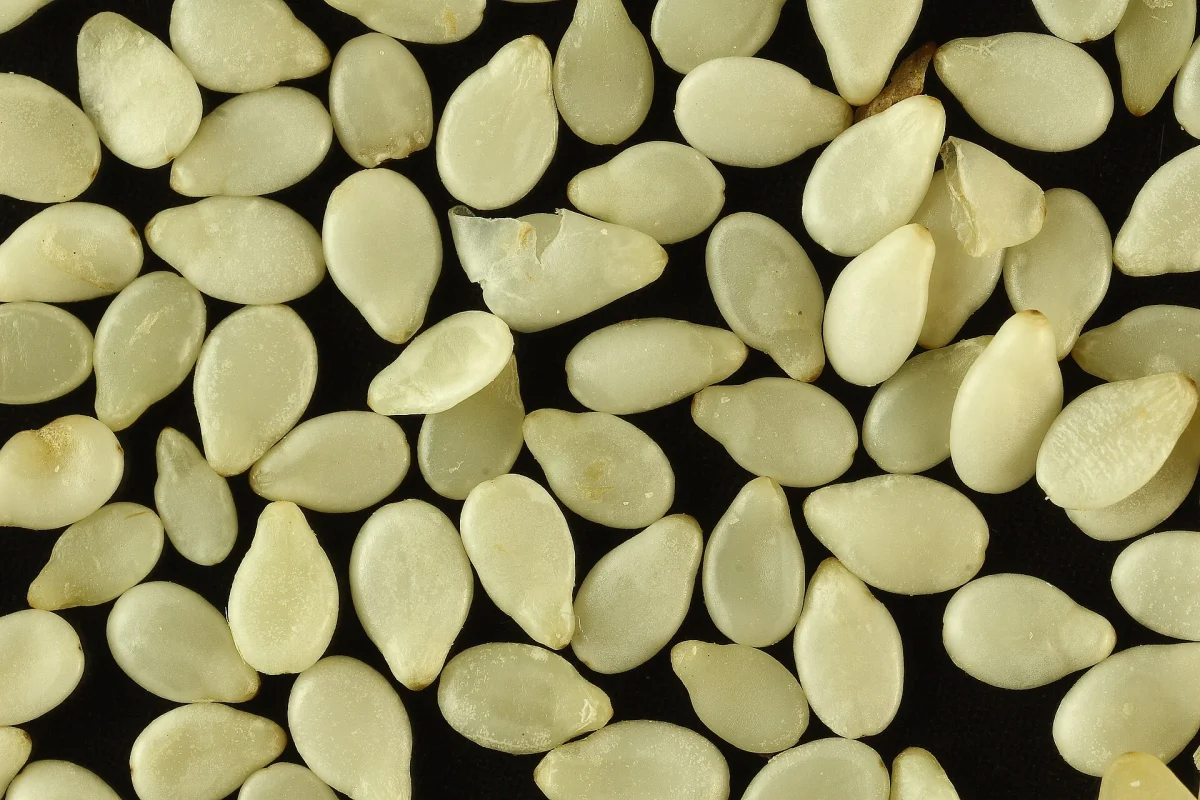
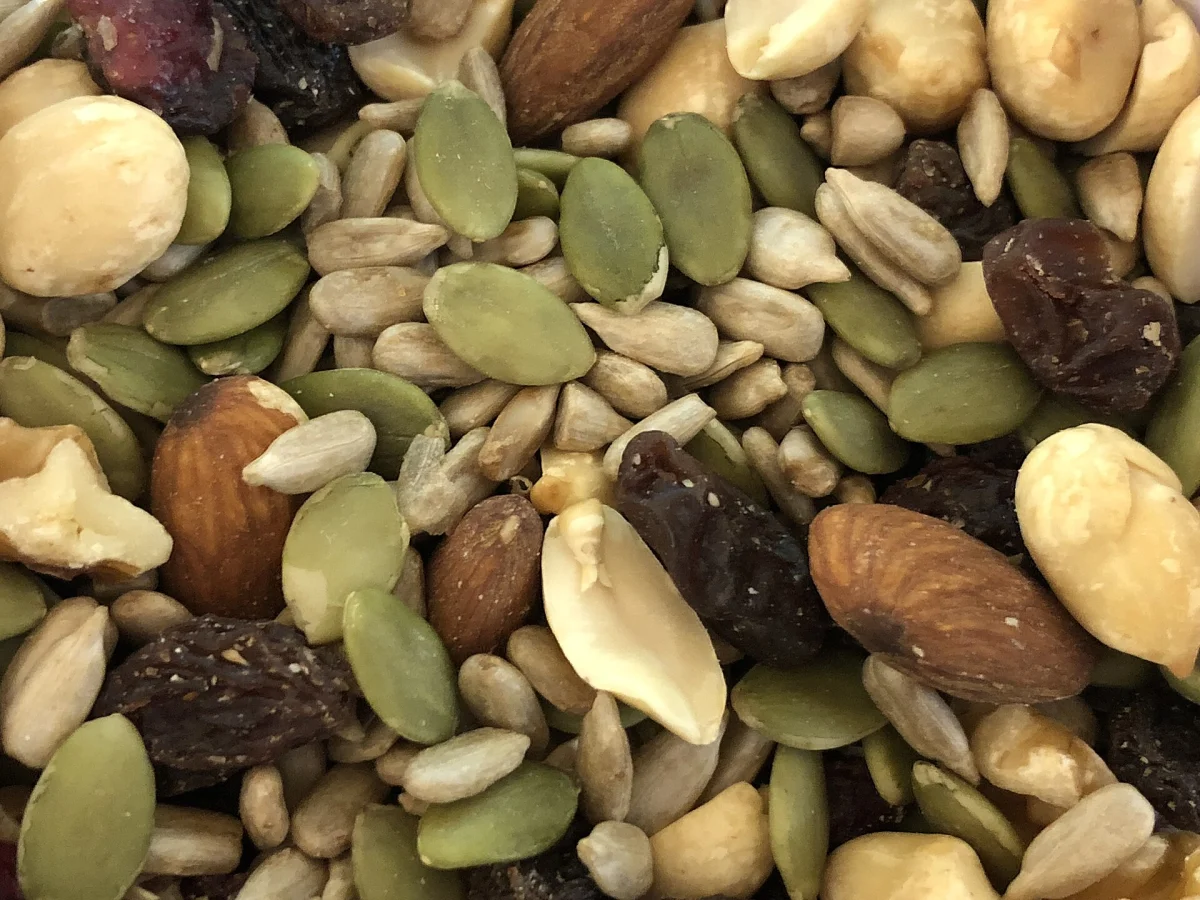
White sesame, melon seeds, raisins, hawthorn pieces, and assorted nuts can decorate Beijing-style white saqima or appear inside a mixed formulation. Their presence changes more than appearance. Loose crumbs can move between neighbouring pastries, and the same counter, tray, or production line may handle peanut- or nut-filled products.
Ask 有花生、芝麻或坚果吗? (You huasheng, zhima huo jianguo ma?, “Does it contain peanut, sesame, or nuts?”). For shared equipment, use 和含坚果的点心共用设备吗? (He han jianguo de dianxin gongyong shebei ma?, “Is it made on equipment shared with nut-containing pastries?”).
Do not infer safety from a missing topping. Sesame or nuts may be mixed into the syrup, placed on the underside, or present through shared production. Conversely, raisins or hawthorn on top do not automatically mean nuts are present. The exact label or a knowledgeable producer remains the best source.
Honey and animal-derived ingredients: vegetarian is not the same as vegan
Most saqima does not centre on meat, but the common use of egg already makes many versions unsuitable for vegans. Some recipes use honey; historical or shop-specific formulas may also use dairy. A vegetarian traveller who eats egg and dairy may find many products suitable, while a vegan traveller needs a much narrower confirmation.
Ask 用蜂蜜吗? (Yong fengmi ma?, “Is honey used?”) together with the egg and dairy questions. The term 素 can be interpreted differently in different settings, so asking about the individual ingredients is clearer than asking only whether the pastry is vegetarian.
How to read a packaged saqima label in China
Start with the product name, ingredient list, allergen statement, production date, shelf life, and storage instructions. Beijing's market regulator advises consumers buying flour and other packaged foods to check the label, ingredients, date, shelf life, storage conditions, production licence, and applicable standard. The same disciplined approach is useful for a packaged pastry.
China released the new national standard GB 7718-2025 in March 2025 with a two-year transition period. The National Health Commission's official guidance says that when used directly as ingredients, eight allergen classes are to be clearly identified: gluten-containing cereals, crustaceans, fish, egg, peanut, soy, milk including lactose, and tree nuts. Sesame is outside those eight and may be declared voluntarily. The guidance also encourages precautionary wording when shared facilities or lines may introduce allergens.
Because products can remain in transition, do not assume every package currently uses the same layout or emphasis. Read the full ingredient list even when a separate allergen box is present. Common caution phrases include 可能含有 (“may contain”) and 本生产线还加工含有……的产品 (“this production line also processes products containing…”).
Loose counter pieces need a different decision process
- Identify the exact piece. Point to it rather than asking about saqima in general.
- Ask about wheat, egg, and dairy first. These can be part of the base and are not reliably visible.
- Ask separately about sesame, peanut, and nuts. Include shared trays and equipment if cross-contact matters.
- Request packaged information when available. A sealed version from the same producer may provide a clearer ingredient list than a handwritten counter card.
- Choose another food if the answer is uncertain. Staff uncertainty is not confirmation that an ingredient is absent.
Visitors interested in how loose pieces, mixed pastry plates, and gift boxes differ can continue with our guide to saqima in Beijing pastry shops. The setting changes how much label information is available, even when the pastry looks familiar.
A practical first purchase
If you do not have an allergy or dietary restriction, begin with a small plain piece so that you can understand the fried-strand structure before trying decorated versions. If you do need ingredient certainty, a clearly labelled individual package is usually easier to evaluate than a loose mixed tray. Photograph the ingredient panel if you need time to translate it, and keep the package until you have finished the product.
This guide helps with food vocabulary and label reading; it cannot certify a product as safe for a specific person. For a serious allergy, use manufacturer information and professional medical advice, and avoid a product when its ingredients or cross-contact controls cannot be confirmed.
Frequently asked questions
Is saqima gluten-free?
Usually not. Documented Beijing-style saqima uses wheat flour for the fried strands. Only rely on a gluten-free claim made for the exact product, together with suitable manufacturing information.
Does every saqima contain egg?
Egg is common in traditional and modern Beijing descriptions, but recipes vary. Check the package or ask about the exact counter item instead of assuming that all products are identical.
Is sesame always used?
No. White sesame appears in some Beijing versions and may be a topping, an underside coating, or absent. It should be checked separately, especially because the 2025 national guidance lists sesame as a voluntarily declared allergen rather than one of the eight specified classes.
Can vegans eat saqima?
Many standard versions are not vegan because they contain egg, and some also use milk, cream, or honey. A product should only be treated as vegan after checking those ingredients and the producer's cross-contact information.
Sources
Photo credits
- Sesame sachima product photo, Asienmarkt Online
- All-purpose flour, Veganbaking.net, CC BY-SA 2.0
- Fresh eggs, Autumn Mott, CC0
- White sesame seeds, Sanjay Ach, CC BY-SA 3.0
- Mixed nuts, seeds, and raisins, Famartin, CC BY-SA 4.0
Comments (0)