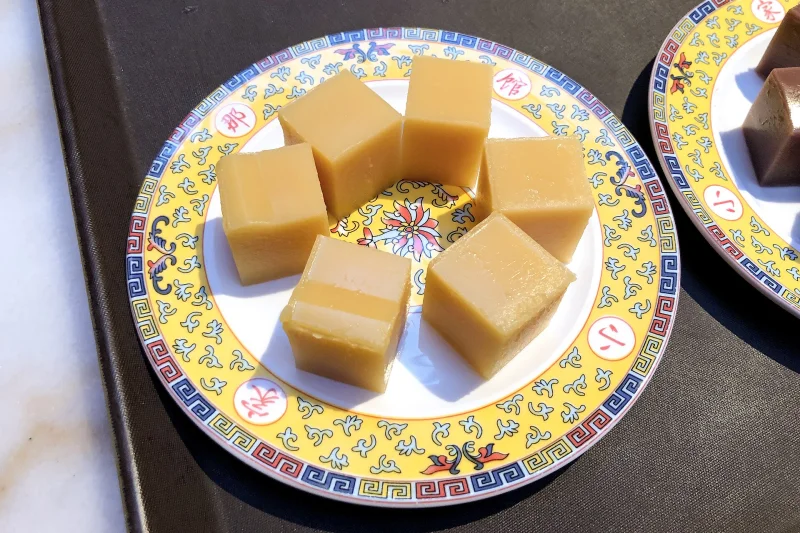
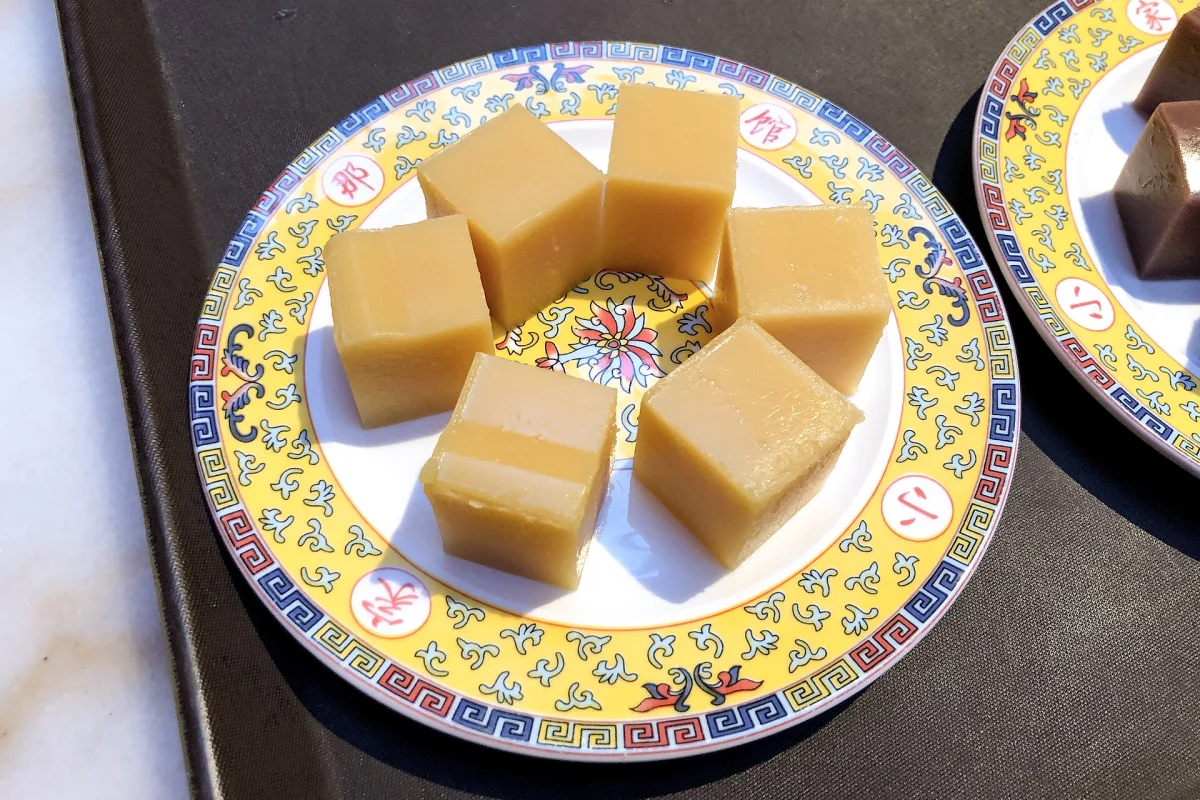
Wandouhuang (豌豆黄), often called Beijing pea cake or pea pudding in English, is a chilled sweet made from cooked peas, sugar, and time. It is not a baked cake and it should not be chewy like a rice snack. A good piece is pale yellow, cool, smooth, and soft enough to yield immediately, with a clean pea flavour that stays lighter than its colour suggests.
Dish Photos
What Wandouhuang is
Beijing Tourism describes Wandouhuang as a traditional Beijing snack and a springtime food: peas are milled, peeled, washed, cooked until tender, sweetened, allowed to set, and cut into pieces. That sequence explains the texture. The dessert is closer to a delicate chilled set puree than to bread, pastry, or jelly made with gelatine.
The name literally points to peas, but the finished sweet should taste refined rather than vegetal. Sugar rounds the flavour; cooling gives it its characteristic firm-but-creamy bite. For that reason, it is best treated as a small cold dessert or a calm finish after stronger savoury snacks.
Fine and rustic Beijing styles
Beijing food writing commonly distinguishes a finer court-associated style from a more rustic, seasonal style. The fine version is typically made with carefully prepared white peas and aims for a uniform, almost translucent pale yellow. Its pleasure is precision: a clean surface, very smooth texture, and a restrained sweetness.
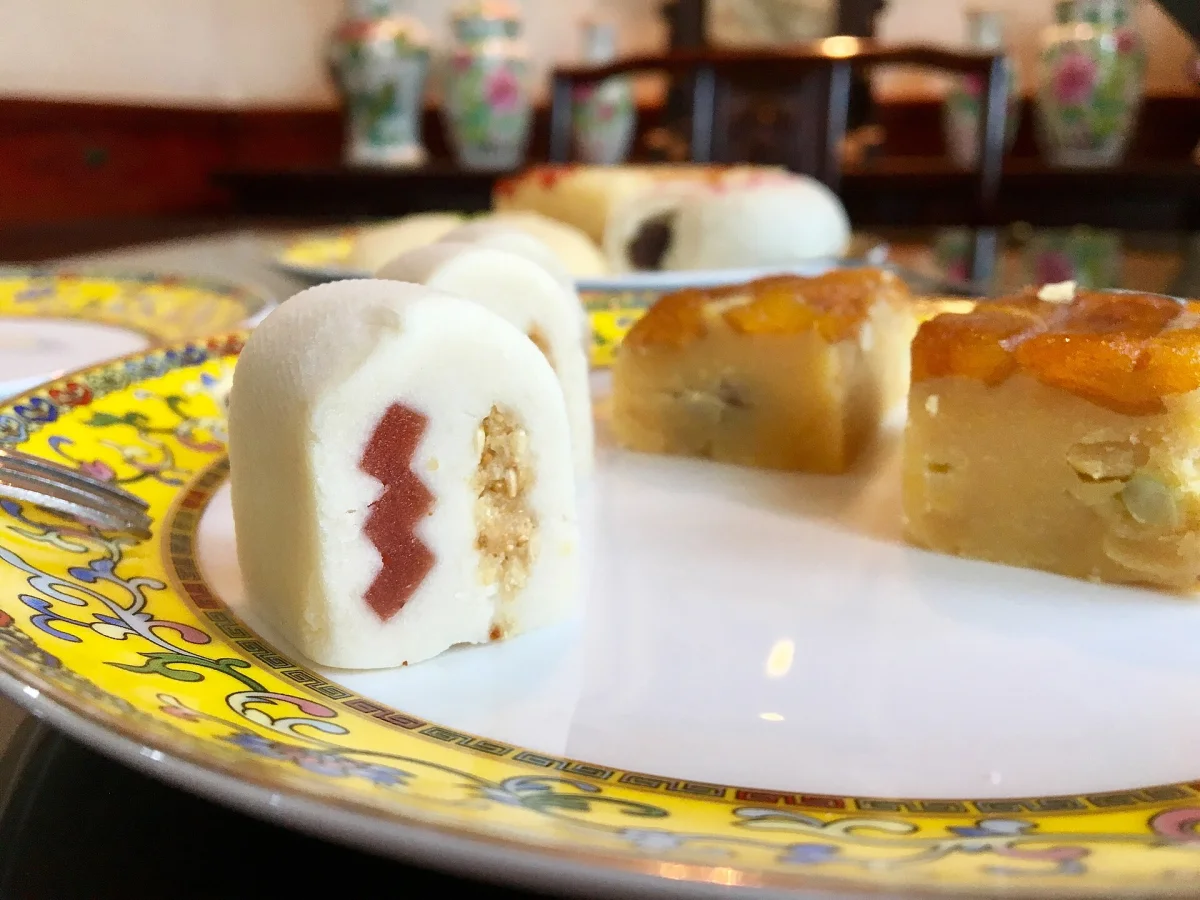
The rustic version is often called cu Wandouhuang. It can include red jujube, so the cut surface may show red-and-yellow contrast and feel a little less uniform. That is not a flaw. It is a different style with a more direct pea-and-fruit character. When a counter offers both, choose the plain pale version to focus on silkiness, or the jujube version when you want a more recognisable seasonal accent.
How to recognise a good piece
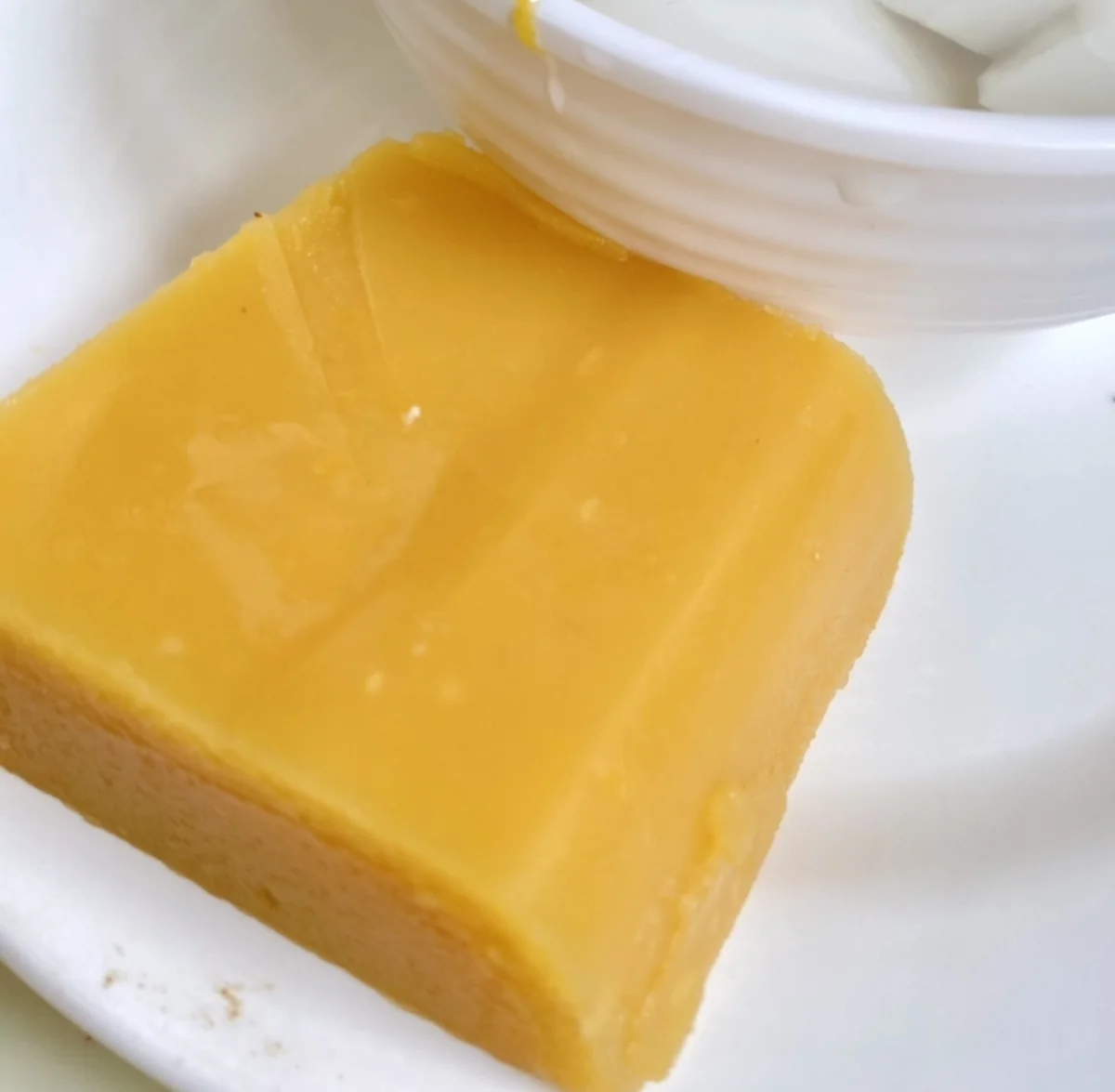
- Look for a clean, calm surface. It should be pale yellow and evenly set, without a watery rim or a dried, cracked skin.
- Check the cut. A neat slice holds its edges but does not look rubbery. Very sharp, glossy edges can suggest too firm a set; collapsing edges suggest it has warmed too long.
- Expect a cool, smooth bite. Good Wandouhuang softens on the tongue. Grittiness, a grainy centre, or a thick pasty mouthfeel means the pea puree has not achieved the texture this snack is known for.
- Keep sweetness in proportion. It is a dessert, but sugar should support the pea flavour. If the first impression is only syrupy sweetness, the snack loses the restrained character that makes it useful in a mixed Beijing snack order.
When and how to eat it
Historically, Wandouhuang is especially associated with spring. Beijing Tourism notes its connection with the third day of the third lunar month and the spring snack season, although counters now often sell it year-round. Serve it chilled or cool, not warmed. One or two small pieces are enough for a first tasting, particularly when you are also trying savoury breakfast dishes.
It pairs well with plain tea. Avoid ordering it immediately after a very sweet pastry if you want to notice its texture; it reads more clearly after salty foods or as the last quiet bite of a snack plate.
Do not confuse it with other Beijing sweets
Wandouhuang is neither sticky rice nor a filled roll. Aiwowo is soft and glutinous with a hidden filling, while Lvdagun is rolled and coated with roasted soybean flour. Wandouhuang has no coating and no required centre: its identity is the smooth, chilled pea set itself.
That difference is useful at a counter where several pale or yellow sweets sit together. Ask for Wandouhuang (豌豆黄), start with the plain version, and use the jujube-decorated style as a second comparison rather than assuming they will taste the same.
Why it belongs in a Beijing food guide
Wandouhuang shows another side of Beijing snack culture: understated rather than fried, cool rather than steaming, and built around texture rather than a heavy filling. Its fine and rustic forms make it a practical first lesson in how one local sweet can preserve more than one style without losing its identity.
Sources
- Beijing Tourism: Wandouhuang in the traditional Beijing snack selection
- Beijing Tourism: traditional Beijing snack classics
- Beijing Tourism: springtime Beijing snack traditions
Comments (0)