Wandouhuang and yundoujuan are often placed on the same Beijing snack table, but they do not do the same job. Wandouhuang is the quiet yellow square: chilled, smooth, lightly sweet, and built around peas. Yundoujuan is pale and rolled: soft white kidney-bean paste wrapped around a sweet center. Both are associated with Beijing's long tradition of refined cold snacks, yet their colors, structure, and eating rhythm are very different.
This is not another guide to the fine-versus-rustic versions of pea cake. For that background, start with our Beijing wandouhuang guide. Here, the useful question is how to recognize wandouhuang beside yundoujuan, why the two make sense together, and how to order them without treating either one as a generic dessert.
The quick distinction
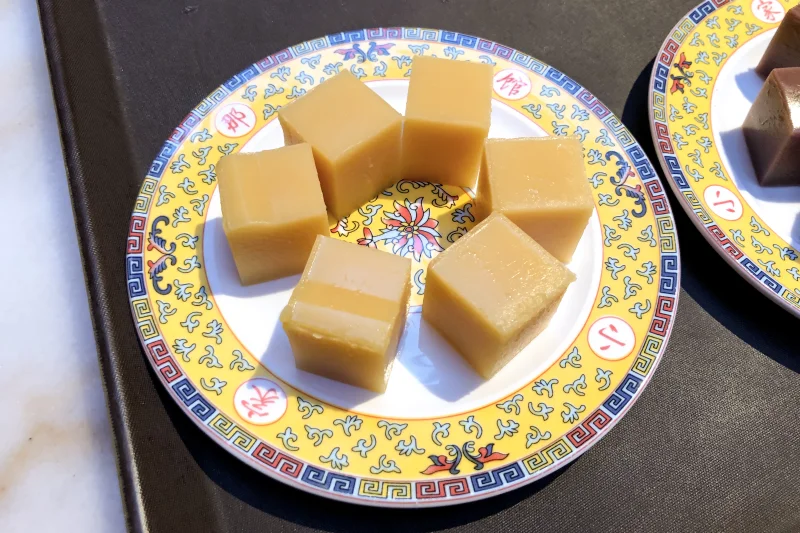
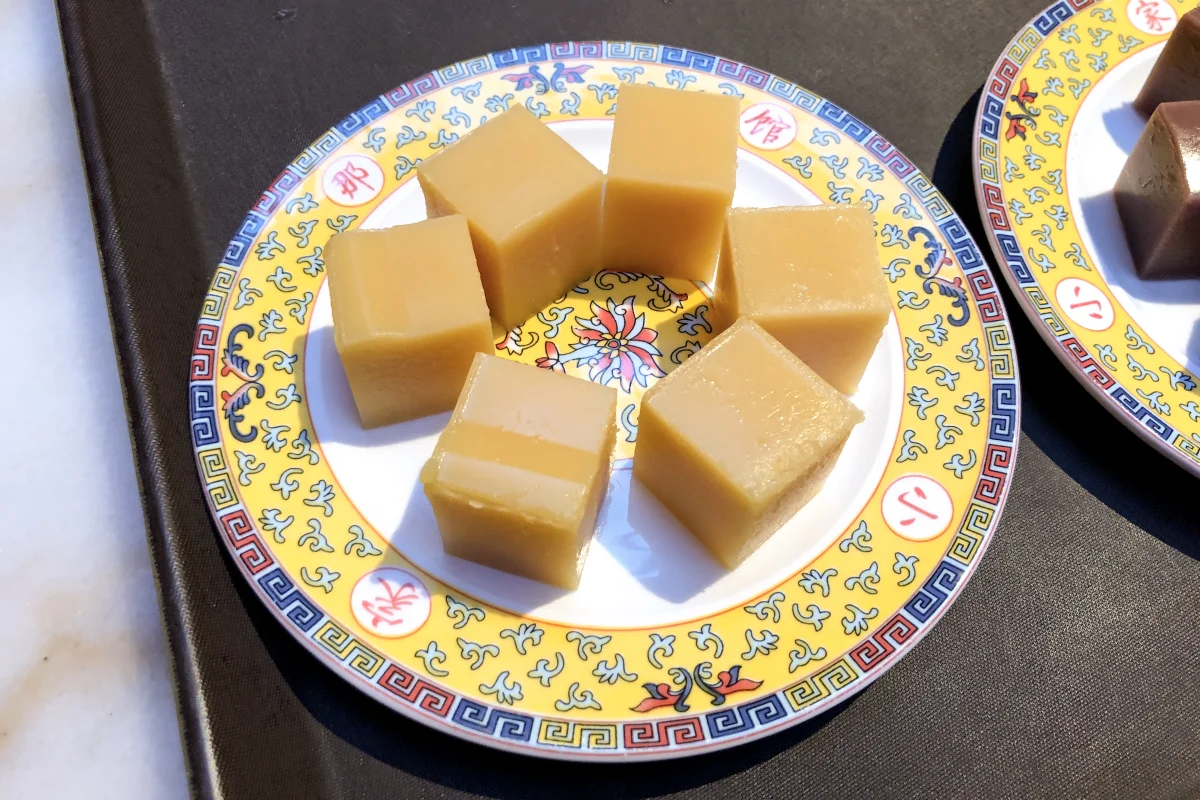
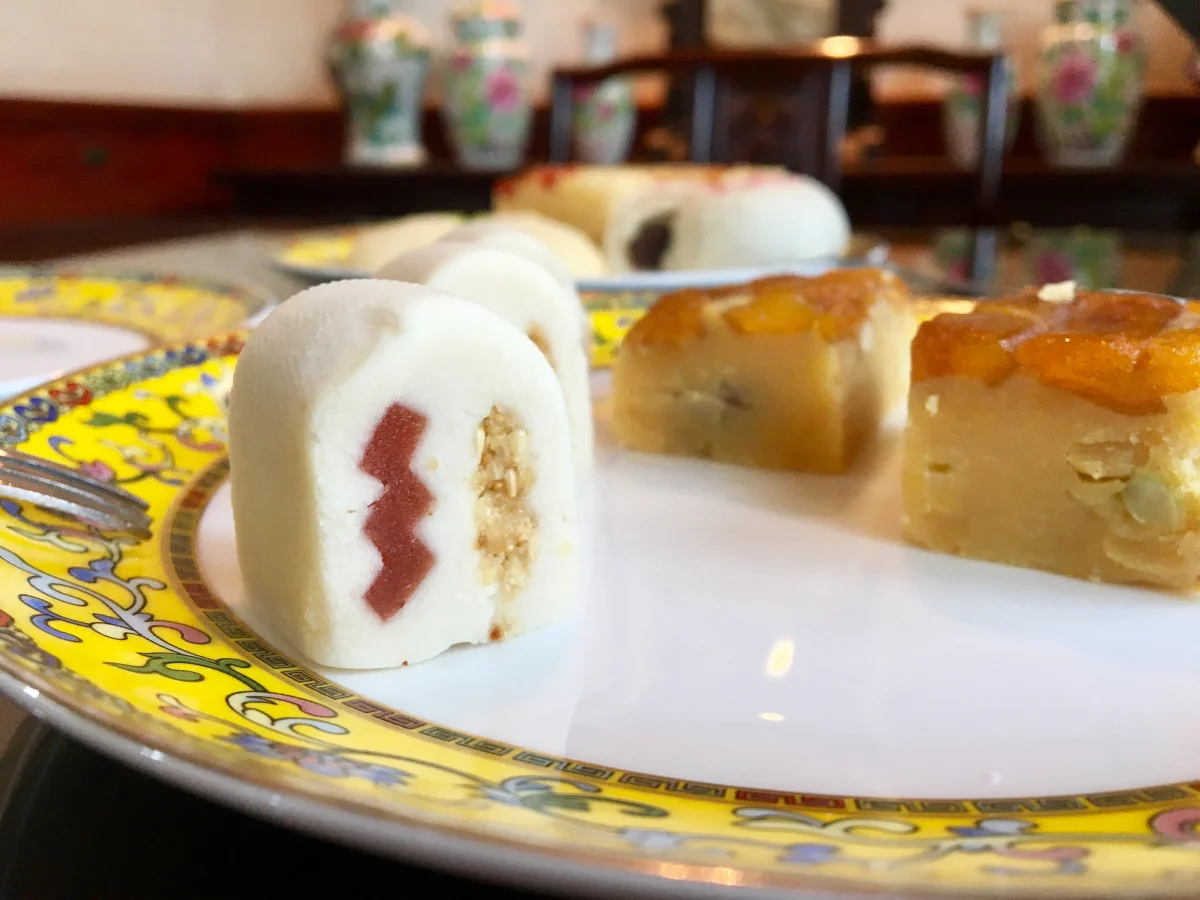
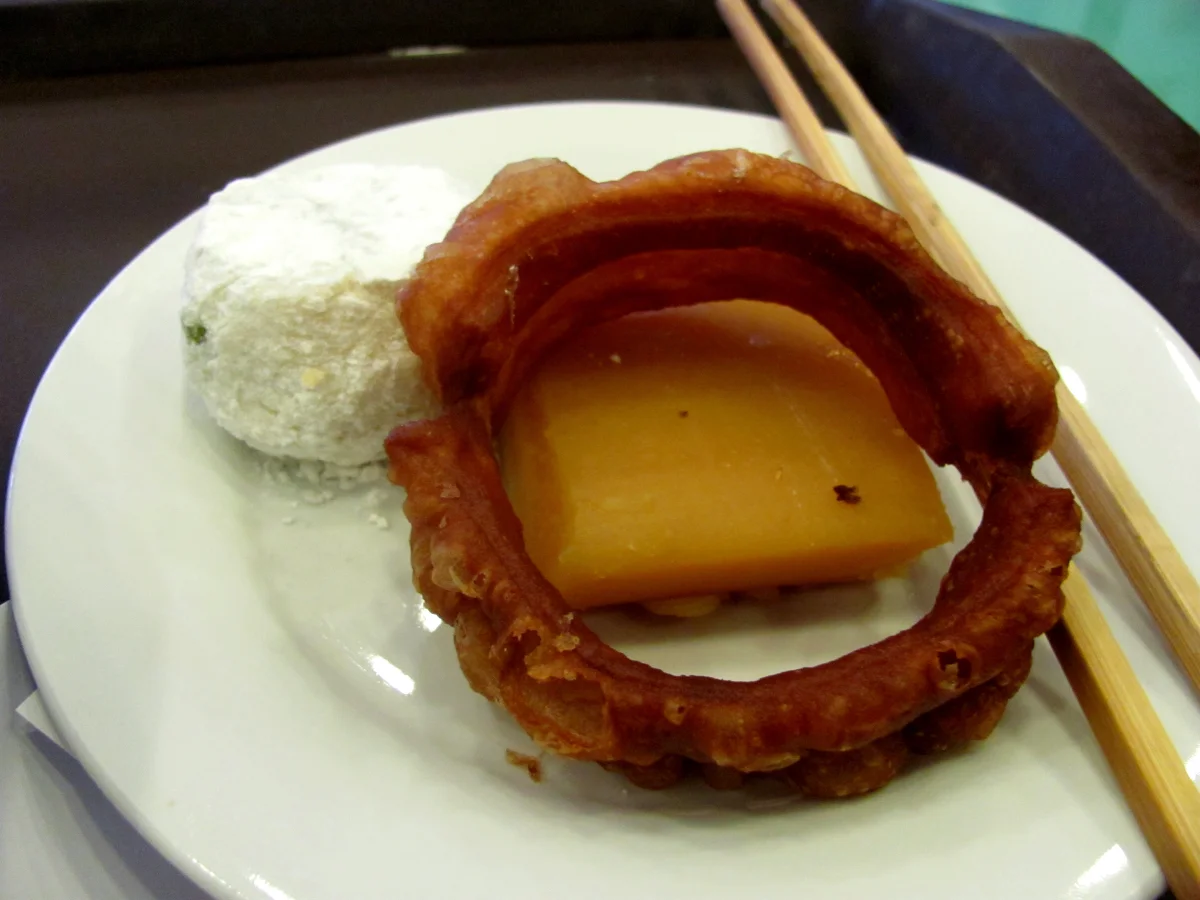
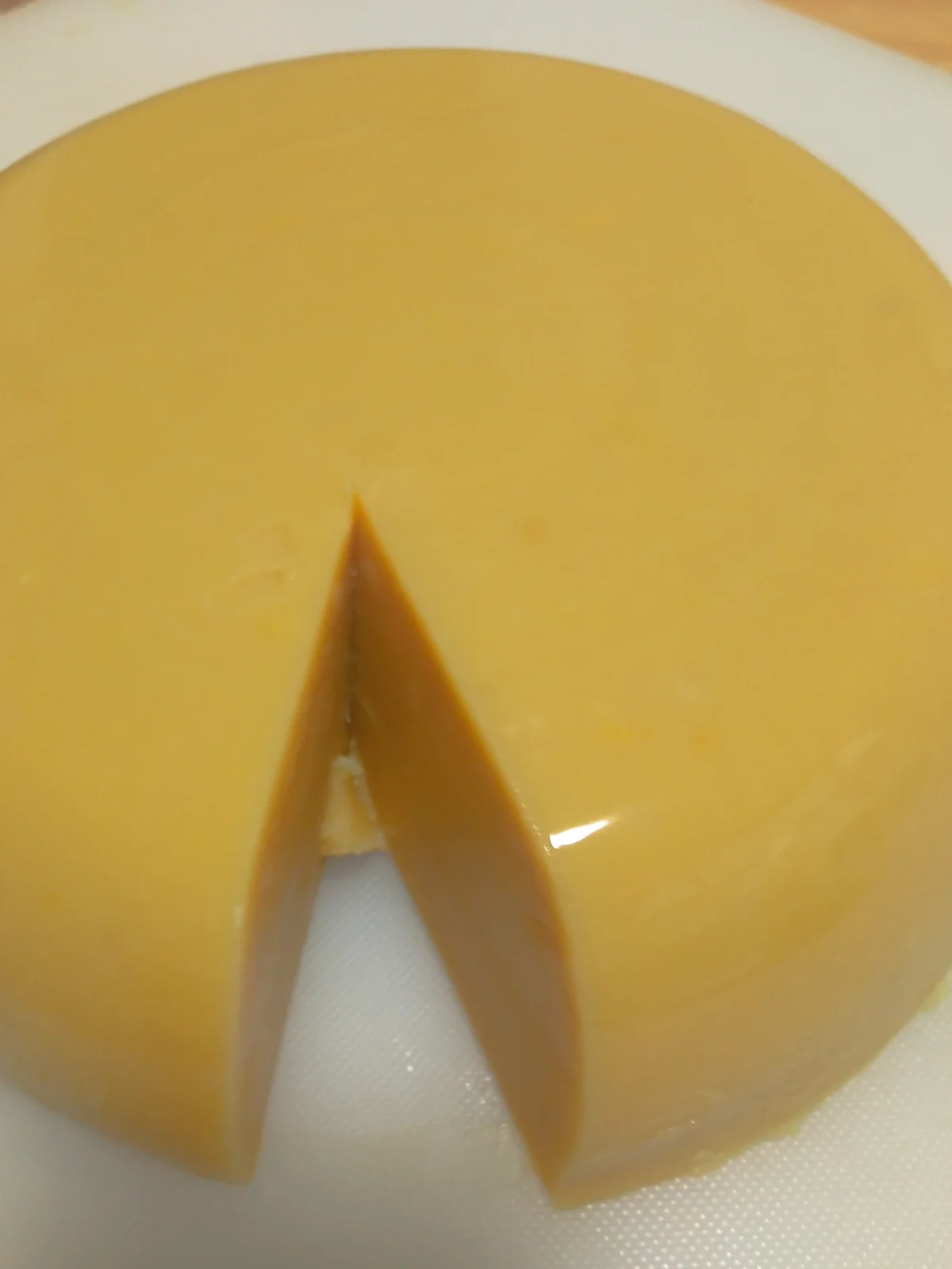
Wandouhuang is a set pea cake. Its color is pale yellow, its shape is usually a square, rectangle, or neat slice, and the texture should be cool, fine, and able to hold a clean edge. Yundoujuan is a roll made from a soft white bean layer around a sweet filling. It is usually white or ivory, cylindrical or sliced from a cylinder, and more yielding when bitten.
On a mixed plate, look at the outside first. Yellow, cut, and smooth points to wandouhuang. White, rolled, and filled points to yundoujuan. That simple visual test is more dependable than broad English labels such as “bean cake,” which can describe too many different Chinese sweets.
Why they are often discussed together
Beijing Tourism describes wandouhuang as a traditional Beijing snack that moved from popular food into Qing court cooking, where a more refined version became known as xi wandouhuang. Its official material also describes yundoujuan as a Beijing folk snack later associated with court-style snacks. The two therefore belong to the same useful dining conversation: chilled, bean-based sweets with a Beijing cultural setting, not two names for one recipe.
That shared setting does not make them interchangeable. Wandouhuang leads with a clean pea taste and a cool, set texture. Yundoujuan leads with softness and the contrast between the bean wrapper and its filling. A plate containing both is interesting precisely because the textures move in different directions.
What wandouhuang should feel like
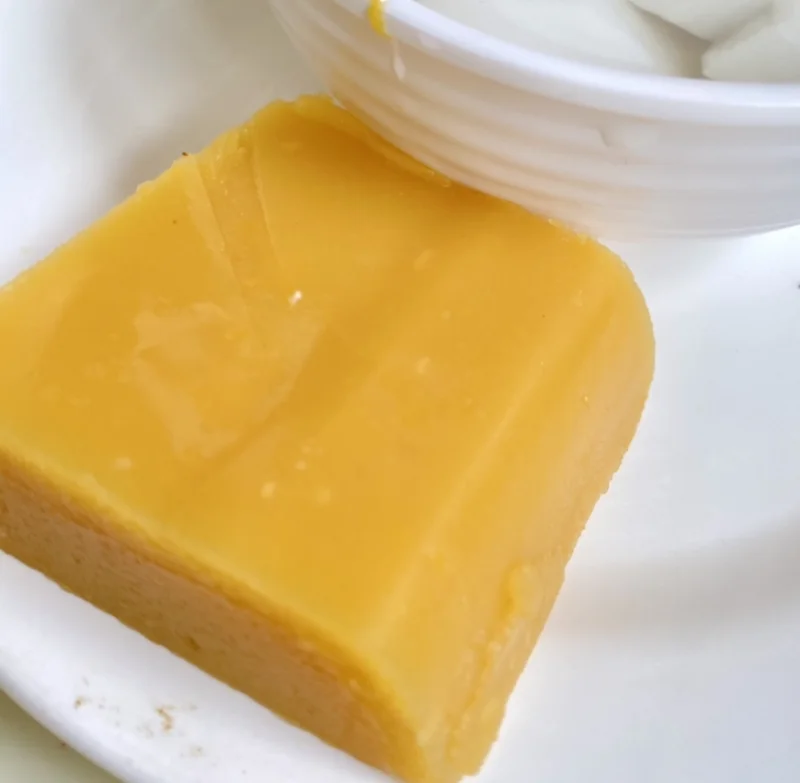
A good piece of wandouhuang should look even in color and cut cleanly rather than slump at the corners. The surface can be faintly glossy from chilling, but it should not be wet. When the spoon or fork presses down, it should give smoothly and break in a fine, soft line instead of crumbling into dry mealiness.
The flavor is restrained. You should notice the pea before the sugar, with a cool finish rather than a heavy syrupy one. That is why wandouhuang is easy to enjoy after a savory meal or beside other small Beijing sweets. If a piece tastes aggressively sweet, gritty, or refrigerator-dry, it loses the balance that makes the snack distinctive.
What yundoujuan adds to the plate
Yundoujuan is softer and more layered. Its white kidney-bean paste should be smooth and tender, not chalky, and the center gives each slice a small sweet accent. The outside is not meant to have the firm, cut-square confidence of wandouhuang. It should feel gentle and pliable, with the filling appearing as a defined line or core when the roll is sliced.
Because yundoujuan is paler and softer, it benefits from a small bite rather than a large mouthful. The point is to taste the wrapper and filling together. It is a better contrast to wandouhuang than another yellow, molded pea dessert would be.
How to order a two-snack plate
If a menu offers both, order a small portion of each rather than doubling up on one large sweet. Start with wandouhuang while its cool pea flavor is clearest. Then try yundoujuan, whose softer wrapper and filling will feel richer by comparison. Drinking plain tea or warm water between bites helps; neither snack needs a strong sauce or topping.
Do not assume every snack counter serves both on one plate. Some shops sell them individually, while restaurant-style cold snack platters may group several small desserts together. Ask for the Chinese names, wandouhuang and yundoujuan, rather than asking only for “two bean desserts.”
How they differ from other Beijing sweets
Wandouhuang is neither sticky rice nor a pastry. That separates it from aiwowo, which has a chewy glutinous-rice exterior and a more substantial filling. Yundoujuan is also not a baozi: it has no yeast dough or steamed-bun structure. Both snacks are served for their cool, fine textures, not for warmth, crust, or chew.
This matters when composing a broader snack order. Pairing wandouhuang and yundoujuan with one chewy item such as aiwowo gives the table three different textures. Ordering several molded bean sweets at once usually produces less contrast and makes it harder to notice what each one does well.
Freshness and presentation checks
- Wandouhuang: look for a tidy cut, even pale-yellow color, and a moist-looking but not wet surface.
- Yundoujuan: look for a smooth white wrapper, a visible center after slicing, and no cracked or dried outer layer.
- Temperature: both are commonly enjoyed cool. Very cold pieces can mute their flavor, while pieces left uncovered too long can dry at the edges.
- Portion: these are tasting snacks. A few small pieces are normally enough when they are part of a larger Beijing meal.
The useful way to remember them
Think of wandouhuang as the yellow, cut pea cake: clean, cool, and lightly sweet. Think of yundoujuan as the white bean roll: soft, filled, and layered. They share a Beijing snack setting and both reward careful texture, but they give the diner different signals from the first glance to the final bite.
That contrast is why they work well together. The plate becomes a small lesson in Beijing cold snacks: one piece defined by a precise set, the other by a tender roll.
Sources
Photo credits
Comments (0)