When people around the world think about food in Beijing, one dish almost always comes to mind first: Peking Duck. It is served at state banquets, recommended in guidebooks, and often becomes the first “must-try” meal for visitors. While Beijing has a wide and diverse food culture, Peking Duck stands apart as the city’s most recognizable and widely celebrated dish.
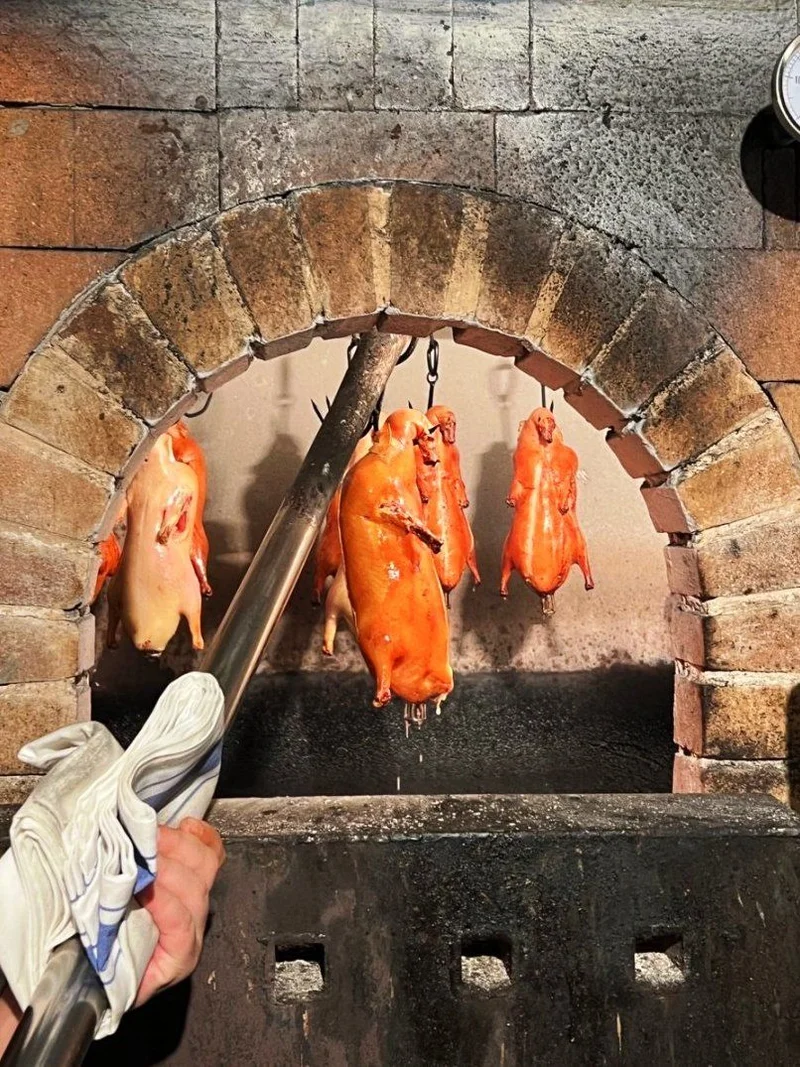
Peking Duck has a history stretching back hundreds of years. Originally associated with imperial kitchens, it gradually moved from palace dining halls into the broader public sphere. Today, it represents refinement, craftsmanship, and tradition. The preparation is highly specialized. Ducks are carefully selected, air is pumped under the skin to separate it from the meat, and the bird is roasted until the skin becomes thin, crisp, and evenly browned. When served, the duck is sliced tableside, emphasizing both skill and ceremony.
What makes Peking Duck so popular is not only its flavor, but also the complete eating experience. The crispy skin is wrapped in thin pancakes along with cucumber, scallions, and sweet bean sauce. Each bite balances richness, freshness, and subtle sweetness. For many diners, this ritualized way of eating is just as important as the taste itself. It turns a meal into a shared event, making Peking Duck especially popular for family gatherings, business dinners, and special occasions.
However, to understand popularity in Beijing fully, it is important to look beyond restaurant dining. While Peking Duck dominates in terms of reputation, everyday food habits in the city tell a more layered story. Many locals do not eat Peking Duck frequently; instead, they enjoy foods that are quicker, cheaper, and tied to daily life. This does not diminish the duck’s status, but it explains why it functions more as a symbol than a daily staple.
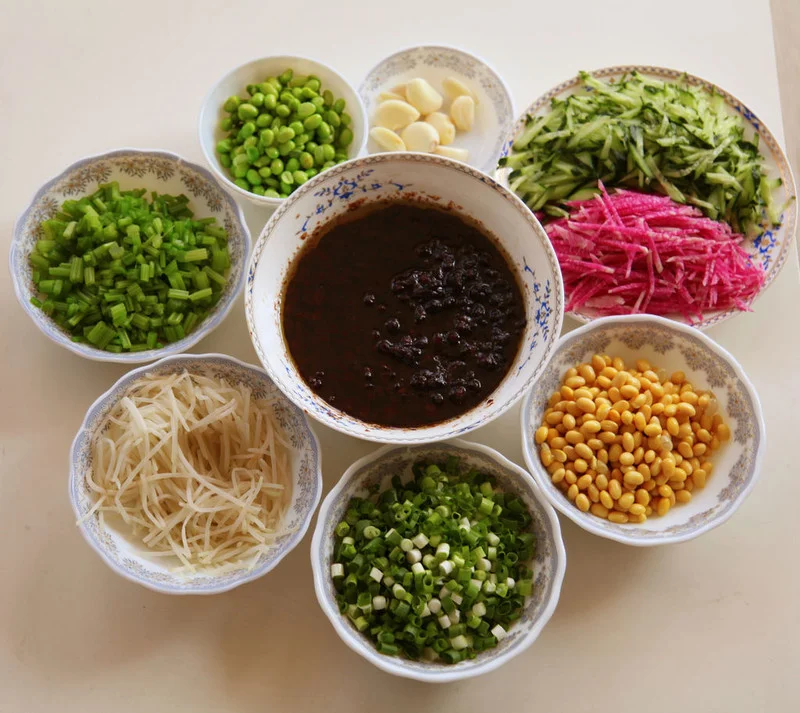
One such everyday favorite is zhajiangmian, thick wheat noodles topped with a savory soybean paste sauce, minced pork, and fresh vegetables. This dish reflects northern Chinese tastes: hearty, salty, and filling. It is widely available, easy to prepare, and deeply familiar to Beijing residents. Another common sight is jianbing, a street-side crepe eaten for breakfast. Made fresh on a griddle and customized with egg, herbs, sauces, and crispy fillings, it represents the fast-paced rhythm of modern Beijing mornings.
Beijing-style hot pot, particularly the traditional copper pot version with clear broth and sliced lamb, also holds a special place in local food culture. It is especially popular during colder months and emphasizes freshness and communal dining. Like Peking Duck, it brings people together, but in a more casual, everyday setting.
Despite this variety, if one dish must be identified as the most popular food in Beijing in terms of recognition, symbolism, and cultural weight, Peking Duck remains the clear answer. It appears in almost every discussion of Beijing cuisine and continues to define how the city is understood through food. For visitors, it often serves as an introduction to Beijing’s culinary identity. For locals, it is a dish tied to tradition, celebration, and the city’s historical memory.
In short, Beijing’s food culture cannot be reduced to a single dish, but Peking Duck occupies a unique position. It is not eaten every day, yet it is always present in the background of the city’s food story. That combination of rarity, prestige, and tradition is exactly why it continues to be regarded as Beijing’s most popular food.
Comments (0)