Beijing Chuanr vs. Zhizi Barbecue: Skewers, Iron Grills, and How to Tell Them Apart
Learn the difference between Beijing chuanr and zhizi barbecue: skewers versus sliced meat on an iron grill, seasoning, heat, portions, and practical ordering cues.
Read a Beijing barbecue menu with confidence: meat names, offal and tendon terms, serving units, skewer sizes, and practical first-round questions.
A Beijing barbecue menu can look deceptively simple: a column of short names, a price beside each one, and the character 串 repeated down the page. The important information is often in the word before it. A lamb skewer, a chicken wing, and a skewer of kidney are different orders even when they arrive on similar sticks.
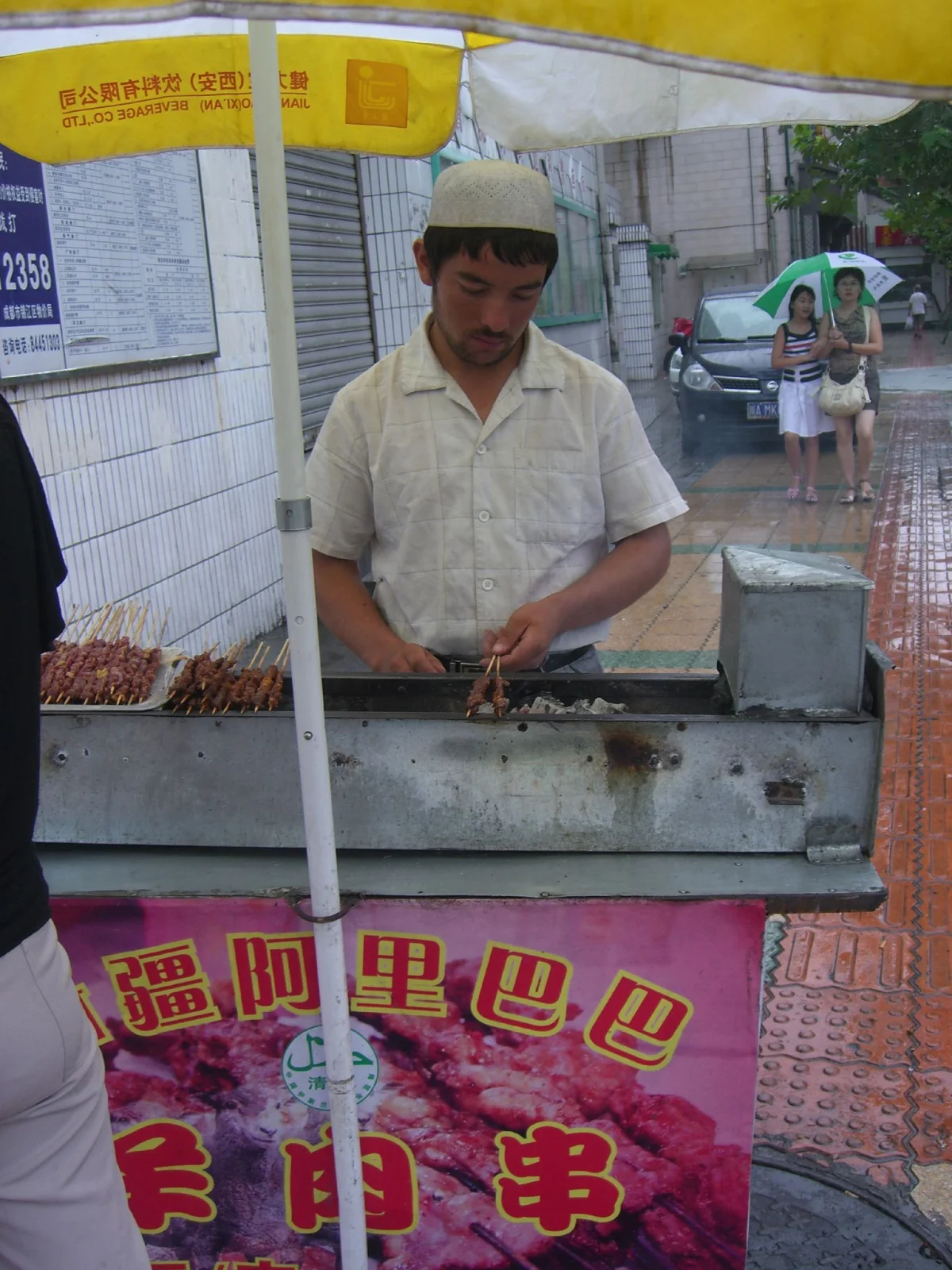
This guide helps you read that menu and build a manageable first round. For the flavour and texture of the classic lamb skewer, start with our Beijing chuanr introduction. Here, the focus is the ingredient name, serving unit, size, and questions that prevent an accidental order.
Chuanr (串儿, chuànr) is a useful spoken word for skewers, but it does not identify the meat. Yangrou chuan means lamb or mutton skewers; niurou chuan means beef skewers. If you point to a menu line that only says a house-special skewer, ask what it contains. A photograph, brown seasoning, or the shape of the stick cannot establish the animal.
Official Beijing Tourism coverage documents menus containing lamb, beef, chicken wings, shrimp, and vegetables together. These examples show the range of a barbecue order; they do not mean every shop carries every item. Treat the menu in front of you as the current offer, and check availability before choosing a large mixed order.
| Menu name | What it identifies | What to confirm |
|---|---|---|
| 羊肉串 — yángròu chuàn | Lamb or mutton meat skewers | Size, minimum order, and whether the meat includes pieces of fat |
| 牛肉串 — niúròu chuàn | Beef skewers | Whether the house version is plain meat or a seasoned special |
| 五花肉 — wǔhuāròu | Pork belly | The serving unit; this is not a lamb item |
| 鸡翅 — jīchì | Chicken wings | Whether one order is one wing, a middle wing segment, or a portion |
| 羊腰 — yángyāo | Lamb or sheep kidney | Whether you want offal and how the shop portions it |
| 鸡心 / 鸡胗 — jīxīn / jīzhēn | Chicken hearts / gizzards | The actual ingredient rather than a generic “chicken skewer” |
| 韭菜 / 茄子 / 金针菇 | Chinese chives / aubergine / enoki mushrooms | Seasoning, sauces, and whether any meat is added |
This is a reading aid, not a complete menu. A short name may omit a marinade, topping, or cooking sauce. If an ingredient matters to your diet, confirm it with staff rather than assuming the table describes the full recipe.
A lamb skewer can contain both lean meat and fat. That does not make it the same order as a menu item called roujin (肉筋) or yangroujin (羊肉筋). Those names can refer to a different mix of meat and connective tissue, and the exact cut can vary between sellers. Ask what the house uses if you want ordinary meat cubes rather than a chewier item.
Likewise, banjin (板筋) points to a tendon item, commonly listed as beef tendon, rather than another name for tender beef cubes. Read the full label when an animal is specified. A menu that separates 羊肉串, 羊肉筋, and 牛板筋 is giving you a texture choice as well as an ingredient choice.
A useful request is zhège shì shénme ròu? (这个是什么肉?, “What meat is this?”). Follow with shì ròu háishì nèizàng? (是肉还是内脏?, “Is it meat or offal?”) if the answer is unclear. These short questions are more useful than trying to infer a cut from the English word “special.”
Two restaurants can sell an item at a similar price per stick while serving quite different amounts. A long skewer may hold more meat, more space between pieces, or simply a thicker handle. The name da chuan (大串, large skewer) is a relative description, not a citywide weight standard.
Some menus show a price per chuan (串, skewer), others per fen (份, portion), and some group several sticks into a serving. Ask yí fèn jǐ chuàn? (一份几串?, “How many skewers are in a portion?”) before ordering. If the menu lists a minimum, that can apply to each ingredient rather than the whole order. Clarify this before choosing five different flavours.
Red-willow skewers, metal sticks, and thin bamboo sticks also do not guarantee a particular portion. They tell you something about presentation and equipment, but the meat amount still needs checking. Our chuanr and zhizi barbecue comparison explains the larger distinction between individual skewers and a shared iron-grill meal.
For a first visit, choose ordinary lamb skewers as your reference point, then add one different ingredient only if you want a comparison. Find out the smallest order and judge it against what else you plan to eat. A fixed recommendation of ten or twenty sticks is unreliable when sizes and minimums differ.
For two people, a practical conversation is: “What is the smallest lamb-skewer order, and how large is it?” Then choose a vegetable dish and decide whether you need a bread or other staple. If the lamb portion is substantial, another large meat order may be unnecessary. If it is a small tasting serving, add a second round after checking the first one.
Keep different ingredients identifiable on the plate. Asking for one portion of lamb and one of beef separately makes the comparison easier than a mixed pile whose seasoning hides which is which. If the restaurant offers a set meal, check the item list and quantities before assuming it matches your preferences.
Grilled chives, mushrooms, aubergine, peppers, and corn can give a barbecue meal variety. But a vegetable item may still be brushed with sauces or served with a topping. Ask about the preparation when you need a meat-free or vegan order; the raw ingredient name alone is not enough.
The same approach applies to heat. Bú yào làjiāo (不要辣椒, “No chilli, please”) is a preference about seasoning, not a statement about the underlying meat or sauces. Make the ingredient choice first, then the spice request. The chuanr seasoning guide covers cumin, chilli, and salt in more detail.
This leaves room to enjoy the meal instead of decoding an oversized order. For a wider evening snack plan, browse the Beijing street-food collection. The useful habit is the same across counters: identify the item, understand the unit, and ask one precise question before paying.
Portion planning and the questions above are editorial guidance. Actual ingredients, sizes, minimum orders, and availability must be confirmed with the seller.
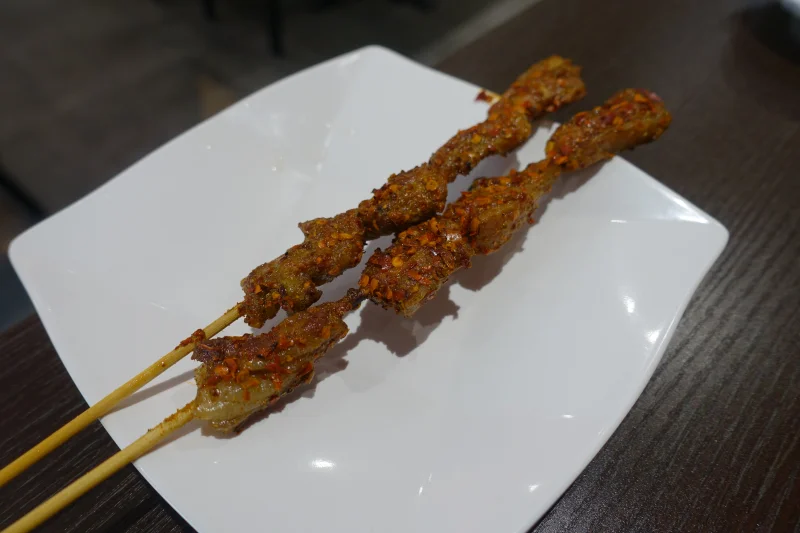
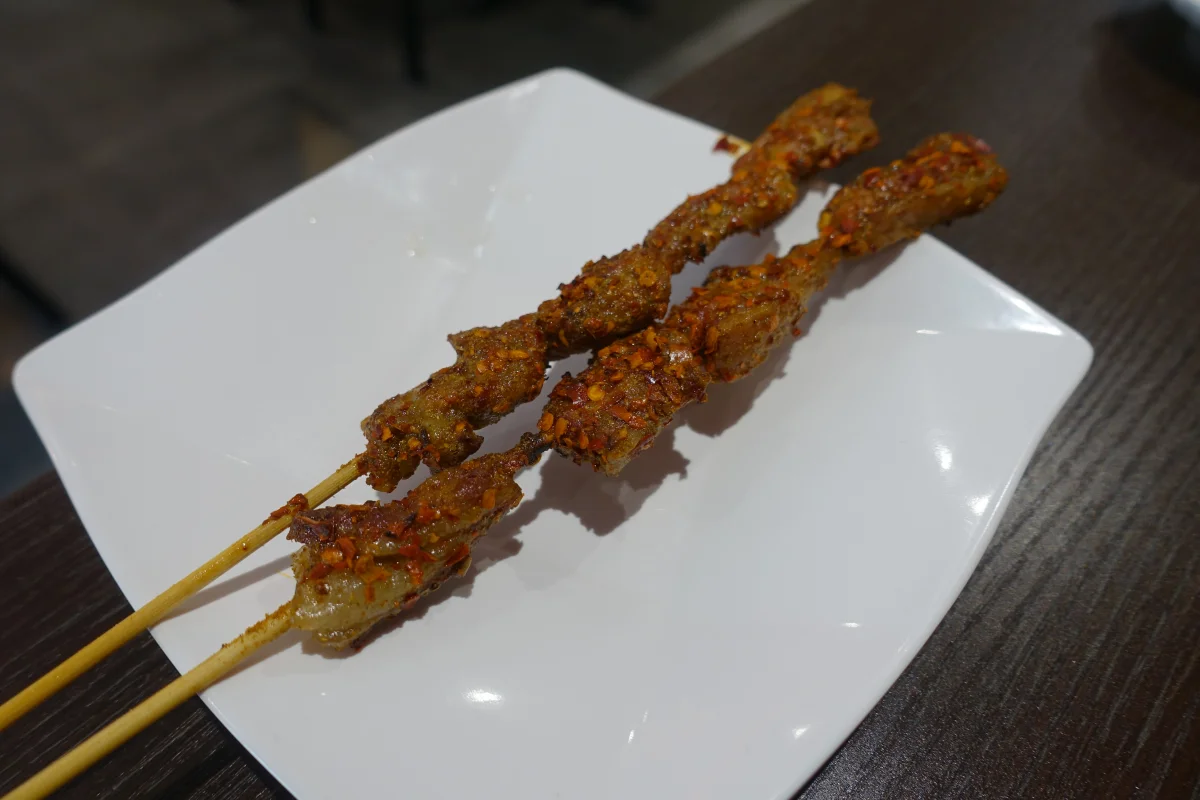
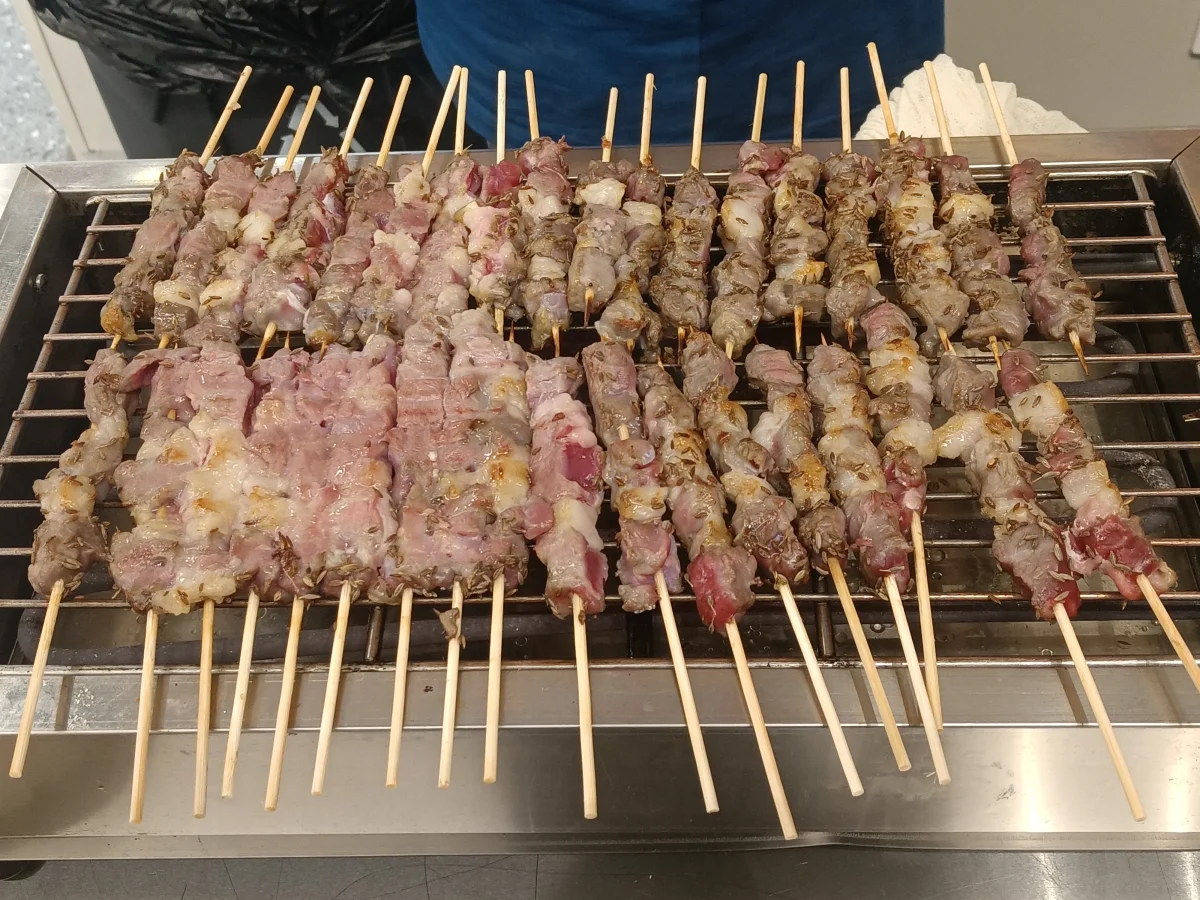
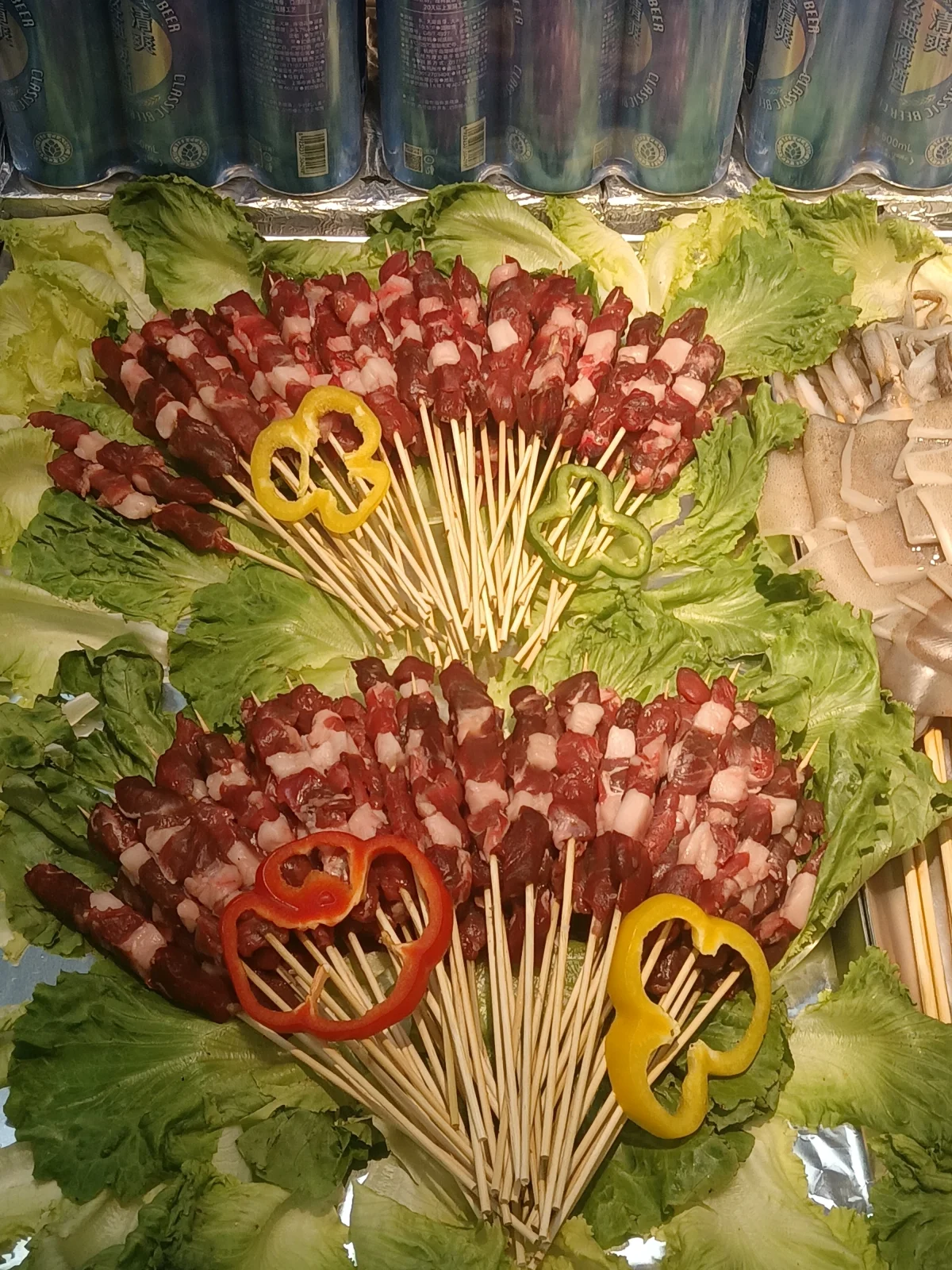
The photographs illustrate lamb-skewer serving and preparation formats; they are not a review of the Beijing venues in the sources. Guilhem Vellut, lamb skewers at Petit Villa in Paris, CC BY 2.0; Fumikas Sagisavas, Freshippo lamb-skewer display and grill, CC0 and CC0; Alpha, Xinjiang Ali Baba skewer stall, CC BY-SA 2.0. Images are resized for display.
Comments (0)