How to Order Chuanr in Beijing: Menu Words, Skewer Sizes, and First-Round Choices
Read a Beijing barbecue menu with confidence: meat names, offal and tendon terms, serving units, skewer sizes, and practical first-round questions.
Learn the difference between Beijing chuanr and zhizi barbecue: skewers versus sliced meat on an iron grill, seasoning, heat, portions, and practical ordering cues.
Beijing menus can place several kinds of grilled lamb close together, but they are not interchangeable. Chuanr (串儿) is a skewer: small pieces of meat cooked on individual sticks and usually finished with cumin, chili, or both. Beijing zhizi kaorou (炙子烤肉) is a different experience: sliced, often marinated beef or mutton cooked on a distinctive round iron grill. Knowing which format you are ordering makes it easier to choose the right meal and avoid calling every grilled lamb dish the same thing.
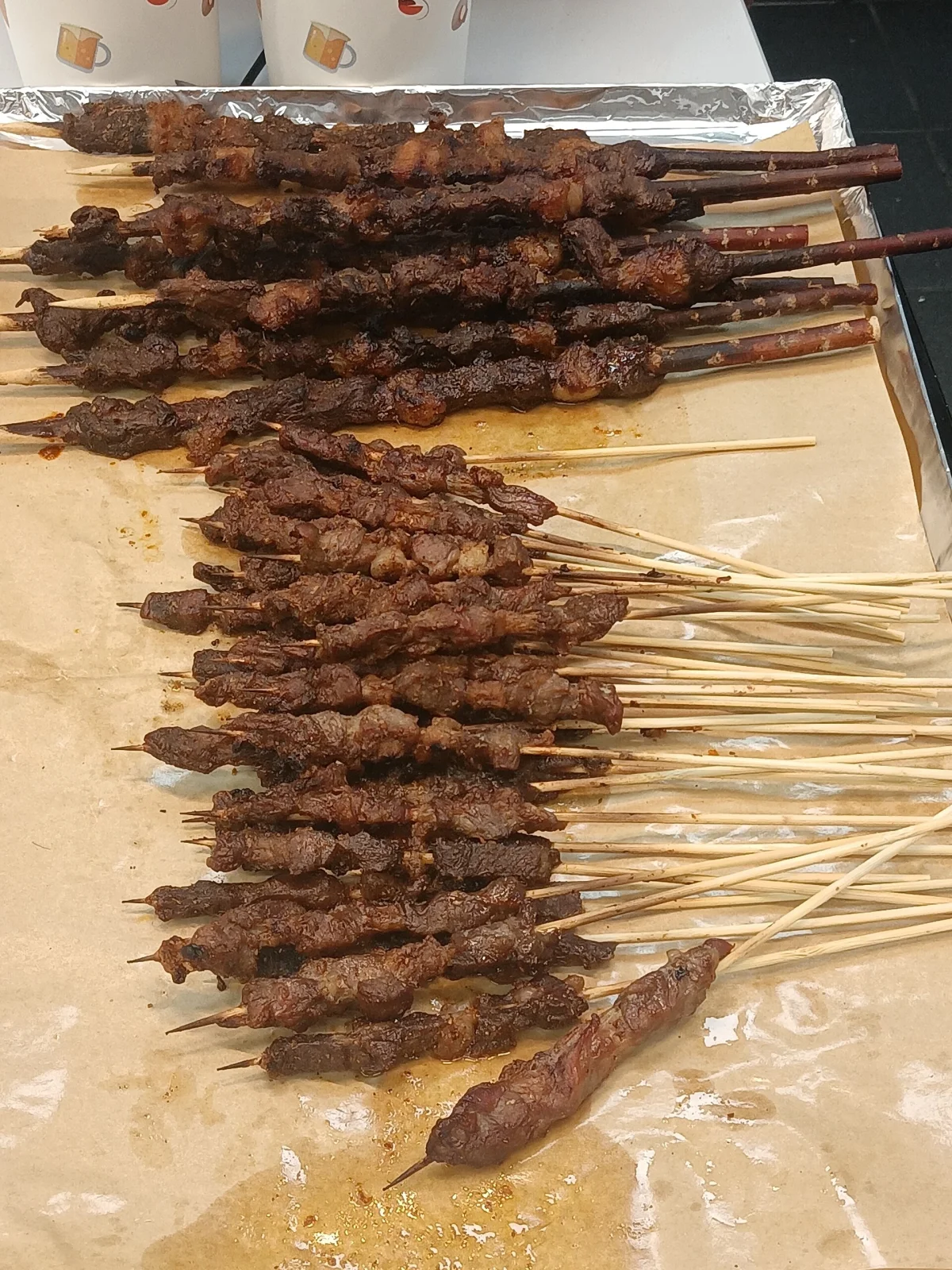
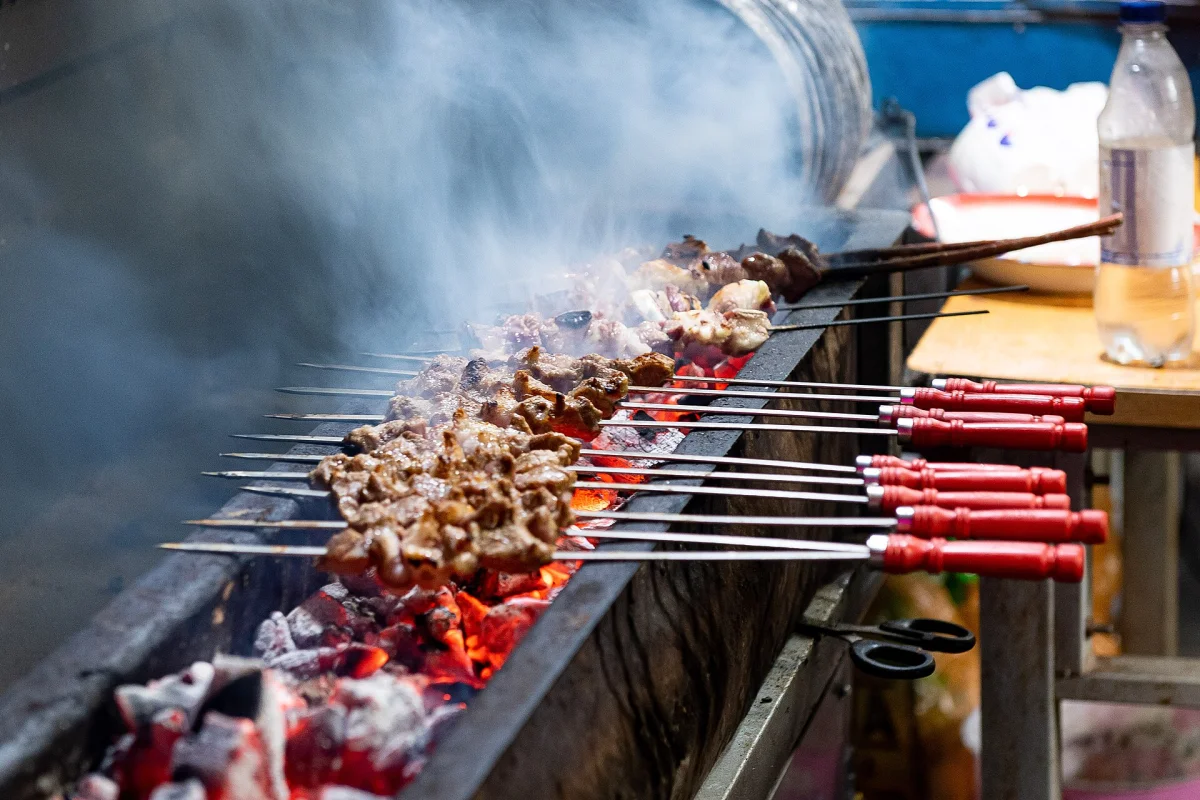
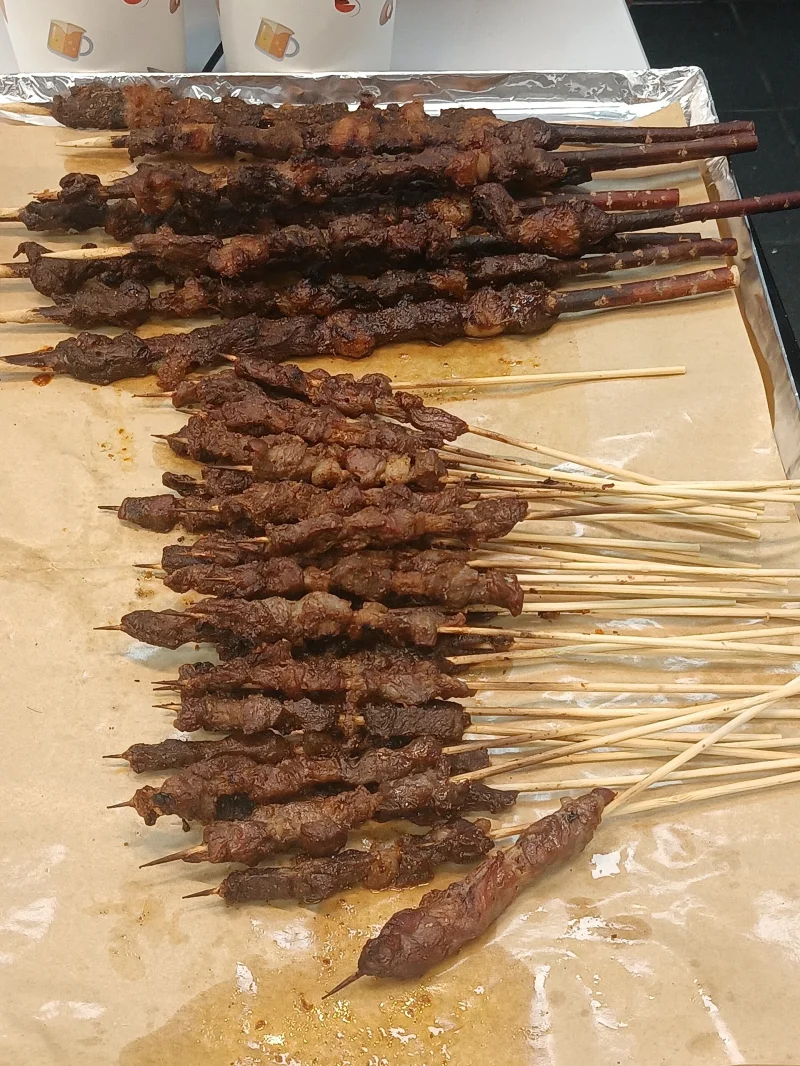
Chuanr is built around the skewer. The lamb arrives as individual sticks, so the cook can give the pieces direct heat and the diner can order a few more whenever the first plate disappears. The surface should have some browning, while the centre stays moist enough to carry the lamb’s flavour. Cumin and dried chili are common finishing seasonings, but their intensity varies widely by shop.
Zhizi barbecue begins with thin slices rather than skewers. Beijing’s official English dining guide describes the meat as marinated and cooked on a special round iron plate called a zhizi, commonly with scallion and onion beneath it. The table rhythm is therefore different: it is closer to a shared grill meal than to successive plates of ready-cooked skewers.
Heat source is not the same thing as dish type. Beijing still has electric-skewer shops where lamb cooks on metal sticks in a high-heat electric oven, while other places use charcoal grills. Official Beijing Tourism coverage of electric skewers emphasizes the browned surface, the aroma of cumin and sesame, and the usefulness of choosing meat with a natural balance of fat and lean. Those are sensible cues for any first chuanr order, regardless of the equipment behind the counter.
What matters most is the result: a fresh skewer should smell of lamb and spice rather than stale oil, have browned edges without turning hard, and be eaten promptly. Do not mistake a very dark surface for proof of quality; a thin cut can become dry quickly, and too much seasoning can hide the meat rather than improve it.
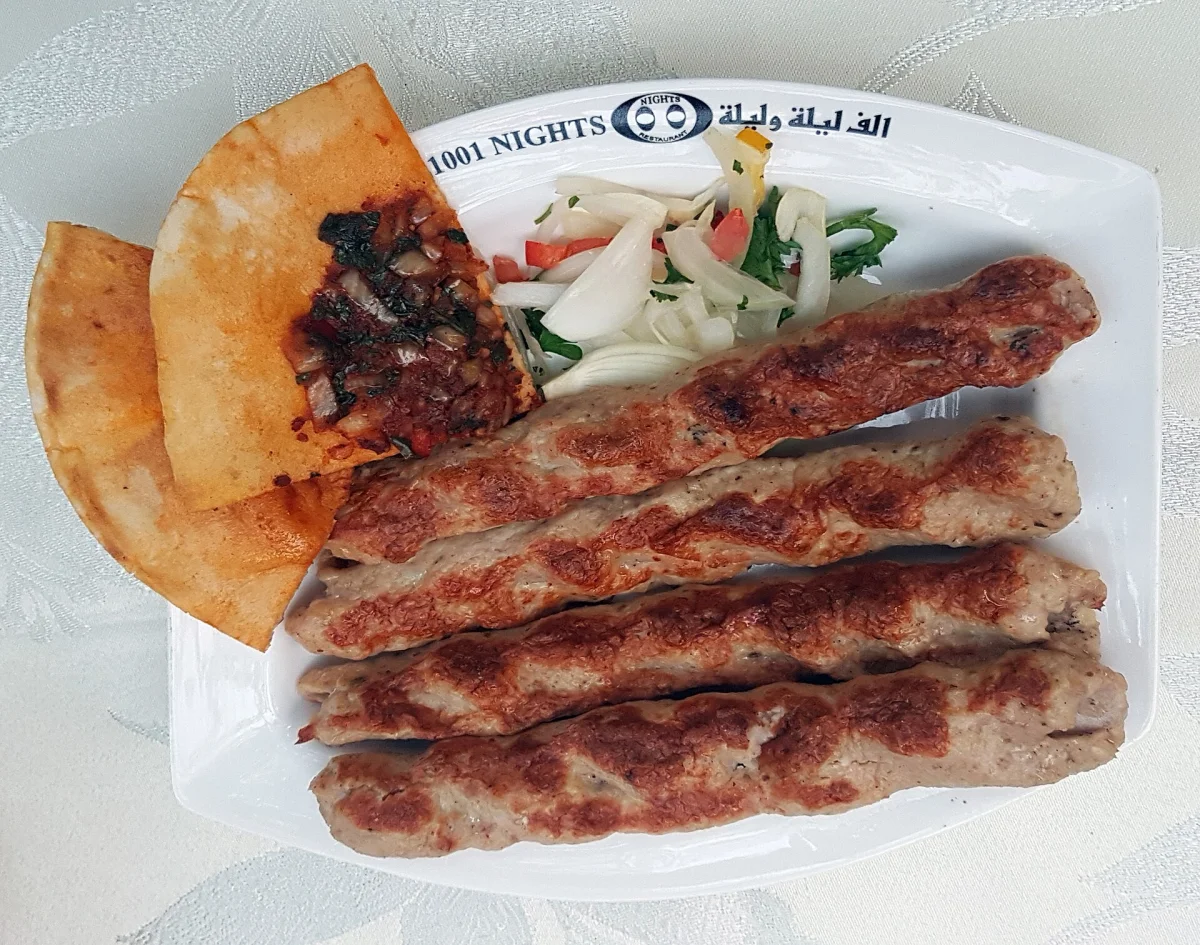
Some Beijing restaurants also serve tandoor-style kebabs or longer grilled minced-meat kebabs. They can be excellent, but they are a separate preparation rather than a synonym for Beijing chuanr or zhizi barbecue. Read the menu by method: skewer, oven, or iron grill. That small distinction is more reliable than assuming that every lamb item with char and cumin will provide the same texture, seasoning, or table experience.
Choose one format as the centre of the meal. For chuanr, begin with a modest round of lamb skewers, then add more after tasting the spice and fat balance. A crisp bread such as shaobing can add contrast without competing with the grill. For zhizi barbecue, leave space for the shared plate and avoid ordering several rich lamb dishes before you know the portion size.
This comparison is useful because it keeps the food specific. Chuanr is not simply “Chinese barbecue,” and zhizi barbecue is not merely a plate of skewers without sticks. Each has its own cut, heat, seasoning, and dining rhythm.
Comments (0)