Guotie Dipping Sauce: Vinegar, Garlic, and Chili Without Losing the Crunch
Choose a guotie dip that suits your plate: recognize vinegar labels, compare fresh garlic with Laba garlic, adjust chili, and keep the browned base crisp.
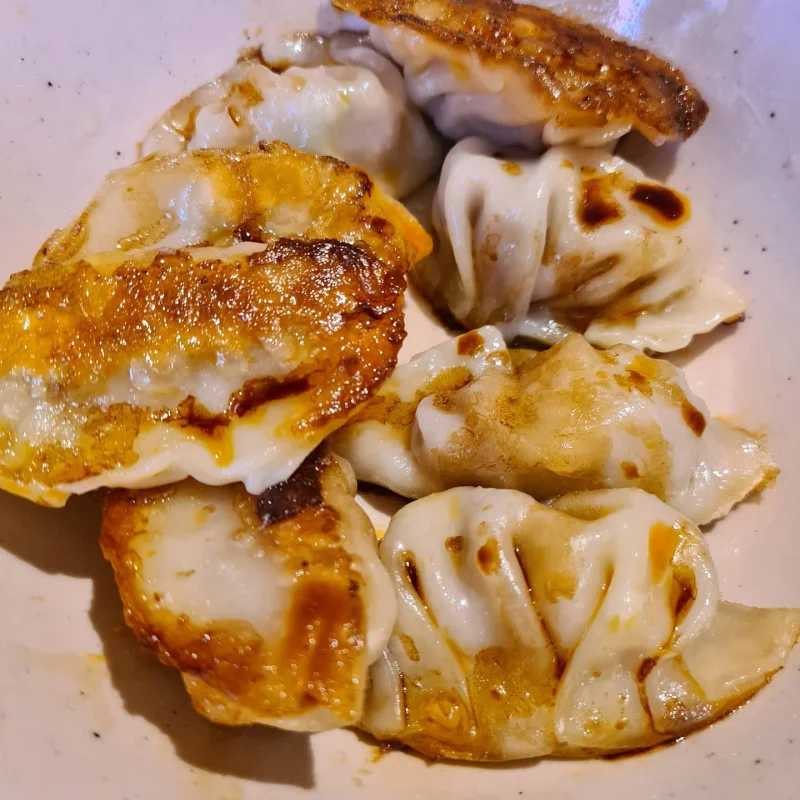
Understand how guotie develop a crisp bottom and tender top, what the covered steam stage does, and how to judge a fresh plate in Beijing.
The browned underside is the reason to order guotie rather than another plate of boiled dumplings. It is also the easiest part to lose: a dumpling can leave the pan with a crisp base and reach the table soft after sitting under a lid or in a closed takeaway box. This guide follows what happens in the pan, then turns that process into useful questions and texture checks for a Beijing snack-shop visit.
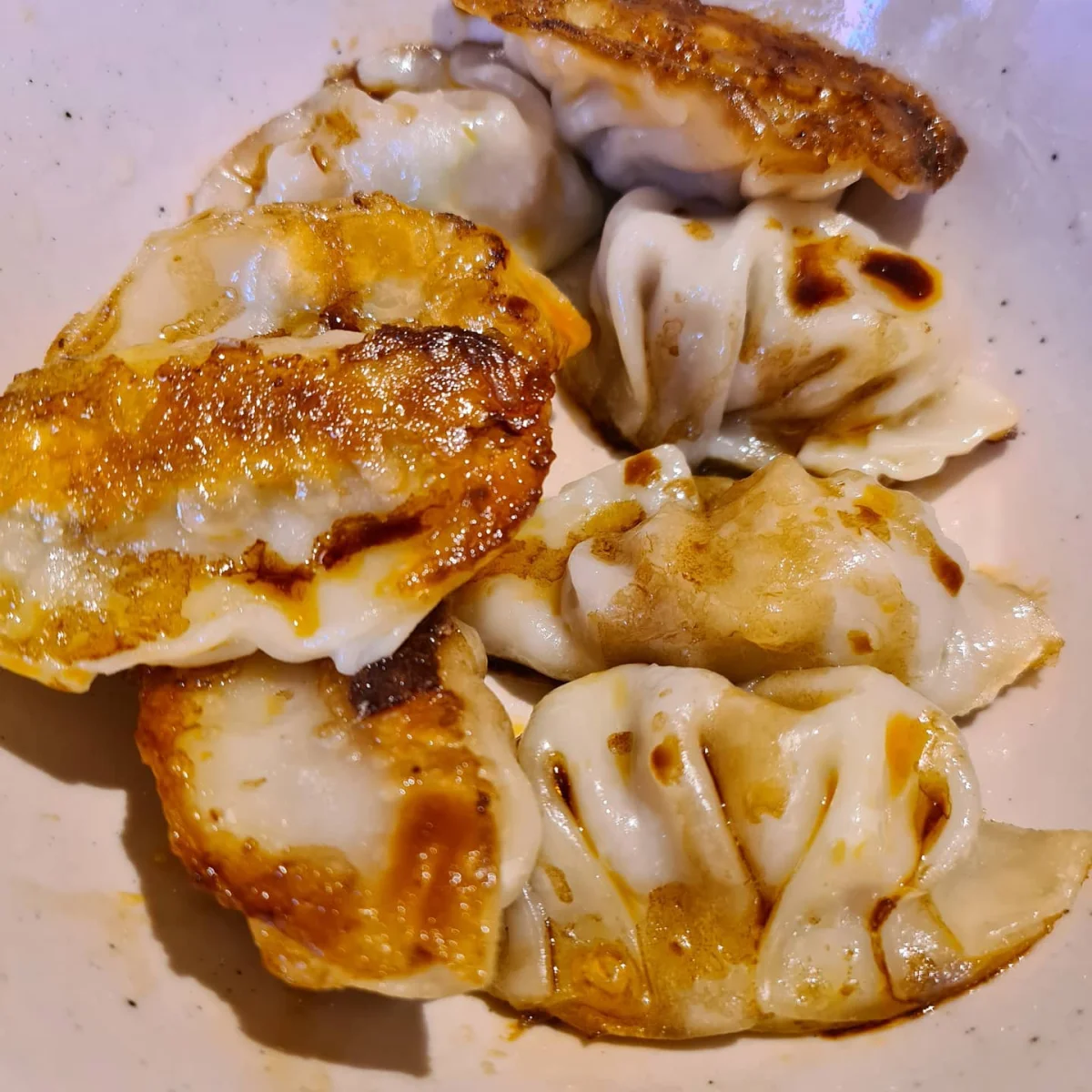
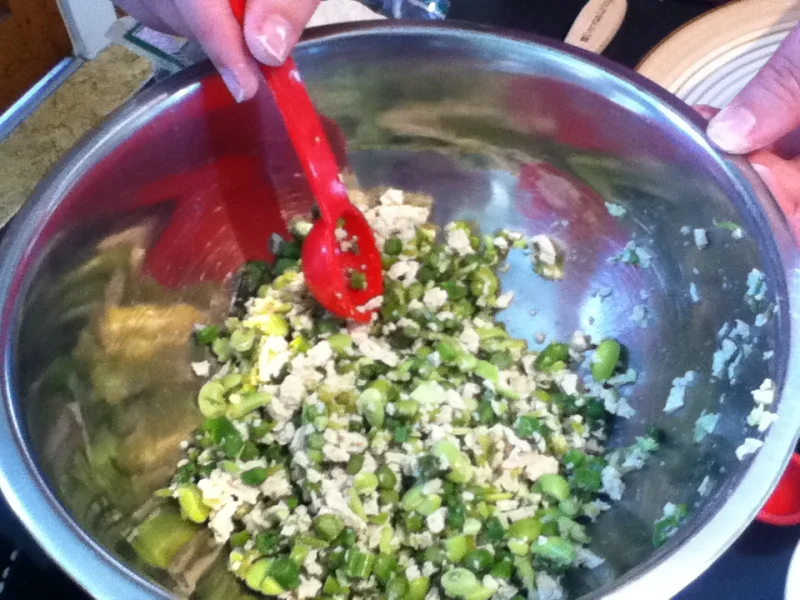
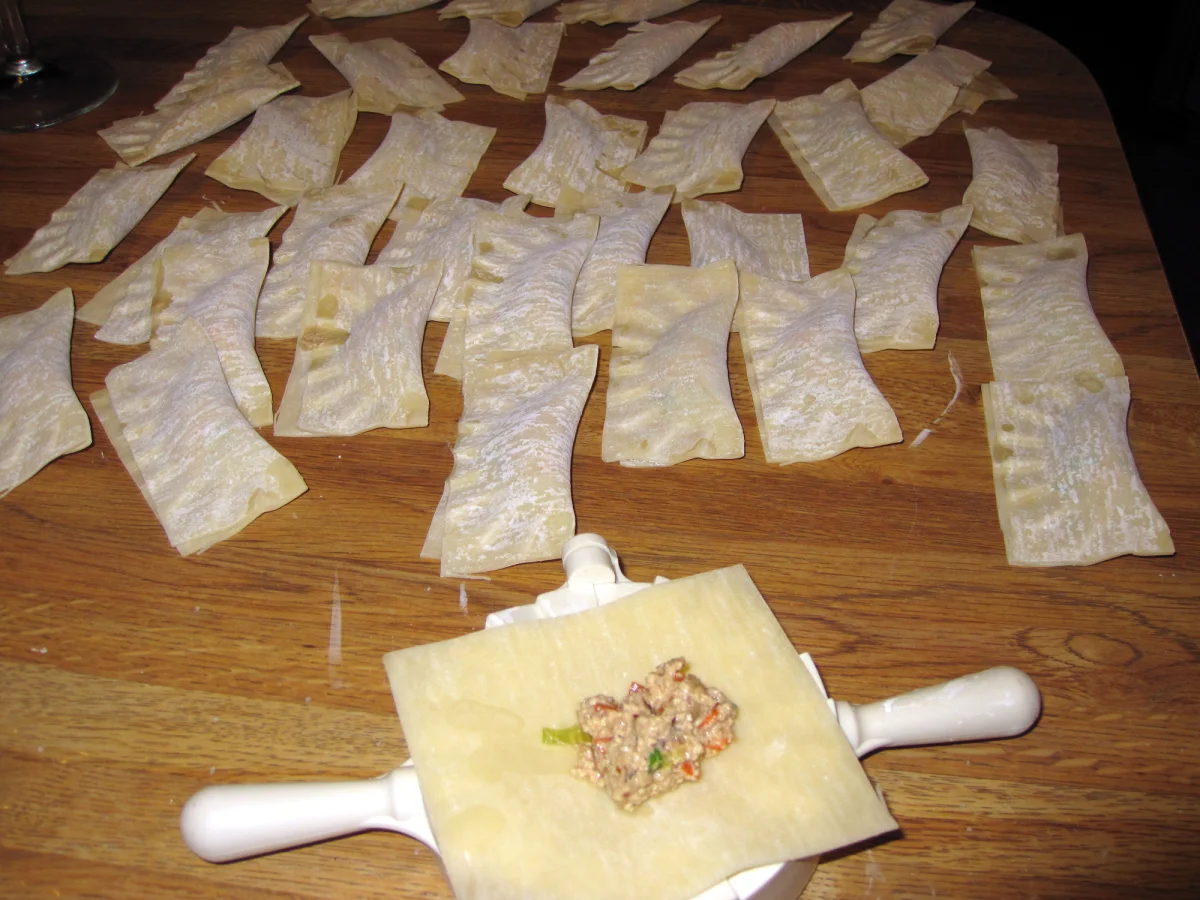
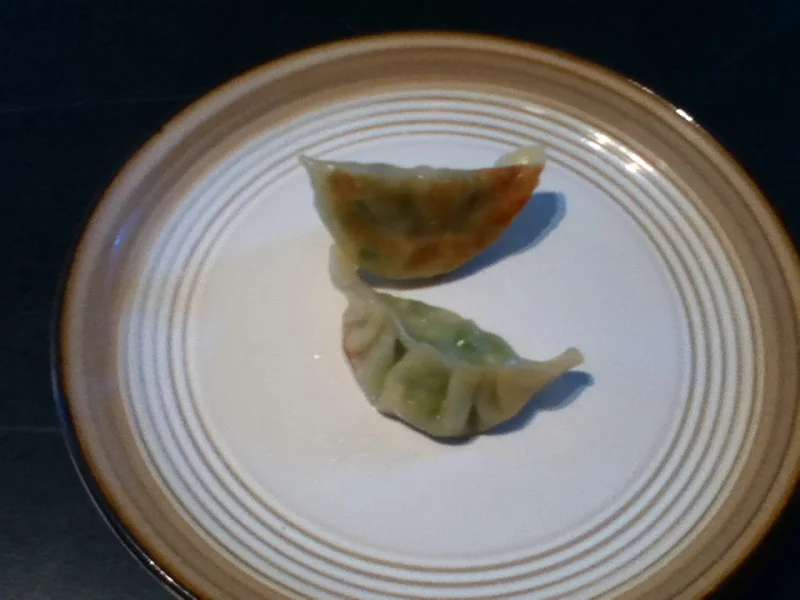
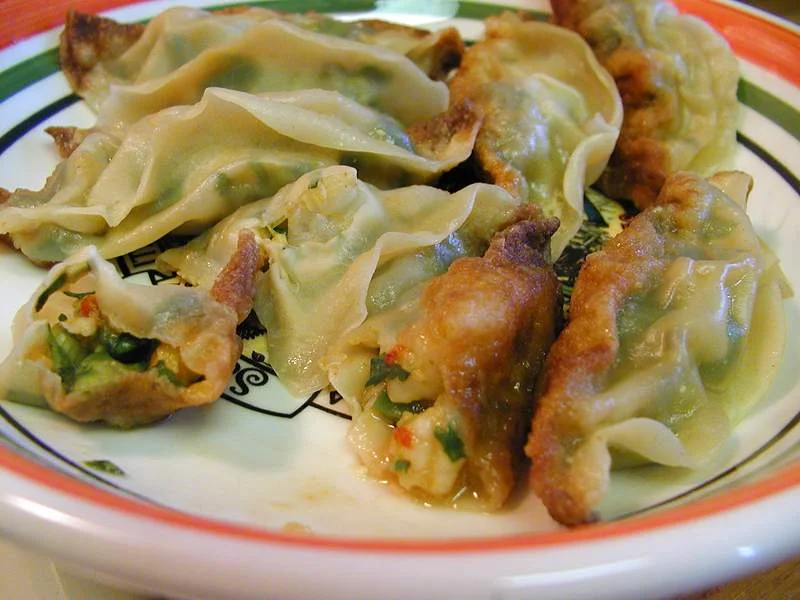
Guotie are not unique to Beijing, and shops do not follow one compulsory recipe. The common idea is a filled wheat wrapper with a surface cooked against a pan. Our Beijing guotie introduction covers fillings, portions, and ordering; here the focus is the contrast between the browned base and the tender upper wrapper.
First, contact browns the bottom. The dumplings sit in a lightly oiled pan, with their bases touching its surface. That contact creates colour and a roasted aroma that steaming alone cannot give. The initial colour may be modest; the point is to establish the side that will become crisp, not to burn it before the filling cooks.
Then, a lid traps steam. Water added to the hot pan turns to steam under a cover. It cooks the upper wrapper and helps heat the filling while the bases stay against the pan. Beijing Tourism describes a local potsticker shop adding water during cooking, and Kikkoman's potsticker recipe uses a covered steam-cook stage. These are examples of the broad pan-fry-and-steam method, not proof that every Beijing cook uses identical amounts or timing.
Finally, the pan dries. Once the added water has evaporated, the lid can come off and the remaining moisture can leave the base. The bottom then regains a dry, crisp surface. A cook who stops while water still pools in the pan will serve a softer result; a cook who keeps frying after the wrapper has dried risks a hard or dark base. The balance depends on the pan, heat, wrapper, and filling.
Colour is useful, but it only tells you about the surface you can see. The upper wrapper should be cooked and pliable, not floury, and a meat filling must be thoroughly cooked. Do not use a photograph or a browned edge as evidence that the centre is done. If a piece seems undercooked, stop eating it and ask the shop to check it.
On a well-made plate, the underside offers a light resistance before the softer wrapper gives way. That is different from an all-over deep-fried crust. It is also different from a steamed dumpling that happens to have a little colour from reheating. The most informative first bite is one without sauce: turn a dumpling over, look at the base, and taste the dry edge before dipping.
No. Some pan-fried dumplings are served with a thin, brittle sheet joining several pieces. That "lace" or skirt can be made by allowing a starchy liquid to cook into a delicate film. It is a presentation choice, not the definition of guotie. Separate dumplings with individually browned bases can be excellent without it.
Do not mistake a thick, gummy sheet for a superior crust merely because it looks dramatic. The useful question is whether it breaks cleanly and leaves the wrapper tender. For the same reason, an open-ended long potsticker and a fully sealed crescent should not be judged by one rigid shape. Beijing menus use the name across more than one form.
A short wait may mean a fresh batch is finishing in the pan. That can be worth it when crispness is your priority. But a busy counter alone does not guarantee a good plate, and a ready-made tray is not automatically stale. Watch whether the dumplings are coming off the heat in small batches and whether steam is trapped over the finished food.
If you are unsure, ask zhè fèn shì xiàn jiān de ma? (这份是现煎的吗?, "Is this portion pan-fried fresh?"). The question asks about the current portion, not a promise that a whole batch will be made specially for you. Also check the minimum portion before ordering: yí fèn jǐ ge? (一份几个?, "How many in one portion?"). Our filling guide helps with the separate question of what is inside.
Vinegar, garlic, and chilli all have their place, but they are choices rather than requirements. The guotie dipping-sauce guide explains how to add them without overwhelming the browned base.
Shuijiao are boiled, so their appeal is a soft, hydrated wrapper. Zhengjiao are steamed, with no intentionally browned underside. Guotie put pan contact at the centre of the experience. If you want to compare all three at a counter, the guotie, shuijiao, and zhengjiao comparison explains the menu names and practical differences.
There is no need to order all three in one sitting. One fresh portion of guotie, eaten before its underside softens, can teach you more than a large mixed order that cools while you photograph it. Look for a base that is browned but not burnt, an upper wrapper that is tender, and a filling that is properly cooked. Those observations matter more than a shop's claim to a single "authentic" shape.
Gallery photographs show independently documented potstickers and preparation stages, not dishes from a reviewed Beijing restaurant: transcendancing, CC BY-SA 2.0; Jon Sullivan, public domain; Karen and Brad Emerson, CC BY 2.0; Quadell, CC BY-SA 3.0 and CC BY-SA 3.0. Images are resized for web display.
Comments (0)