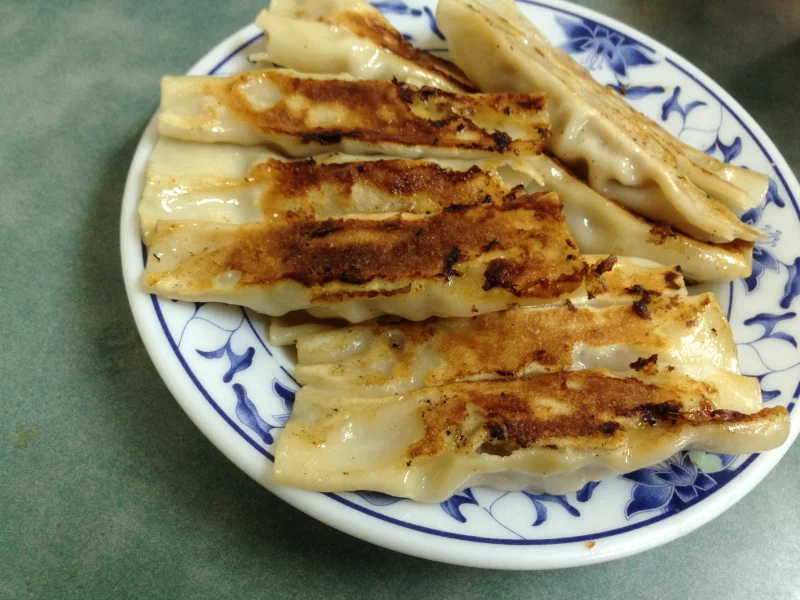
A plate of guotie should give you two different bites at once: a browned base that crackles slightly and a softer wheat wrapper around the filling. In Beijing, these pan-fried dumplings fit just as comfortably beside a breakfast bowl as they do in a simple lunch. They are familiar northern Chinese food, not a dish unique to Beijing, but the city's neighborhood snack shops give them a very local setting.
Dish Photos
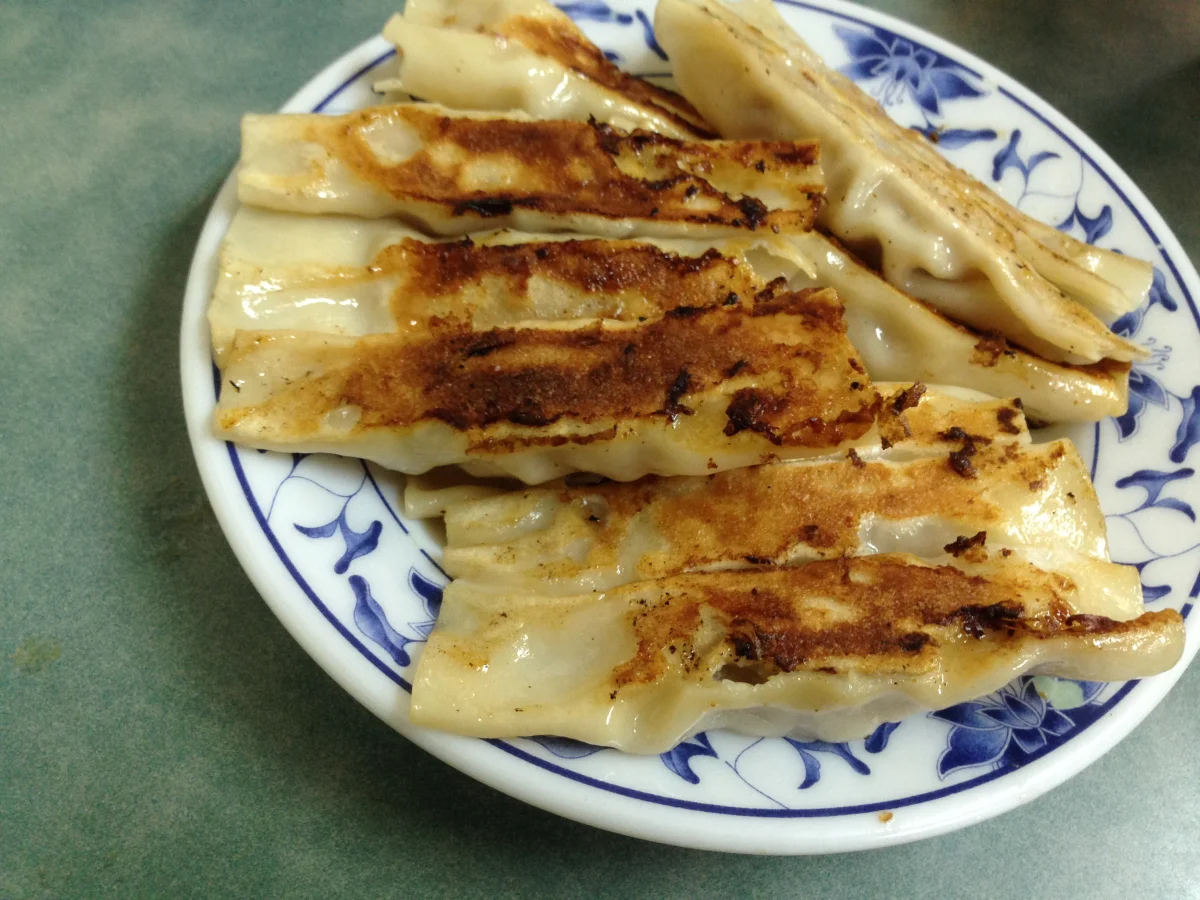
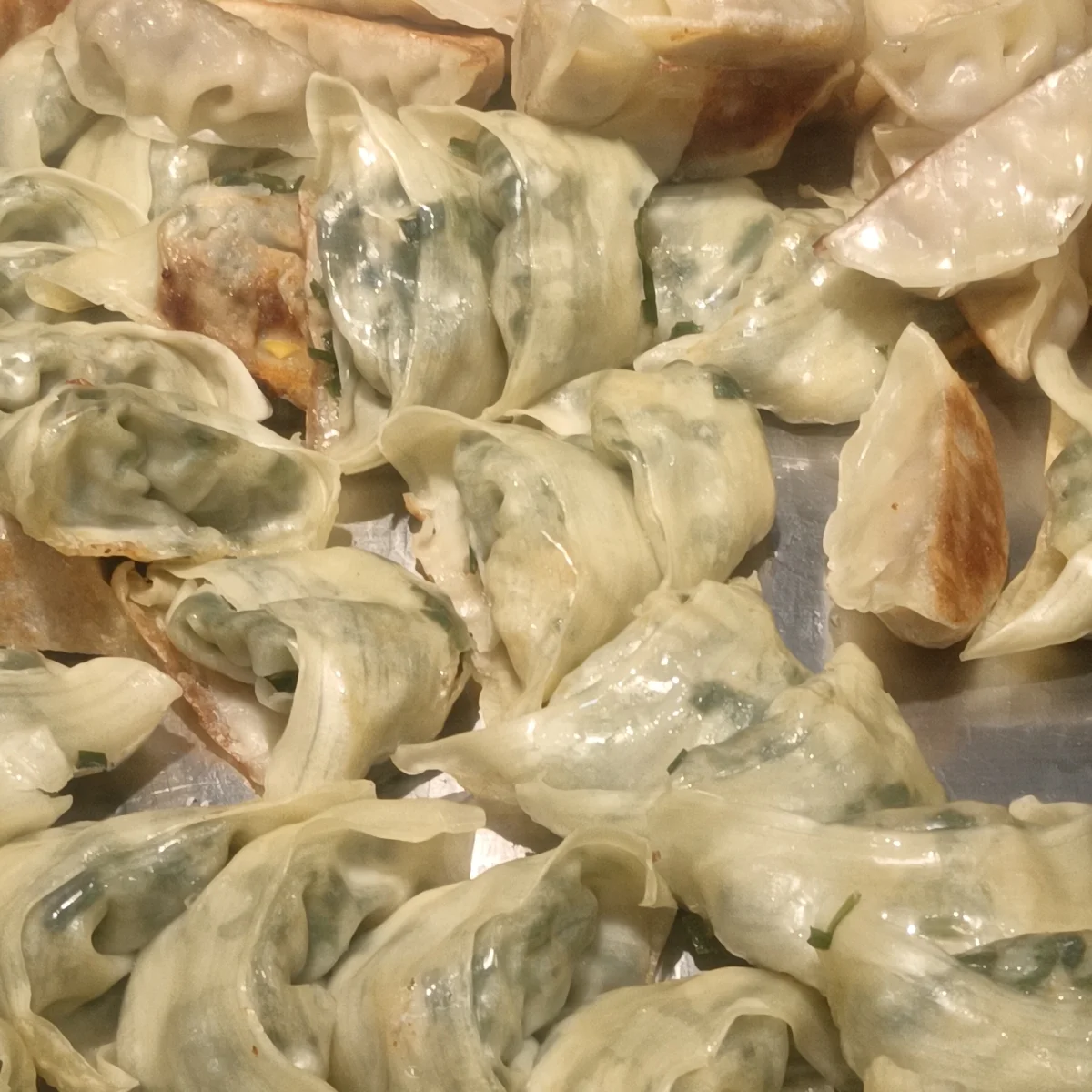
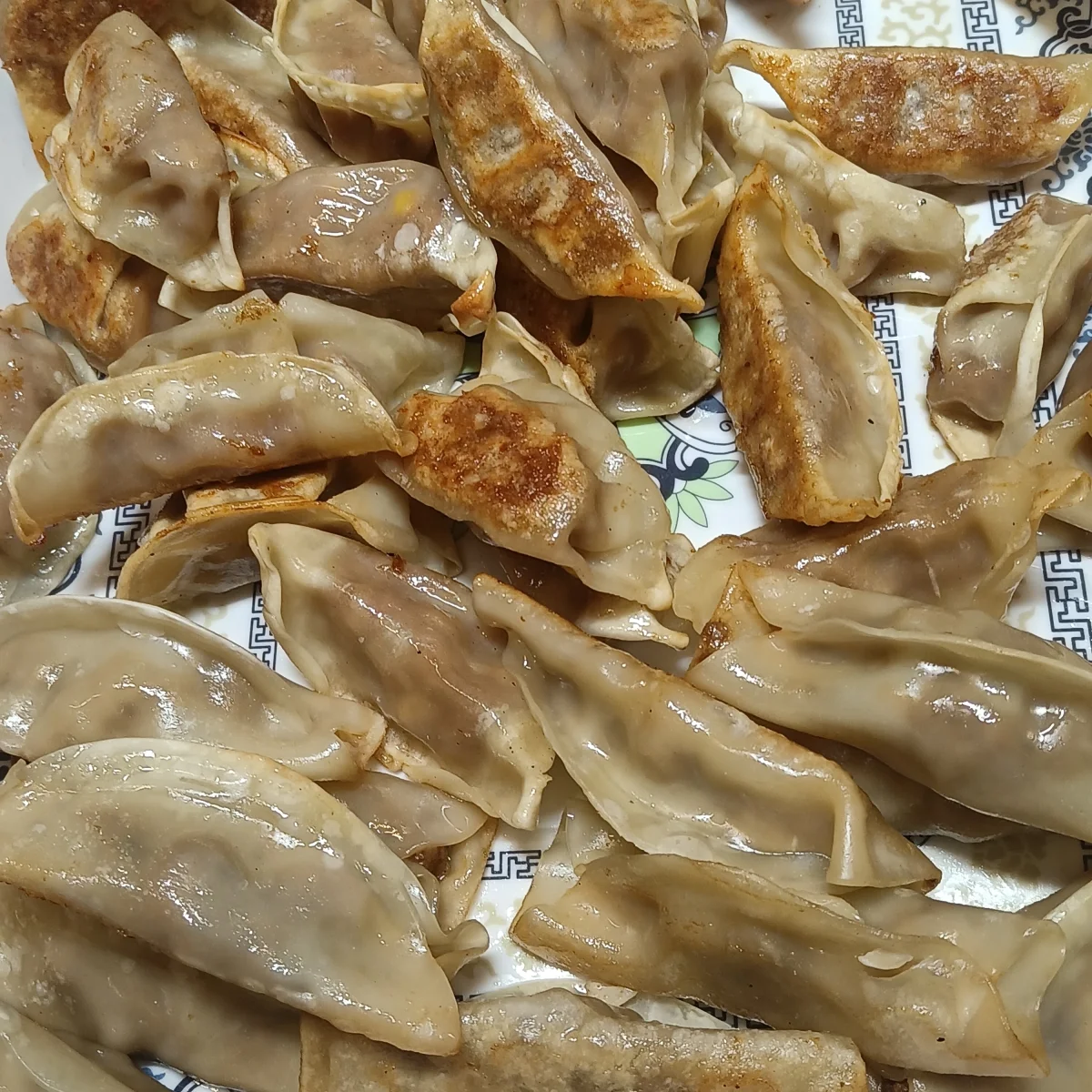
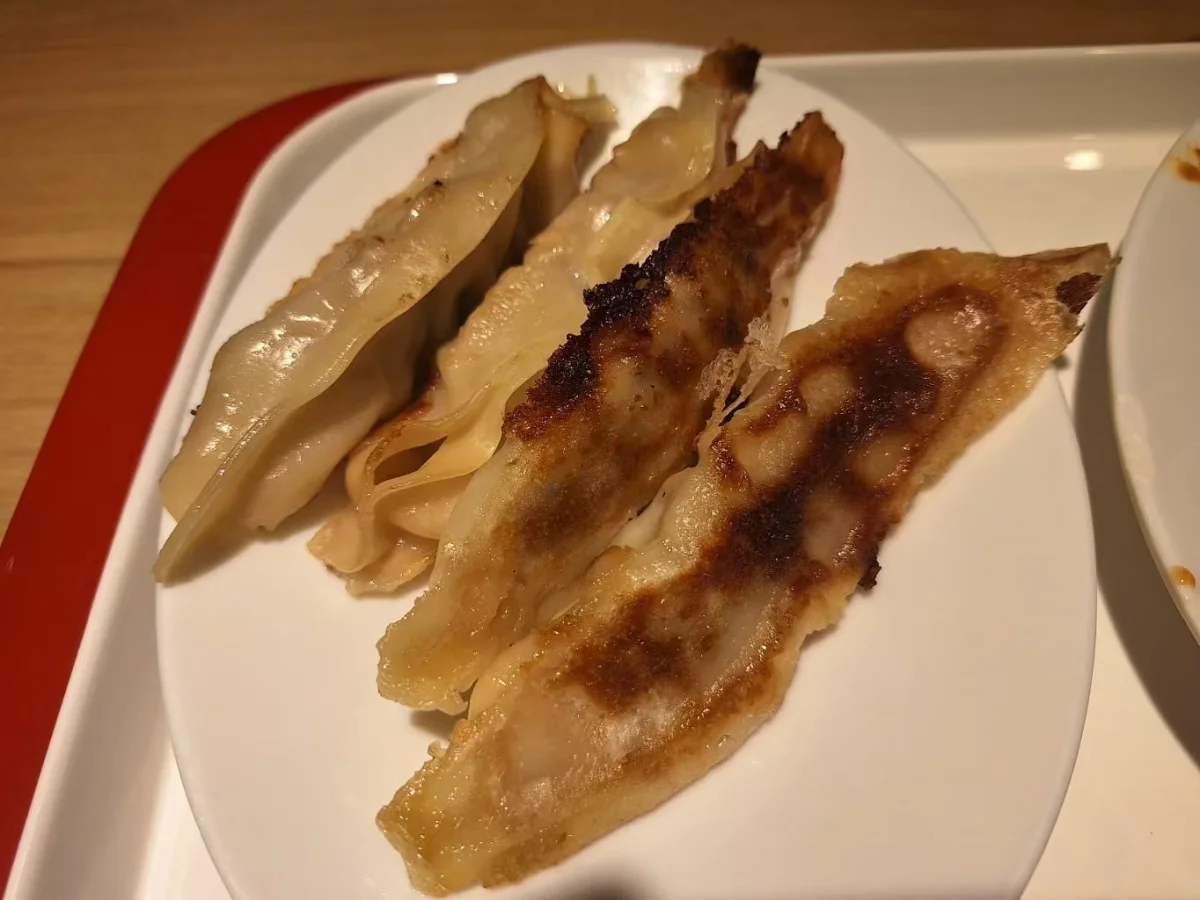
For a first order, concentrate on the filling, portion size, and whether the dumplings are cooked to order. A famous name is less useful than knowing what is coming to your table. This guide explains the menu vocabulary, how to approach the sauce, and why an elongated potsticker and a crescent-shaped one can both be sold as guotie.
What are guotie?
Guotie (锅贴, guōtiē), often translated as potstickers, are filled wheat-wrapper dumplings cooked against a hot pan. The base browns while moisture and a covered pan help cook the upper wrapper and filling. They are not normally submerged in a deep fryer. Their attraction is the contrast between the pan-contact surface and the tender upper half, rather than an all-over brittle shell.
Beijing Tourism's food entry describes a dark-golden bottom, a soft but resilient wrapper, and fillings that vary with the vegetables used. Shape is not a reliable single test: some examples are long and open at the ends; others are folded into crescents. The photographs here show several regional forms of the same broad food, rather than claiming that every Beijing shop makes one identical style.
Guotie, jianjiao, and boiled dumplings: read the cooking method
You may see both guotie and jianjiao (煎饺, pan-fried dumplings) translated as potstickers. Some cooks distinguish raw dumplings cooked directly in the pan from previously cooked dumplings that are fried afterward. Restaurant naming is not consistent enough to turn that distinction into a universal rule. If it matters to you, ask how the shop prepares its version.
- Guotie: expect a distinctly browned pan-fried base and a filled wrapper. Length, folding, and whether the ends are sealed can vary.
- Jianjiao: another name for pan-fried dumplings; do not assume the English translation tells you whether they were cooked beforehand.
- Shuijiao (水饺): boiled dumplings, with a softer surface and no intentionally fried base.
- Zhengjiao (蒸饺): steamed dumplings; again, the defining feature is the cooking method, not a crisp bottom.
Guotie also differs from baozi: a typical steamed bun has a thicker, bread-like wrapper. Ordering one of each can be interesting, but two portions of filled dough may be more food than you need at a short breakfast stop.
Choosing a filling without guessing
Start by reading the complete filling name, not just the vegetable. A menu entry featuring chives or fennel may also contain pork. Likewise, sanxian means a combination of fresh ingredients, not a fixed three-item recipe that every restaurant follows. One Beijing Tourism listing describes a version with pork, egg, chives, and shrimp: a useful reminder to ask rather than infer.
- Zhūròu dàcōng (猪肉大葱): pork and scallion. This is a straightforward starting point when you want a savory meat filling without a strong herbal note.
- Jiǔcài zhūròu (韭菜猪肉): Chinese chives and pork. The chives bring a more assertive aroma than cabbage.
- Xiǎohuíxiāng (小茴香): fennel greens. Confirm what they are mixed with; the short vegetable name alone does not establish whether the filling is meat-free.
- Xīhúlu jīdàn (西葫芦鸡蛋): zucchini and egg. This is a documented option at Beijing potsticker shops, but it is not vegan.
- Sānxiān (三鲜): ask which ingredients the shop uses, especially if you avoid shellfish or pork.
The wheat wrapper, filling, frying oil, and dipping sauce are separate ingredient questions. For dietary restrictions, ask about all of them; neither a vegetable name nor a photograph can establish the full recipe. The corn-and-beef photograph in this guide illustrates one regional filling variation, not a promise that it is available at a particular Beijing restaurant.
How much to order
Look for whether the menu charges by portion, piece, or weight. Fèn (份) means a portion; gè (个) refers to individual pieces. Where a price is expressed by liǎng (两), ask what that quantity means for the finished serving. A weight-based menu does not tell you the piece count without knowing the shop's convention and dumpling size.
A useful question is 一份几个? (Yí fèn jǐ ge?, “How many in one portion?”). For two people tasting other snacks, find out the smallest order and whether the shop allows two fillings in one serving. Do not assume a mixed plate is possible when batches are prepared separately. Confirming this first avoids ordering two full plates just to compare flavors.
At the table: taste the base before adding sauce
Try the first dumpling with little or no sauce, taking care with hot filling. You should be able to notice the difference between the browned underside and the softer top. A golden base is an eating-quality clue, not proof that the filling is safely cooked; if a dumpling seems undercooked, ask the staff to address it.
Vinegar is a useful starting point for dipping. Add chili or other condiments only as you prefer and as the shop provides them. Dip a small part rather than pouring sauce over the entire plate: the wet surface will soften, which changes the very contrast you came to taste. This is a texture preference, not a rule about the one correct local way to eat.
A lacy crust joining several dumplings is one presentation, not a requirement. Equally, an open-ended wrapper is not automatically defective. Judge the dish by the style the shop is making, rather than expecting every plate to resemble a photograph from another region.
Breakfast or lunch: what to put beside it
For breakfast, a bowl of plain millet porridge gives a gentle contrast to the fried base and seasoned filling. Beijing Tourism's coverage of Menkuang Guotie specifically mentions this pairing. You can keep the meal simple with one portion and one bowl, then decide whether you need anything more.
At lunch, choose a modest vegetable side if available rather than automatically adding another large starch dish. If your interest is comparing Beijing wheat foods, save shaobing or youtiao for another stop: they deliver different textures, and each is easier to appreciate before you are full. The Beijing breakfast collection offers other ways to organize a morning meal.
Finding a shop without relying on an old address
Search for 锅贴 near where you will already be, then check the current menu and hours. A June 2025 Beijing Tourism feature places Menkuang Guotie Tu at 78 Langfang Ertiao (廊房二条78号) in the Qianmen area. Older articles place the business in Menkuang Hutong. Treat the newer reference as a starting point, not a permanent address guarantee, and confirm the current listing before making a special trip.
We have not conducted an on-site review of that restaurant. The photographs below are independently credited food illustrations, not photographs of its dishes. Prices and opening hours are deliberately not copied from old articles. A useful visit starts with the correct branch, a clear filling choice, and an understanding that freshly cooked dumplings may require a wait.
Quick answers before you order
Are potstickers only a breakfast food?
No. They can be breakfast, a snack, or a simple main dish. Availability follows the individual shop's service hours rather than a citywide breakfast-only rule.
Are all guotie pork-filled?
No. Recipes and menus vary. Read the full filling name and confirm the actual ingredients rather than deciding from the shape or translation.
Will takeaway taste the same?
Usually not in texture. Steam trapped in a closed container softens a fried base. Eat at the shop when crispness is your priority; if taking the food away, keep sauce separate and plan to eat promptly.
Sources and photo credits
Food descriptions and Beijing context: Beijing Tourism: guotie; Beijing Tourism: potsticker styles and fillings; Beijing Tourism: filled foods and sanxian ingredients; Beijing Tourism: Qianmen snack shops, June 2025. Practical ordering suggestions are editorial guidance, not restaurant service guarantees.
Photographs: bryan..., potstickers photographed in Taipei, CC BY-SA 2.0 (resized for display); Fumikas Sagisavas, chive-and-pork potstickers and beef-and-corn potstickers, CC0; Cartonfox, guotie photographed in Laoling, Shandong, CC0. These regional examples illustrate shape and browning; they are not presented as Beijing restaurant reviews.
Comments (0)