Guotie in Beijing: Crisp-Bottomed Dumplings, Fillings, and How to Order
A guide to Beijing potstickers: pan-fried bases, filling names, portion sizes, vinegar dipping, and breakfast pairings, without confusing every fried dumpling style.
Choose a guotie dip that suits your plate: recognize vinegar labels, compare fresh garlic with Laba garlic, adjust chili, and keep the browned base crisp.
A hot plate of guotie already has plenty going on: a browned base, a soft upper wrapper, and a seasoned filling. The dipping dish should give you another way to enjoy those contrasts, not cover them up. Start with a small taste of the dumpling on its own, then decide whether you want acidity, garlic, heat, or simply another plain bite.
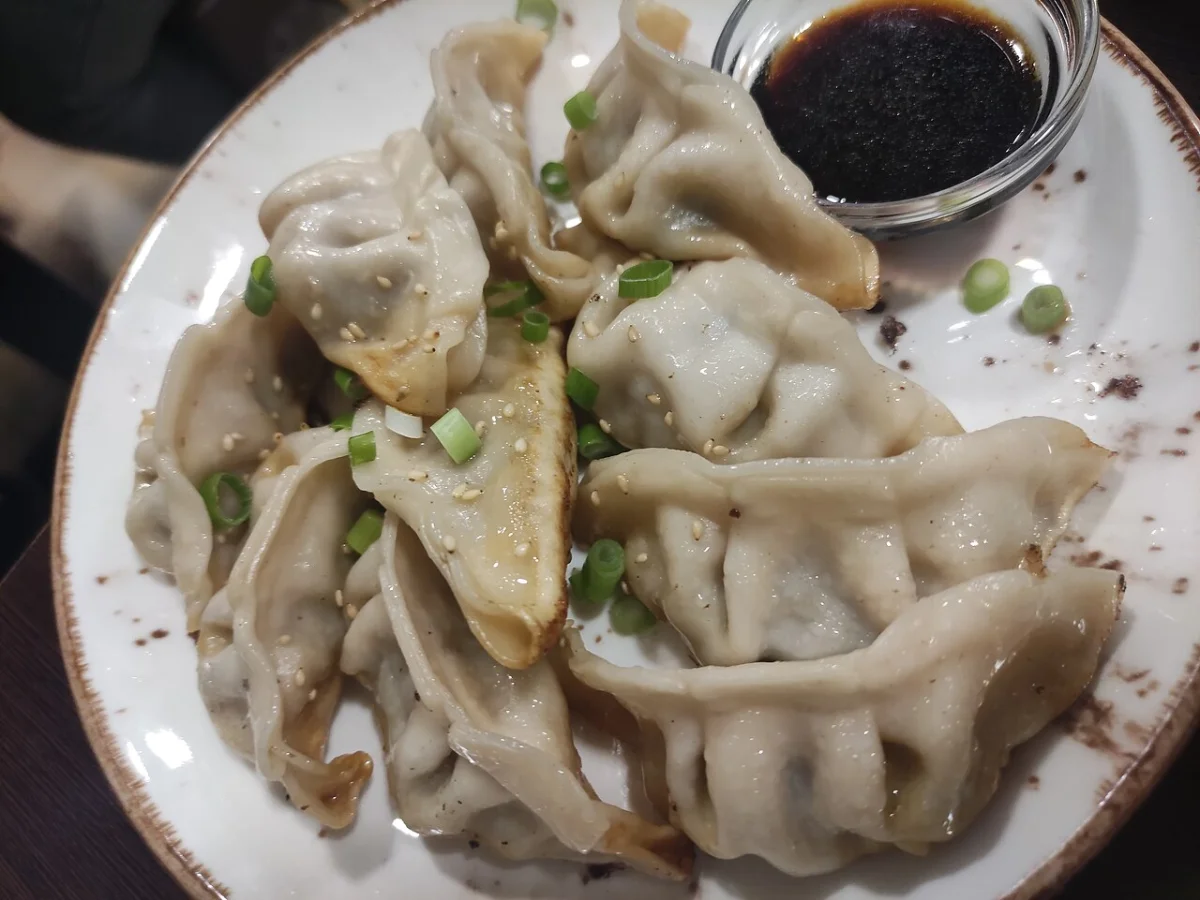
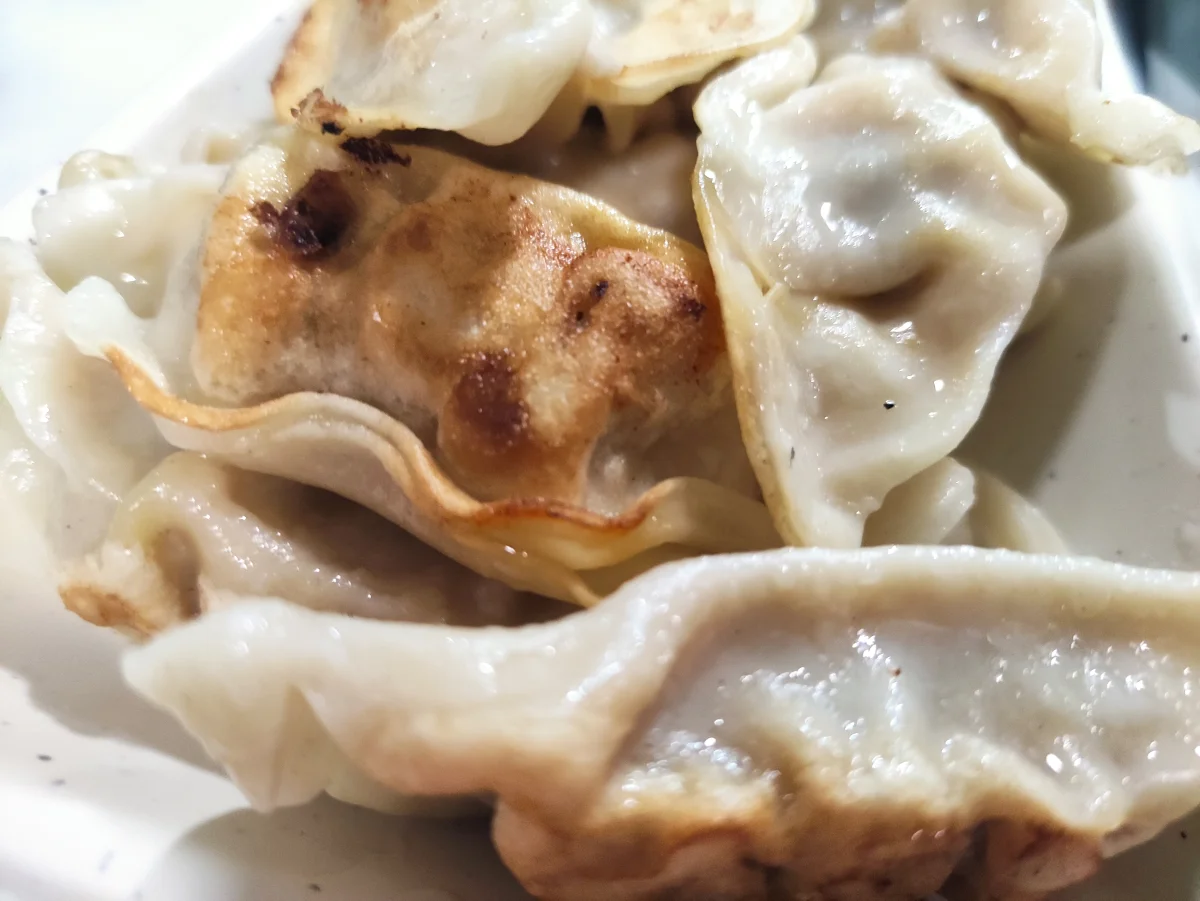
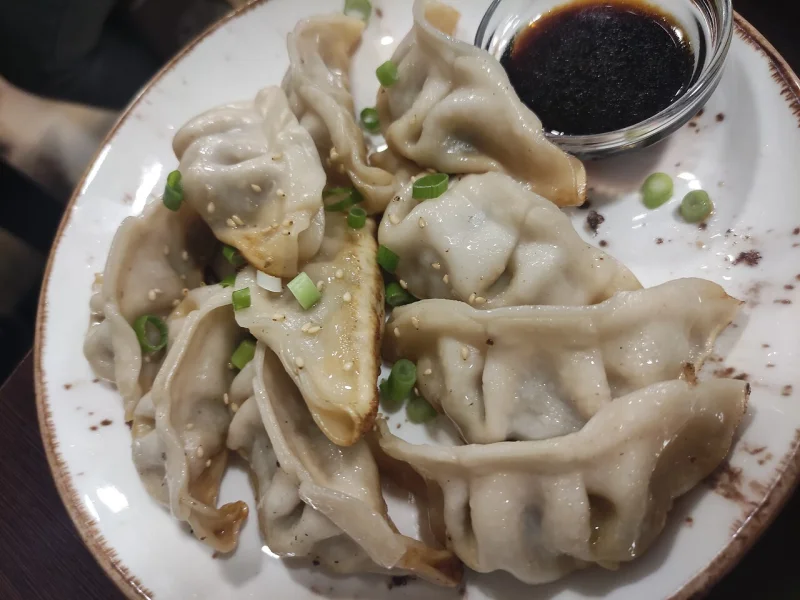
This is a condiment companion to our Beijing guotie guide, rather than another list of fillings or restaurants. The combinations below are practical starting points, not a claim that every Beijing household or snack shop follows one fixed recipe.
If you are unsure where to begin, put a little vinegar in a clean saucer and leave the other condiments alone for the first dumpling. Dip one edge briefly, rather than submerging the entire piece. You can then compare a lightly dressed bite with the plain filling and decide what is actually missing.
Too sour? Use less on the next bite rather than trying to correct a large bowlful. Want a savory note? Try a few drops of soy sauce in a separate small portion. Want garlic or chili? Add one at a time. This is easier to adjust than mixing everything on the table before the food arrives.
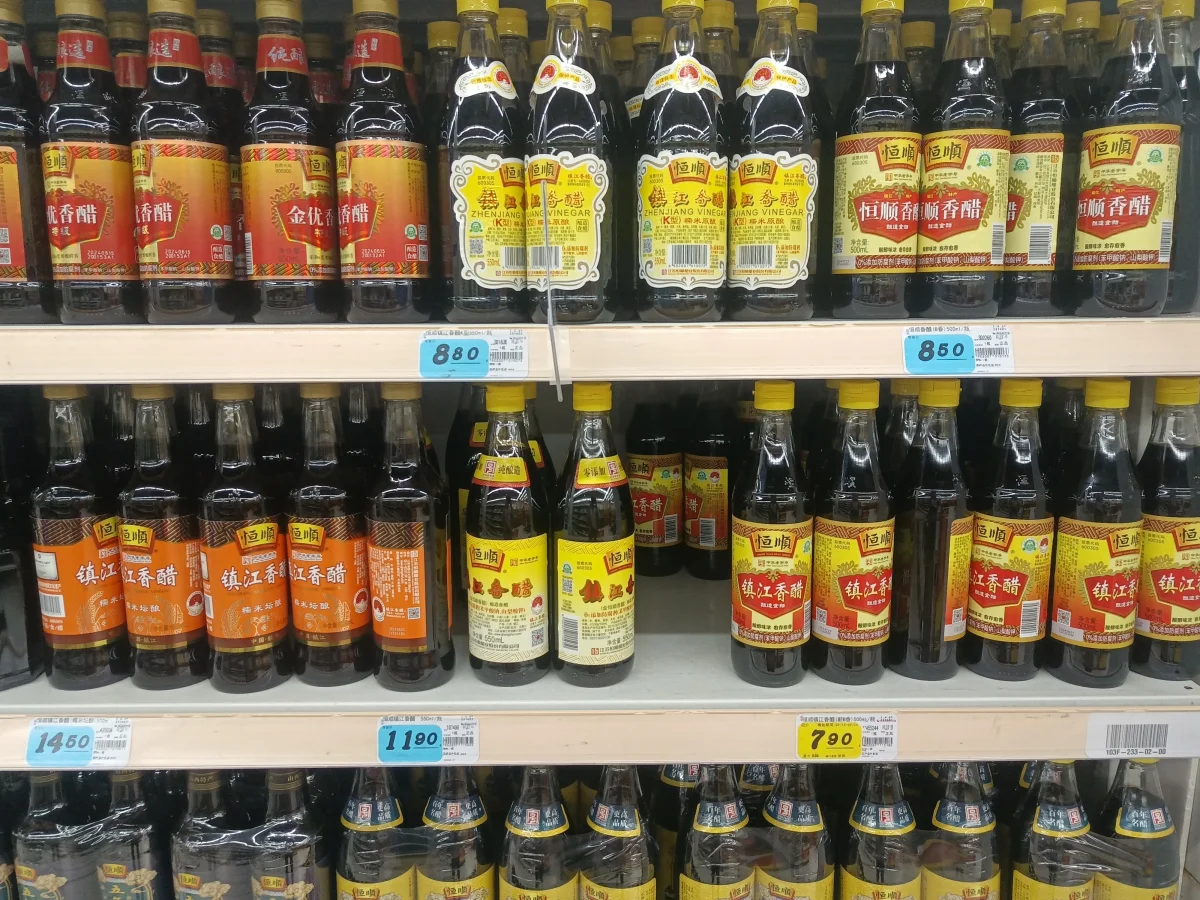
Dark liquids in a condiment set can look surprisingly alike. Ask which bottle is vinegar if there is no readable label; color alone is not a reliable way to separate vinegar from soy sauce.
There is no need to demand a particular brand to enjoy your order. Use what the shop offers, taste cautiously, and keep your dipping dish small. A photograph of packaged vinegar illustrates a label category, not an endorsement or a promise about the bottle at your table.
Fresh garlic brings a direct pungency. Minced garlic, 蒜末 (suan mo), spreads that flavor through the dip; a whole clove, 蒜瓣 (suan ban), lets you alternate small bites with the dumpling. Neither is compulsory. If you want to keep the filling's flavor easy to distinguish, leave garlic out of the first dipping dish.
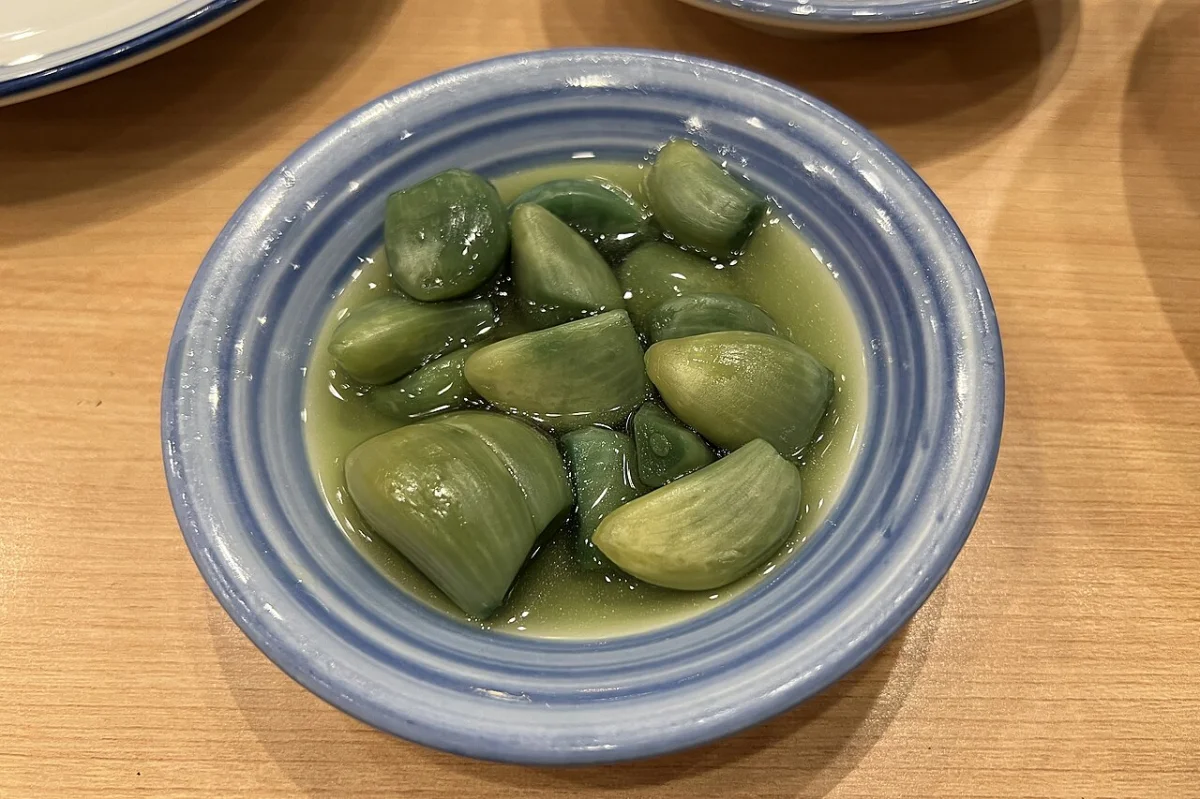
Laba garlic, 腊八蒜 (la ba suan), is vinegar-pickled garlic. Beijing's market regulator describes its characteristic green color and sour, mildly pungent taste. It is associated with the twelfth lunar month's Laba festival, though availability depends on the seller rather than the calendar alone. The same official guidance notes that its pungency is lower than that of fresh garlic.
This has a documented place alongside Beijing dumpling culture: a December 2021 report on the Beijing government website described Huifeng Dumpling House preparing Laba garlic for seasonal sale. That is historical context, not confirmation that the restaurant, or any guotie stall, has it today. Ask “有腊八蒜吗?” (You laba suan ma? Do you have Laba garlic?) rather than assuming it comes with the plate.
If it is offered, try a small piece separately before adding any of its pickling liquid to your sauce. Sweetness and acidity vary by preparation. The familiar green appearance does not replace normal ingredient, storage, or freshness checks.
Chili oil, 辣椒油 (lajiao you), adds oil as well as heat. A spoonful containing lots of chili solids can behave differently from a few drops of the oil above them. Chili sauce, 辣椒酱 (lajiao jiang), may be thicker and bring additional salt or other ingredients. Ask what is in the condiment if that matters to your meal.
For a first try, put a small amount in one side of your saucer and dip there for a single bite. You can always take more; you cannot remove it once it is mixed through the whole dish. Skipping chili is a perfectly reasonable preference and does not make the meal less legitimate.
Instead of memorizing a rigid pairing chart, use the first dumpling as your reference:
These are tasting suggestions, not rules about what pork, beef, egg, or vegetable dumplings must be served with. Recipes vary enough that the food in front of you is a better guide than the filling name alone.
A guotie base loses its dry crunch when left sitting in liquid. Keep sauce in the dipping dish, take one dumpling at a time, and dip shortly before eating. Pouring sauce over the whole plate makes it harder to keep both the browned base and tender wrapper in the same bite.
For takeaway, ask for sauce separately and add it when you eat. A dipping sauce can season a softened dumpling, but it cannot restore a crust that has already softened during the journey. Use a plate and saucer rather than flooding the takeaway box.
The last request refers to the sauce, not the filling. Leaving out a condiment does not change ingredients already mixed into a dumpling. For an allergy or strict dietary restriction, ask separately about the filling, wrapper, cooking oil, condiments, and shared preparation; do not rely on appearance or a brief “no sauce” request.
Keep the condiments alongside the dumplings rather than automatically adding them to every bowl on the table. Different dishes have their own balance. Our Beijing breakfast collection explores those combinations, while the guotie topic brings together the basic ordering guide and this sauce-focused companion. For another wrapper and texture, browse the baozi guides; a steamed bun is not just a softer name for a potsticker.
No. Try vinegar alone first if it is available. Soy sauce is an optional adjustment, and a seasoned filling may not need it.
No. Ask what is available and whether a separate side dish is charged. Historical references to seasonal sales are not a current menu guarantee.
This guide does not prescribe one. Condiment strength, filling seasoning, and personal preference vary. A small tasting portion is more useful than a universal formula.
The practical dipping suggestions are editorial guidance, not a report of a recent restaurant visit. Background on Laba garlic was checked against the Beijing market regulator's Laba food guidance. The dated example of dumpling-house sales comes from the Beijing government portal's December 2021 winter-solstice report. Neither source establishes a single mandatory guotie dipping recipe.
Photographs show actual food and condiments, not AI illustrations. The two dumpling photographs by Francesc Fort were taken at restaurants in Spain and illustrate dipping and crust texture; they are not photographs of a Beijing guotie shop. The Laba garlic photograph was taken by N509FZ at Hongzhuangyuan in Shangdi, Beijing, in January 2022; it does not establish today's menu or price. The vinegar photograph illustrates packaged products, not a current retail-price guide.
Images are resized and compressed for delivery; card and social-preview crops may differ from the full photographs. Adaptations of the CC BY-SA images remain under that license.
Comments (0)