Aiwowo is easiest to enjoy when treated as a small, soft Beijing snack rather than as a dessert to order after every meal. At a traditional snack counter it is usually one choice among many, alongside pea cake, fried rings, and other local specialties. The useful question is not simply whether a shop has it, but whether you want a fresh counter portion to eat soon or a sealed pack to take away.
Start with the right expectation
Official Beijing sources describe aiwowo as a sweet stuffed snack made with glutinous rice or millet flour. Its defining experience is a pale, yielding outer layer around a sweet filling, not a crisp shell or a hot steamed-dumpling texture. The fillings can include sesame, date, hawthorn, nuts, or other sweet ingredients, so do not assume that every white piece has the same center.
That makes aiwowo a good first choice for someone exploring Beijing snacks but not looking for a large dessert. One or two pieces are usually enough to understand the texture. If you are ordering several traditional sweets, share a plate so the glutinous rice does not become tiring before you have tried the savory items.
Choose a snack counter when you want the classic experience
For a counter-made serving, look for a long-established Beijing snack shop that presents aiwowo as part of a broader selection rather than as an isolated novelty. Beijing Tourism identifies Huguosi Snacks and Jinfang Snacks as established places where aiwowo appears among traditional Beijing and halal-style snack offerings. Their value is the context: you can compare the small sweet with other local foods on the same visit.
At the counter, ask which aiwowo is available that day and whether it is intended to be eaten immediately. Do not rely on a particular filling being permanent. Seasonal production, shop recipes, and the day’s selection can change; the official tourism descriptions establish the snack category, not a universal fixed menu.
What freshness looks like
Aiwowo should look neat and lightly dusted, with a soft but intact outer layer. It is not meant to shatter like a biscuit, but it should not look wet, collapsed, or dried out at the edge. Because the rice-based exterior is tender, buy only what you expect to eat soon when choosing a counter portion.
Texture is a better guide than color alone. A very white coating is normal, while a strong perfume or an overly hard skin is not a reason to assume better quality. Take a small bite first: the wrapper should be gently chewy, and the filling should give contrast without turning the whole snack into a sticky sugar mass.
Fresh counter pieces and sealed packs are different choices
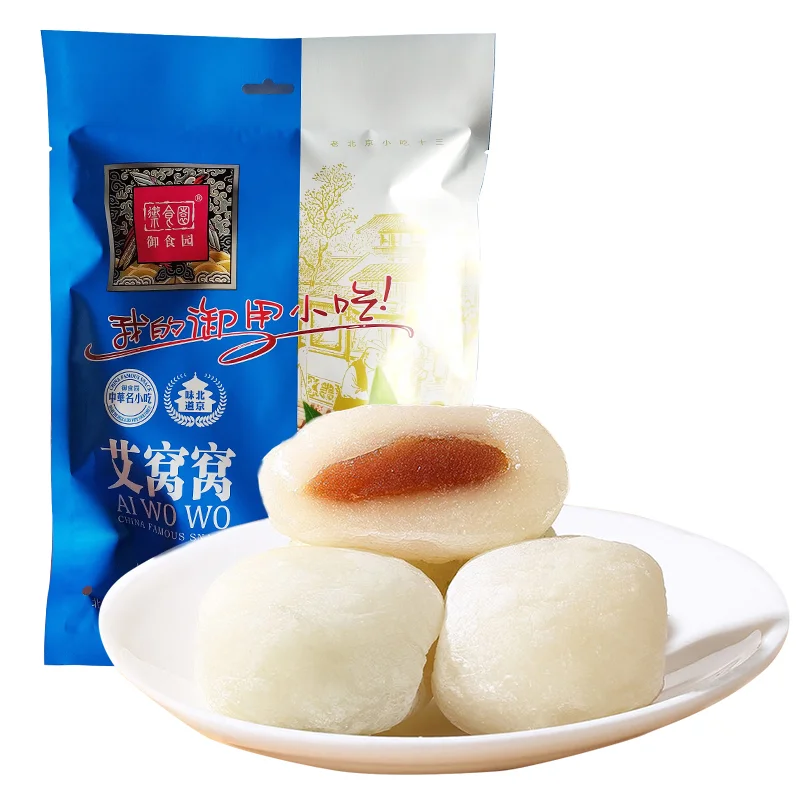
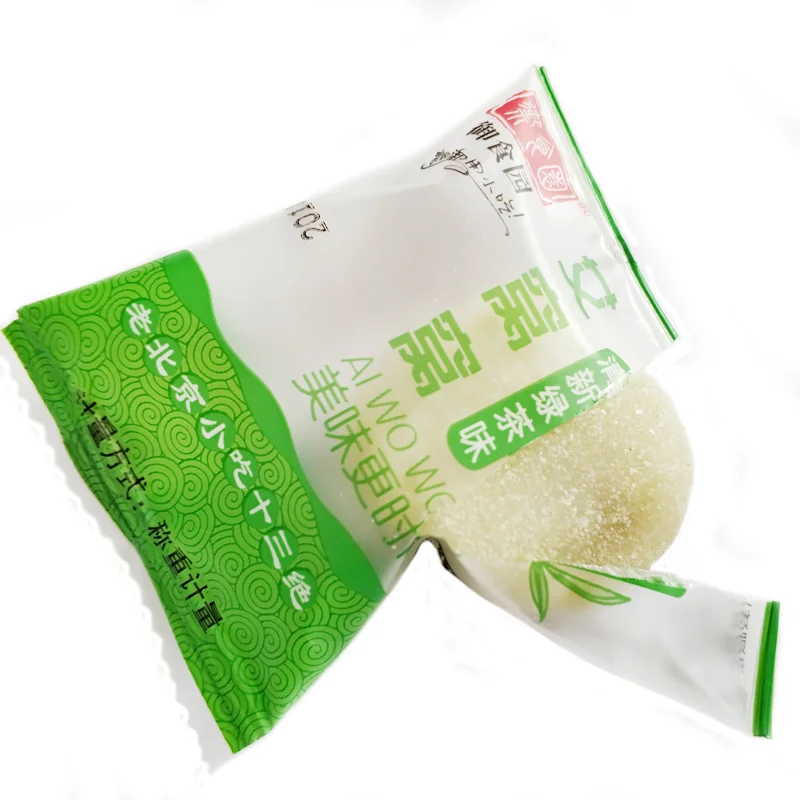
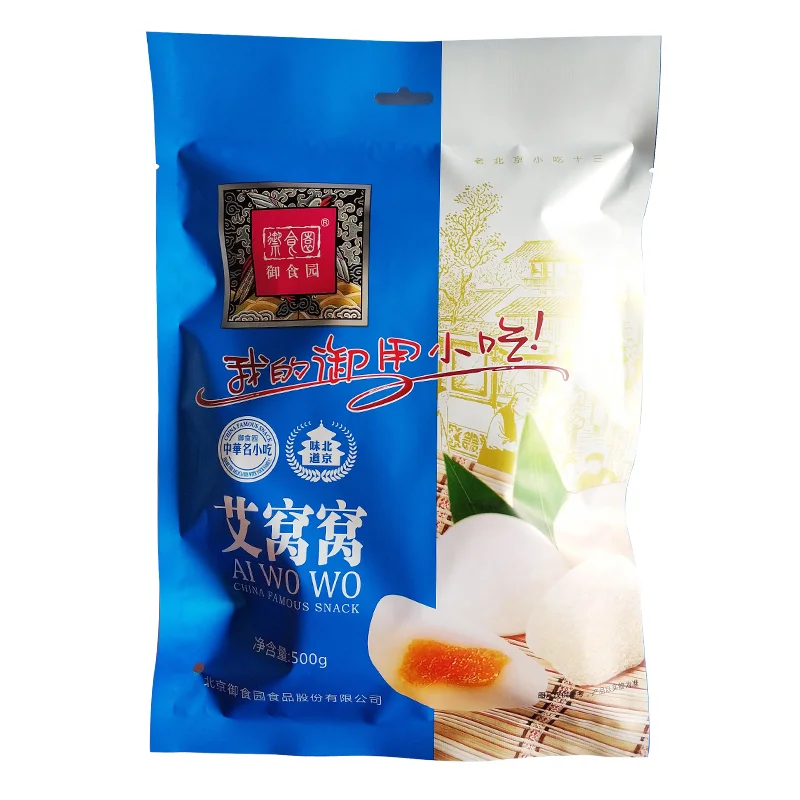
Sealed aiwowo packs are practical for travel, gifts, or sampling different fillings, but they should not be judged by exactly the same standards as a counter-made portion. Packaging protects the snack and identifies the maker; it does not promise that the texture will mirror a freshly prepared plate. Read the label for storage and best-before guidance, then keep the pack for later rather than opening several varieties at once.
If you want the classic soft texture, eat the counter version first. If you want something to carry home, a sealed pack is the sensible choice. Both can be legitimate Beijing snack products, but they answer different needs.
Build a balanced Beijing snack stop
Aiwowo works best beside something with a different texture. Pair it with a few crisp or savory bites, or order it after a sharper drink such as douzhi if that is part of your snack stop. Avoid ordering it as though it were interchangeable with every rice sweet: lvdagun brings roasted soybean flour and a rolled shape, while aiwowo is softer and more enclosed.
For a simple order, choose one aiwowo, one contrasting savory item, and tea or water. That keeps the snack useful as part of a Beijing food outing instead of making it an overly sweet meal.
Why this small snack deserves attention
Aiwowo has a long-standing place in Beijing snack culture, but its appeal is practical as well as historical. It gives a visitor a gentle entry into the city’s sweet rice-based foods without requiring a large portion or a complicated ritual. Ordering it with clear expectations—soft, sweet, filled, and best chosen in a small portion—makes the experience more accurate than treating it as a generic rice ball.
Sources
Photo credits
Comments (0)