Jing Jiang Rou Si: Beijing Shredded Pork, Sweet Bean Sauce, Tofu Skin, and How to Eat It
A practical guide to Beijing Jing Jiang Rou Si: tender pork strips, sweet bean sauce, fresh scallion, tofu-skin wraps, texture cues, and how to eat the dish.
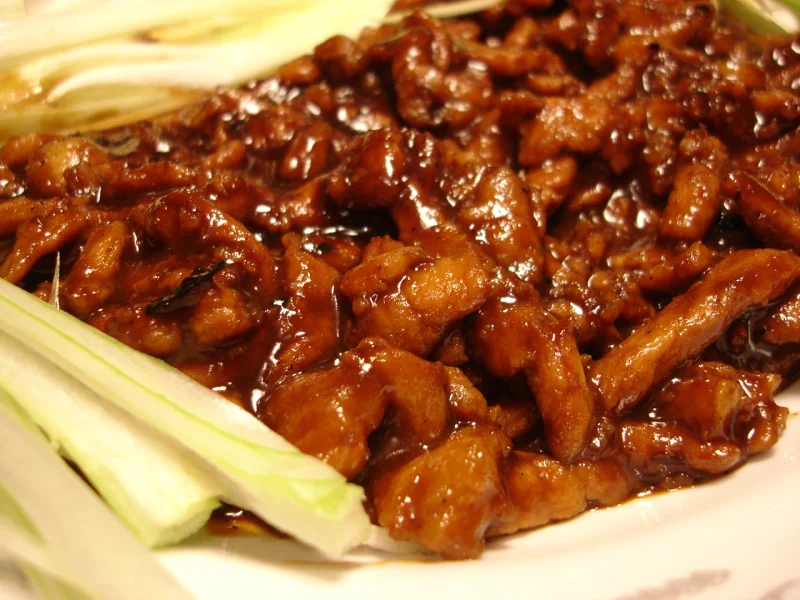
A focused guide to Jing Jiang Rou Si: how sweet bean sauce should coat the pork, why tofu skin and scallion matter, and how to build a balanced wrap.
Jing Jiang Rou Si is often introduced as shredded pork in sweet bean sauce, but that short description misses the table logic that makes the dish work. The pork should arrive coated rather than swimming in sauce; fresh scallion should stay crisp; and the tofu skin or thin pancake should be treated as part of the bite, not a decorative side. When those elements are handled well, the dish is sweet-savory, aromatic, and surprisingly light for something so glossy.
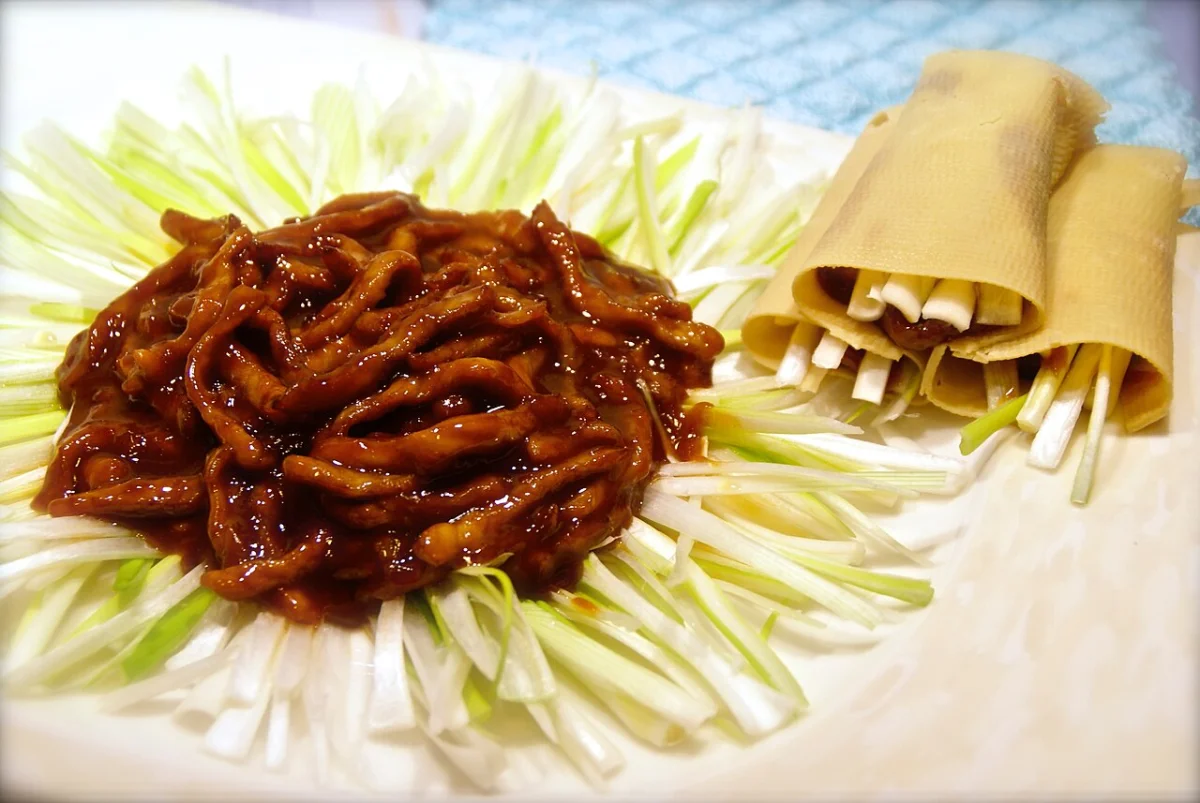
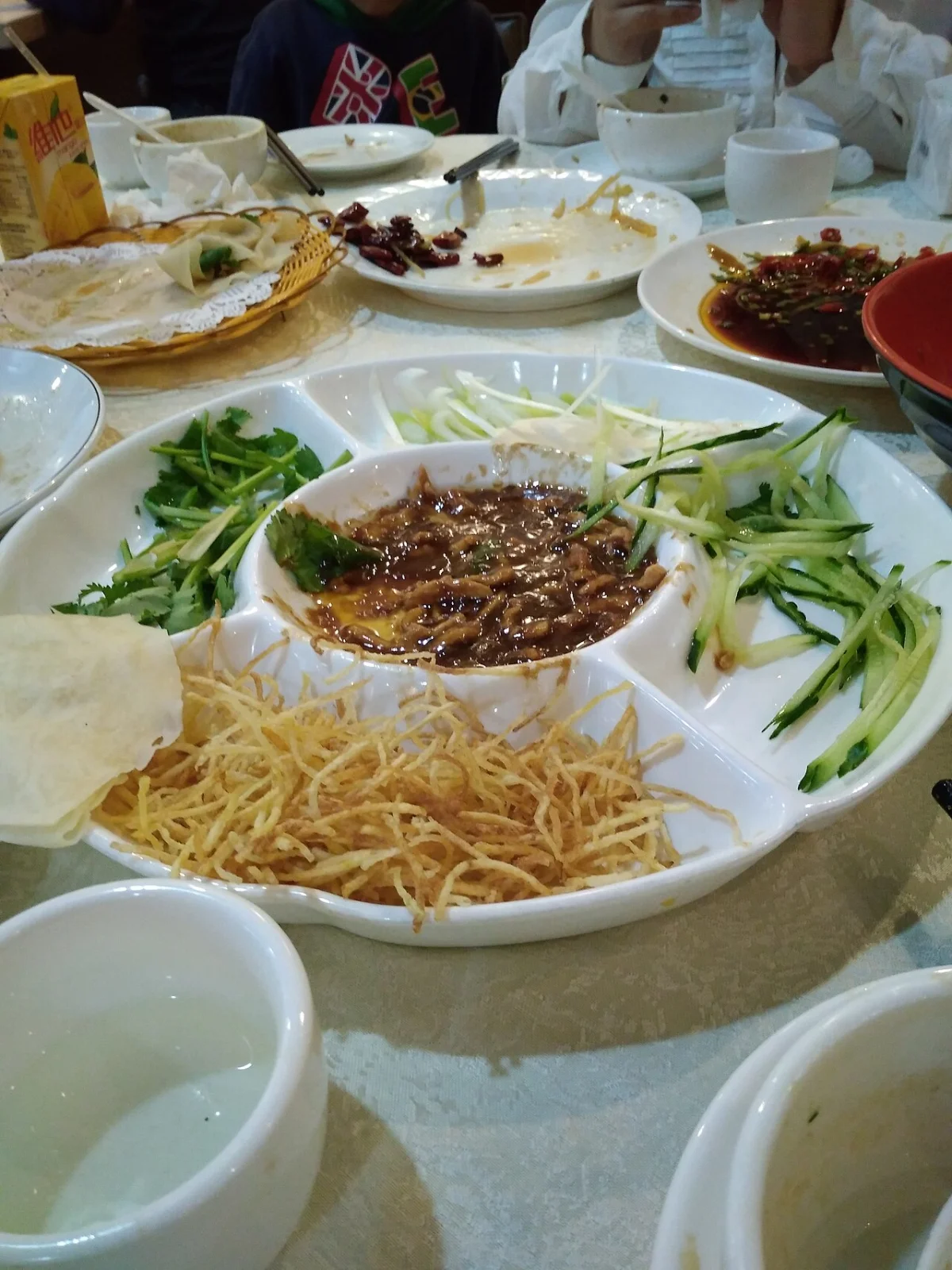
Beijing Tourism describes Jing Jiang Rou Si as a traditional Beijing-flavour dish made with lean pork, sweet bean sauce, scallion, ginger, and the northern jiang bao stir-frying method. That last point is the useful one for diners: the sauce is cooked in the wok so that it perfumes and clings to the pork. It should not be a cold dipping sauce spooned over plain meat at the end.
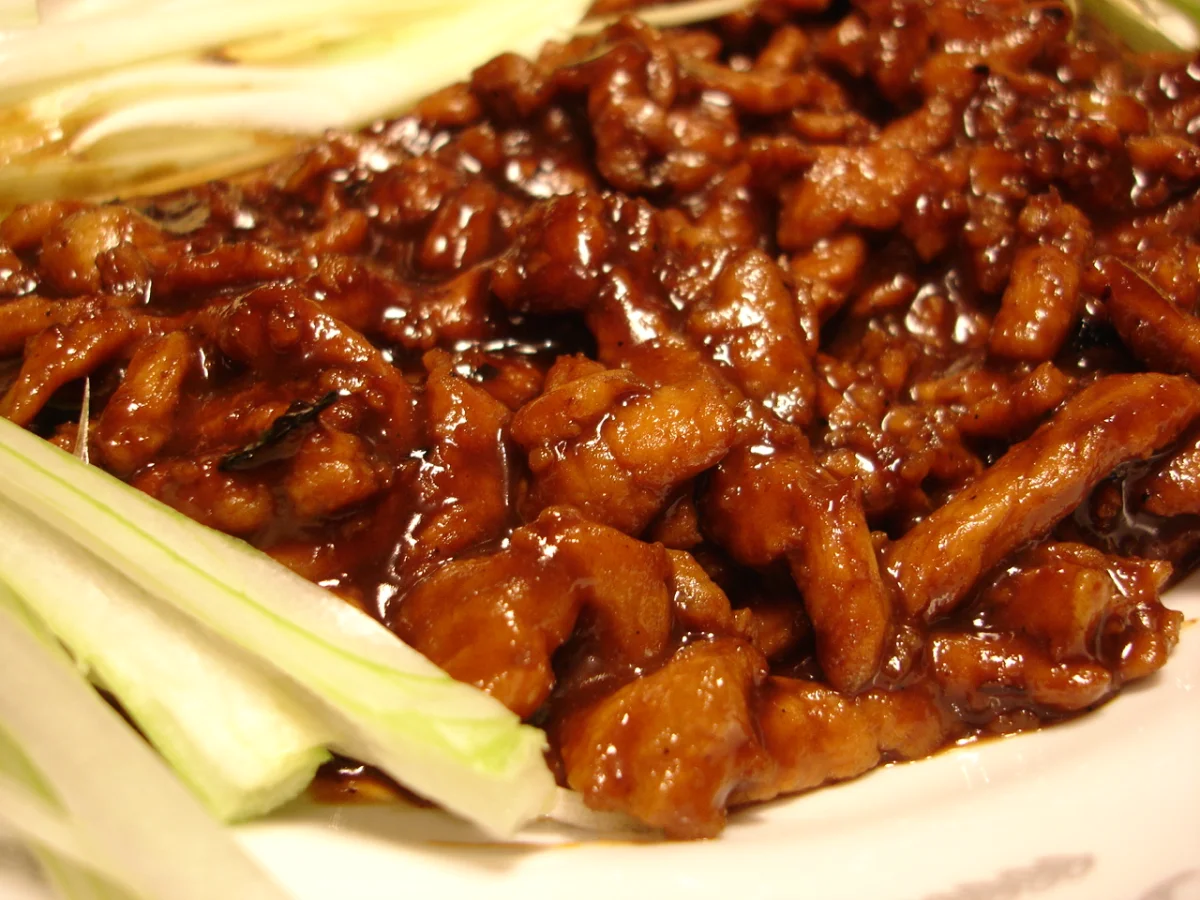
Sweet bean sauce, usually labelled tianmianjiang (甜面酱), gives the dish its dark sheen and rounded sweetness. A well-made plate tastes savory first and sweet second. If the sauce is overly thin, the wrap becomes soggy; if it is too reduced or applied too heavily, it overwhelms the scallion and makes every bite feel sticky. The goal is a thin, even coating on separate pork strands.
Cut and heat matter more than a long ingredient list. Pork loin or tenderloin is sliced into fine, even strands so it cooks quickly. Some kitchens use a light starch-and-egg-white coating before stir-frying, while others keep the preparation simpler. Either way, the pork should be cooked just long enough to turn tender and then returned to the sauce briefly. Long cooking after the sauce has reduced is the usual reason a plate becomes dry or clumpy.
This is why the dish is better judged by texture than by the darkness of the sauce. Deep colour alone is not proof of flavour: the pork needs to remain silky, and the sauce needs to hold it together without turning the pile into a paste.
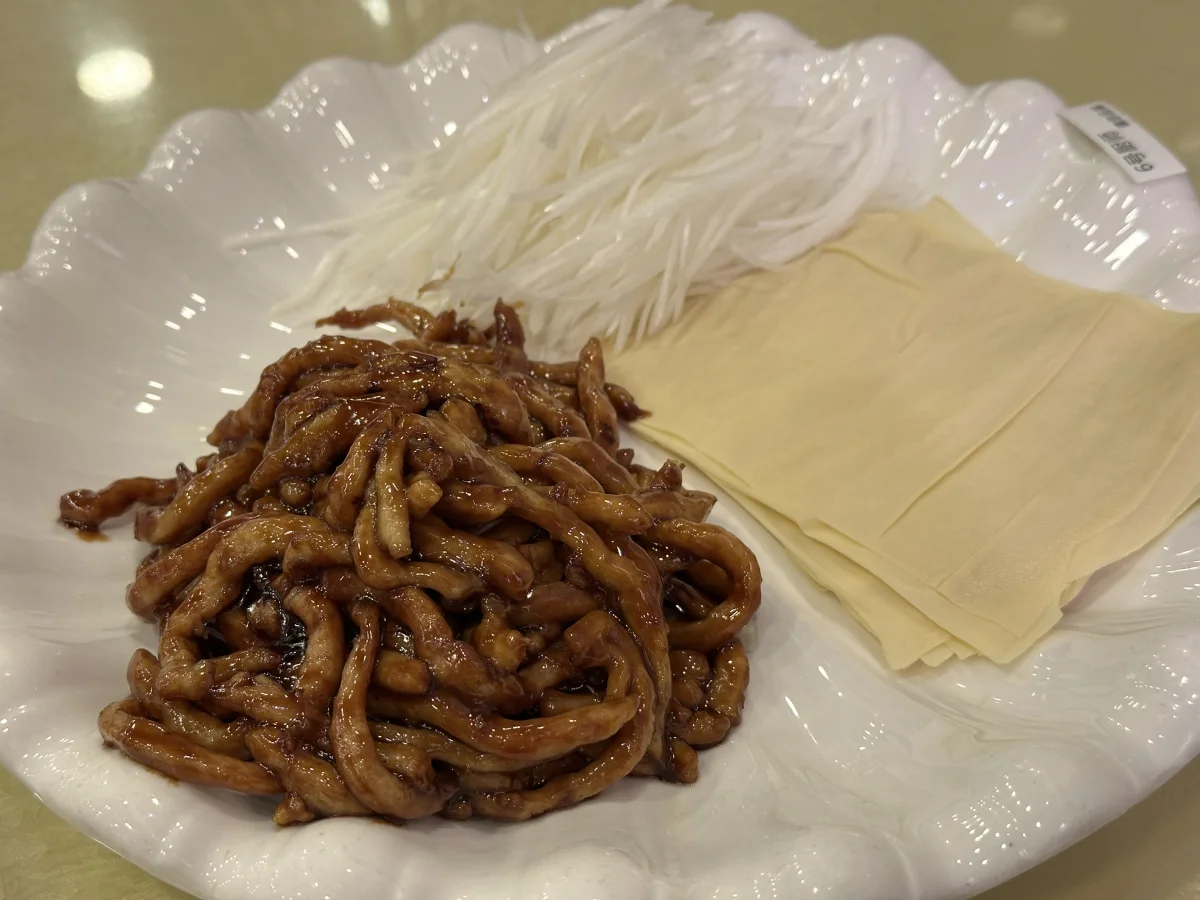
Fresh tofu skin has a mild bean flavour and a tender, slightly elastic feel. It lets the pork and sauce lead without adding much grease. A thin pancake, by contrast, provides a warm wheat base and can make the bite feel closer to the wrapping ritual used for roast duck. Both are legitimate, but they call for a different portion size: tofu skin needs less filling because it tears more easily, while a pancake can take a little more pork.
Do not confuse the wrapper with a spring-roll pastry. It is not meant to be deep-fried or packed tightly. The best wrap is loose enough that the scallion remains crisp and the pork does not spill out on the first bite.
Start with less sauce-heavy pork than you think you need. The scallion is there to balance the dish, and a smaller first wrap makes it easier to adjust the ratio on the next one. This is also a useful contrast with the more structured wrapping sequence in the Peking duck pancake guide: Jing Jiang Rou Si needs a lighter, less tightly packed roll.
The most common mistake is treating the tofu skin as a plate garnish and eating all the pork directly. That leaves the sweetness of the sauce unbalanced. Another is using too much pork in one wrap, which hides the scallion and splits a delicate tofu sheet. Finally, do not expect the sauce to taste like the fermented soybean paste used for Beijing zhajiang noodles; both are sauce-driven dishes, but their preparation, texture, and role at the table are different.
For the dish's basic ingredients, serving context, and first tasting, see the main Jing Jiang Rou Si guide. This companion article is narrower: it helps you read the sauce, wrapper, and texture on the table, so you can build a wrap that tastes balanced rather than merely sweet.
Comments (0)