History of Peking Duck: From Court Cooking to Beijing Restaurants
A historically careful guide to Peking Duck, tracing roast duck from court cooking and Beijing restaurant traditions to hanging ovens, closed ovens, carving, and modern dining.
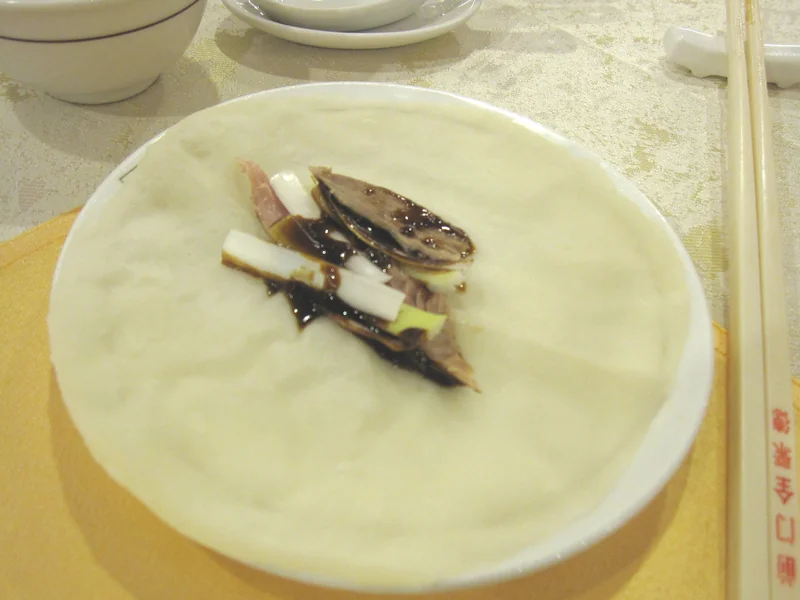
A practical Beijing Peking duck pancake guide covering sauce amount, scallions, cucumber, crisp skin, wrap order, and common first-timer mistakes.
The pancake is where Peking duck becomes a hands-on Beijing meal. The duck may be carved by a chef, and the skin may get most of the attention, but the final bite depends on how you use the thin pancake, sweet bean sauce, scallions, cucumber, and sliced duck together. A badly wrapped pancake can hide the crisp skin under too much sauce. A good one keeps the duck warm, balanced, and easy to eat.
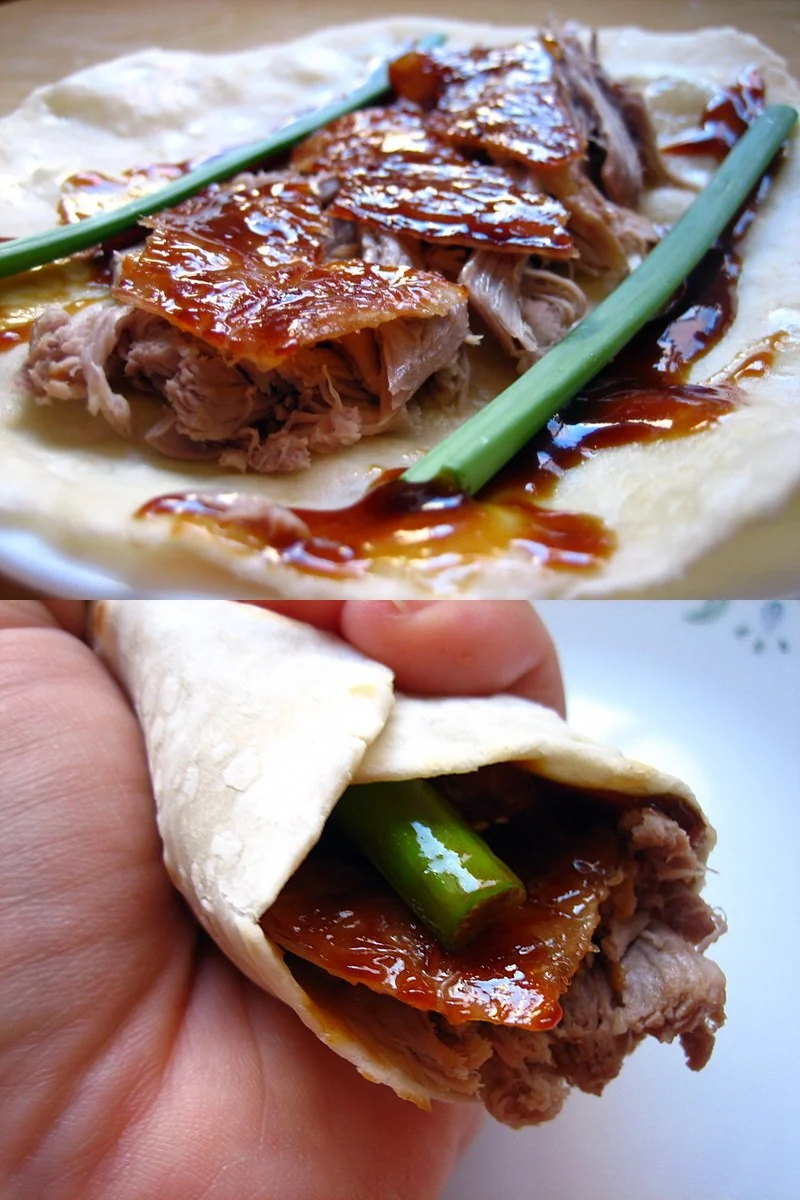
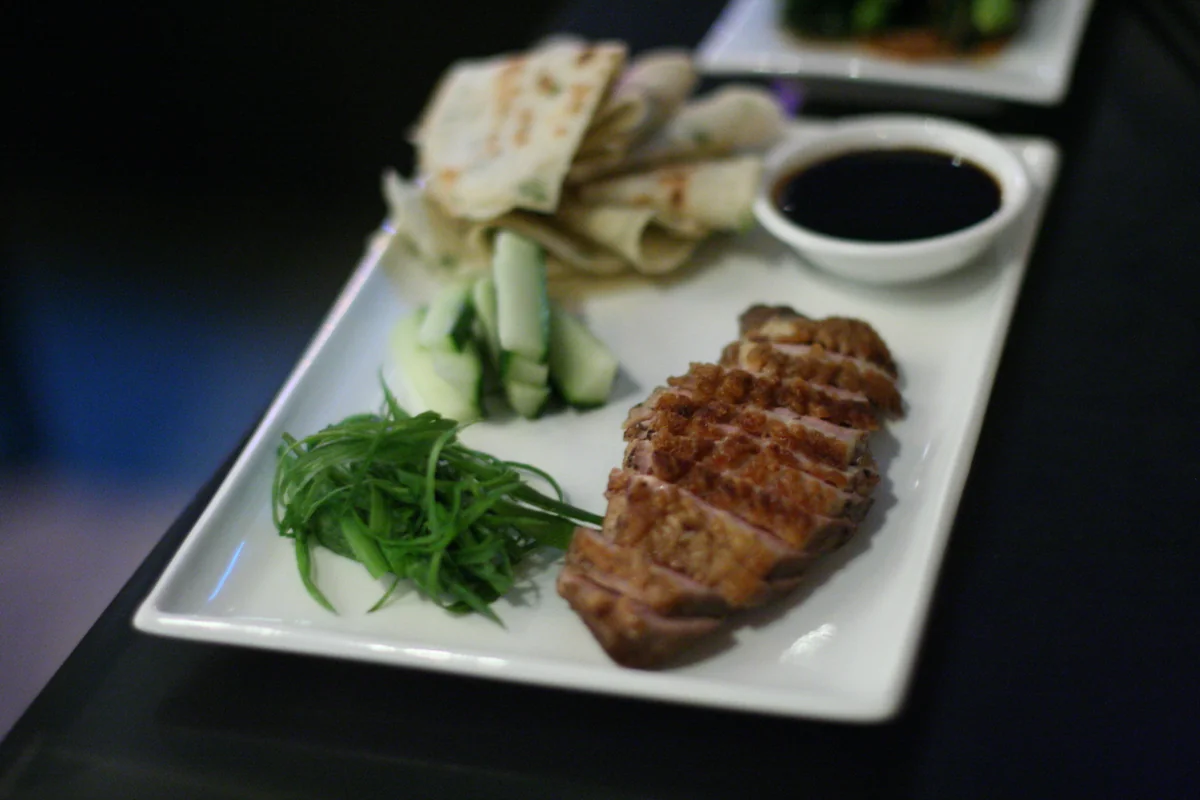
This guide focuses on the table step: how to build a Peking duck pancake after the duck has been carved. For the bigger picture, start with our Peking Duck in Beijing guide. If you want to understand why the slices look different on the plate, read the separate guide to Peking duck carving technique.
A classic Beijing roast duck setup usually includes thin pancakes, sliced duck, sweet bean sauce, scallion strips, cucumber strips, and sometimes sugar or additional condiments depending on the restaurant. Beijing Tourism describes the usual serving method as thin pancakes with Chinese onions and sweet bean sauce. Some restaurants may call the sauce plum sauce in English, but in Beijing the standard flavor is closer to sweet bean sauce: salty-sweet, dark, and thick enough to cling to the pancake.
The pancake should be soft and thin, not thick like a flour tortilla. It is there to hold the duck, not compete with it. The scallion gives sharpness, cucumber gives freshness, and sauce adds sweetness and salt. The duck provides fat, skin, meat, and roast aroma. The goal is not to stuff the pancake as full as possible; it is to make one compact, balanced bite.
Start by laying one pancake flat on your plate. Spread a small line or thin patch of sauce across the center. Add one or two slices of duck, preferably with skin attached. Then add a few scallion and cucumber strips. Fold the bottom edge up first, then fold in the sides, and roll or close the pancake enough that the filling does not fall out.
Many first-timers put the sauce directly on the duck or use too much sauce. That makes the bite muddy and covers the roast flavor. A better approach is to let the sauce touch the pancake first, then let the duck sit on top. You still get sauce in the bite, but the skin does not immediately turn wet.
Use less than you think. The sauce is concentrated, and a heavy spoonful can dominate the duck. For a first pancake, try a line of sauce about the width of one chopstick stroke. After that, adjust. If the duck is very fatty and rich, a little extra sauce can help. If the skin is especially crisp, keep the sauce light so the texture stays clear.
This is also why Peking duck should not be judged only by color or plating. A beautiful duck can still feel unbalanced if every pancake is overloaded. The best meals let you taste several layers: pancake, sauce, scallion, cucumber, skin, meat, and roast aroma.
The green strips on the plate are part of the structure. Scallions cut through the fat and give a sharp finish. Cucumber cools the bite and keeps the pancake from feeling too heavy. If you skip both, the duck can taste richer but flatter. If you add too many, the duck becomes background.
A good first ratio is one or two scallion strips, one cucumber strip, and one or two duck slices. If the duck slice is mostly skin, use more cucumber. If it is mostly meat, add slightly more scallion or sauce. The point is to make each pancake feel intentional rather than random.
Yes, in many restaurants it is completely normal to pick up the wrapped pancake by hand. Some visitors try to eat the whole thing with chopsticks and end up tearing the pancake. Use chopsticks to place the filling, then use your fingers to fold and eat. If the restaurant provides gloves, you can use them, but they are not always necessary.
The official Beijing Tourism eating description also emphasizes rolling the pancake and taking a bite. That is the experience: the wrap should be compact enough to lift, but not packed so tightly that the pancake splits.
Some restaurants serve the crispiest skin separately at the beginning, sometimes with sugar or sauce. Then the main sliced duck arrives for pancakes. If your server explains a special first bite, follow the restaurant's order. Otherwise, use the standard pancake method.
The carved duck also changes through the meal. Early slices may have more skin and crispness; later slices may have more meat. This is why a good wrapper adapts. With skin-heavy slices, protect the crunch and go light on sauce. With meatier slices, sauce and scallion become more important.
The first mistake is using too much sauce. The second is making the pancake too full. The third is ignoring the vegetables. The fourth is waiting too long after the duck is carved. Peking duck is best when the skin is still warm and the fat has not begun to feel heavy.
Another mistake is treating Peking duck as only a photo dish. The table service matters. Watch how the server places the duck, how the pancakes are kept warm, and whether the sauce and condiments are replenished. These small details often separate a careful duck restaurant from a rushed one. For restaurant planning, see our guide on where to eat Peking duck in Beijing.
Quanjude, Bianyifang, Da Dong, Siji Minfu, and smaller roast duck restaurants may serve the same basic pancake set, but the balance can feel different. A duck with stronger roast aroma may need less sauce. A leaner duck may benefit from more cucumber. A very crisp skin should be kept away from wet sauce until the last moment.
This is one reason Peking duck remains central to Beijing food culture. It is not only a famous dish; it is a sequence of craft, carving, wrapping, and eating. The pancake is the final step where the diner participates in the dish.
Use one thin pancake, a light smear of sauce, one or two duck slices, one or two scallion strips, and one cucumber strip. Fold the bottom, close the sides, and eat while warm. If the first pancake tastes too salty or sweet, reduce the sauce. If it tastes too fatty, add more cucumber. If it tastes plain, add a little more scallion or choose a slice with crisp skin.
Once you understand that balance, Peking duck becomes easier to appreciate. The best bite is not the largest bite. It is the one where crisp skin, tender meat, sauce, vegetable, and pancake arrive together.
Comments (0)