Where to Buy Tanghulu in Beijing: Old Shops, Snack Streets, Temple Fairs, and Winter Stalls
A practical guide to where to buy tanghulu in Beijing, comparing old snack shops, tourist streets, temple fairs, winter stalls, and freshness cues.
A practical guide to tanghulu sugar shell texture in Beijing, explaining why hawthorn works, how weather affects the coating, when to eat it, and how to spot a fresh skewer.
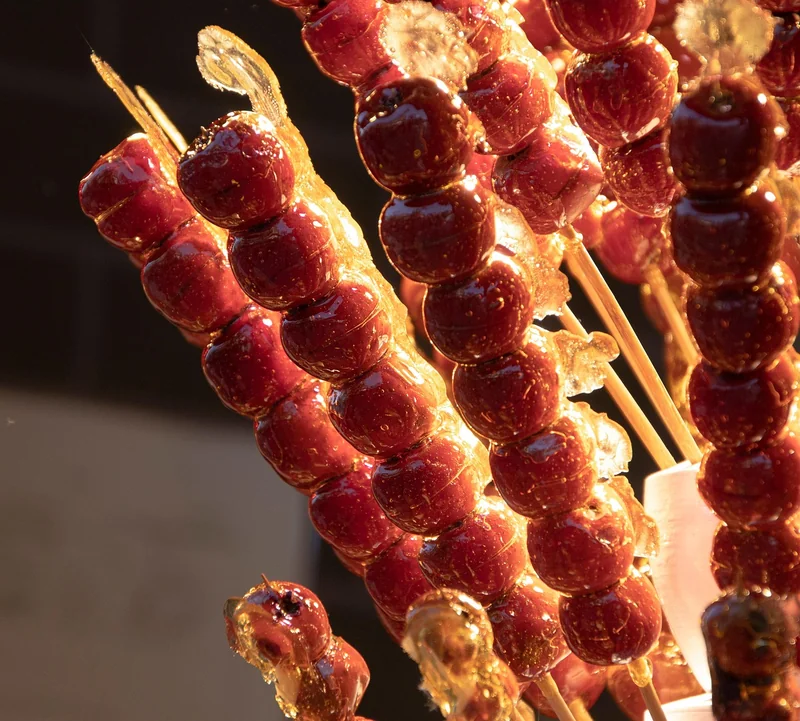
The best tanghulu is not just sweet fruit on a stick. What makes it memorable is the thin sugar shell: it should crack cleanly, stay glossy in cold air, and give way to the tart fruit underneath. When the sugar coating is too thick, sticky, or soft, the snack loses the sharp contrast that makes Beijing tanghulu so satisfying.
This guide explains why the sugar shell matters, why traditional hawthorn remains the most important version, and how weather and timing affect the bite. If you need general buying advice first, see our Tanghulu Buying Guide. If you are choosing between classic and modern versions, compare traditional hawthorn vs mixed-fruit tanghulu.
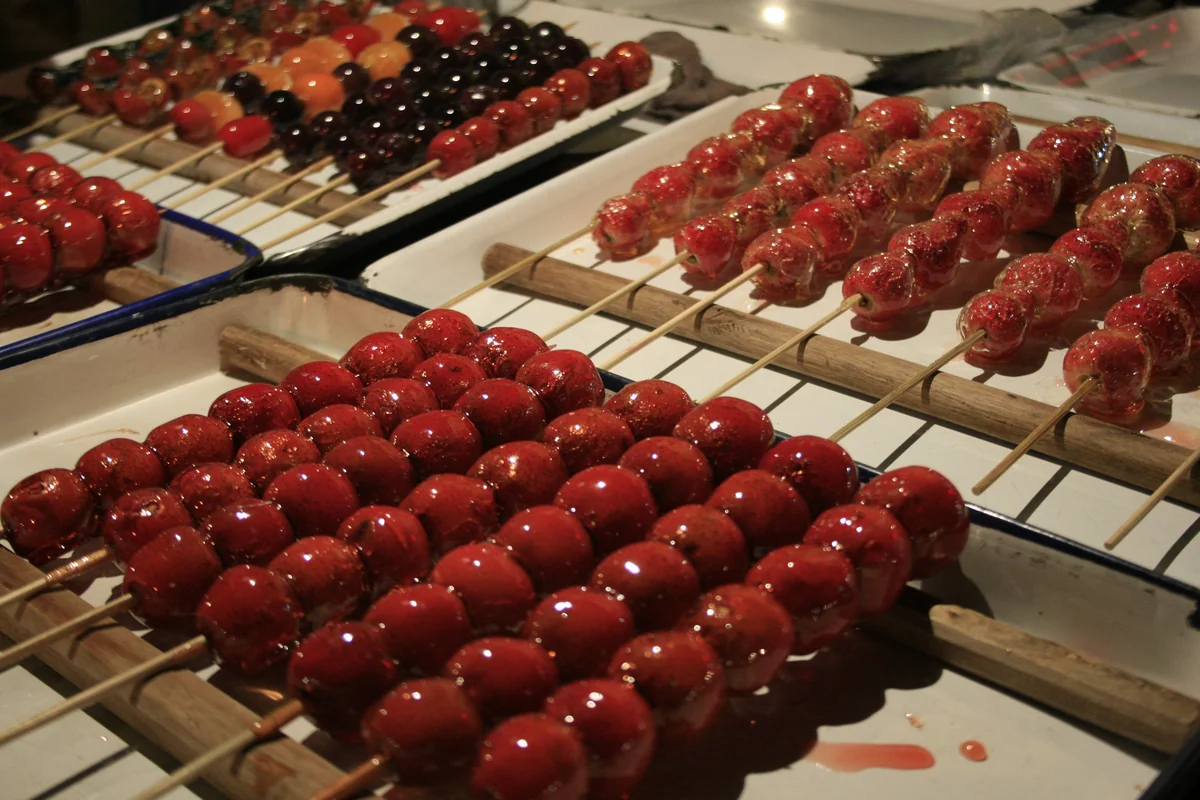
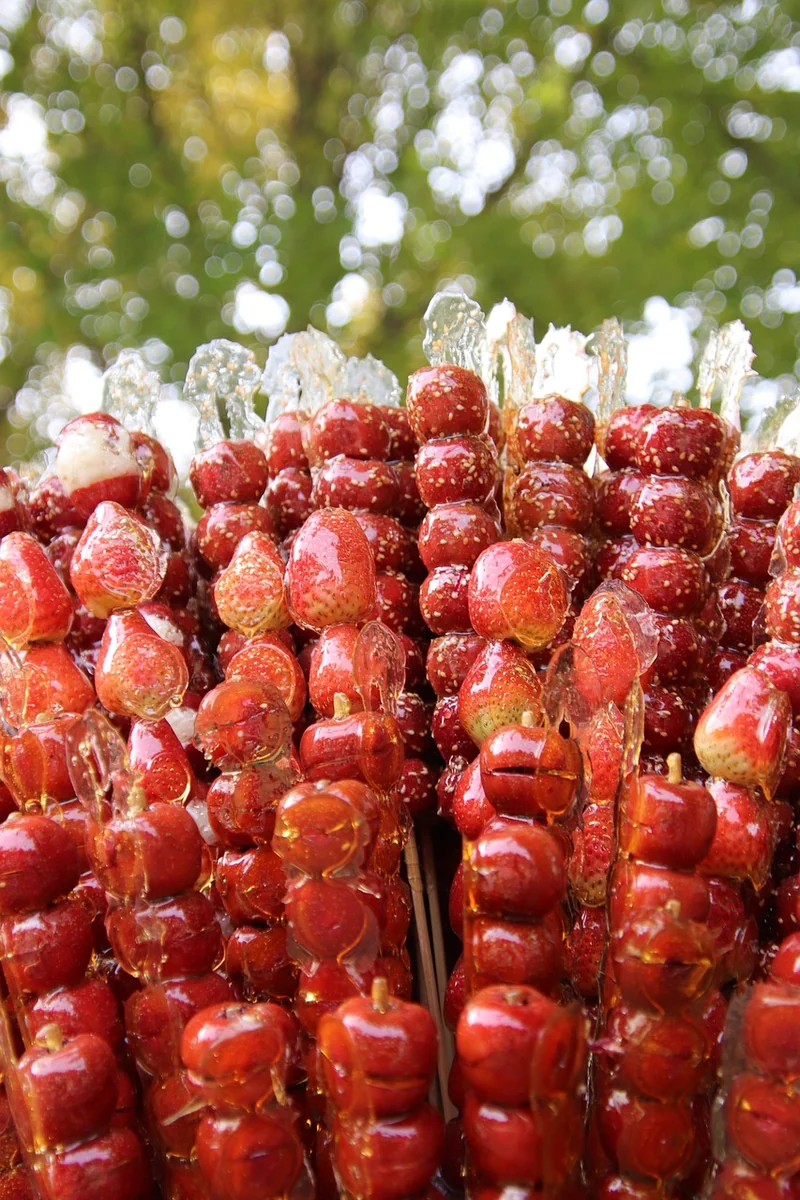
A good tanghulu shell should be thin, glassy, and crisp. When you bite it, the shell should crack before the fruit softens. It should not bend like syrup, stick heavily to your teeth, or feel cloudy and grainy. The shell is a coating, not a thick candy layer.
Look at the surface before buying. A fresh skewer usually has a clear shine and a firm coating. If the sugar looks wet, dull, uneven, or sagging between fruits, the skewer may have been exposed to warmth or moisture for too long. That does not always make it unsafe, but it usually means the texture will be disappointing.
Traditional tanghulu uses hawthorn because the fruit is naturally tart, firm, and small enough to skewer. The sourness balances the sugar shell. Without that acidity, the snack can become flatly sweet, especially when vendors use very sugary mixed fruits.
Hawthorn also gives a stronger contrast in texture. The skin and flesh have enough structure to stand up to the hot sugar coating, while the tart interior keeps each bite lively. This is why many modern fruit versions are fun to photograph, but classic hawthorn often gives the clearest tanghulu experience.
Tanghulu is strongly associated with northern winter for a practical reason: cold air helps the sugar shell stay firm. In dry, cold weather, the coating can keep its crisp bite longer. In warm or humid conditions, the shell softens more quickly and can become sticky before you finish eating.
This is also why tanghulu feels natural at winter fairs, outdoor snack streets, and holiday markets. The setting is not just nostalgic. It supports the texture. For more on that seasonal atmosphere, see our guide to Tanghulu at Beijing Temple Fairs.
Even in winter, tanghulu is best eaten soon after purchase. The shell starts changing once the skewer leaves the display rack. If you put it in a warm bag, carry it into a heated shop, or wait while walking through crowded indoor areas, the coating can lose its snap.
If you are buying one for photos, take the photo quickly and then eat it. Do not treat tanghulu like a packaged candy that will hold the same texture for hours. The best version is fresh, cold, glossy, and crisp.
A thick coating may look impressive, but it can make the skewer hard to eat. If the sugar layer seems bulbous, uneven, or overly heavy at the bottom of each fruit, it may crack into large sharp pieces or overwhelm the hawthorn. A thin shell is usually better than a dramatic shell.
When the coating is right, the fruit remains the center of the bite. You should taste sour hawthorn, then sugar, then fruit again. If the only thing you notice is hard candy, the balance is off.
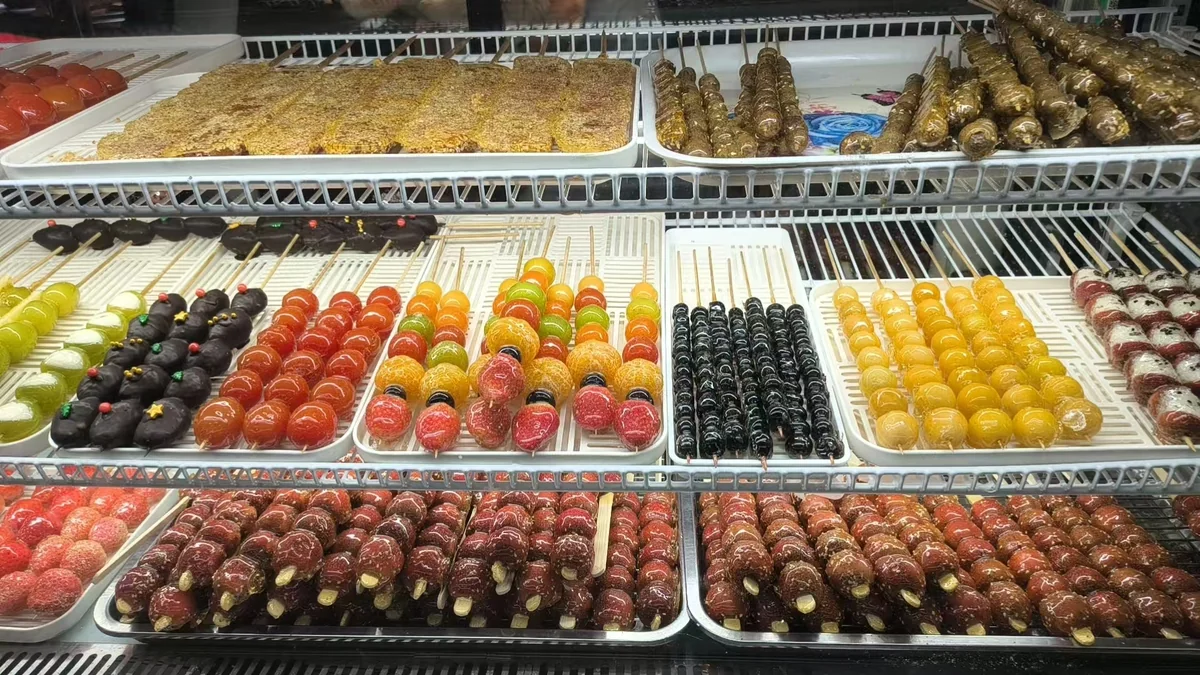
Mixed-fruit tanghulu is popular because it is colorful and approachable. Strawberries, grapes, kiwi, orange segments, and other fruits can make the skewer look festive, but they are more sensitive than hawthorn. Juicier fruits can leak moisture and soften the sugar shell faster.
If you choose mixed fruit, inspect it carefully. The fruit should look fresh and firm, and the shell should still be crisp. Avoid skewers where the coating has started to slide or where fruit juice has collected under the sugar. A beautiful skewer is not useful if the texture is already gone.
Hold the skewer upright and bite one fruit at a time. Do not try to break several pieces off at once. The shell can crack sharply, and the fruit can release juice. If the skewer is large, eat slowly and step aside from crowded walking lanes.
For children, smaller hawthorn skewers are easier than oversized mixed-fruit versions. Large novelty skewers are attractive in photos, but they can be sticky, heavy, and difficult to finish before the shell softens.
Avoid tanghulu that looks wet, sticky, cloudy, or collapsed. Avoid skewers sitting too close to warm lights or heated indoor air. Avoid fruit that looks shriveled under the sugar. If several skewers on the same rack have syrup threads or dripping sugar, choose another vendor.
Also be careful with extremely large displays. A tall rack can look attractive, but freshness depends on turnover. A vendor selling steadily is usually better than a beautiful display that does not move.
For your first Beijing tanghulu, choose a small traditional hawthorn skewer with a clear, thin shell. Eat it outdoors or soon after buying. Notice the crack of the sugar, the tartness of the fruit, and the way cold air keeps the coating firm.
Once you understand that balance, mixed-fruit versions become easier to judge. You can enjoy them as modern variations, but the standard for good tanghulu still comes from the classic combination: tart hawthorn, thin sugar shell, cold-weather texture, and quick eating.
For official context on tanghulu and Beijing snack culture, see Visit Beijing: Bring “Beijing Flavor” Back Home | Tanghulu, Visit Beijing: Changdian Temple Fair, and Beijing Municipal Government: Holiday fun and temple fair events.
Comments (0)