Where to Buy Tanghulu in Beijing: Old Shops, Snack Streets, Temple Fairs, and Winter Stalls
A practical guide to where to buy tanghulu in Beijing, comparing old snack shops, tourist streets, temple fairs, winter stalls, and freshness cues.
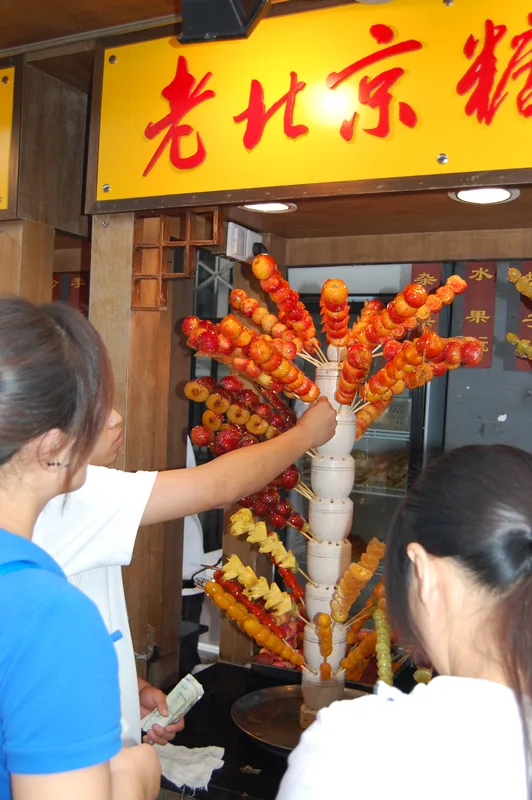
A practical guide to Beijing tanghulu, explaining candied hawthorn skewers, crisp sugar shells, seasonal street snack culture, modern fruit versions, freshness signs, and buying t…
Tanghulu is one of Beijing's most recognizable sweet snacks: fruit on a bamboo skewer coated in a hard, shiny sugar shell. The classic version uses hawthorn berries, whose tartness keeps the candy from tasting flat. Modern stalls may also sell strawberry, grape, mandarin orange, kiwi, or mixed-fruit versions.
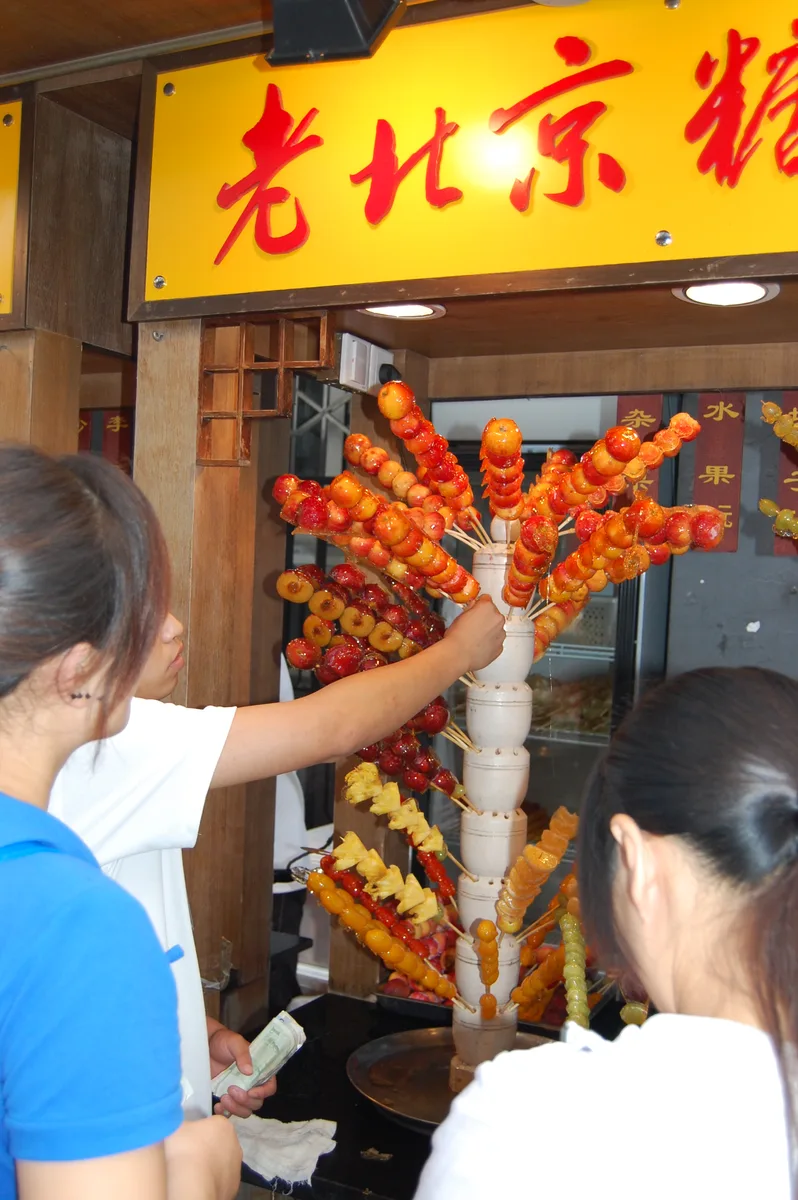
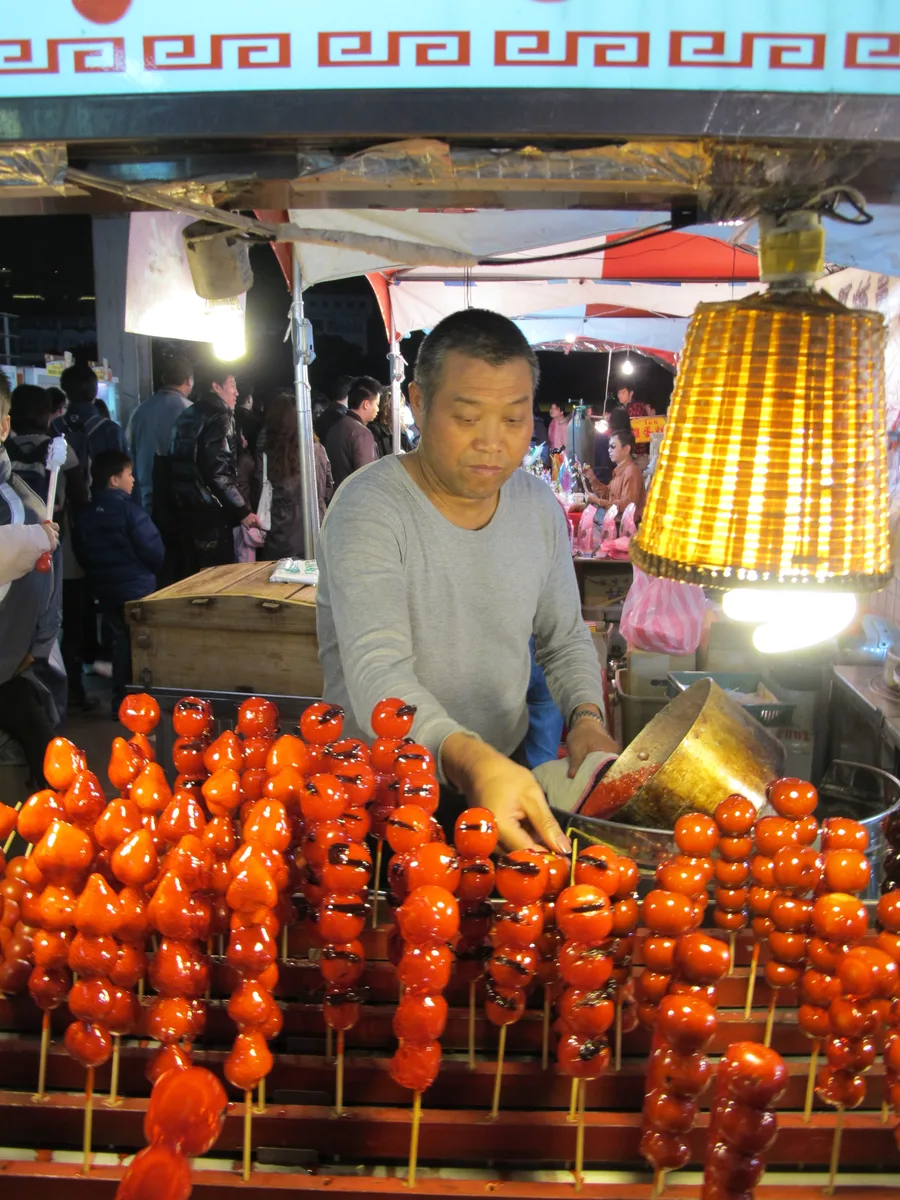
It is simple food, but details matter. Good tanghulu should crack when you bite it, taste bright rather than sticky, and balance sweet sugar with sour fruit. This guide explains what to buy, when to buy it, and how tanghulu fits into Beijing street food.
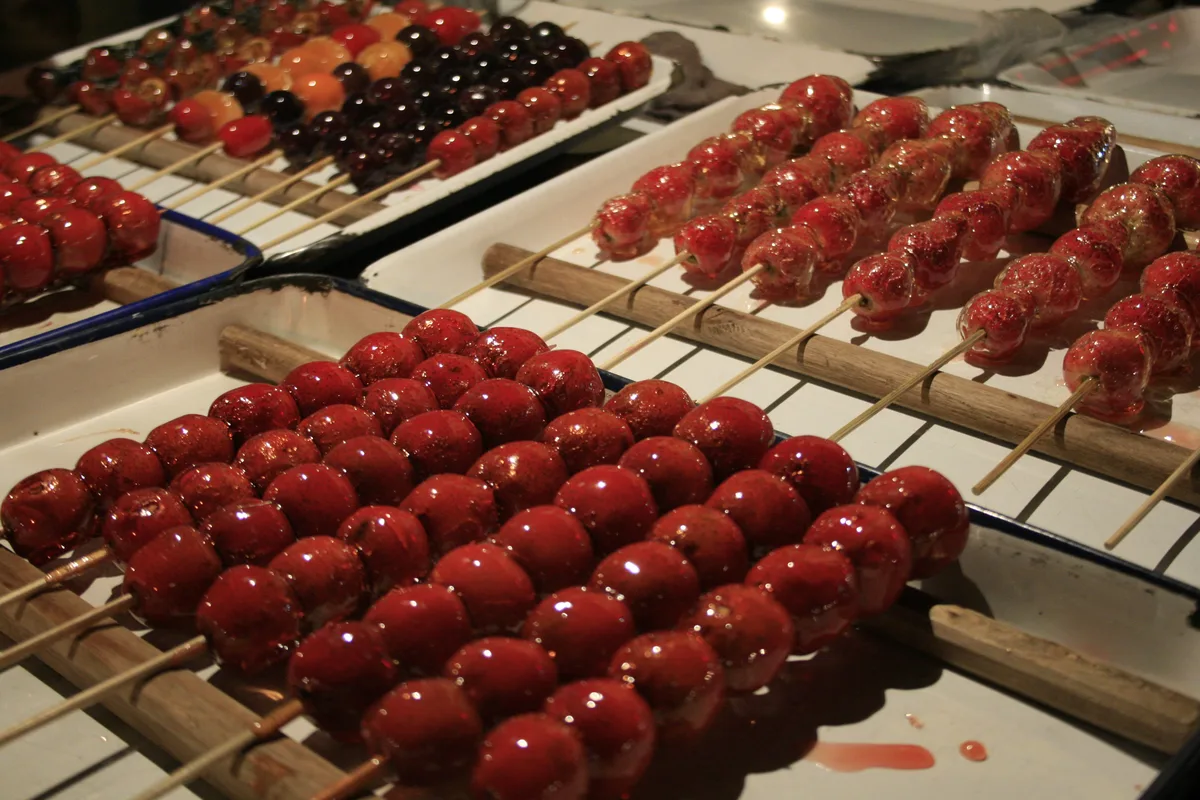
Tanghulu is made by skewering fruit, dipping or coating it in hot sugar syrup, and letting the sugar set into a clear shell. The most traditional fruit is hawthorn, a small red fruit with a tart flavor and firm texture. That tartness is important because the sugar shell is very sweet.
The best bite has three parts: a clean sugar crack, a tart fruit center, and a short finish that does not feel syrupy. If the sugar is sticky, dull, or wet, the snack has probably been exposed to moisture or held too long.
Hawthorn works because it is sour and structured. The fruit does not collapse easily under the sugar shell, and its acidity balances the candy coating. A skewer of only sweet fruit can taste pleasant, but it often lacks the contrast that makes classic tanghulu memorable.
Some hawthorn skewers are plain, while others may have the seeds removed or include a sweet filling between fruit pieces. For a first try, choose a simple hawthorn skewer so you understand the original flavor logic.
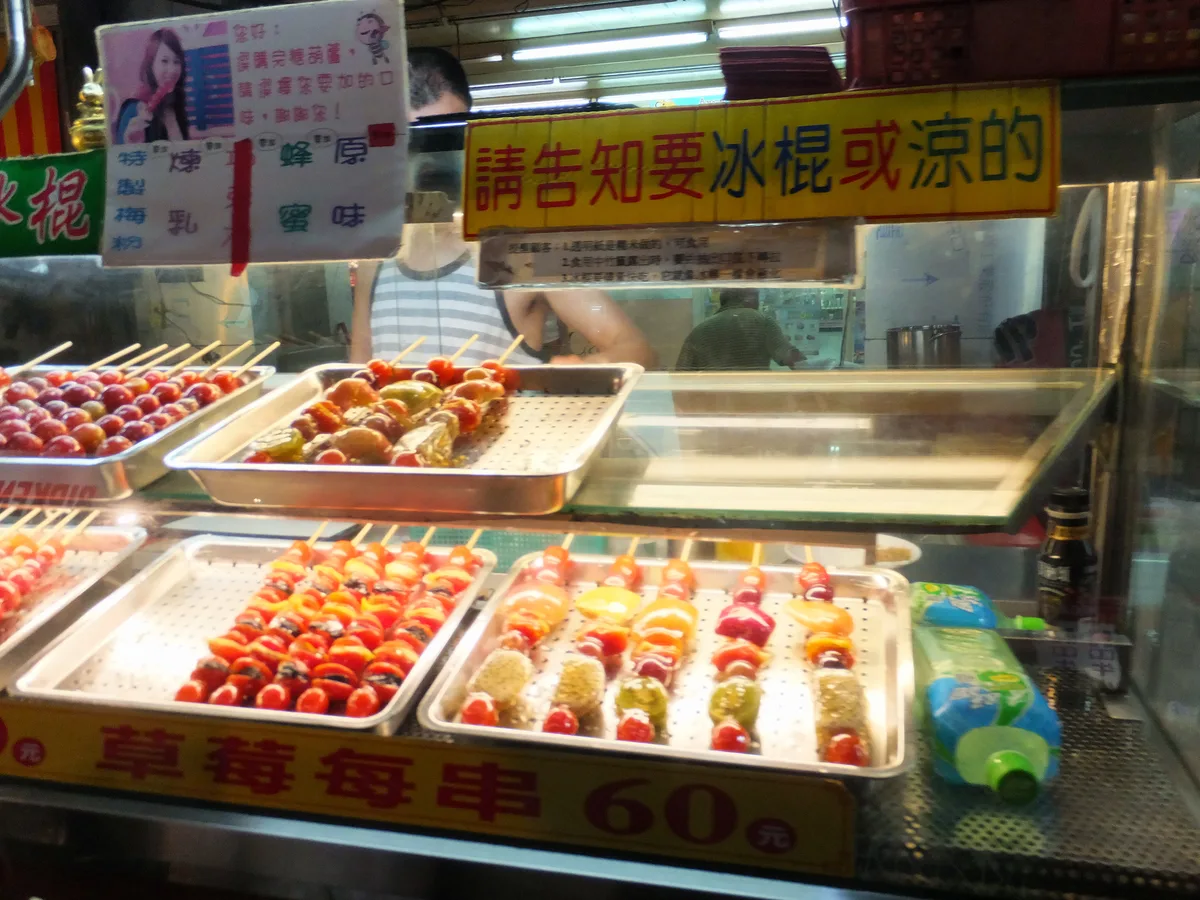
Modern tanghulu stalls often sell strawberries, grapes, cherry tomatoes, mandarin segments, kiwi slices, or mixed fruit. These versions are more colorful and can be easier for visitors who find hawthorn too tart.
The tradeoff is texture. Juicy fruits release moisture faster, which can soften the sugar shell. If you choose strawberry or mixed fruit, buy from a stall with fast turnover and eat it soon.
Tanghulu is strongly associated with colder weather because the sugar shell stays crisp more easily. In warm or humid conditions, the coating can turn sticky. That does not mean you can only eat it in winter, but winter is when the texture is most reliable.
It is also visible around parks, pedestrian streets, temple fairs, snack streets, and evening street-food carts. During festivals, tanghulu can feel more like a seasonal memory than a normal snack.
Look for a glassy sugar shell. It should be clear, shiny, and dry to the touch. Avoid skewers where syrup is dripping, the coating looks cloudy, or fruit juice has leaked into the sugar.
Check the fruit, too. Hawthorn should look firm and bright. Strawberries or grapes should not look bruised or wet. If the stall displays many skewers under strong light for a long time, choose carefully because heat can affect the sugar.
Eat it slowly and carefully. The sugar shell is hard, and the skewer is sharp. Bite from the side rather than pushing the whole fruit straight into your mouth. For children, adults should help because the candy shell and stick both require attention.
Tanghulu is not a snack to save for later. Once wrapped or carried indoors, temperature changes can make the sugar sticky. It is best eaten soon after buying.
Classic hawthorn tanghulu tastes sweet first, then tart. The sugar shell gives a sharp crack, while the fruit brings acidity and a slightly dry finish. If you are used to soft candy, the texture may be surprising.
Strawberry tanghulu is sweeter and juicier. Grape tanghulu is crisp and mild. Mixed-fruit skewers are more about variety and color than tradition. They are enjoyable, but they do not explain the snack as clearly as hawthorn.
Tanghulu sits on the sweet side of Beijing snack culture. It is very different from savory breakfast foods such as baozi, jianbing, or jiaoquan. It is also easier for most visitors than douzhi, because the flavor contrast is simple: sugar and tart fruit.
For a balanced street-food route, tanghulu works best after a savory snack. Eat something hot and filling first, then use tanghulu as a walking sweet.
The first mistake is buying the biggest and most colorful skewer without checking texture. A beautiful mixed-fruit skewer can still be sticky if it has been sitting too long.
The second mistake is expecting tanghulu to be soft. The sugar shell should be hard. If you have sensitive teeth, bite carefully or choose smaller fruit pieces.
Tanghulu is at its best when the sugar shell is crisp, the fruit is tart, and the skewer is eaten right away. Start with hawthorn if you want the traditional version, then try modern fruit skewers for variety. It is a small snack, but it captures a very visible part of Beijing's street-food memory.
Image Credits: Tanghulu photos sourced from Wikimedia Commons file pages: Peking-013.JPG, TangHuLu.JPG, Tanghulu - panoramio, and Candy-coated fruits Tanghulu vendor.
Comments (0)