Where to Buy Tanghulu in Beijing: Old Shops, Snack Streets, Temple Fairs, and Winter Stalls
A practical guide to where to buy tanghulu in Beijing, comparing old snack shops, tourist streets, temple fairs, winter stalls, and freshness cues.
A practical guide to choosing and eating fresh tanghulu in Beijing, explaining crisp sugar shells, winter weather, fruit moisture, storage mistakes, and the best time to eat after…
Tanghulu looks simple: fruit, bamboo skewer, and a clear sugar shell. The part that makes it memorable is timing. A good skewer should crack lightly when you bite it, then give way to tart hawthorn or juicy fruit underneath. If the sugar turns sticky, cloudy, or wet, the snack quickly loses the clean contrast that makes it worth buying.
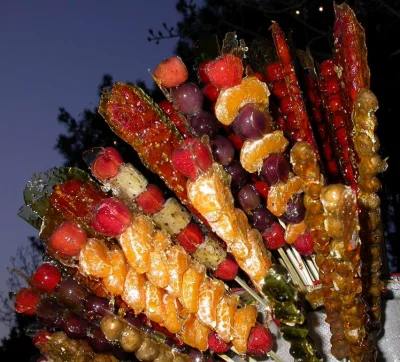
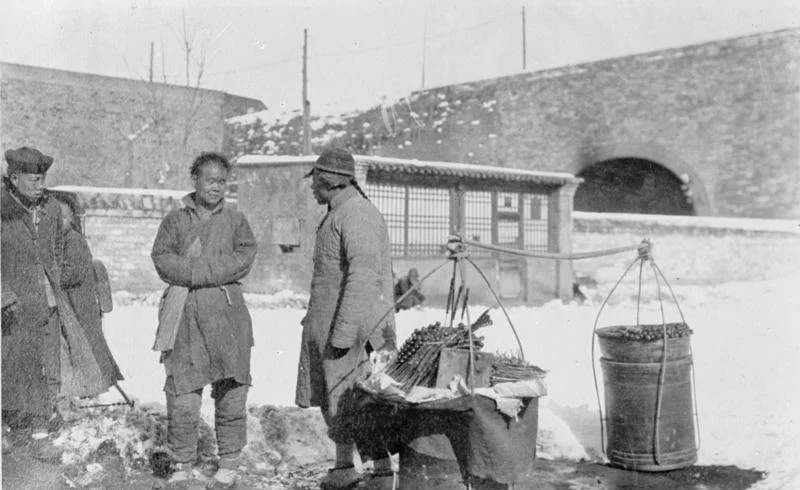
This guide focuses on freshness: how to judge the sugar shell before you pay, why Beijing winter weather helps, which fruit choices soften faster, and how soon you should eat tanghulu after buying it. For the broader background, see the main Tanghulu topic, the Beijing tanghulu buying guide, and the sugar shell and hawthorn guide.
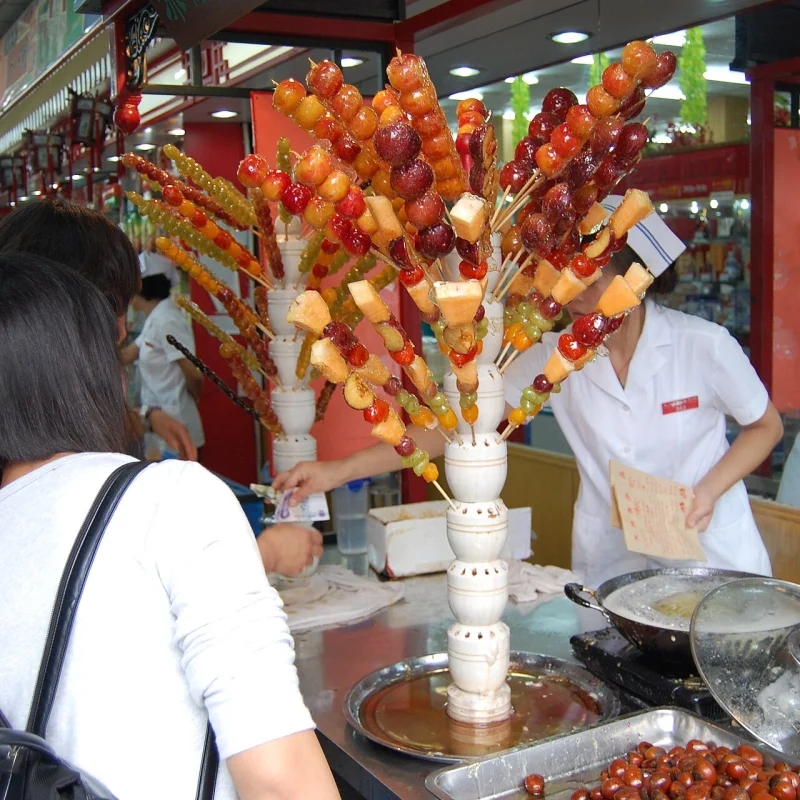
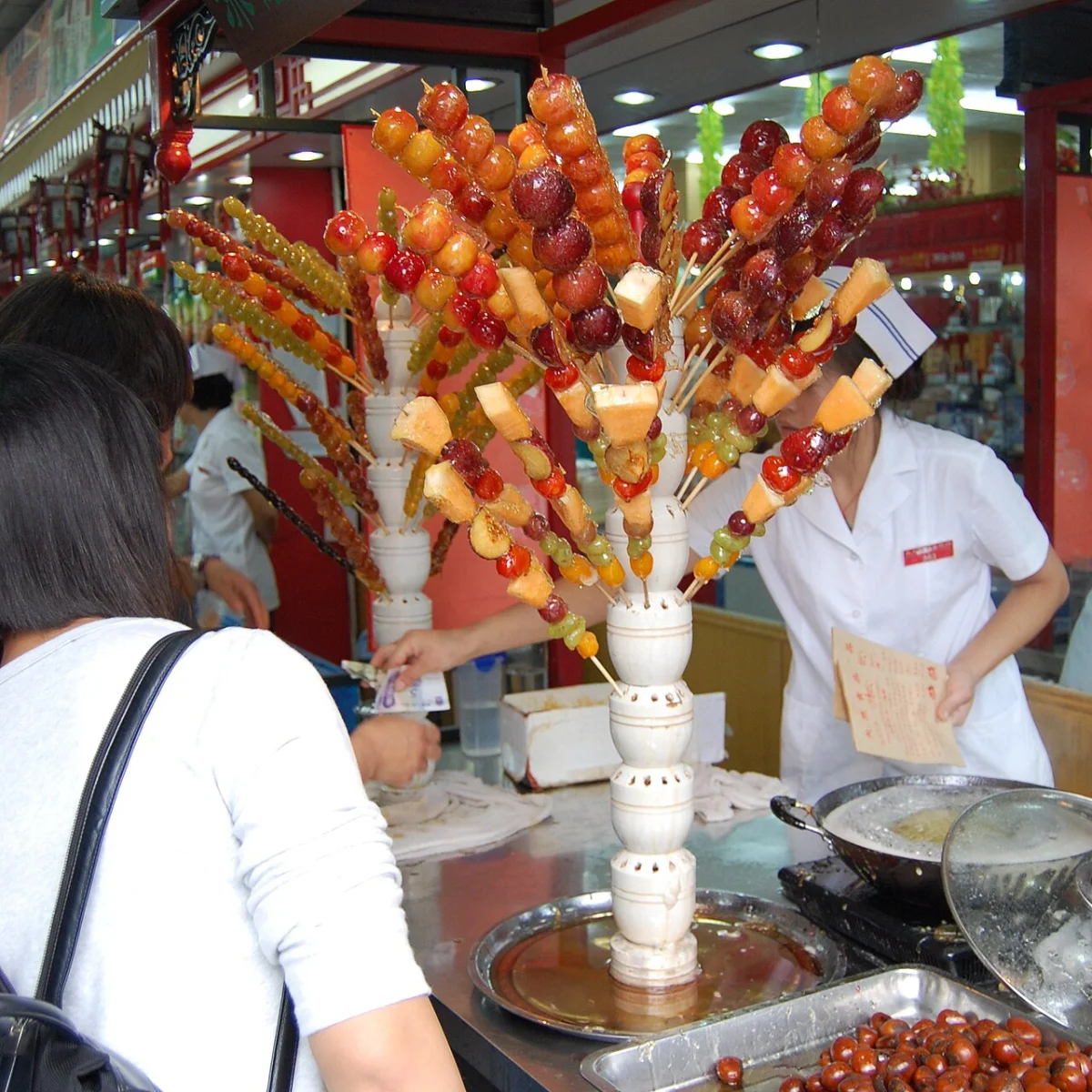
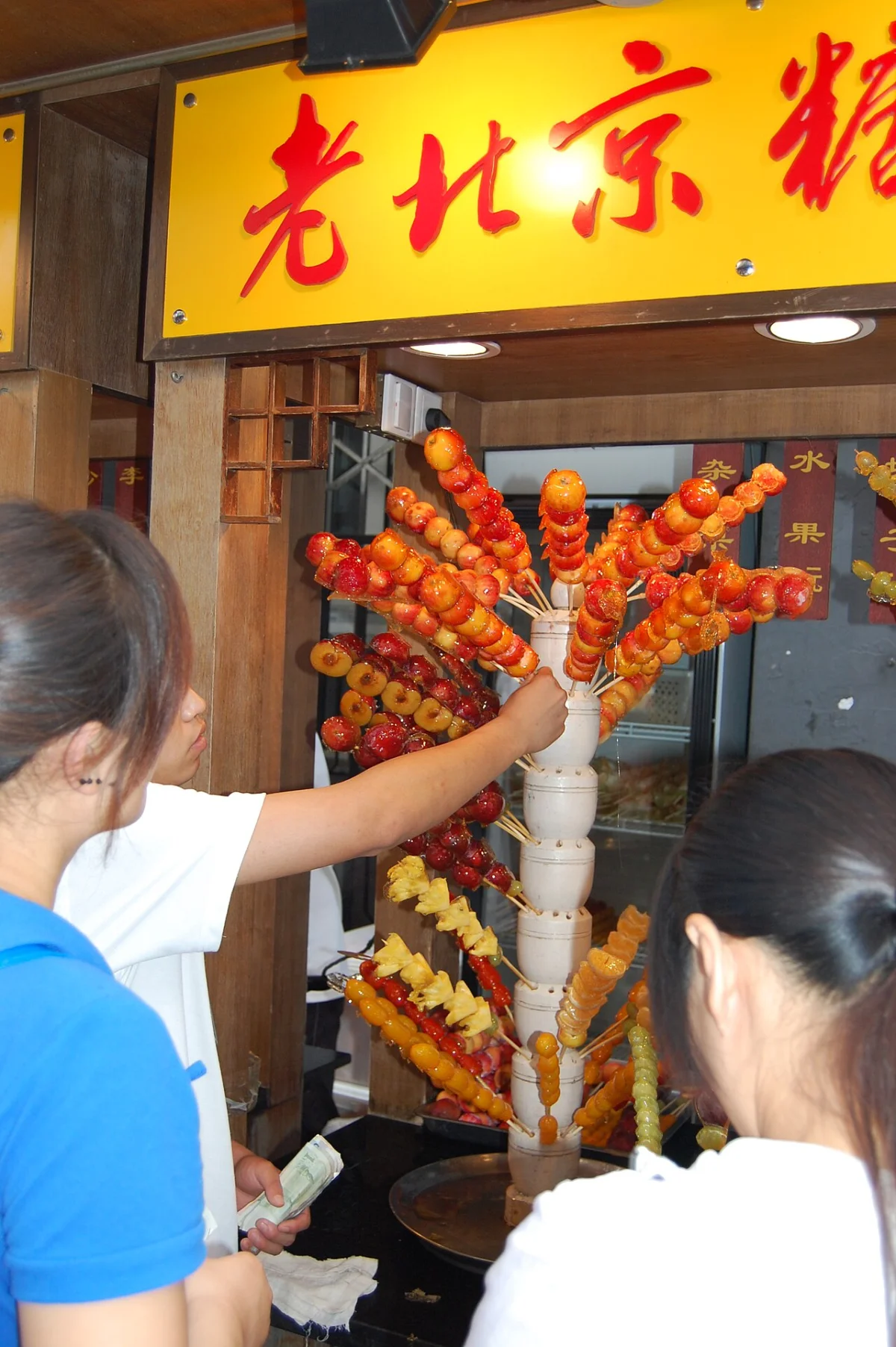
Many first-time visitors choose the tallest, most colorful skewer because it looks dramatic in photos. That is not always the best eating choice. Tanghulu is at its best when the sugar has set into a thin, hard layer and the fruit has not started leaking juice into it. Once moisture reaches the sugar, the clear shell softens and becomes tacky.
Traditional hawthorn tanghulu often holds texture better than very soft mixed-fruit skewers. Hawthorn is firm and tart, so it can support a crisp shell without collapsing quickly. Strawberry, grape, citrus, and melon styles can be delicious, but they carry more surface moisture and usually need to be eaten sooner.
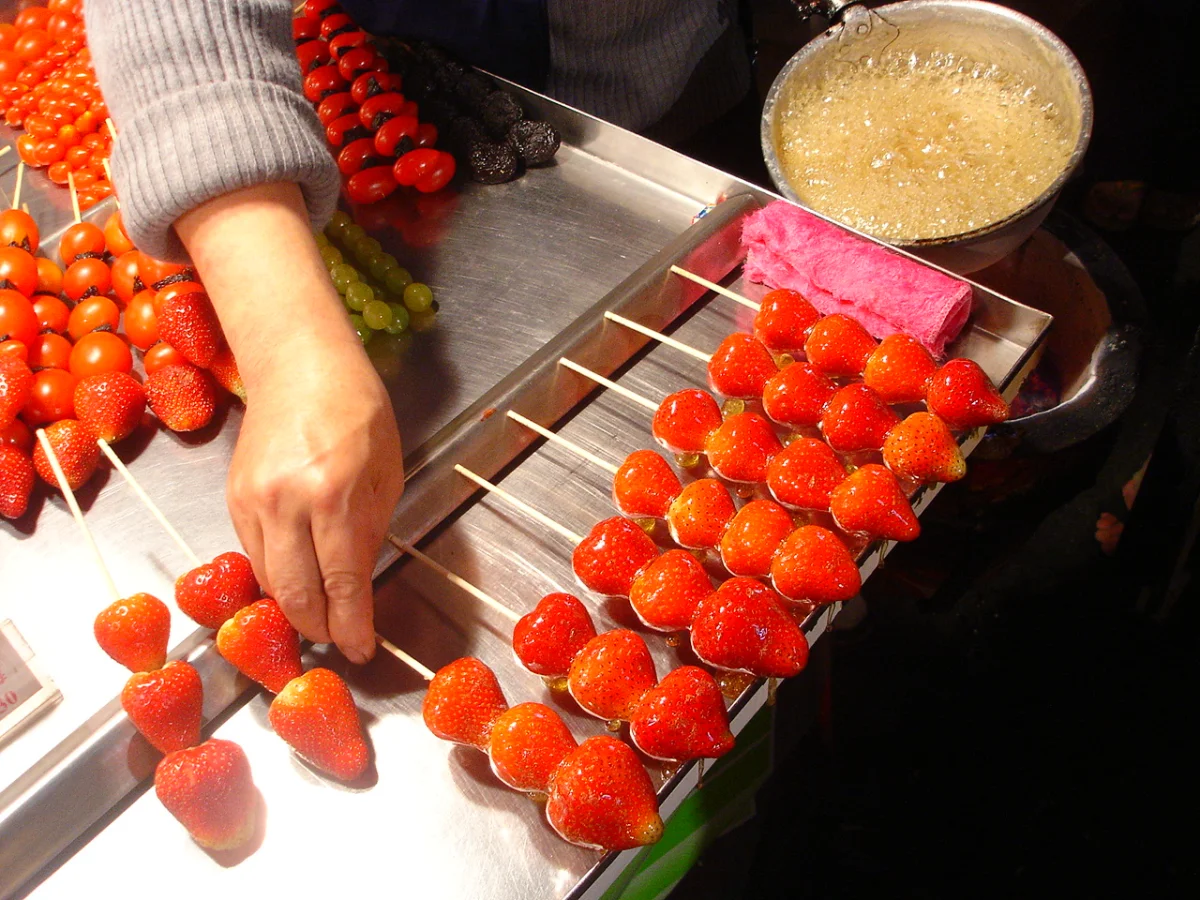
Look for a clear, glassy coating rather than a dull or milky one. The shell should sit tightly around the fruit. A little shine is normal; visible syrup dripping onto the tray is not. If several skewers are stuck together, or if the vendor has to peel one skewer away from another, the sugar has probably softened.
Fresh tanghulu should also sound different. Vendors often handle a crisp skewer with a light tap or rattle as the sugar touches the tray. When the shell has melted, the movement looks slow and sticky. You do not need to touch the food yourself; just watch how cleanly the vendor lifts it from the display.
Cold, dry air helps the sugar shell stay hard. That is one reason tanghulu feels especially natural in Beijing winter, temple fair season, and evening snack walks. The contrast between cold air, hot street food nearby, and a bright red skewer is part of the experience.
Warm indoor air and humid days work against the snack. If you buy tanghulu from a heated indoor shop and carry it around for too long, the shell can turn sticky faster than it would outside. Rainy weather is also a warning sign. Even if the fruit is fresh, moisture in the air can shorten the sugar shell’s life.
Classic hawthorn is usually the safest choice if you care about the clean crack of the sugar. The fruit is small, firm, and slightly dry compared with many modern fruit options. It also has the sourness that balances the hard candy layer.
Mixed-fruit tanghulu is better when you want color and variety, but it is less forgiving. Strawberries bruise, citrus segments release juice, and melon-like fruit can soften quickly. If you choose a mixed skewer, eat it soon after purchase instead of saving it for later. For a fuller comparison, read traditional vs mixed-fruit tanghulu.
The best answer is immediately, or at least during the same short walk. Tanghulu is not a snack designed for storage. A paper bag or plastic sleeve may keep your hands clean, but it can trap warmth and moisture around the sugar shell. If you put it in a warm subway carriage, taxi, or hotel room, the texture can fade quickly.
Refrigeration is not a perfect fix. A cold refrigerator may harden the sugar temporarily, but condensation can form when you take the skewer back out. That moisture can make the surface sticky. If you want the best texture, buy one skewer when you are ready to eat, not a large bundle for later.
If this is your first skewer in Beijing, start with traditional hawthorn. It gives the most classic balance: tart fruit, hard sugar, and a clean snap. If you want a softer and sweeter experience, choose mixed fruit, but treat it as an immediate snack rather than something to carry for an hour.
For location choices, snack streets, winter fairs, and old-style food shops can all work. What matters is turnover. A busy stand that keeps replacing skewers usually gives you a better chance of fresh sugar than a quiet display where the same skewers have been sitting for a long time. If you are planning a food walk, pair this guide with where to buy tanghulu in Beijing and the wider Beijing street food topic.
Avoid oversized skewers if you are eating alone and walking in cold weather with gloves or a camera. They look impressive but are harder to finish neatly. Also avoid skewers with broken fruit skins, heavy syrup at the bottom, or uneven sugar patches. These signs do not always mean the snack is unsafe, but they usually mean the texture will be less satisfying.
The easiest strategy is simple: buy small, eat soon, and judge the sugar before the fruit. A fresh tanghulu skewer should feel lively and crisp, not heavy and sticky.
Food background checked against the Beijing municipal government’s traditional snack page and licensed Wikimedia Commons image records. External source links are provided for attribution and verification only.
Comments (0)