Where to Buy Tanghulu in Beijing: Old Shops, Snack Streets, Temple Fairs, and Winter Stalls
A practical guide to where to buy tanghulu in Beijing, comparing old snack shops, tourist streets, temple fairs, winter stalls, and freshness cues.
A practical guide to eating tanghulu at Beijing temple fairs and winter snack streets, covering hawthorn skewers, sugar shell texture, fairground timing, and first-timer buying ti…
Tanghulu feels different when you eat it at a Beijing temple fair. On an ordinary street, it is a quick sweet-and-sour snack on a stick. At a winter fair, surrounded by lanterns, snack stalls, windmills, calligraphy stands, and families walking slowly through the crowd, it becomes part of the old Beijing holiday atmosphere.
This guide focuses on that setting: where tanghulu fits into Beijing fairground food culture, how to choose a good skewer when many vendors are selling similar-looking fruit, and how to avoid the common mistake of buying one that looks bright but tastes flat. For basic flavor and freshness checks, you can also compare this with our Tanghulu Buying Guide.
Beijing temple fairs are not only about food. They combine seasonal shopping, folk performances, crafts, small gifts, children’s toys, and local snacks. Tanghulu fits that environment because it is easy to carry, visually festive, and closely tied to winter street life in northern China. The red hawthorn fruit and glossy sugar shell look right at home in a crowded Spring Festival market.
Official Beijing tourism materials often describe Changdian Temple Fair as one of the city’s classic folk-culture events, and tanghulu appears naturally in that fairground context. That matters for visitors because it explains why a simple candied fruit skewer can feel more memorable at a fair than in a random snack street: the food is part of the scene, not just a product on a counter.
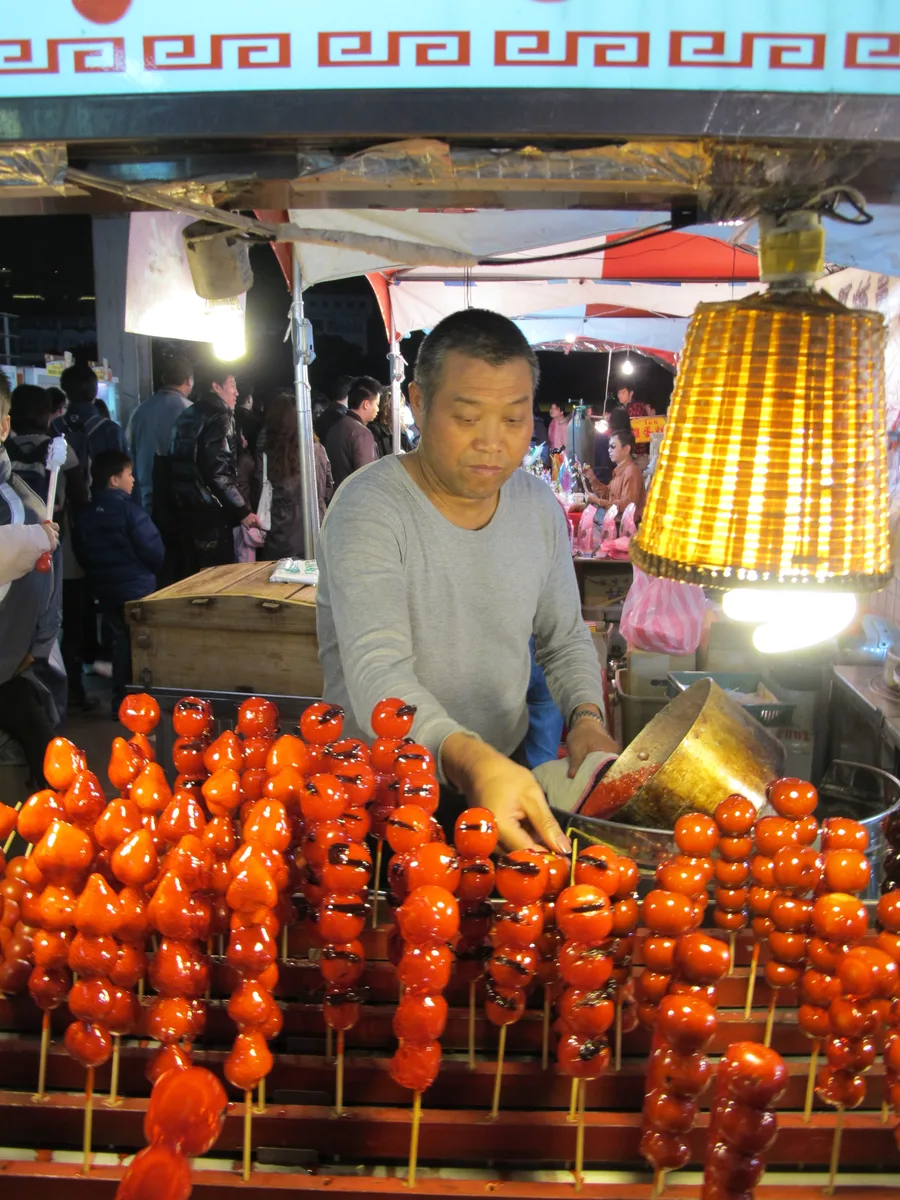
At a temple fair, vendors usually display tanghulu in a more dramatic way. You may see tall racks of hawthorn skewers, mixed-fruit skewers, or oversized novelty versions meant to catch attention from a distance. The visual display is part of the fun, but it can also make judging quality harder. The brightest skewer is not always the freshest one.
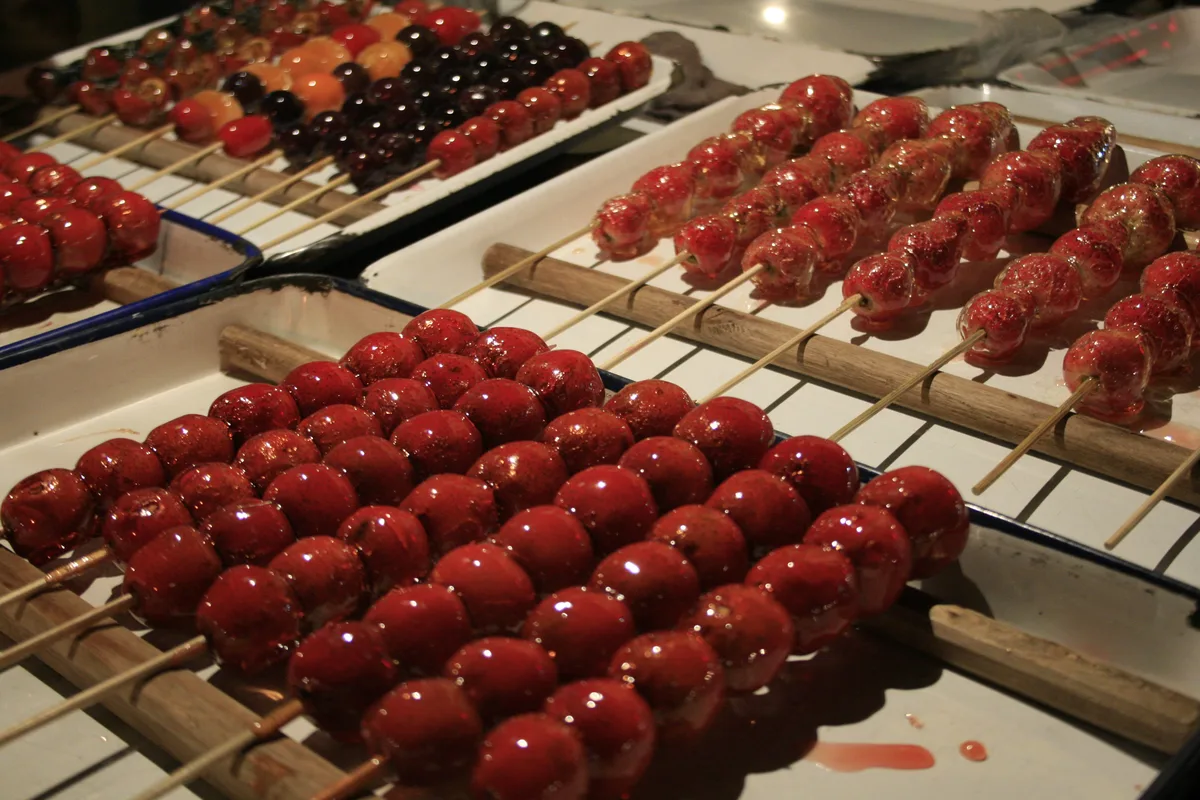
Look for a sugar shell that appears clear and glassy rather than cloudy or sticky. If the coating looks wet, sagging, or dull, it may have been affected by warmth, moisture, or time. A good skewer should still have a clean crack when bitten, followed by the sour fruit flavor underneath.
Traditional hawthorn is the most classic choice. It gives the strongest contrast: sharp, tart fruit under a thin hard sugar shell. This is why hawthorn tanghulu remains the best first choice for understanding the old Beijing version of the snack. It is also less dependent on decoration, because the flavor comes from the fruit itself.
Mixed-fruit tanghulu can be more approachable if you dislike strong sourness. Strawberries, grapes, kiwi, orange segments, or other fruits may appear in modern displays, especially at busy commercial snack areas. They can be enjoyable, but the fruit must be fresh and the coating must stay crisp. For a full comparison, see our guide to traditional hawthorn vs mixed-fruit tanghulu.
Buy when the fair is active but not overcrowded. Early in the day, stalls may have cleaner displays and fresher batches. During the busiest holiday hours, turnover can be high, which is good for freshness, but the crowd makes it harder to inspect the skewer. Late in the day, choose carefully because some fruit may have been exposed for longer.
Cold weather helps tanghulu because the sugar shell stays firm. Warm indoor markets or crowded heated areas can soften the coating faster. If you are walking for a long time, eat the skewer soon after buying it instead of carrying it in a warm bag.
Use three simple checks. First, the fruit should look full, not shriveled. Hawthorn naturally has spots and texture, but it should not look collapsed. Second, the sugar shell should be thin enough to bite through, not thick like hard candy. Third, the skewer should not feel sticky before you even eat it.
If a vendor offers many varieties, start with one small traditional hawthorn skewer before choosing a larger mixed-fruit version. This lets you test the stall’s sugar coating and fruit freshness without committing to a heavy snack. It is the same practical approach we recommend for other Beijing snacks: start simple, then branch out.
Tanghulu is easy to carry, but it is not always clean to eat in a dense crowd. The sugar shell can crack, fruit juice can drip, and the bamboo stick can be awkward if people are walking close to you. Step aside before biting, especially near narrow fair lanes or photo spots.
For children, choose a smaller skewer with fewer fruit pieces. Large novelty skewers look impressive but can be heavy, messy, and difficult to finish. For adults, one classic skewer is usually enough if you are also trying other fair foods.
Tanghulu works best as a bright, sour break between heavier foods. If you have been eating fried snacks, meat buns, or hot bowls, the tart hawthorn can reset your palate. That is one reason it feels natural in winter markets: it contrasts with richer street food instead of competing with it.
If you are building a fairground food route, do not start with the sweetest mixed-fruit skewer. Try a traditional hawthorn version first, then decide whether you still want richer snacks. You can connect this with other seasonal guides through Winter Food in Beijing and broader Beijing Street Food.
Choose a skewer from a vendor with steady turnover. Avoid fruit that looks wet under the sugar. Eat it soon after buying. Keep the bamboo stick pointed down when walking. If you are unsure whether hawthorn will be too sour, pick a smaller skewer instead of a large display piece.
Most importantly, do not judge tanghulu only as candy. The best version is about balance: crisp sugar, tart fruit, cold-weather texture, and the festive setting around it. That balance is why tanghulu continues to feel strongly connected to Beijing winter streets and temple fair memories.
For official context on Changdian Temple Fair and tanghulu’s place in Beijing temple-fair food culture, see Visit Beijing: Changdian Temple Fair, Visit Beijing: Bring “Beijing Flavor” Back Home | Tanghulu, and Beijing Municipal Government: Holiday Fun, Temple Fairs and Park Events.
Comments (0)