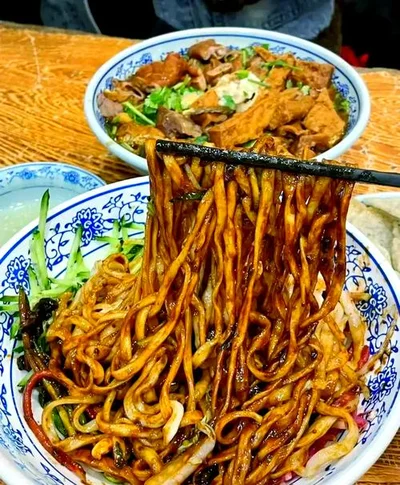
Beijing Zhajiang Noodles mixed with rich soybean paste and fresh vegetables.
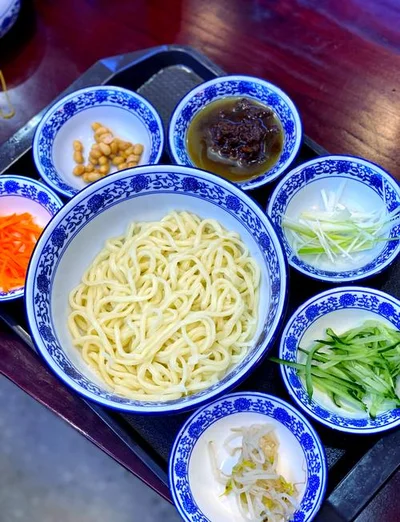
Beijing Zhajiang Noodles set with fresh shredded vegetables and glossy fried soybean paste.
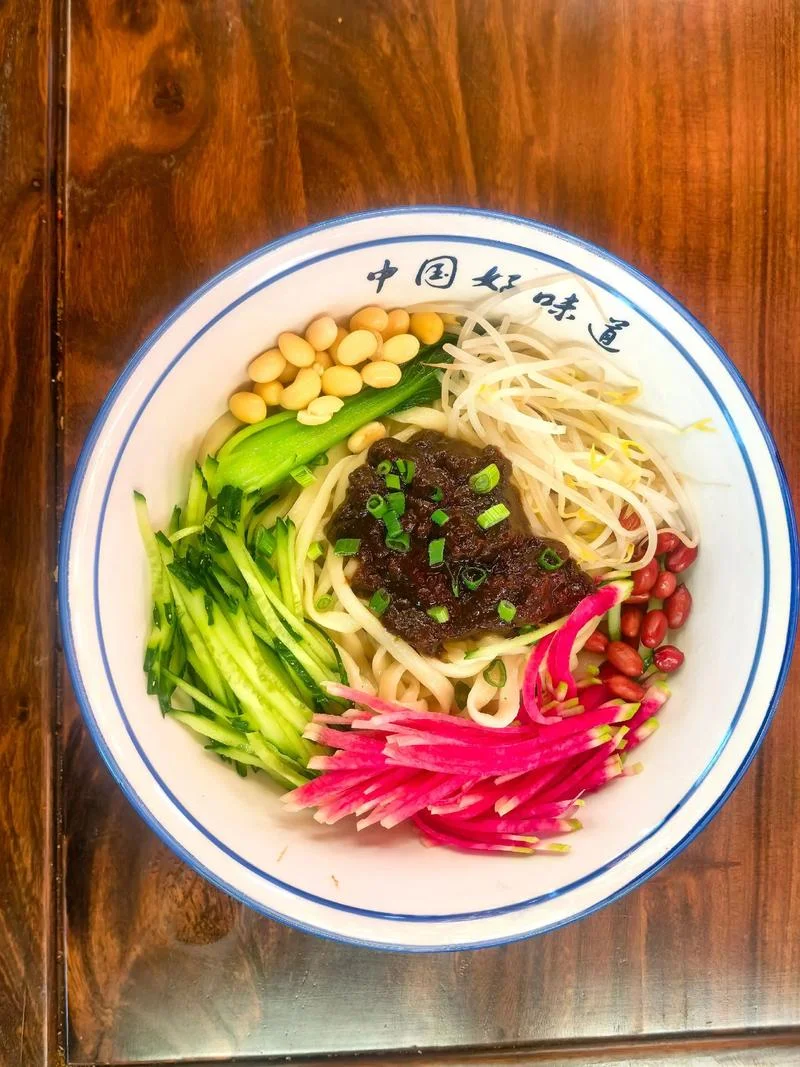
Beijing Zhajiang Noodles with assorted shredded toppings and traditional fried soybean paste.
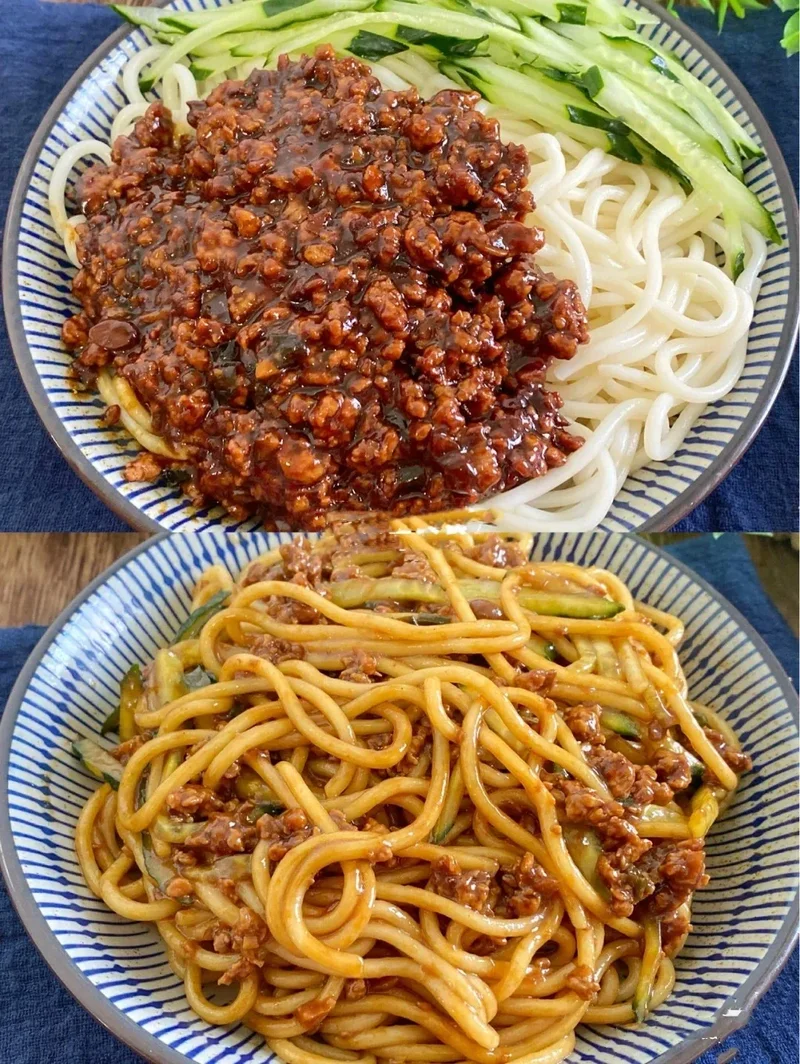
Beijing Zhajiang Noodles topped with minced pork soybean paste and shredded cucumber.
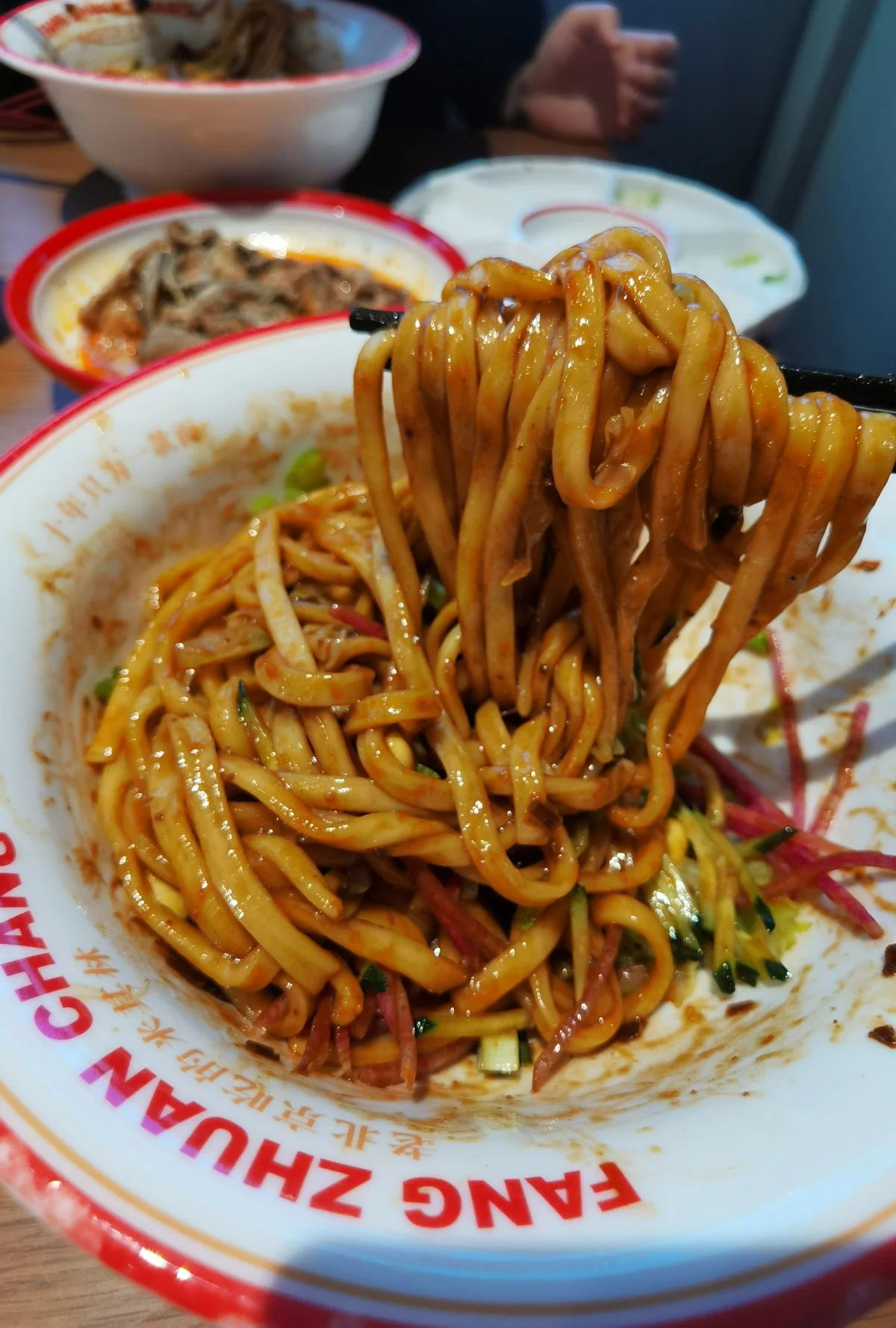
Beijing Zhajiang Noodles fully mixed with thick soybean paste and vegetables.
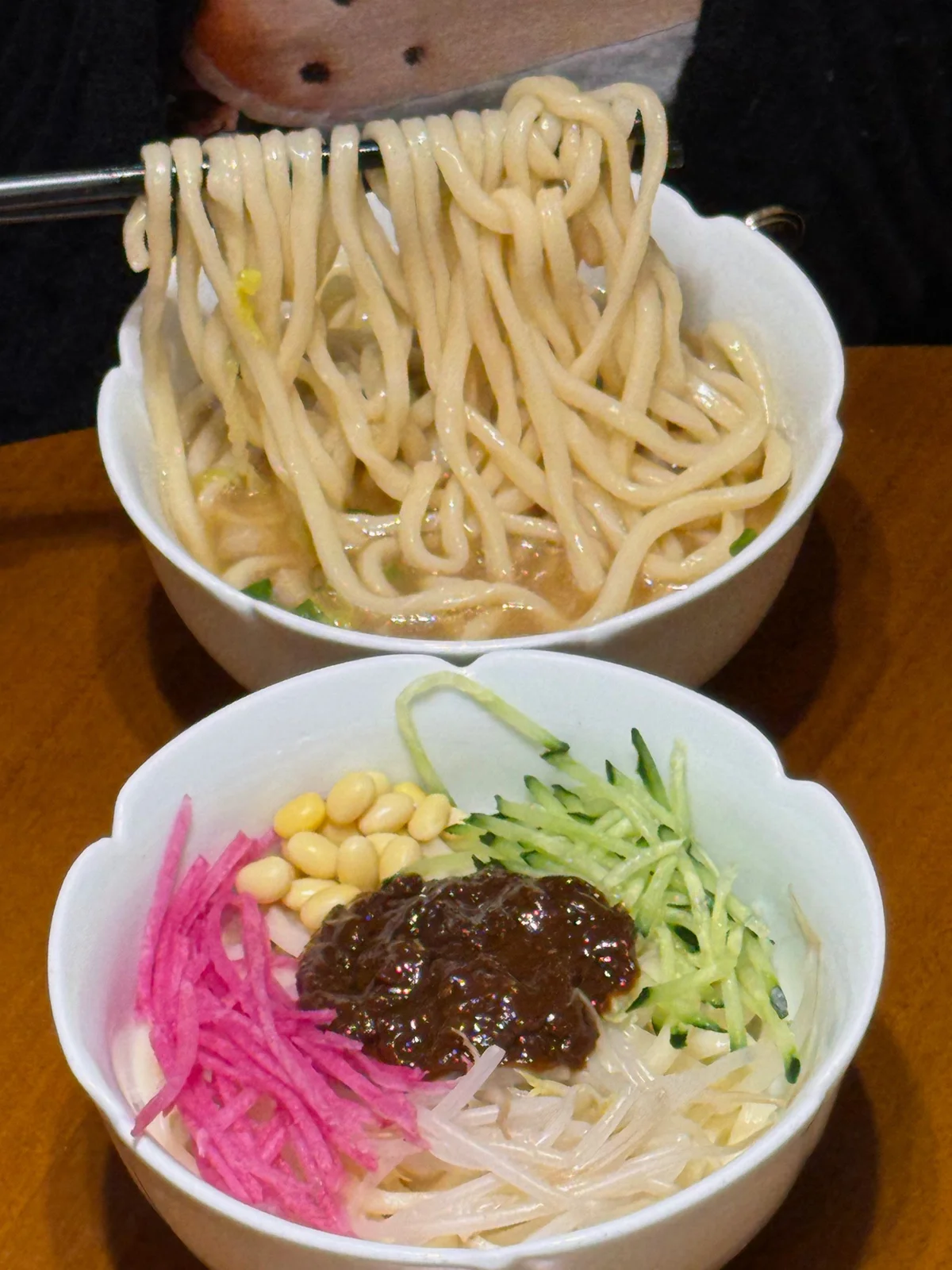
Beijing Zhajiang Noodles with hand-cut noodles and assorted fresh toppings ready to mix with fried soybean paste.
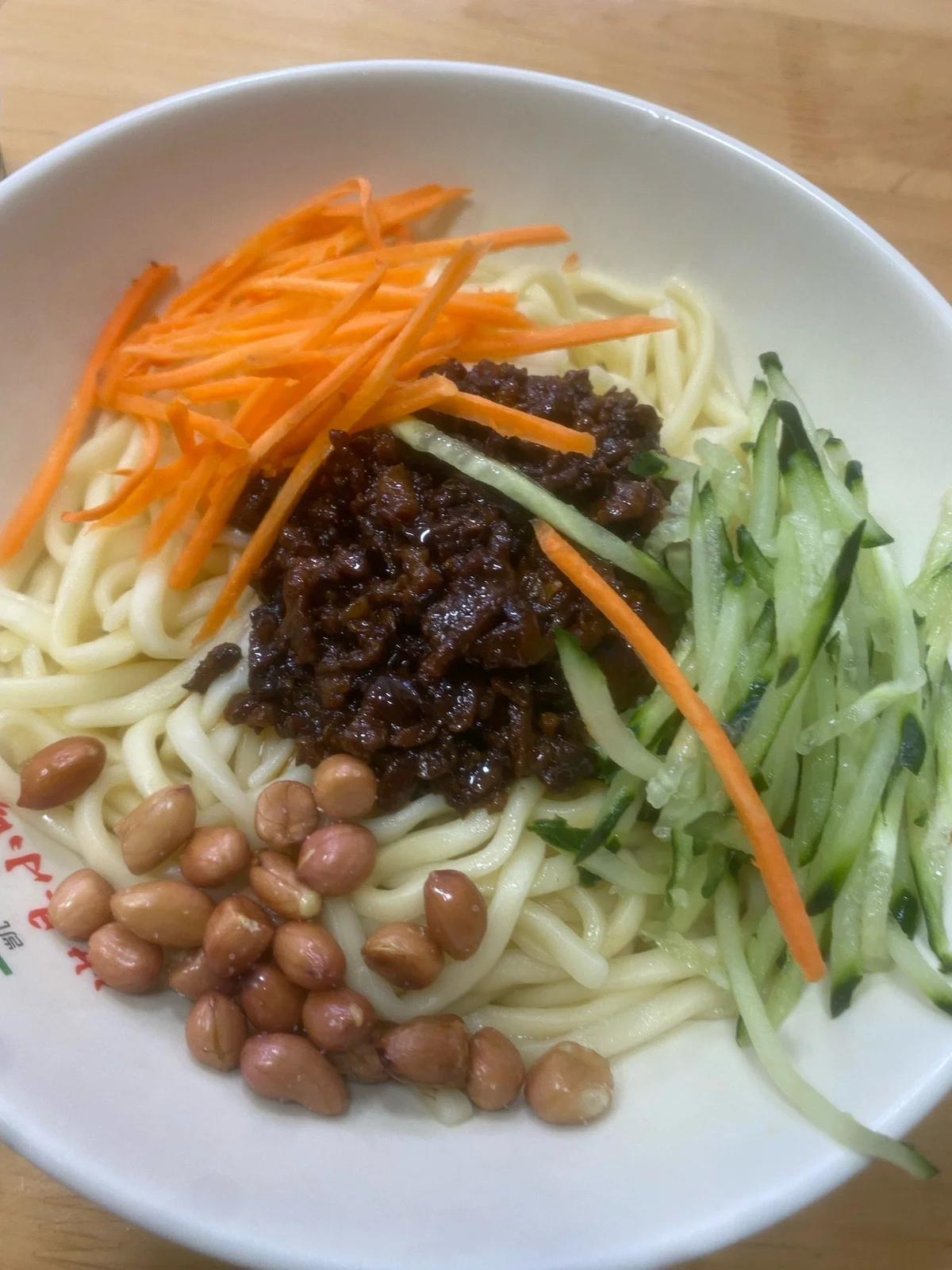
Beijing Zhajiang Noodles topped with carrot, cucumber, peanuts, and fried soybean paste.
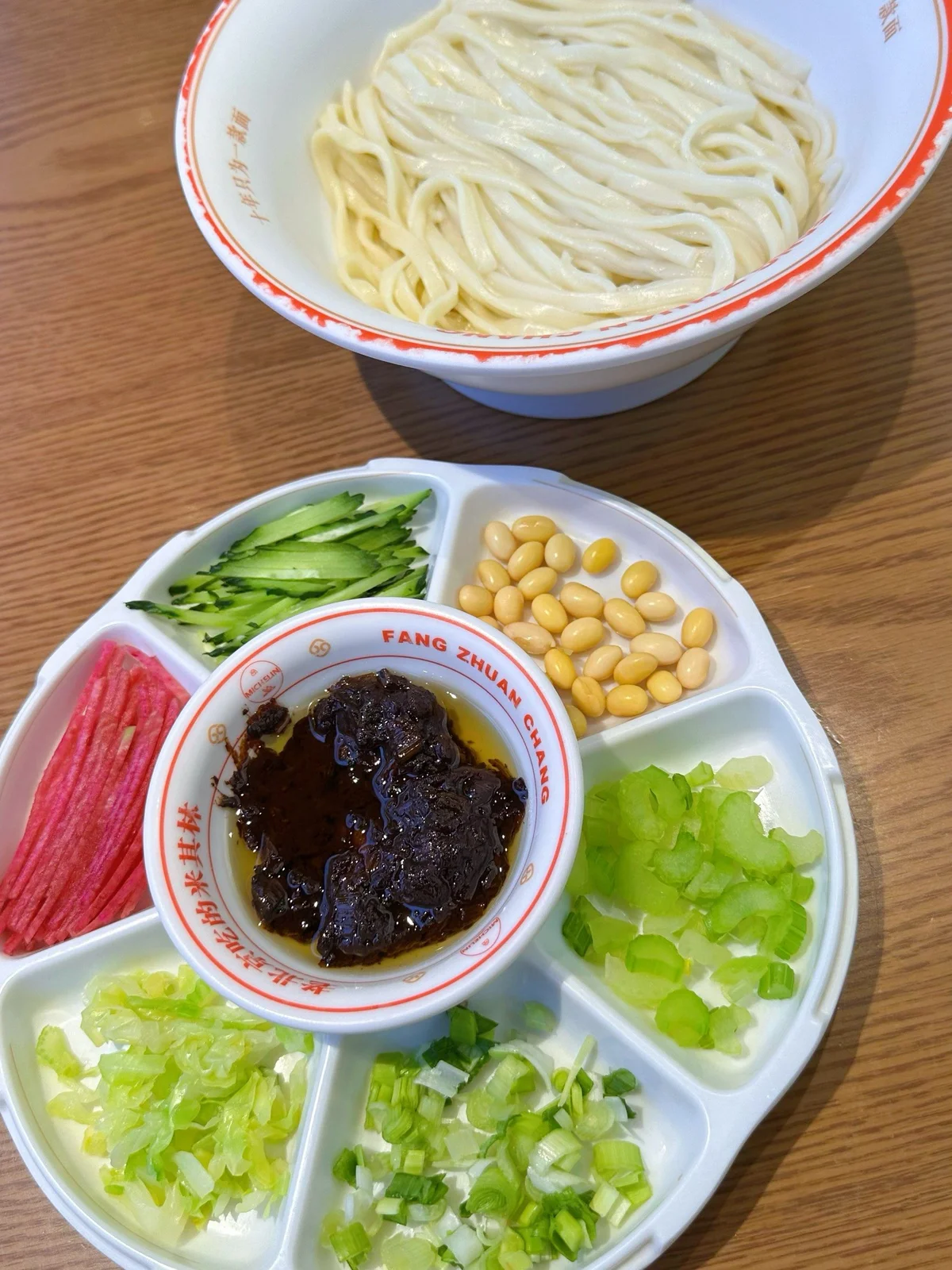
Beijing Zhajiang Noodles served with separate toppings and a bowl of thick fried soybean paste.
Zhajiang Noodles is one of the most defining dishes of Beijing cuisine. While Peking Duck often represents the city’s grand culinary traditions, Zhajiang Noodles represents the opposite: simple, hearty, everyday food found in homes and small noodle shops across the capital. Its flavor comes from just three essential components — thick hand-cut noodles, fresh and crunchy toppings, and a deeply fragrant fried soybean paste known as “Zhajiang.”
The noodles are typically thick and chewy, often made by hand or cut into wide strips. The texture is key — they need enough bite to stand up to the heaviness of the sauce. Beijing-style toppings are always fresh and finely cut into thin strips: cucumber, bean sprouts, radish, green beans, scallions, and occasionally sliced tofu. These ingredients balance the richness of the sauce and create a refreshing contrast.
The star of the dish is the sauce. Beijing-style Zhajiang uses fermented yellow soybean paste, which is darker and stronger than sweet bean paste. The paste is fried slowly with minced pork, allowing the fat to render and blend with the fermented flavor of the beans. A properly made Zhajiang is glossy, intensely savory, and slightly salty — meant to coat every strand of the noodles.
While Zhajiang Noodles may appear simple, it embodies important aspects of Beijing food culture: bold flavors, hearty textures, and a strong sense of home-style cooking. Many Beijingers grow up eating this dish weekly, often prepared by parents or grandparents who insist that the “real flavor” comes from slow frying and patience.
Today, visitors can enjoy Zhajiang Noodles everywhere from old neighborhood shops to modern restaurants. Each place has its interpretation, but the core remains unchanged: great noodles, fresh toppings, and unforgettable Zhajiang.
Comments (0)