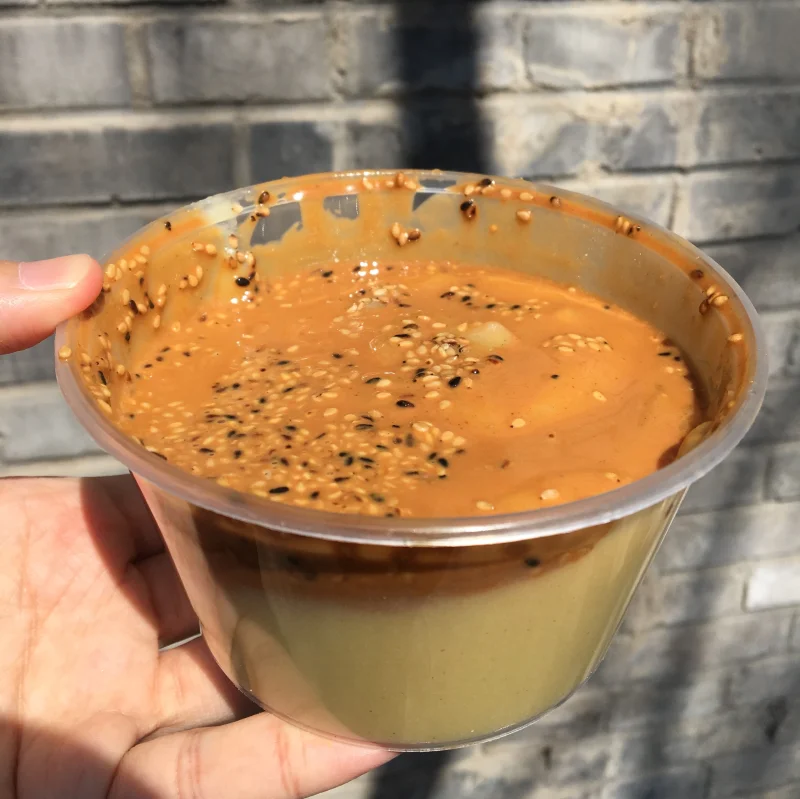
Miancha (面茶) is not a cup of tea. In Beijing, it is a hot, thick grain porridge, most often associated with millet or millet flour, finished with sesame paste and a scattering of sesame. It is one of the city’s most textural snack-counter foods: warm and smooth underneath, fragrant and slightly gritty on top.
Dish Photos
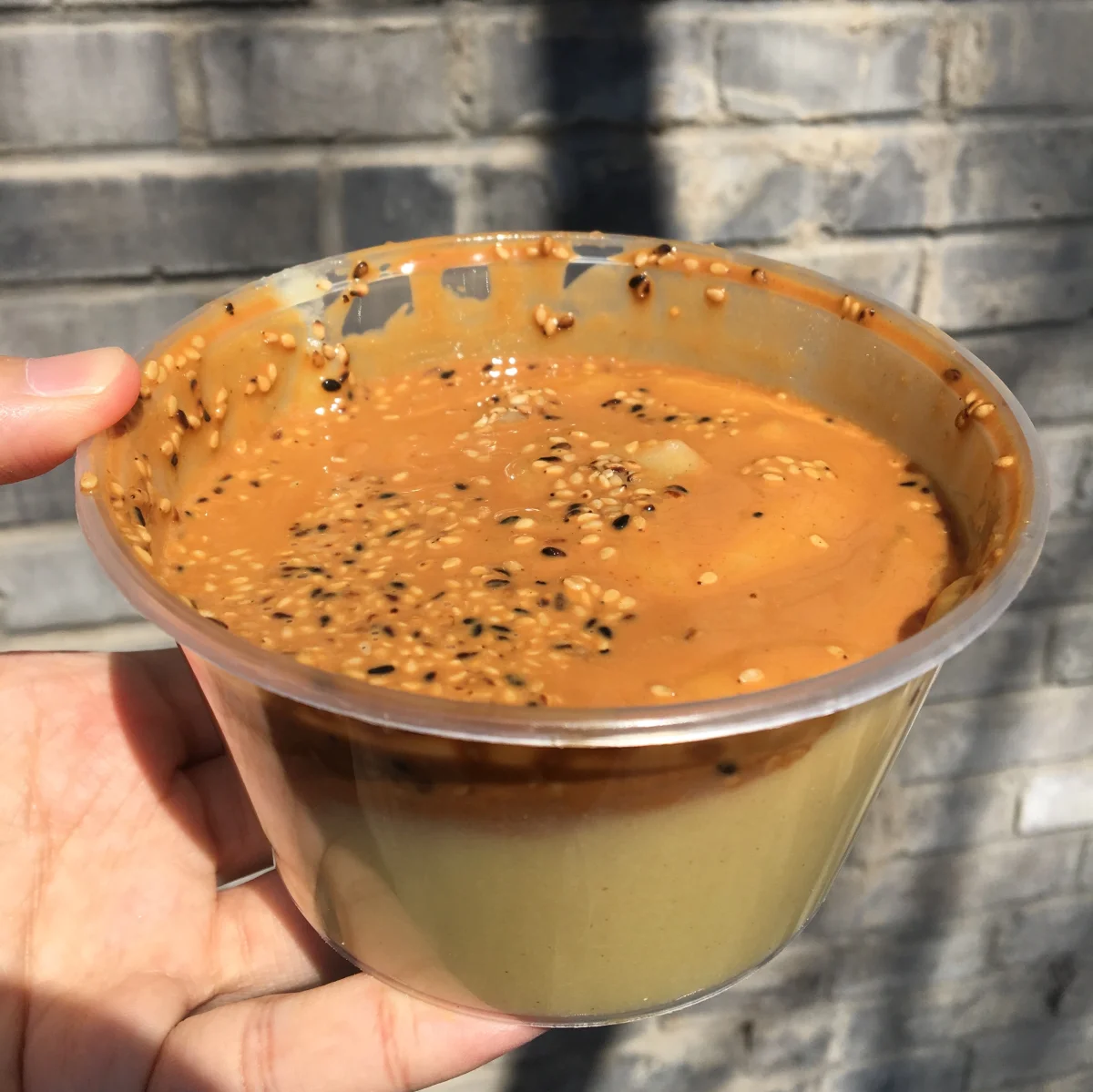
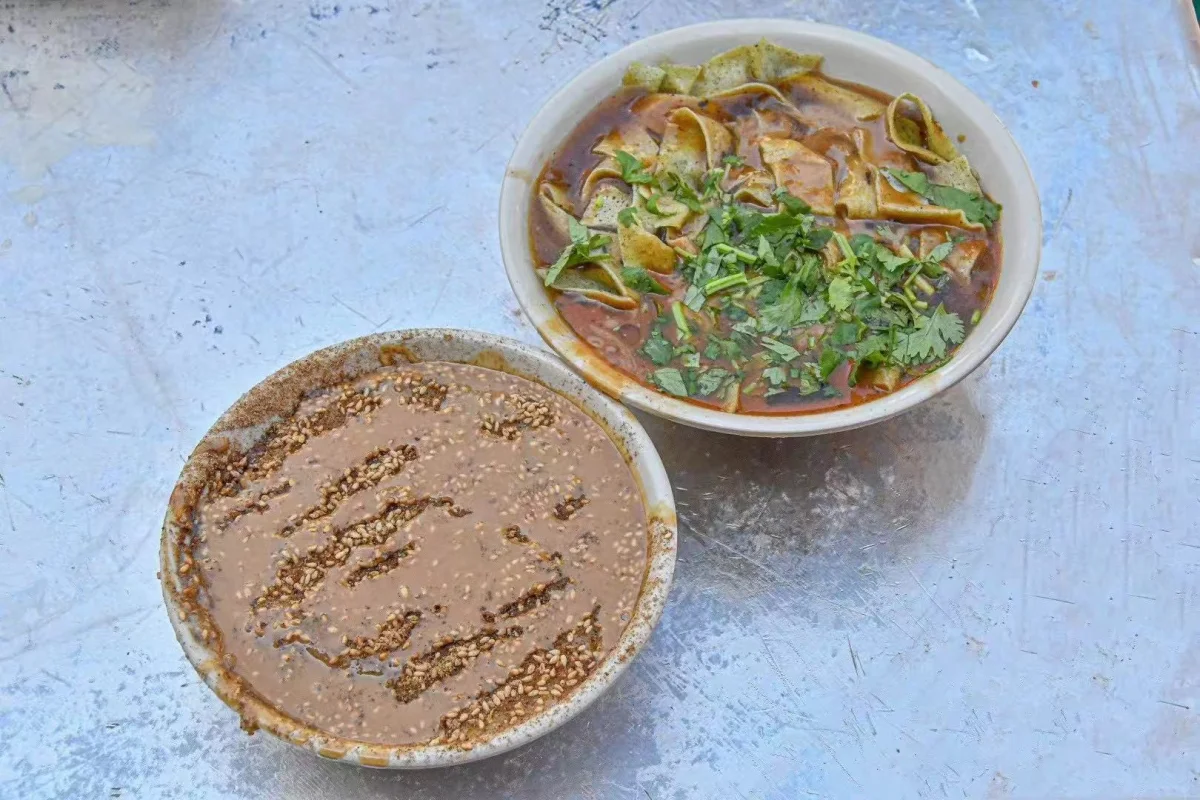
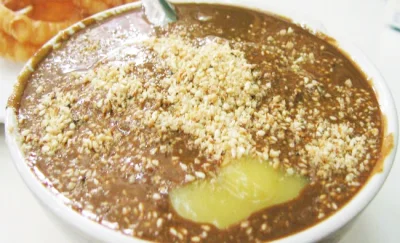
For a first-timer, the useful question is not whether it is sweet. Beijing-style miancha usually reads more savoury-nutty than dessert-like, although the exact balance varies by shop. The sesame is the first aroma, then the cooked grain. Think of it as a small hot snack or breakfast bowl rather than a drink.
What makes Beijing miancha different
Beijing’s official tourism materials describe miancha as a thick brown preparation made from millet and crushed toasted sesame; other official local descriptions list yellow millet flour with sesame paste, sesame oil, salt, and toasted sesame. Those details explain the appearance: the base is dense enough to hold a sesame-paste swirl on the surface, rather than behaving like thin tea or soup.
Do not confuse it with the Hokkien dish that also uses the name miancha, or with douzhi and soy-based breakfast bowls. Beijing miancha is defined by the cooked grain base and sesame topping. Its flavour is toasted, grainy, and gently salty; it is not fermented and it is not dairy-based.
How to eat it: do not stir the whole bowl first
The familiar local method is to bring the bowl to the lips and sip around the rim, taking a little of the sesame layer with the warm base each time. A Beijing Tourism guide specifically notes this bowl-edge approach rather than using a spoon. You do not need to perform it perfectly, but it is a sensible way to keep the topping from disappearing into the porridge all at once.
If the sesame paste has pooled heavily in one place, take a small amount from that side first. Stirring is not forbidden, but a vigorous stir turns the bowl into one uniform paste and makes it harder to notice the contrast that the preparation is designed to have.
What a good bowl should look and feel like
- Surface: sesame paste and toasted sesame should be visible, not merely a brown sheen.
- Body: the grain base should be thick and smooth enough to eat slowly, not watery or split.
- Aroma: look for toasted sesame before sweetness; a harsh burnt smell is not the goal.
- Temperature: it is best hot or at least properly warm. A lukewarm bowl loses much of its comfort and sesame fragrance.
These are tasting cues rather than a claim that every counter follows a single recipe. Traditional snacks vary by operator, and local sources themselves show that miancha is made in several related styles.
Best Beijing breakfast pairings
Miancha has enough body to be a snack by itself, so pair it with one crisp item rather than ordering a large table of rich foods. Jiaoquan is a natural contrast: the brittle fried ring gives the mouth something crisp after the soft, sesame-heavy bowl. A plain shaobing can also work when you want a more substantial breakfast, but keep the portion modest because both foods are wheat- or grain-forward.
It is less useful to pair miancha with another dense, strongly seasoned bowl on a first visit. If you are also curious about douzhi, taste the two separately rather than treating them as interchangeable drinks: douzhi is fermented and tangy, while miancha is toasted and sesame-led.
How to order without overdoing it
Ask for miancha (面茶) and start with one small bowl. At a traditional snack counter, point to the bowl if pronunciation feels awkward. If condiments are offered, add only a little at first; the dish already has a complete sesame-and-grain profile. This is not a food that needs a heavy sauce.
Miancha is especially satisfying in cool weather, but it is not limited to a particular season. Treat it as a slow, warm pause in a Beijing snack stop, then move to one crisp partner rather than trying to make it a full multi-dish meal.
Sources and photo credits
Food context: Beijing Municipal Government: Beijing Hutong Tour; Beijing Tourism: Miancha; Beijing Tourism: Miancha serving custom.
Photos: Zheng Zhou, CC BY-SA 4.0; Amazingloong, CC BY-SA 4.0; Beijing Tourism.
Comments (0)