Jiaoquan and Douzhi Pairing Guide: Beijing’s Crispy Ring and Sour Breakfast Drink
A practical guide to the old Beijing pairing of crisp jiaoquan and sour douzhi, with ordering tips, flavor logic, pickled vegetable pairings, and first-timer advice.
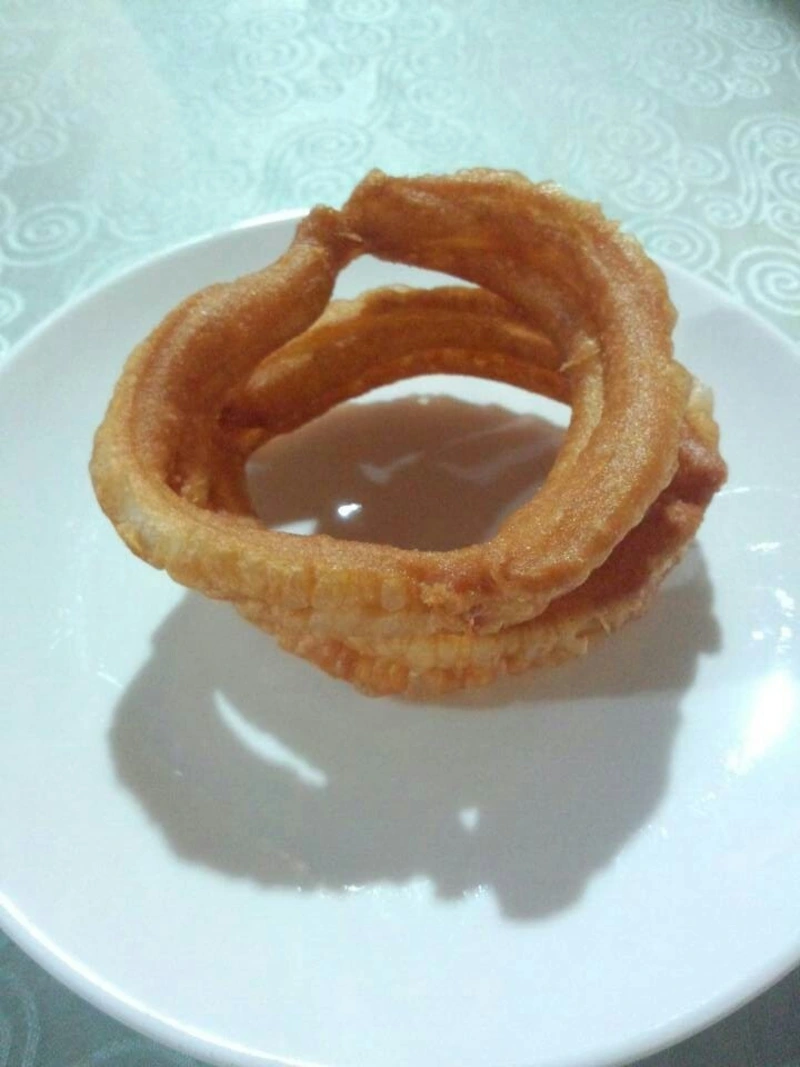
A practical guide to Beijing jiaoquan, the crispy fried ring paired with douzhi, covering texture, taste, ordering tips, snack-shop culture, and how it differs from youtiao.
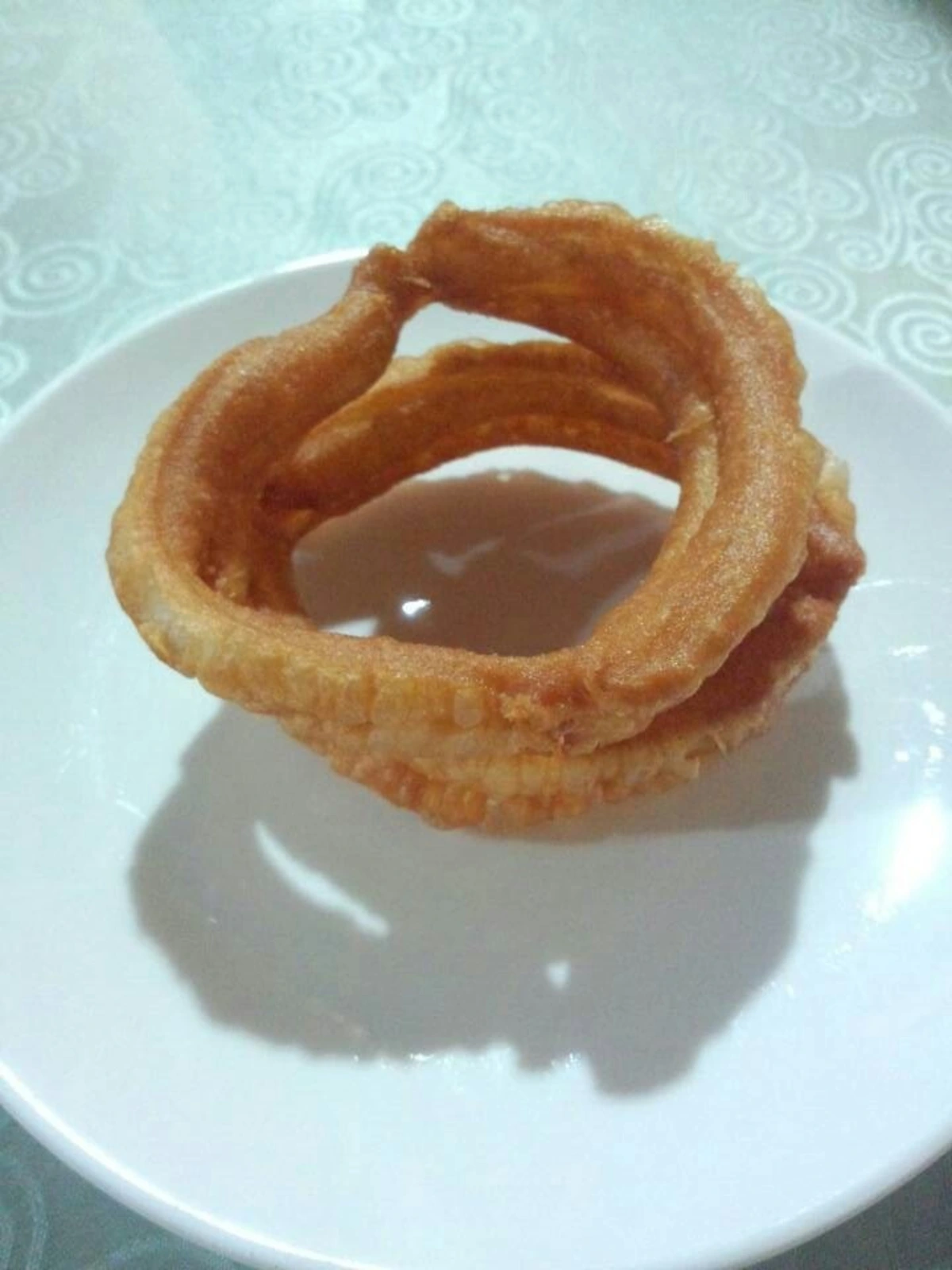
Jiaoquan is one of Beijing's simplest-looking snacks: a small golden fried ring, thin enough to snap, oily enough to feel satisfying, and crisp enough to survive beside a bowl of hot douzhi. It looks a little like an onion ring, but it is not made with onion. It is a ring of fried dough, valued for texture more than complexity.
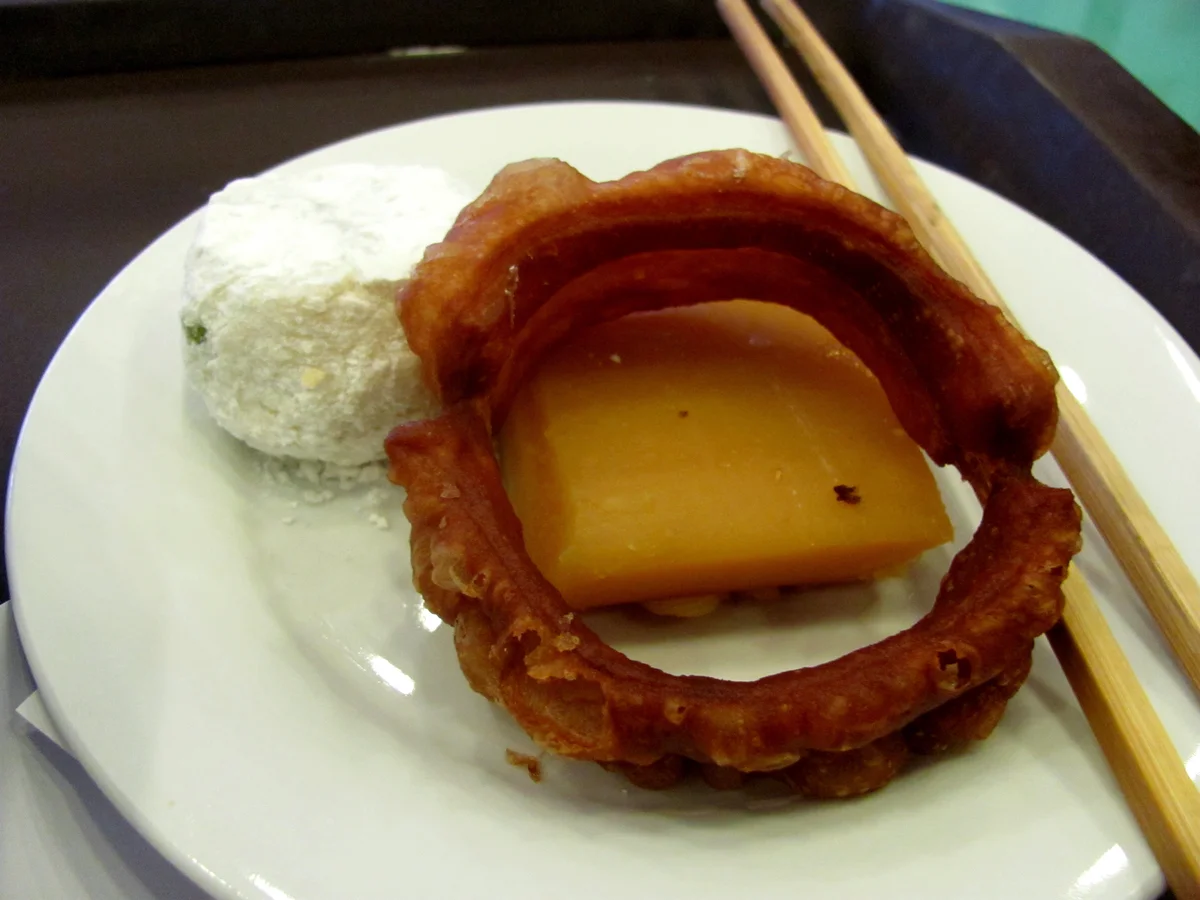
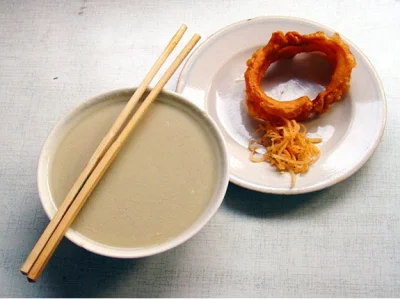
The reason jiaoquan matters is not that it is rare or elaborate. It matters because it completes one of Beijing's most famous old-school breakfast pairings: sour fermented mung bean drink, salty pickles, and a crunchy fried ring.
Jiaoquan, often translated as fried ring, is a traditional Beijing snack made from dough shaped into a circle and fried until crisp. A good piece should be thin, dry-crisp rather than soft, and golden brown without tasting burnt.
It is lighter and more brittle than youtiao. Youtiao is long, puffy, and breadier; jiaoquan is smaller, ring-shaped, and more about crackly texture. That difference explains why jiaoquan works so well with douzhi: it cuts through the drink's sour aroma with crunch and oil.
Douzhi is sour, hot, and fermented. On its own, it can be difficult for first-time visitors. Jiaoquan gives the meal a second rhythm: sip the douzhi, bite the fried ring, then add pickled vegetables for salt and sharpness. The pairing is more balanced than either item alone.
If you order douzhi without jiaoquan, you miss the classic structure. If you order jiaoquan without douzhi, it still works as a snack, but you lose the old Beijing breakfast context that made it famous.
Jiaoquan should be crisp, lightly oily, and wheat-fragrant. It should not be limp, heavy, or stale. Because it is fried, freshness matters. A piece that has sat too long can still look correct but taste flat.
The best jiaoquan is not complicated. It should break cleanly, leave a light fried aroma, and make the douzhi meal easier to enjoy. Think of it as texture support rather than a standalone main dish.
Both are fried wheat foods, but they play different breakfast roles. Youtiao is larger and softer inside, often eaten with soy milk, tofu pudding, or porridge. Jiaoquan is smaller, more brittle, and more closely linked to douzhi and old Beijing snack shops.
At a snack shop, order jiaoquan with douzhi and pickled vegetables. If you are trying this breakfast for the first time, order one set for sharing. Eat it while the ring still feels crisp. Break pieces off with your hand or chopsticks, sip the douzhi, and use pickles to reset your palate.
For a safer first breakfast, start with the Beijing breakfast guide or jianbing. For a more old-school breakfast, jiaoquan and douzhi are the more memorable choice.
Look for old Beijing snack shops and Huguosi-style counters rather than modern cafes. These places are more likely to serve jiaoquan with the proper context: douzhi, pickles, other Beijing snacks, and fast morning service.
Because jiaoquan is simple and fried, freshness is more important than famous branding. Choose a shop where snacks move quickly and the fried rings do not look tired or oily.
Try jiaoquan if you want to understand old Beijing breakfast beyond the easy options. It is less famous internationally than Peking Duck and less immediately friendly than jianbing, but it gives a direct sense of snack-shop food culture.
It is especially useful after reading about douzhi. Together, the two explain why Beijing breakfast is not only about comfort food. It can also be about acquired tastes, texture, habit, and memory.
This guide is original editorial content. The links below were used for factual cross-checking, official local-food context, and image attribution; they are not copied source text.
Photo credit:Visit Beijing.
Comments (0)