Miancha in Beijing: Sesame Swirls, Bowl-Sipping, and What to Order Alongside It
A practical guide to Beijing miancha: its millet-and-sesame structure, the traditional bowl-sipping method, freshness cues, and how to pair it with a Beijing breakfast.
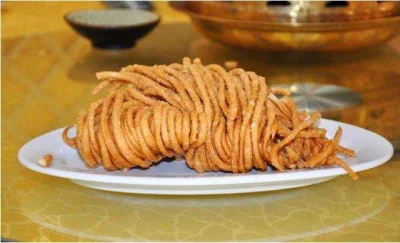
Compare Beijing miancha and youcha: millet and sesame paste versus roasted flour, how each bowl tastes, how to order, and the breakfast pairings that make their differences clear.
Miancha (面茶) and youcha (油茶) can look like close relatives when they arrive at a Beijing snack counter: both are hot, thick, grain-based bowls with a toasted, sesame-adjacent aroma. They are not interchangeable, however. Miancha is associated with a cooked millet base and a visible sesame-paste topping, while youcha is built around dry-roasted flour mixed into hot water with oil and other aromatic ingredients.
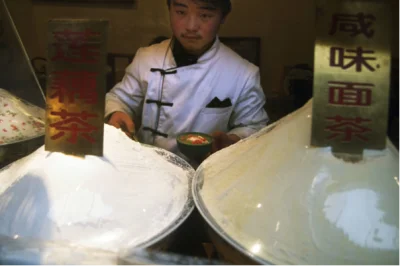
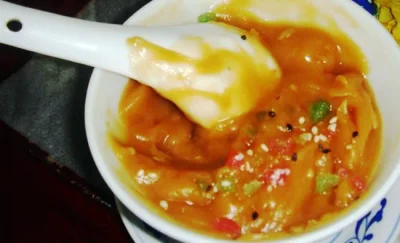
The most useful way to think about them is as two different snack bowls rather than two versions of tea. Neither is a standard brewed drink. A small order of each is a good way to understand why old Beijing breakfast vocabulary contains both names.
Official Beijing tourism descriptions identify miancha with millet or millet flour, crushed toasted sesame, and sesame paste. The finished bowl is dense enough to carry a distinct sesame layer on top. By contrast, Beijing Tourism’s description of youcha starts with wheat flour that is dry-roasted until fragrant and yellow, then worked with hot water into a thick paste. Its traditional ingredient list may include oil, sesame, walnuts or seeds, osmanthus, and sugar; the exact recipe is not identical at every counter.
That difference affects the first mouthful. Miancha usually leads with sesame and cooked grain. Youcha tends to feel more floury and roasted, with its richness dispersed through the bowl rather than sitting as a sesame swirl on the surface. Both can be comforting on a cold morning, but they reward different expectations.
Beijing miancha is recognizable by the contrast between its thick grain base and its sesame topping. A good bowl should look composed rather than thin: the sesame paste and toasted sesame are visible, while the porridge below remains hot and smooth. The overall profile is nutty, toasted, and often gently savoury rather than dessert-sweet.
There is also a familiar serving custom. Instead of immediately stirring everything with a spoon, local descriptions recommend sipping from the edge of the bowl so that a little sesame topping reaches the mouth with each sip of the warm base. This is not a rule that needs to be performed perfectly, but it preserves the contrast that makes miancha distinctive. If you stir vigorously at the beginning, the bowl becomes more uniform and the sesame layer is harder to notice.
Youcha is also thick, but its starting point is roasted flour rather than a millet porridge. It has a deeper cereal aroma and a more integrated, paste-like body. Sesame may still be part of the flavour, yet it is not the same visual signature as miancha’s surface topping. Depending on the maker, you may notice a faint nutty, floral, or sweet note from additions such as walnuts, seeds, osmanthus, or sugar.
Do not assume that every bowl follows the most elaborate historical recipe. Beijing Tourism records a traditional version with several rich ingredients, including bone-marrow oil, but snack counters and home preparations vary. For a visitor, the reliable ordering distinction is simple: ask whether the counter’s bowl is miancha or youcha, then expect sesame-and-millet contrast from the first and roasted-flour richness from the second.
| What to compare | Miancha | Youcha |
|---|---|---|
| Base | Cooked millet or millet flour | Dry-roasted wheat flour mixed with hot water |
| Most visible feature | Sesame paste and toasted sesame on top | A unified, roasted flour paste |
| Main aroma | Sesame first, then warm grain | Toasted flour, with oil, seeds, nuts, or floral notes depending on the recipe |
| Useful first-timer cue | Try a sip from the rim before stirring | Take a small spoonful and notice the roasted grain flavour |
| What not to call it | Not brewed tea and not soy milk | Not a cup of tea and not simply a sweeter miancha |
The table describes typical Beijing versions, not a universal national rule. Both names travel across regions and recipes, so a shop’s own preparation deserves more weight than a menu translation alone.
Start small. These are substantial bowls, and ordering one of each for two people is more useful than ordering two large bowls before you know which texture you prefer. Say or point to 面茶 for miancha and 油茶 for youcha; a counter that makes only one will usually make that clear. Avoid asking for “sesame tea,” which can obscure the distinction.
For miancha, add one dry, crisp companion such as jiaoquan. The fried ring breaks up the bowl’s softness without competing with the sesame. For youcha, a plain shaobing can work, though it makes a more filling breakfast because both foods are grain-forward. In either case, take a few bites first before adding extra sugar, chilli, or sauce; the point is to taste the bowl’s toasted profile.
Visitors sometimes group these bowls with douzhi because all three appear in conversations about traditional Beijing breakfast. The comparison stops there. Douzhi is a fermented mung-bean drink with a tangy character. Miancha and youcha are dense grain snacks. Tasting them all in one morning is possible, but do so in small portions and treat each as a separate local specialty.
For a first visit, choose one bowl, one crisp or baked side, and time to eat it while it is hot. Miancha suits someone who wants a pronounced sesame layer and a distinctly Beijing bowl-sipping ritual. Youcha suits someone who wants roasted flour, warmth, and a more blended paste. Neither needs to win; knowing the difference makes the breakfast counter much easier to read.
Food context: Beijing Tourism: Miancha; Beijing Tourism: Miancha serving custom; Beijing Tourism: Youcha; Beijing Municipal Government: Beijing Hutong Tour.
Photos: Beijing Tourism; Beijing Tourism; Sina News photo page.
Comments (0)