History of Peking Duck: From Court Cooking to Beijing Restaurants
A historically careful guide to Peking Duck, tracing roast duck from court cooking and Beijing restaurant traditions to hanging ovens, closed ovens, carving, and modern dining.
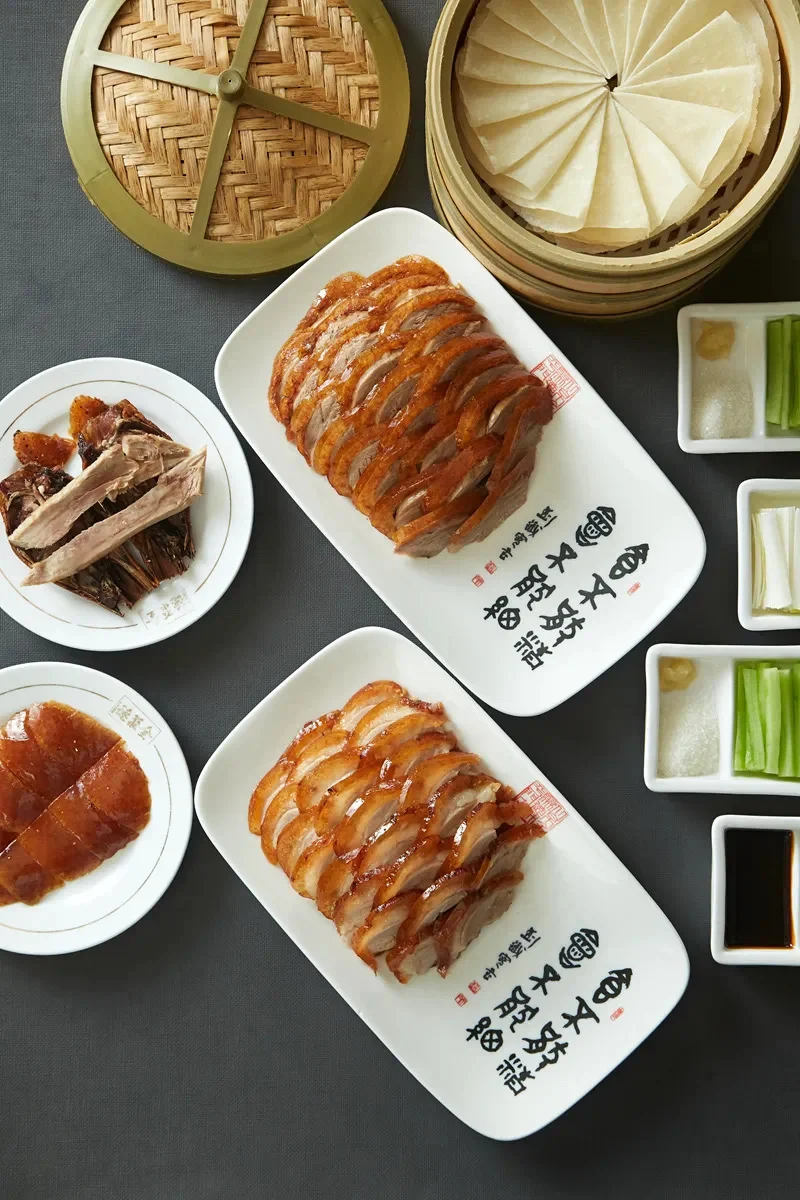
A practical comparison of two Beijing roast duck traditions: Quanjude-style hanging oven duck and Bianyifang-style closed oven duck, with guidance on skin, aroma, meat texture, wr…
Two names come up again and again when people talk about Beijing roast duck: Quanjude and Bianyifang. The difference is not only brand history. They represent two classic roasting traditions: hanging-oven duck cooked with open fruit-wood fire, and closed-oven duck roasted by contained heat without visible flame.
This guide compares the eating experience rather than ranking one restaurant over the other. If you need the general dish overview first, read Peking Duck in Beijing. If you already know the basics and want to understand why two roast ducks can taste different in Beijing, start here.
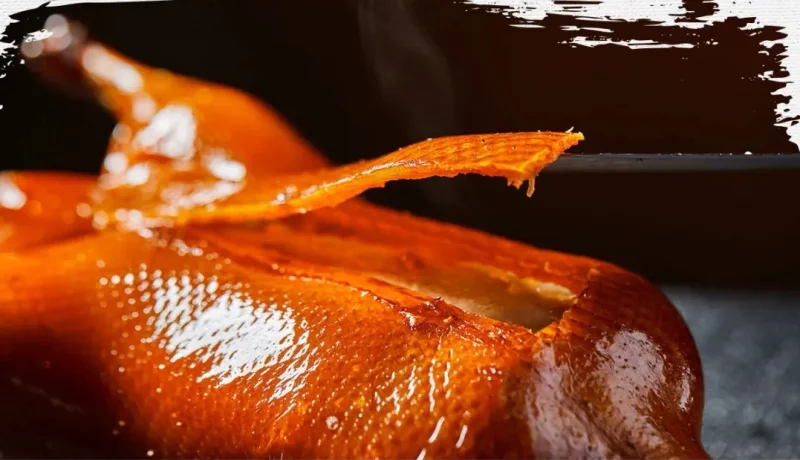
Quanjude is closely associated with hanging-oven roast duck. The duck hangs in an oven where fruit wood burns openly, giving the finished duck a deeper roasted aroma and a glossy jujube-red color. When it is done well, the skin is crisp, the fat feels fragrant rather than heavy, and the meat carries a light smoky sweetness from the roasting process.
Bianyifang is associated with closed-oven roast duck. The duck is cooked by retained heat inside the oven rather than direct visible flame. This style is often described as gentler, with tender meat, a cleaner roast character, and crisp skin that is less dominated by smoke. It can feel more restrained, especially for diners who prefer duck flavor over wood-fire aroma.
In a hanging-oven duck, the skin can feel more dramatic: darker color, stronger aroma, and a clearer roasted edge. That makes the first bite memorable, especially if you taste the skin before adding sauce. The best pieces should be crisp but not brittle, with enough fat underneath to carry flavor.
Closed-oven skin can be subtler. Instead of chasing a smoky note, it leans on clean crispness and the balance between skin and tender meat. If you tried yesterday’s Peking duck skin guide, think of this article as the next step: the same skin-first logic, but applied to different roasting styles.
Roast duck is not only about the skin. A good duck should also keep the meat moist. Hanging-oven duck can be richer and more aromatic, but if timing is off it may dry around the edges. Closed-oven duck often aims for a softer meat texture and a cleaner finish, which is why some diners find it easier to eat over a long meal.
When the plate arrives, look for slices that hold together cleanly. The duck should not look wet, but it should also not look tired or dry. If the skin and meat separate completely before you pick them up, the texture may be less satisfying in a pancake wrap.
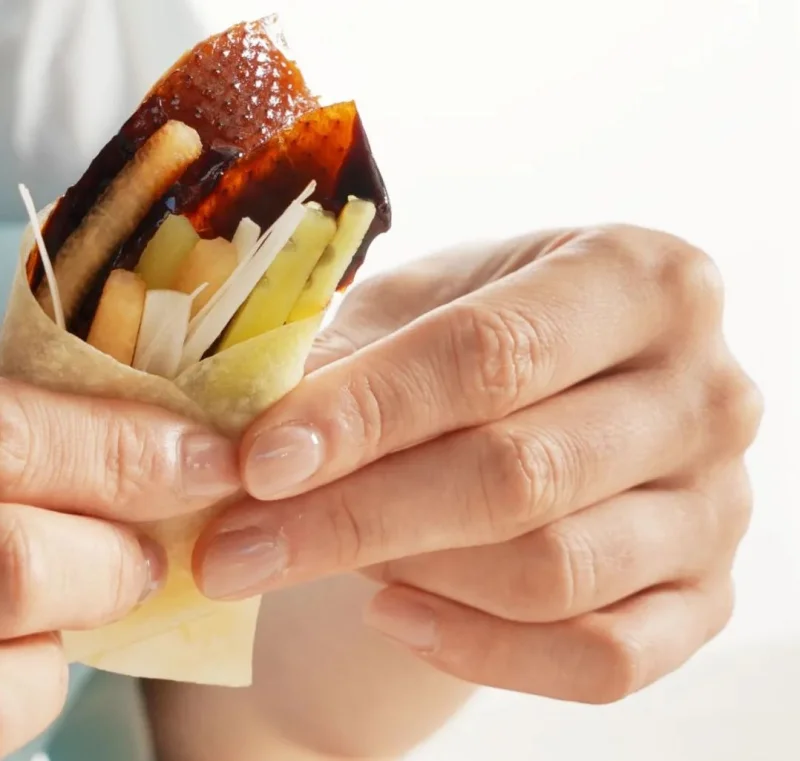
Both styles work in pancakes, but they behave differently. A stronger hanging-oven duck can stand up to sweet bean sauce, scallion, cucumber, and radish. The sauce should support the roast, not cover it. Use a thin layer and let the duck remain the center of the bite.
A cleaner closed-oven duck can be especially good with a simpler wrap. Too much sauce or too many vegetables may hide the gentler roast flavor. For a first wrap, use two or three pieces of duck, a small brush of sauce, and one or two crisp vegetable strips. The pancake wrapping guide gives more detail on folding and balance.
If this is your first Beijing roast duck meal, do not overcomplicate the order. Choose one whole or half duck depending on your group size, then add basic pancakes, sweet bean sauce, scallions, cucumber, and one light vegetable dish. The duck should be the main event. Too many heavy side dishes make it harder to compare the skin and meat.
If you are visiting multiple duck restaurants in Beijing, compare them across the same basic sequence: skin first, then a simple pancake wrap, then a piece with less sauce, then a final wrap adjusted to your taste. This keeps the comparison fair and prevents sauce, garlic, or side dishes from deciding the result for you.
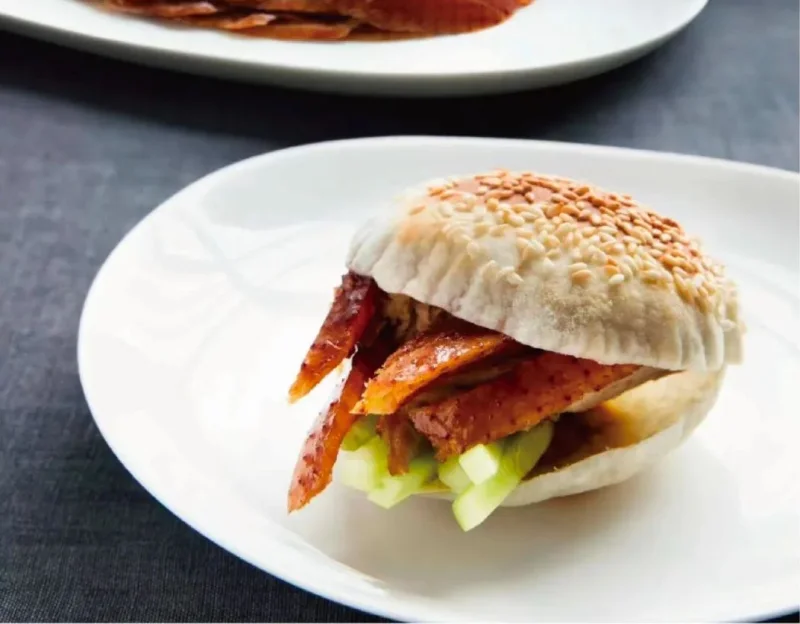
Some modern Beijing duck restaurants serve duck skin with caviar, in small buns, or as tasting-menu style bites. These can be interesting, but they should not replace understanding the classic structure. Modern plating often emphasizes contrast and presentation; classic roast duck emphasizes carving, skin, fat, meat, pancake, and sauce.
For visitors, the best approach is to treat modern bites as additions after you understand the traditional version. Eat the classic duck first, then try a bun, a skin-only piece, or a chef’s special serving. That way you can tell whether the variation improves the duck or simply changes the format.
Choose hanging-oven duck if you want stronger roast aroma, deeper color, and a more dramatic skin-first experience. Choose closed-oven duck if you want a cleaner, gentler roast with tender meat and less emphasis on smoke. If you are eating with a group, either style can work; the more important choice is whether the restaurant carves the duck well and serves it promptly.
Beijing roast duck rewards attention. Once you understand the oven style, the first bite becomes easier to read: aroma, crispness, fat, meat texture, sauce balance, and whether the pancake wrap still lets the duck speak for itself.
For official Beijing tourism context on roast duck, including hanging-oven and closed-oven descriptions, restaurant background, and eating methods, see Visit Beijing's Peking Duck feature. Images are localized from that official tourism feature and related official restaurant account materials presented there.
Comments (0)