Jianbing looks simple when a Beijing street vendor folds it in seconds, but first-timers often make the same mistakes: waiting too long, biting from the wrong end, adding too much sauce, or squeezing the folded crepe until the crisp cracker breaks into sharp crumbs. The result is still tasty, but it can become messy fast.
This guide focuses on how to eat jianbing once it is in your hand. For the broader dish introduction, start with our Jianbing in Beijing guide. For sauce and filling details, use the separate Jianbing Sauce and Fillings Guide.
Eat it soon after it is folded
Jianbing is best in the first few minutes. The outside crepe is still warm, the egg and scallions are fragrant, and the baocui crisp cracker inside has not yet softened. If you carry it around for too long, steam collects inside the wrapper and the crunchy center becomes limp.
If you are buying jianbing as part of a breakfast walk, eat it before moving on to heavier items. Do not treat it like a packaged sandwich that can sit in a bag for half an hour. The texture is the point: soft crepe outside, sauce in the middle, crisp layer inside.
Hold it from the folded bottom
Most vendors fold jianbing into a rectangle or square packet. Hold it from the folded bottom or from the paper wrapper, not from the middle. If you grip the center too tightly, the cracker breaks, sauce squeezes out, and the crepe can tear.
Keep the open or softer edge slightly upward. Take smaller bites at first, especially if the jianbing is large. The first bite tells you where the sauce is concentrated and how brittle the cracker is. After that, you can adjust your grip.
Do not overload sauce on the first try
Sweet bean sauce, chili, fermented bean paste, and other vendor-specific sauces can make jianbing deeply satisfying, but too much sauce turns the crepe wet and salty. If this is your first Beijing jianbing, ask for normal sauce and light chili, or skip chili until you understand the base flavor.
The best version should taste balanced: wheat or mung-bean crepe, egg, herbs, sauce, and crunch. If every bite tastes only like chili paste, you lose the point of the dish. Stronger sauce choices are easier to enjoy after you know what the standard version tastes like.
Understand the crispy cracker
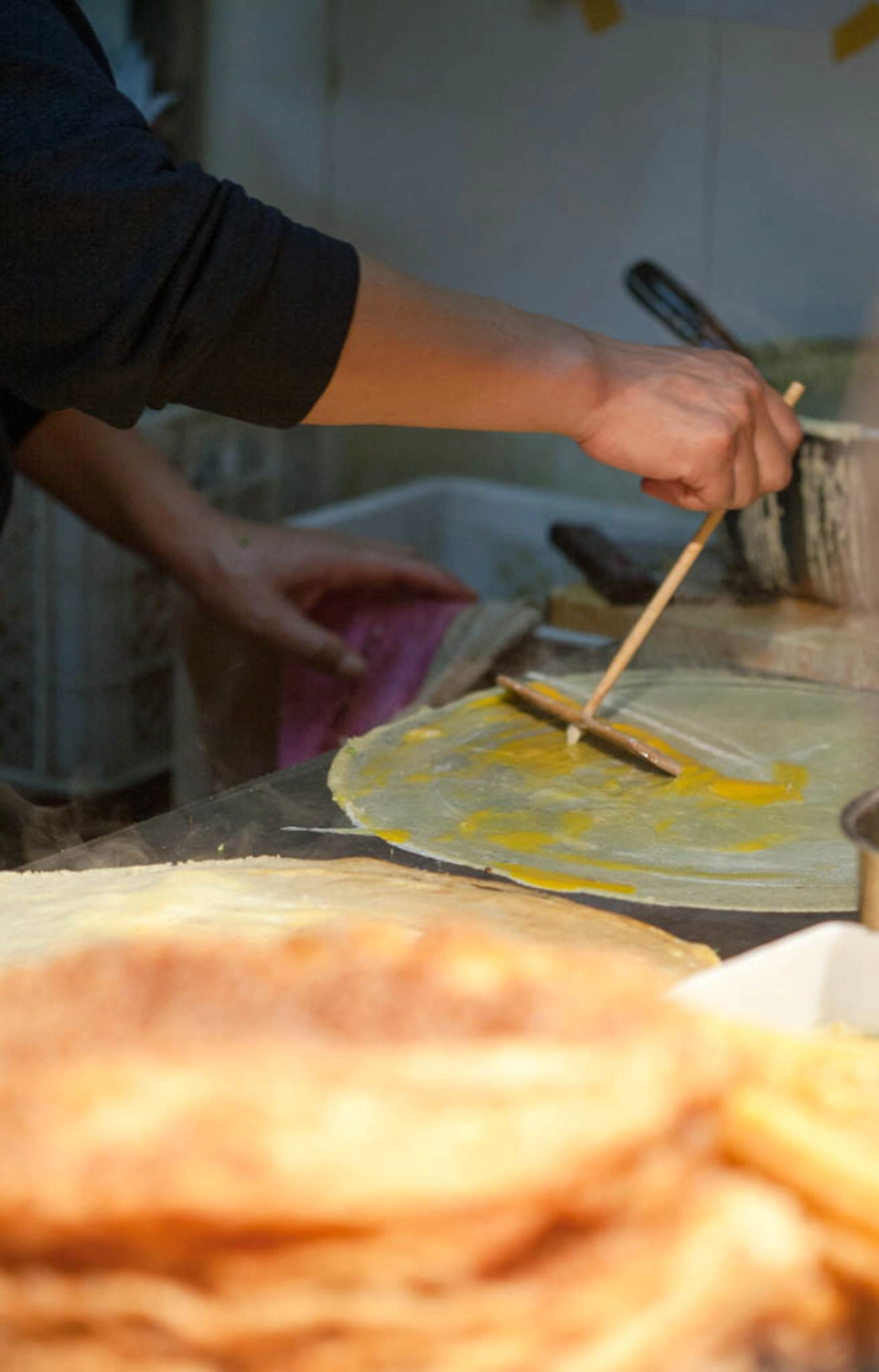
The crisp layer inside jianbing is often what makes the dish memorable. It may be called baocui or use a fried cracker-like sheet, depending on the vendor. Its job is not only to add crunch but also to create structure, so the folded crepe has bite instead of becoming a soft roll.
When the cracker is fresh, it breaks cleanly and contrasts with the soft crepe. When it is stale or steamed too long inside the wrapper, it becomes chewy. This is why timing matters. If you want to compare texture with other Beijing breakfast staples, see our shaobing vs jianbing vs baozi guide.
Choose a simple version before adding extras
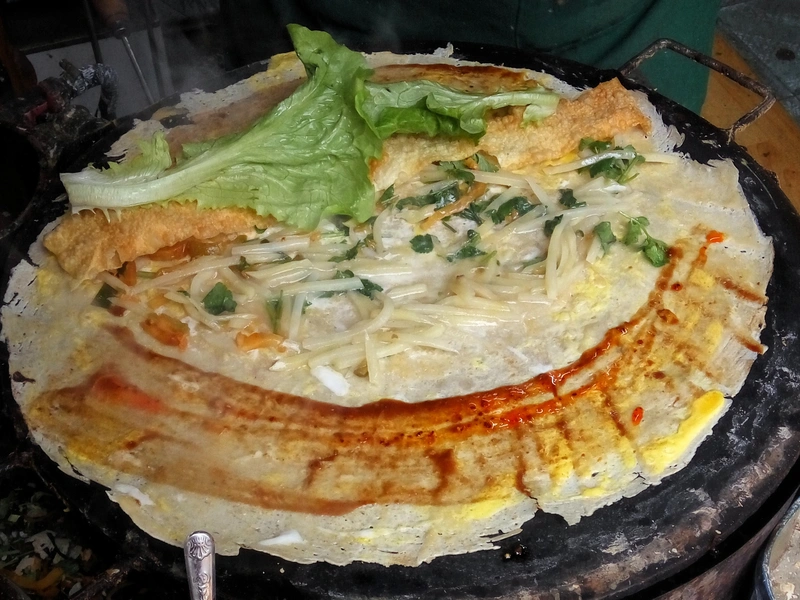
Many stalls offer sausage, extra egg, lettuce, meat floss, or other add-ons. They can be enjoyable, but they also make the folded crepe thicker, wetter, and harder to eat neatly. A simple jianbing with egg, sauce, scallion, cilantro, chili if wanted, and crisp cracker is the easiest first order.
Extra egg is usually a safer upgrade than sausage or too many wet ingredients. It adds richness without changing the structure too much. Lettuce can add freshness, but it may also make the crepe harder to fold tightly. If your goal is to understand classic breakfast texture, keep the first one simple.
Watch the vendor before ordering
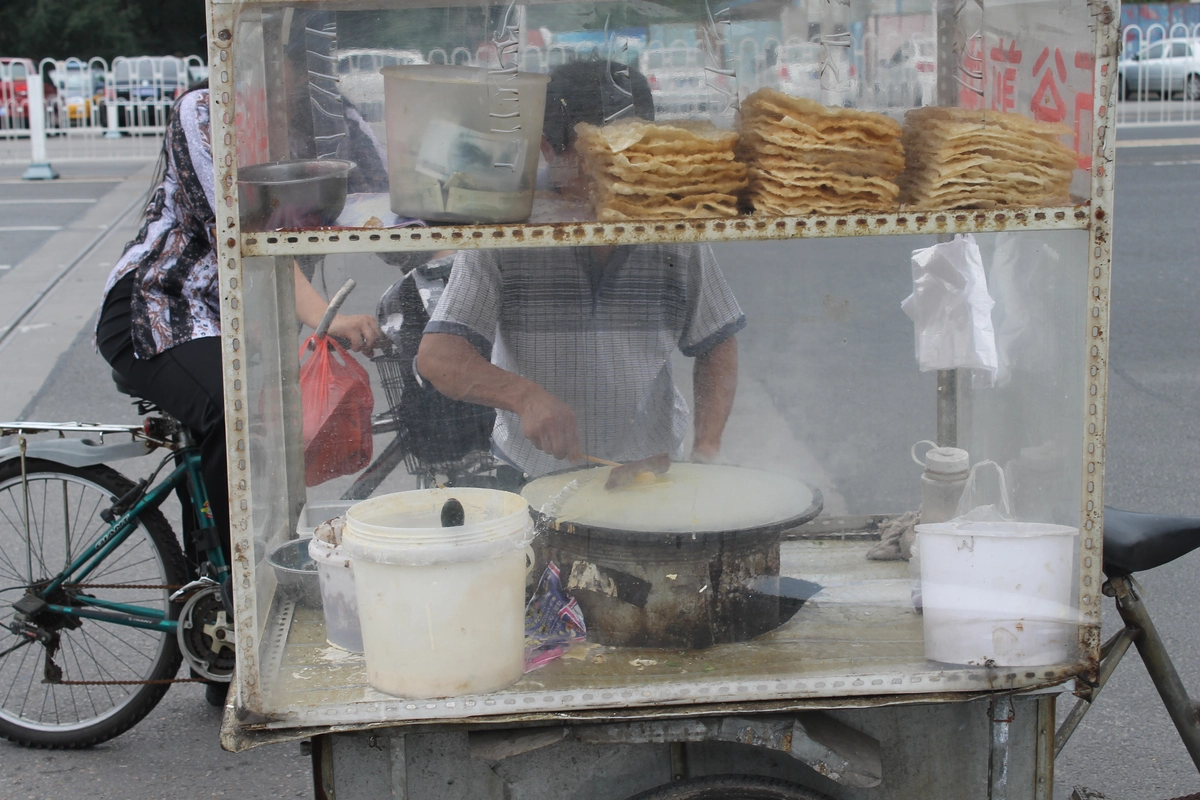
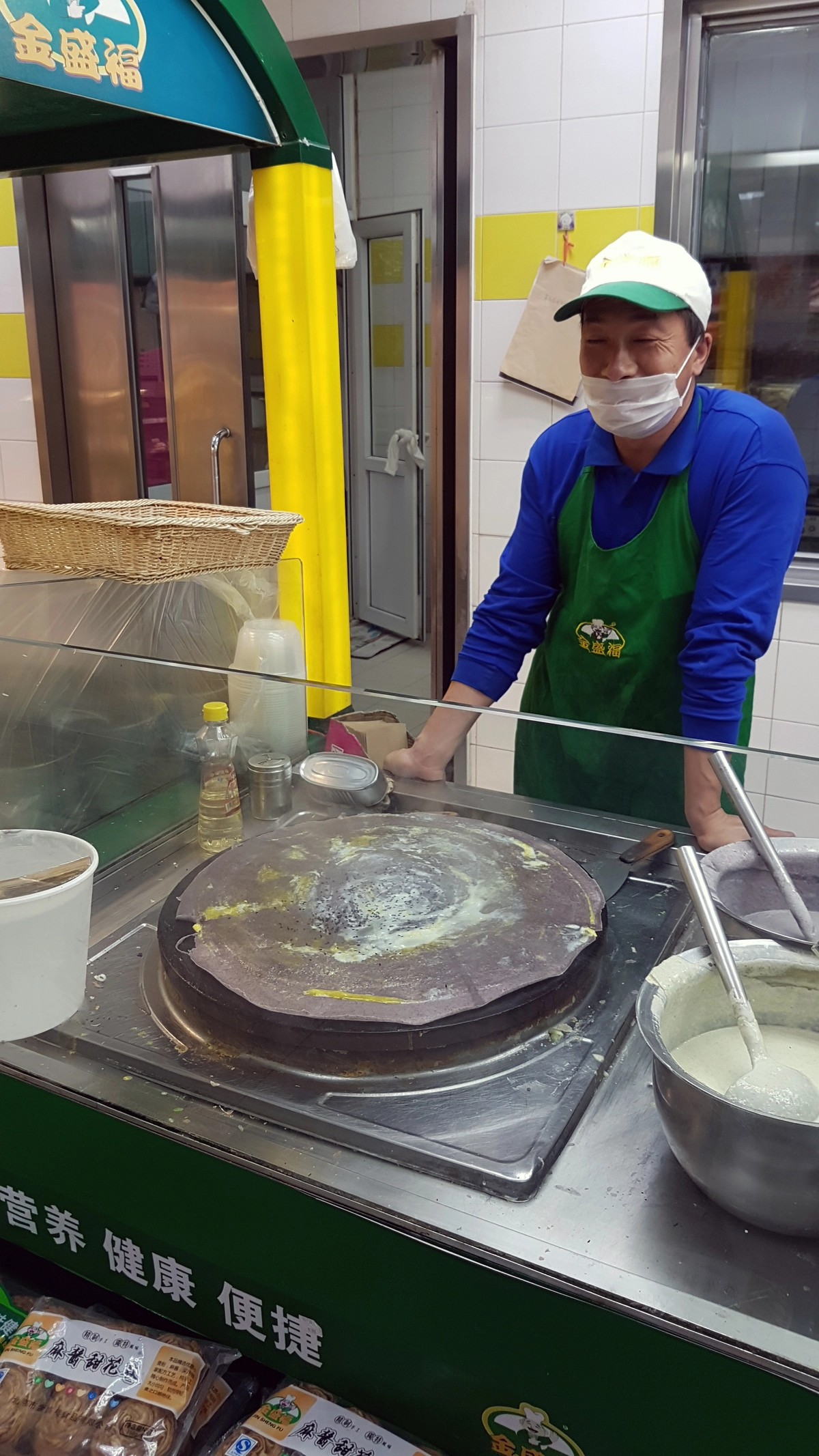
In a busy Beijing breakfast spot, watch one or two orders before you speak. You can see how much sauce the vendor uses, whether the cracker looks crisp, and how the crepe is folded. This also helps you order quickly when your turn comes.
If the stall has steady turnover, the batter, eggs, and crackers are more likely to be fresh. A quiet stall is not automatically bad, but freshness is easier to judge when you see jianbing being made continuously. For location context, see our guide on where to eat jianbing in Beijing.
How to avoid the most common mess
Do not unwrap the whole jianbing at once. Peel the wrapper down gradually as you eat. Keep the folded packet vertical or slightly angled upward. If sauce begins to collect near one corner, bite from that side before it drips.
Avoid walking fast while eating it. Jianbing is street food, but it is easier to enjoy when you step aside for a few minutes. This is especially true near subway entrances, school gates, and morning commute areas where people are moving quickly around the stall.
Should you eat it with a drink?
A warm drink makes jianbing feel more like a complete breakfast. Soy milk, bottled water, or a simple tea can balance the sauce and egg. If you are also trying stronger Beijing breakfast foods such as douzhi or chaogan, eat jianbing separately rather than turning the meal into too many competing flavors.
Jianbing is filling enough for many visitors on its own. If you plan to eat baozi, shaobing, or noodles afterward, share one jianbing or order a smaller, simpler version. The dish looks light, but the crepe, egg, sauce, and cracker add up.
First-timer checklist
Order a simple jianbing with normal sauce. Ask for light chili if you are unsure. Eat it within a few minutes. Hold it from the folded bottom. Peel the wrapper down gradually. Take smaller first bites. Do not add too many extras until you know the texture you like.
Once you understand the basic version, jianbing becomes easy to customize. You can add more chili, extra egg, different herbs, or a richer filling, but the best versions still depend on the same foundation: warm crepe, balanced sauce, fresh egg, and a crisp center that stays crunchy until the last bites.
References
For official background on Beijing breakfast and local snack culture, see Visit Beijing: Beijing’s Breakfast Culture and Visit Beijing: A Bite of Authentic Beijing Cuisine.
Comments (0)