Beijing breakfast can look simple from the sidewalk: a griddle, a steamer, a small oven, a queue, and a line of regulars who already know what they want. But Shaobing, Jianbing, and Baozi solve different breakfast needs. One is baked and layered, one is made to order on a hot plate, and one is steamed, soft, and filling.
This guide compares the three without treating them as interchangeable snacks. If you are planning a morning food walk, it also helps you decide when to choose a sesame flatbread, when to wait for a fresh jianbing, and when a basket of baozi is the better order.
The short difference
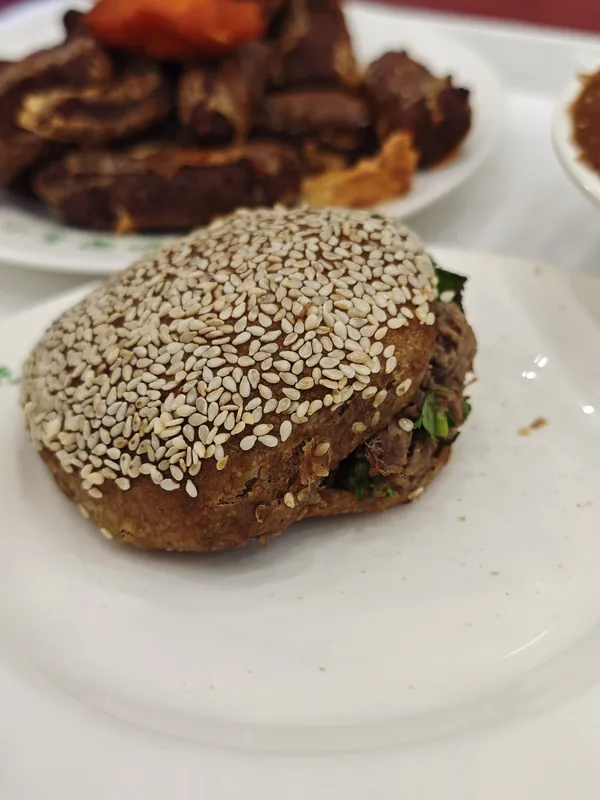
- Shaobing: baked wheat flatbread, often sesame-topped, crisp outside and layered inside; good with eggs, sliced meat, soup, or soy milk.
- Jianbing: a griddled breakfast crepe folded around egg, sauce, herbs, and a crisp sheet; best eaten immediately after it leaves the griddle.
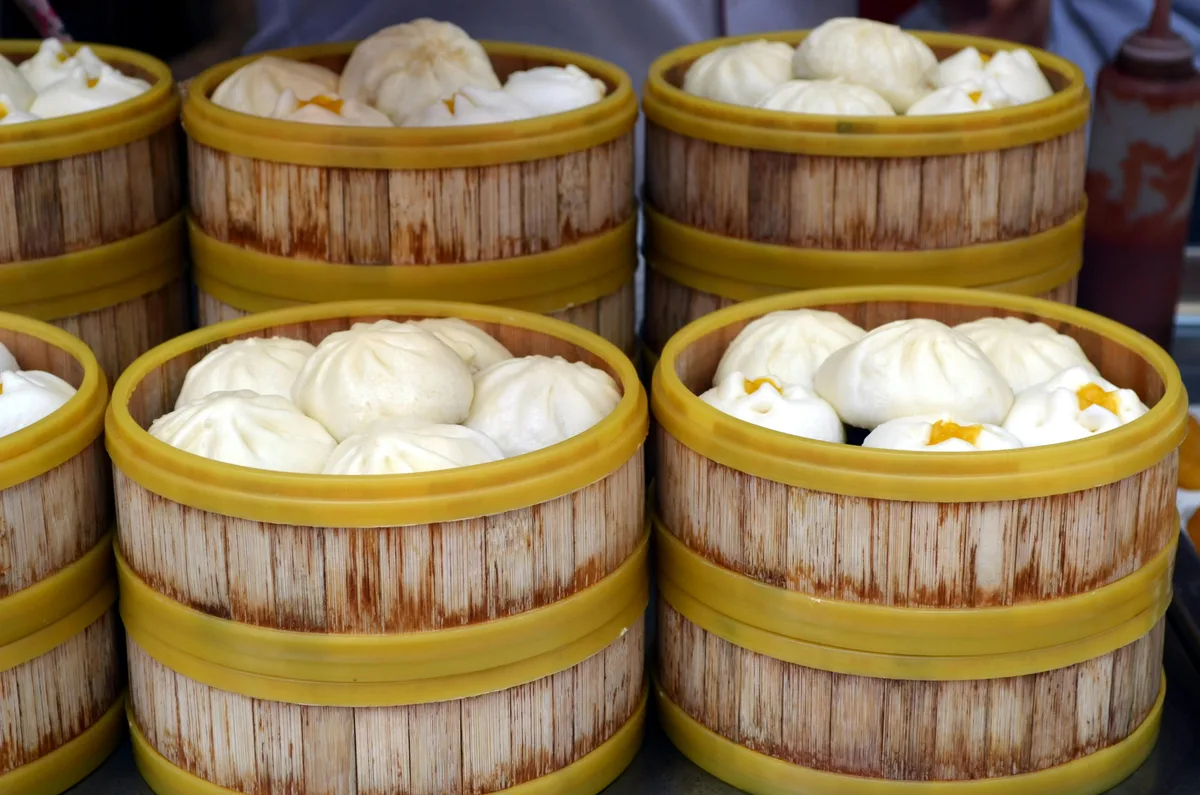
- Baozi: steamed buns with meat or vegetable fillings; filling, portable, and often ordered by the piece or basket.
Shaobing: baked, layered, and quietly versatile
A Beijing shaobing is less showy than jianbing, but it has a structure that rewards close attention. The better ones have a toasted outer shell, sesame aroma, and a layered interior that can be split open for fillings. Some shops sell plain sesame shaobing; others add beef, egg, or sliced cured meat. The texture is the point: it should not feel like soft sandwich bread.
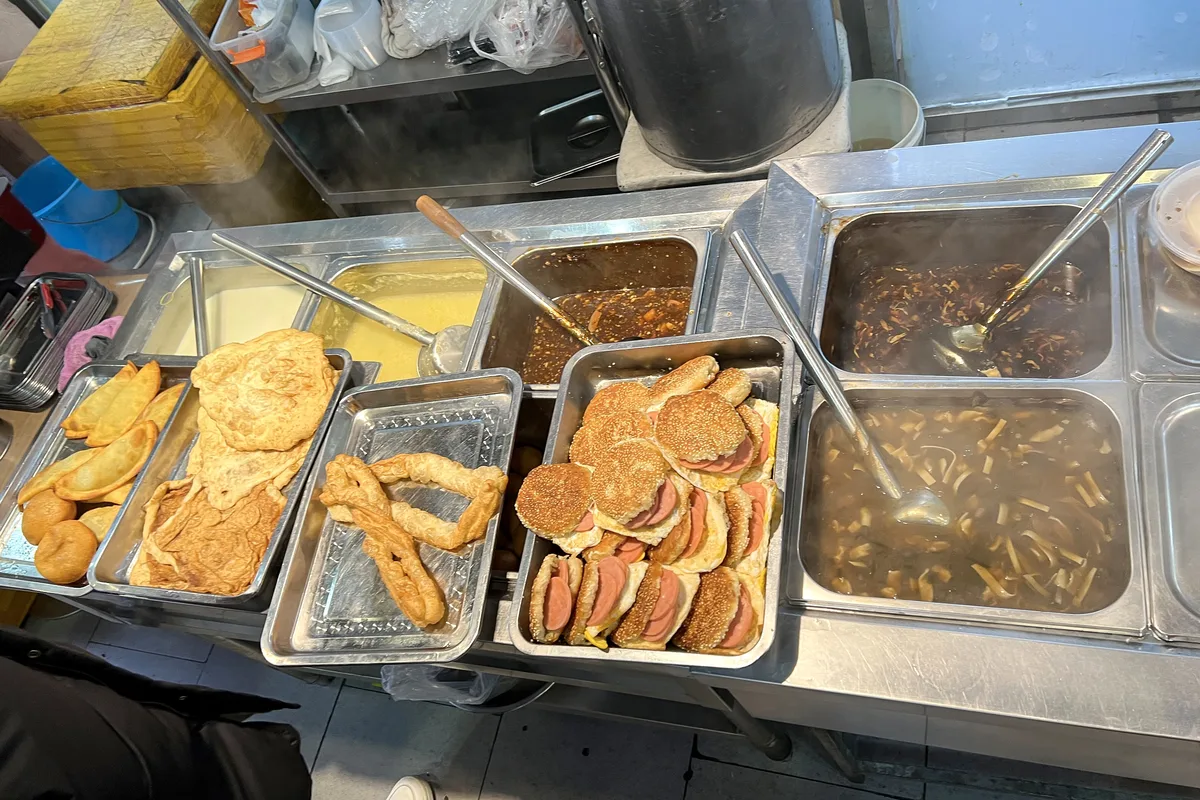
Shaobing works especially well when breakfast includes something wet or rich. It can be eaten with Beijing chaogan guide, doufunao, soy milk, or a bowl of soup, because the bread holds up better than a soft bun. For a deeper dish profile, use the Beijing shaobing guide.
Jianbing: made to order and timing-sensitive
Jianbing is more of a performance food. Batter spreads across the griddle, egg is cracked and smoothed over the surface, sauce is brushed on, then herbs and a crisp sheet are folded inside. A good jianbing has contrast: tender crepe, salty-sweet sauce, fresh scallion or cilantro, and a brittle crunch in the middle.
Because the crisp layer softens quickly, jianbing is best eaten on the spot rather than carried around for an hour. If you need the full ordering vocabulary, sauce choices, and local variations, see the Beijing jianbing guide.
Baozi: steamed, filling, and easy to share
Baozi are the most forgiving of the three. They hold heat well, come in clear filling categories, and can feed one person or a group. In Beijing breakfast shops, common choices include pork, beef, lamb, cabbage, chive and egg, and mixed vegetable fillings. A good bun should have a springy wrapper, visible pleats, and a filling that is juicy without soaking through the dough.
The main ordering risk is not knowing the filling. If a shop lists multiple buns, ask for the filling first rather than only pointing. For practical names and filling differences, use the Beijing baozi guide and the baozi fillings guide.
Which one should you order?
- Choose shaobing if you want something toasted, not too sweet, and suitable with a bowl of soup or stew.
- Choose jianbing if you want a hot, made-to-order street breakfast with sauce and crunch.
- Choose baozi if you want a filling breakfast that is easy to buy in multiples and share.
For a balanced morning route, do not order all three from the same kind of shop. Buy jianbing from a griddle stall, baozi from a steamer-focused shop, and shaobing from a bakery or old-style snack counter. That gives you three cooking methods instead of three versions of the same carbohydrate.
How locals combine them
A common pattern is to pair dry items with something hot and wet. Shaobing can go with chaogan or soy milk; baozi can pair with millet porridge, doufunao, or simple soup; jianbing often stands alone because it already contains sauce, egg, herbs, and crunch. This is why Beijing Breakfast is better understood as a set of small pairings, not only a list of famous snacks.
Image credits
Wikimedia Commons shaobing photo; Pexels baozi basket photo.
Comments (0)