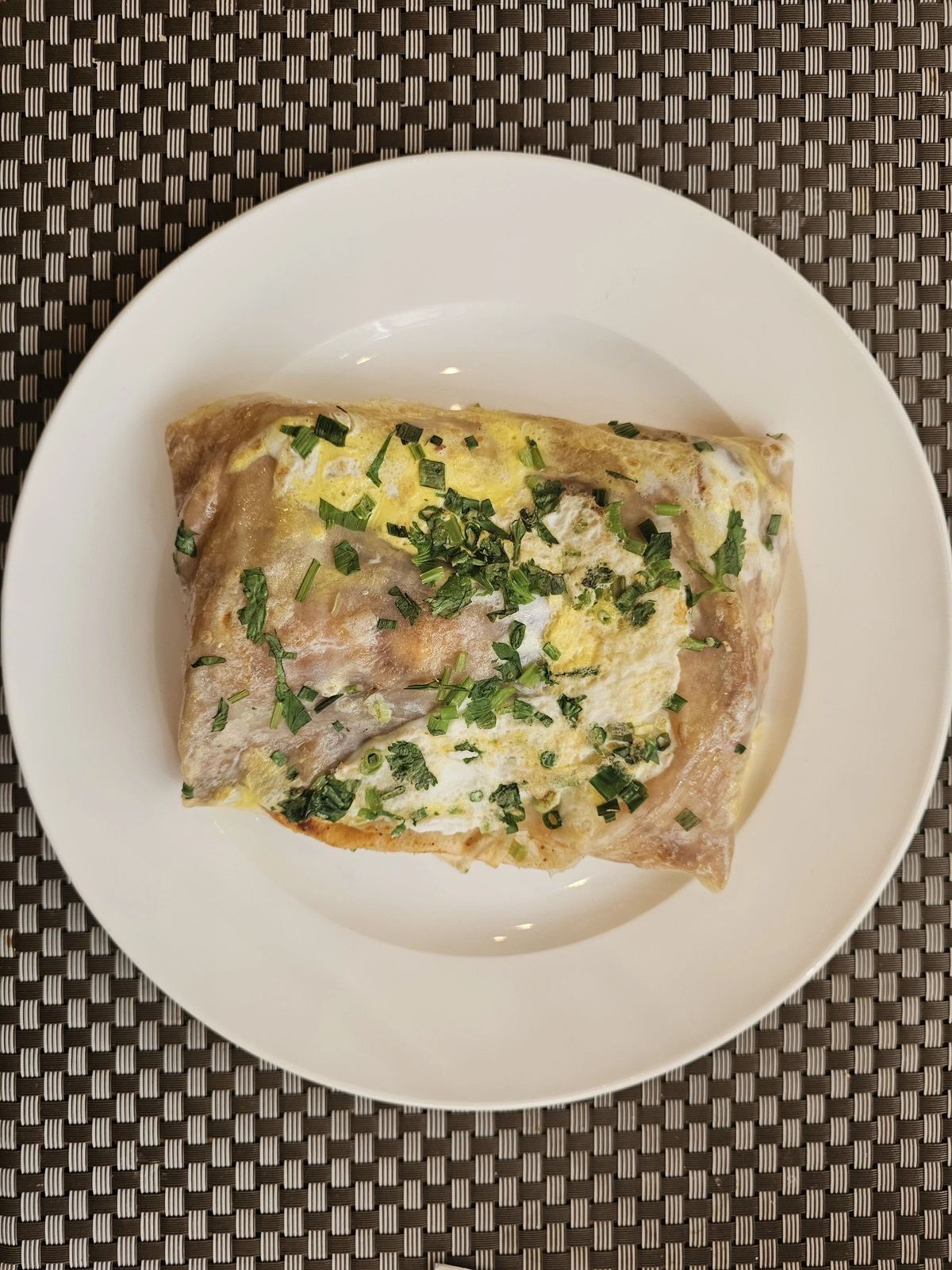
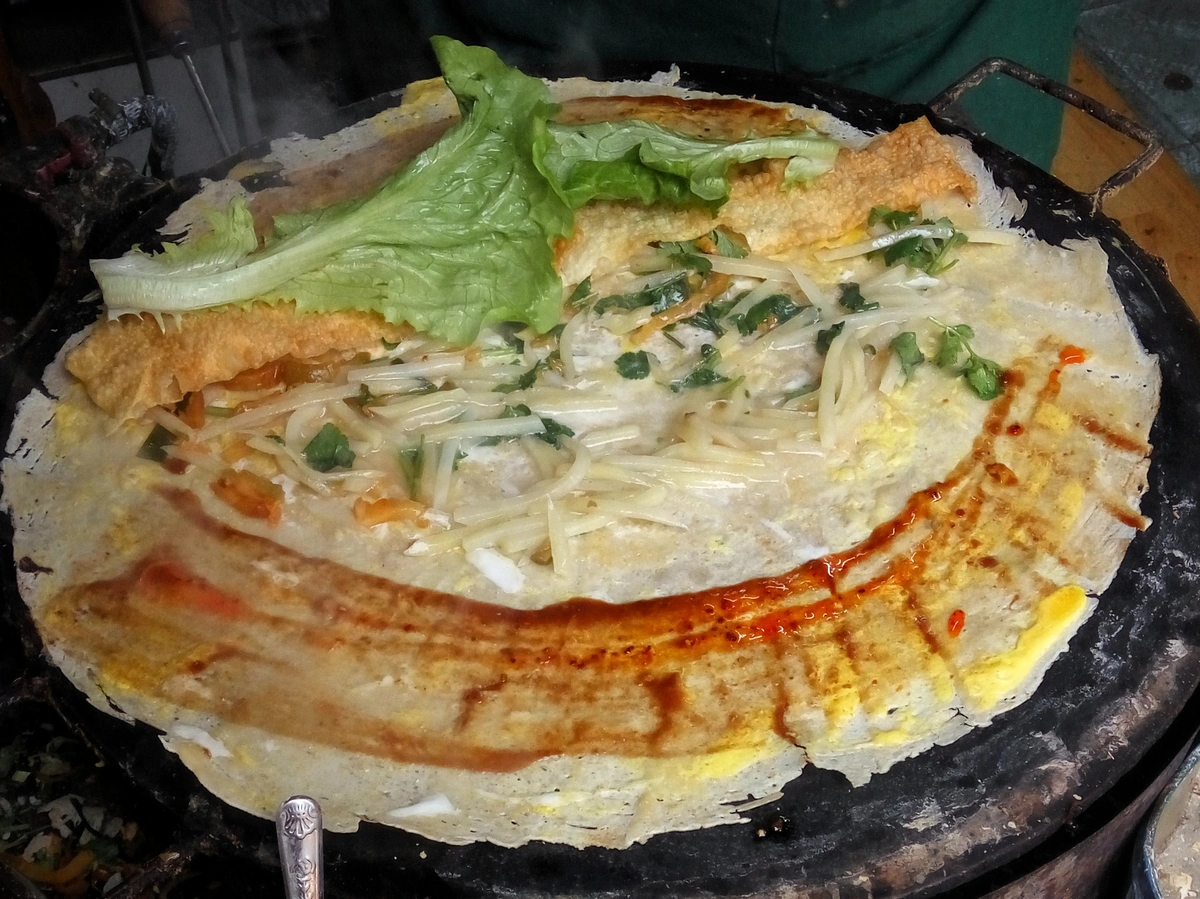
Jianbing is one of the easiest Beijing breakfasts for visitors to understand: a thin crepe cooked on a round griddle, brushed with sauce, folded around egg, scallion, cilantro, chili if you want it, and a crisp cracker that gives the wrap its snap.
It is fast food, but not careless food. A good jianbing depends on timing. The batter must spread thinly, the egg has to set without drying, the sauce should season without overwhelming, and the cracker needs to stay crisp until you take the first bites.
What Jianbing Is
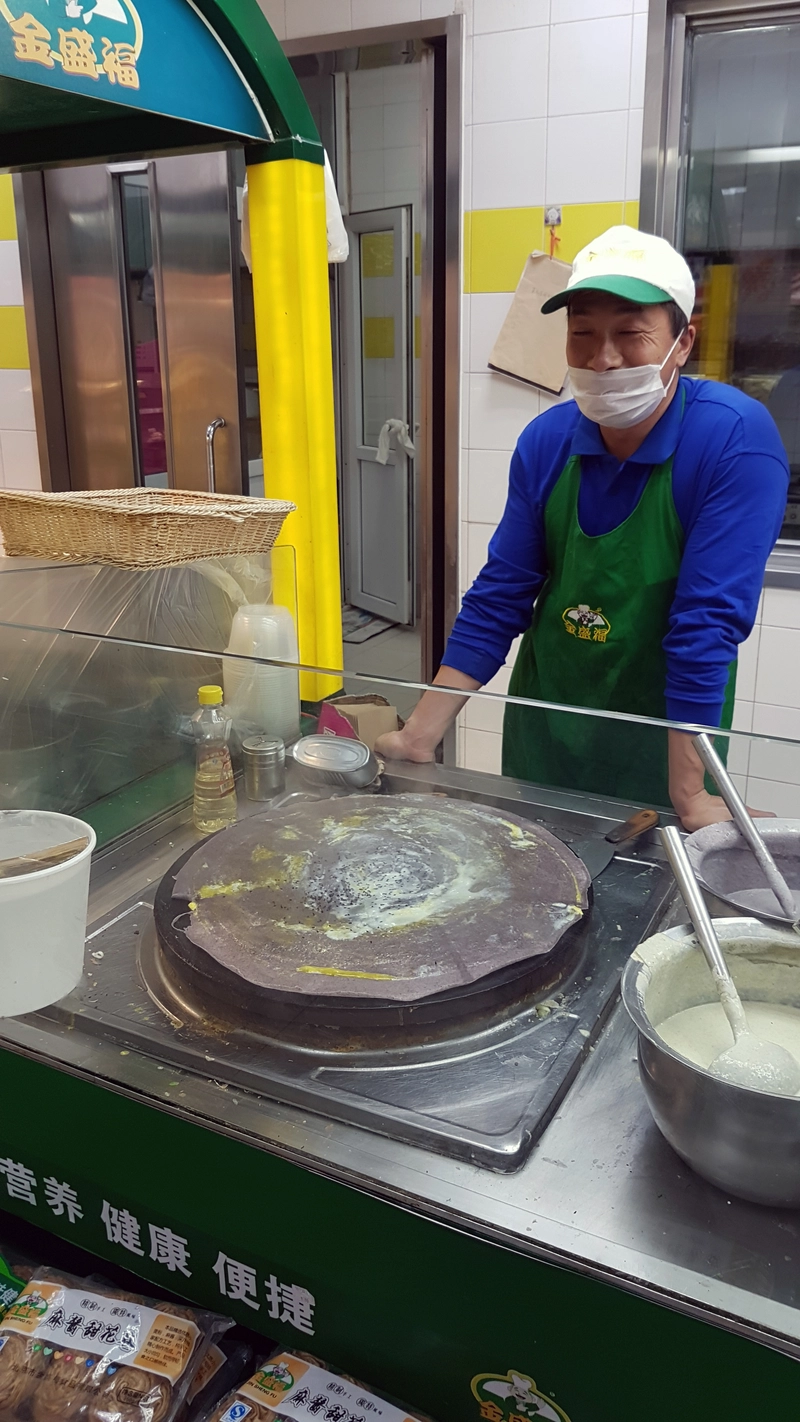
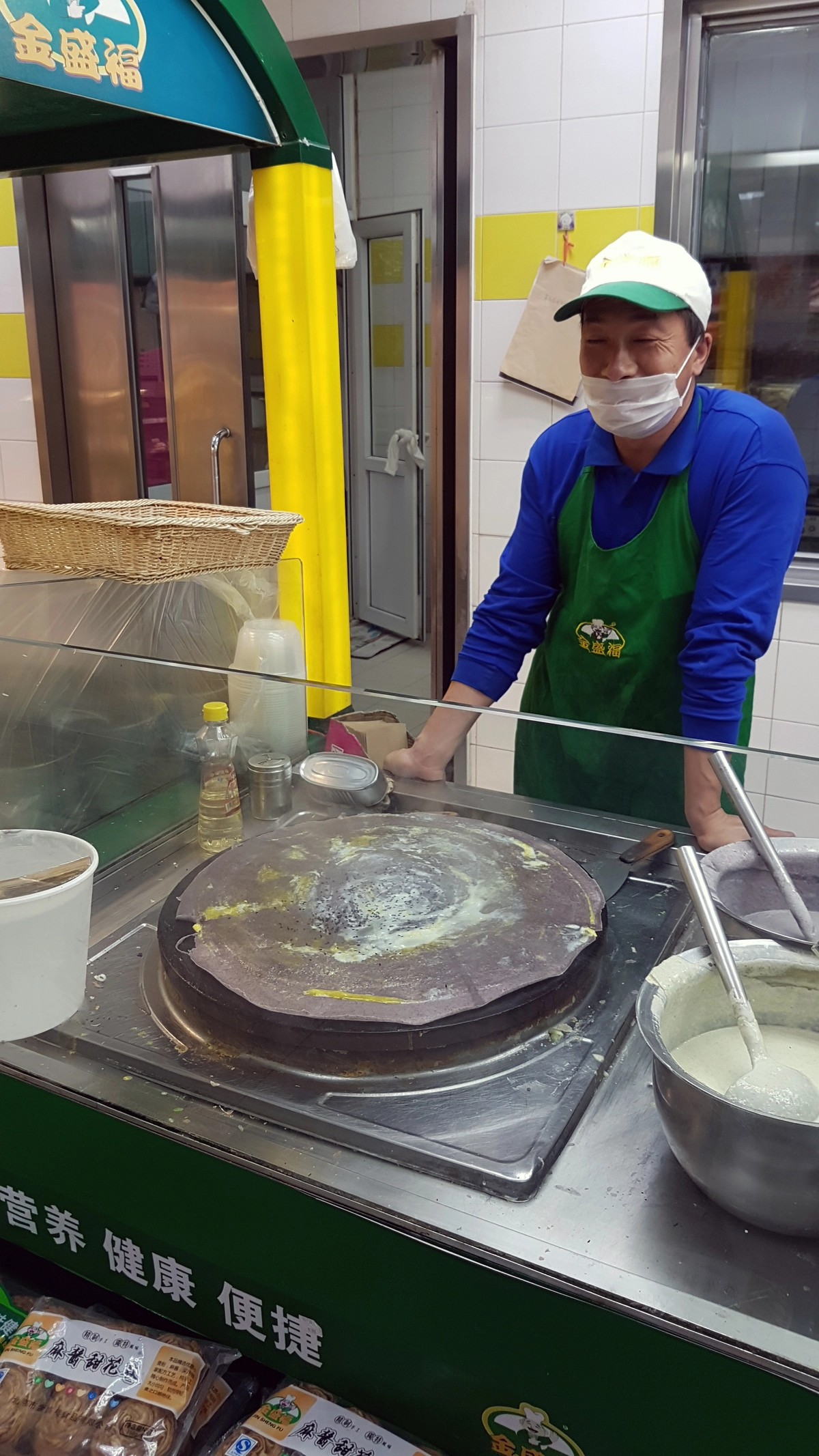
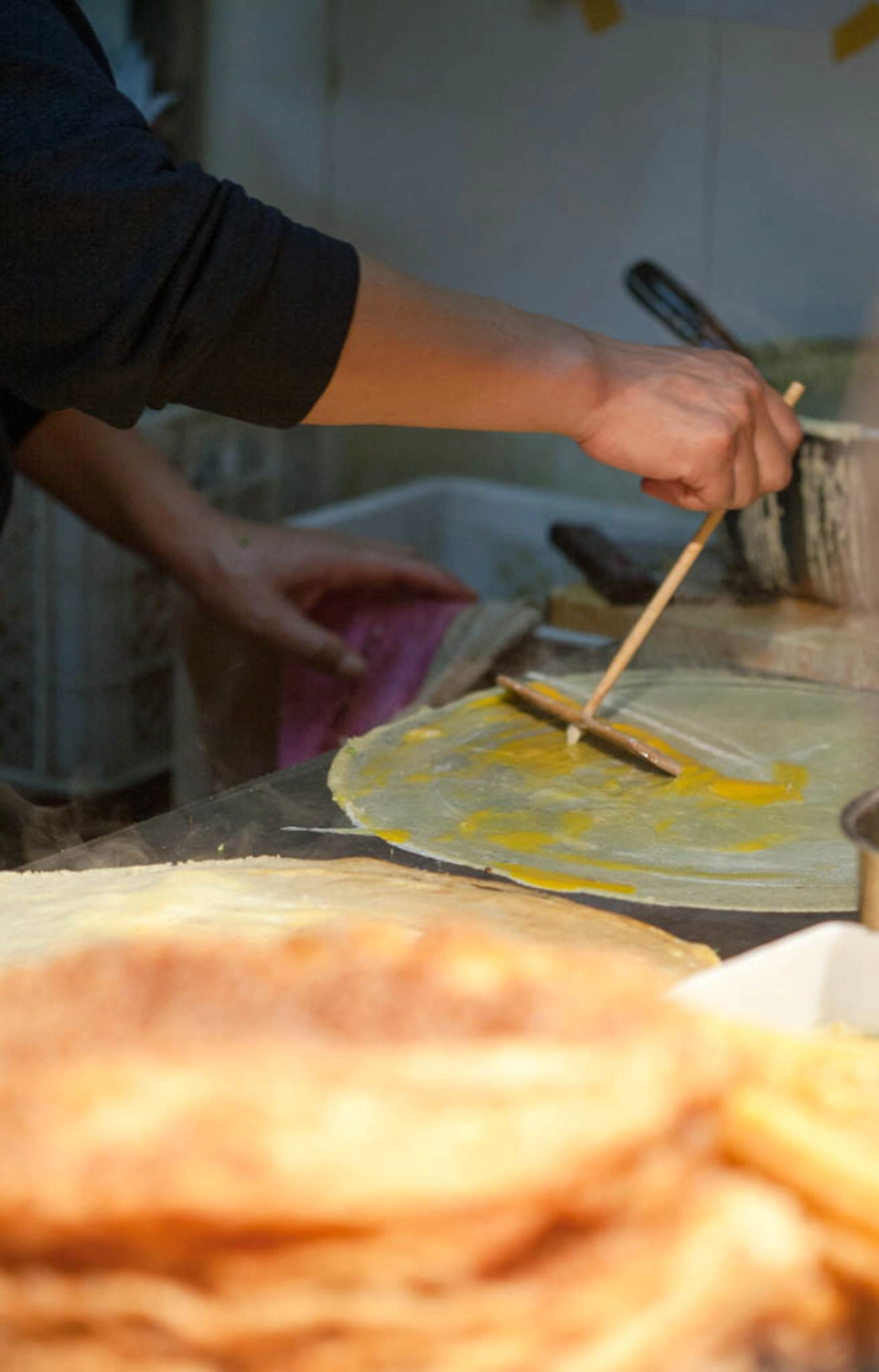
Jianbing is often described as a Chinese breakfast crepe, but that comparison only goes so far. The Beijing street version is savory, hot, and built for movement. A vendor spreads batter on a flat griddle, cracks an egg over it, scatters scallion or cilantro, flips the crepe, brushes on sauce, adds a crisp sheet, then folds the whole thing into a handheld breakfast.
The result is soft outside, crisp inside, salty-sweet from the sauce, and fresh from the herbs. It should be eaten immediately. If you carry it too long, the cracker softens and the best part disappears.
Main Ingredients
- Batter: usually wheat-based, sometimes mixed with mung bean or other grains depending on the vendor.
- Egg: cracked directly onto the crepe while it cooks.
- Sauce: often a fermented bean-style sauce, sometimes with chili paste.
- Scallion and cilantro: added for freshness and aroma.
- Crispy cracker: the thin fried layer that gives jianbing its structure and crunch.
- Optional extras: sausage, lettuce, pickles, more egg, or different sauces depending on the stall.
How to Order Jianbing in Beijing
The easiest order is one jianbing with egg and crisp cracker. Decide three things before the vendor folds it: chili, cilantro, and any meat or extra egg. If you do not want chili, say it early. If you dislike cilantro, say that early too, because the herbs are added before folding.
Useful phrases include bu yao la for no chili and bu yao xiangcai for no cilantro. Pointing also works at busy stalls, but it helps to decide quickly because jianbing vendors often work through a line of morning customers.
What Makes a Good Jianbing
A good jianbing should be thin but not torn, hot but not greasy, and crisp in the middle. The sauce should be enough to season the crepe without making it wet. The cracker should crack when you bite, not bend like paper. The best versions feel balanced rather than overloaded.
A common mistake is ordering too many extras. Sausage and lettuce can be enjoyable, but if the crepe becomes too thick, the cracker breaks badly and the wrap turns heavy. For a first try, keep it classic.
When to Eat It
Jianbing is strongest in the morning, when stalls are busy and ingredients move quickly. It can also work as a late-night snack, but breakfast is the best context. Pair it with soy milk if you want an easy start, or use it as a lighter alternative before a bigger lunch of Zhajiang Noodles.
If you are exploring old Beijing breakfast, compare it with douzhi and jiaoquan. Jianbing is easier for most visitors; douzhi is more culturally challenging.
Where to Find Jianbing
Look near residential areas, subway exits, office districts, markets, and older snack streets. A small stall with steady morning turnover is usually better than a stand where cooked crepes sit for a long time. Freshness matters more than fame.
For visitors, do not build an entire cross-city trip around one stall. Jianbing is a practical breakfast, so the best version is often the one made fresh near your morning route. If you are planning a broader first day of eating, start with the Beijing breakfast guide.
Common Mistakes
- Waiting too long before eating it.
- Forgetting to ask for no chili before folding.
- Adding too many extras on the first try.
- Buying a pre-made or lukewarm crepe.
- Expecting it to taste sweet like a dessert crepe.
Who Will Like Jianbing
Jianbing is a strong first Beijing street food for travelers because it is visible, affordable, customizable, and not too challenging. It works for breakfast, between sights, or as a snack when you do not want a full restaurant meal.
It is also a useful bridge into Beijing food culture. From one simple wrap, you meet several local patterns: wheat staples, fermented sauce, scallion, quick griddle cooking, and the habit of eating something hot and practical before the day starts.
References and Further Reading
This guide is original editorial content. The links below were used for factual cross-checking, official local-food context, and image attribution; they are not copied source text.
Comments (0)