Baocui, the thin crispy cracker folded into jianbing, is easy to overlook until it goes wrong. When it is fresh, it gives the crepe its snap, keeps the sauce from feeling heavy, and makes each bite more satisfying. When it is stale or softened too early, even a well-made jianbing can taste flat.
This guide focuses on the crisp layer inside Beijing-style jianbing and how to order around it. For the wider dish, start with the main jianbing guide. For a general sauce and filling overview, use the jianbing sauce and fillings guide.
What baocui does inside jianbing
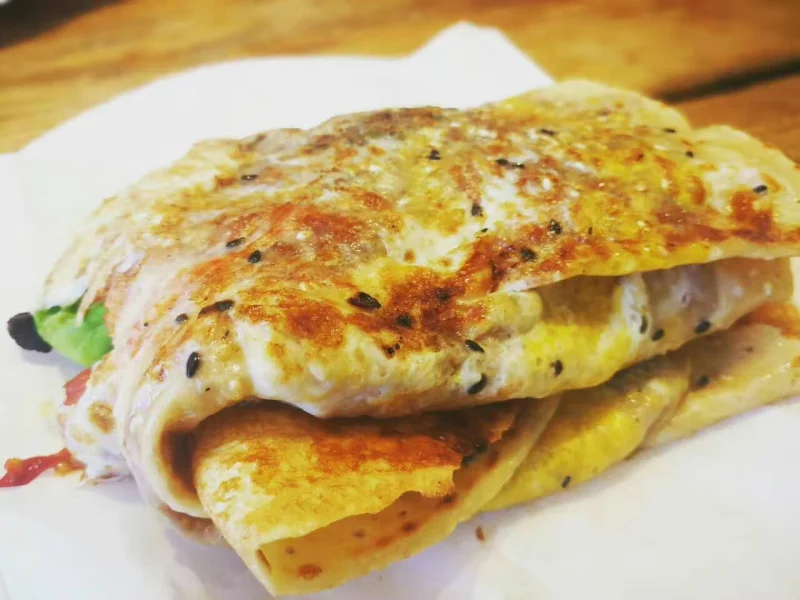
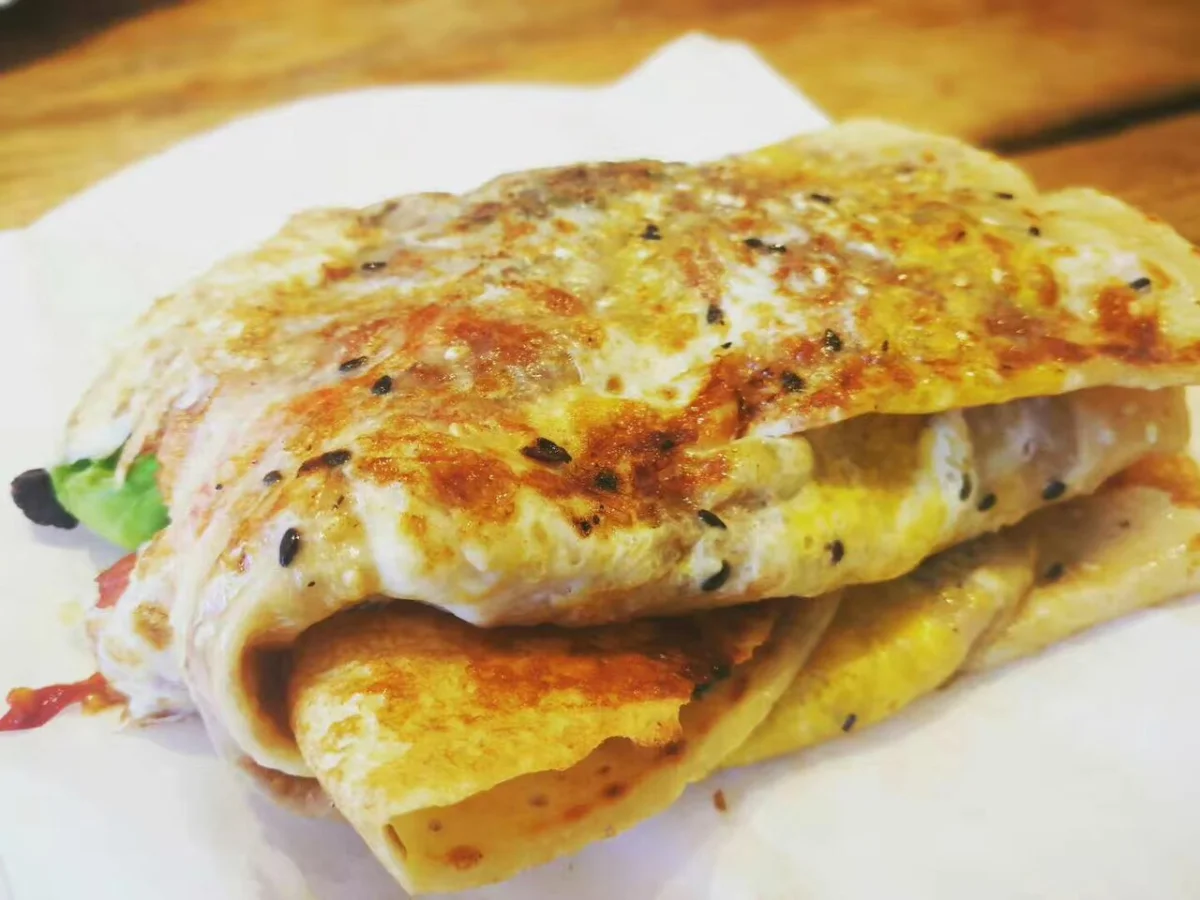
Jianbing is a griddled breakfast crepe built from batter, egg, sauce, scallion, cilantro, chili, and a crisp center. Baocui is the brittle layer that turns the crepe from a soft egg wrap into a street breakfast with structure. It also separates wet sauce from the folded outer crepe, so the first few bites stay lively instead of dense.
The best baocui should crack cleanly when bitten. It should not taste oily, leathery, or damp. If the cracker has been sitting exposed for too long, it can still look golden but lose the brittle texture that makes jianbing work.
Baocui vs youtiao inside a crepe
Some vendors or regional versions use youtiao instead of a thin crisp cracker. Youtiao gives a softer, breadier bite and absorbs sauce more readily. Baocui is lighter and sharper, so it suits a quick Beijing breakfast crepe that should be eaten immediately while hot.
If you want crunch, ask for the crisp cracker and avoid extra wet fillings. If you want a heavier breakfast, youtiao-style filling may feel more substantial, but the crepe will be less snappy and more filling.
How sauce affects the crunch
Sauce is essential, but too much sauce is one of the fastest ways to flatten the baocui. Sweet bean sauce gives the standard salty-sweet base, chili adds heat, and fermented or savory notes vary by vendor. The key is proportion: enough sauce to flavor the egg and crepe, not so much that the cracker softens before you finish eating.
For first-timers, order normal sauce and light chili. After a few bites, you can decide whether stronger chili makes sense. If you ask for heavy sauce from the start, the baocui may lose its texture before you understand what a balanced jianbing should taste like.
Which add-ons help, and which make it heavy
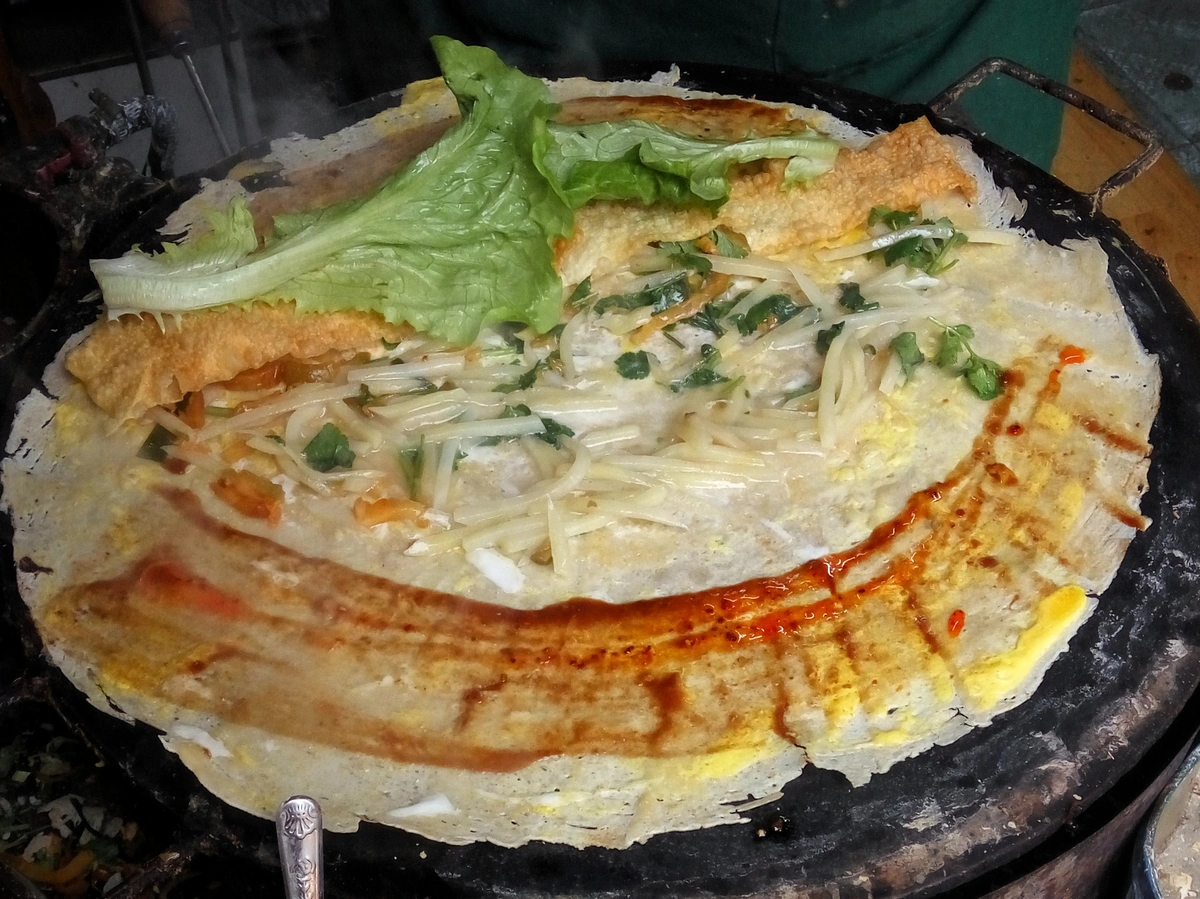
Egg, scallion, cilantro, and chili are the core additions. Sausage, lettuce, and extra egg can be good, but they change the balance. Sausage adds salt and richness. Lettuce adds freshness but also moisture. Extra egg makes the crepe softer and more filling. None of these are wrong, but they should not hide the crisp layer.
If you want the most classic texture, keep the order simple: one egg, normal sauce, scallion, cilantro if you like it, a little chili, and baocui. Add sausage only when you want a heavier breakfast rather than the cleanest crepe texture.
Freshness signs at the stall
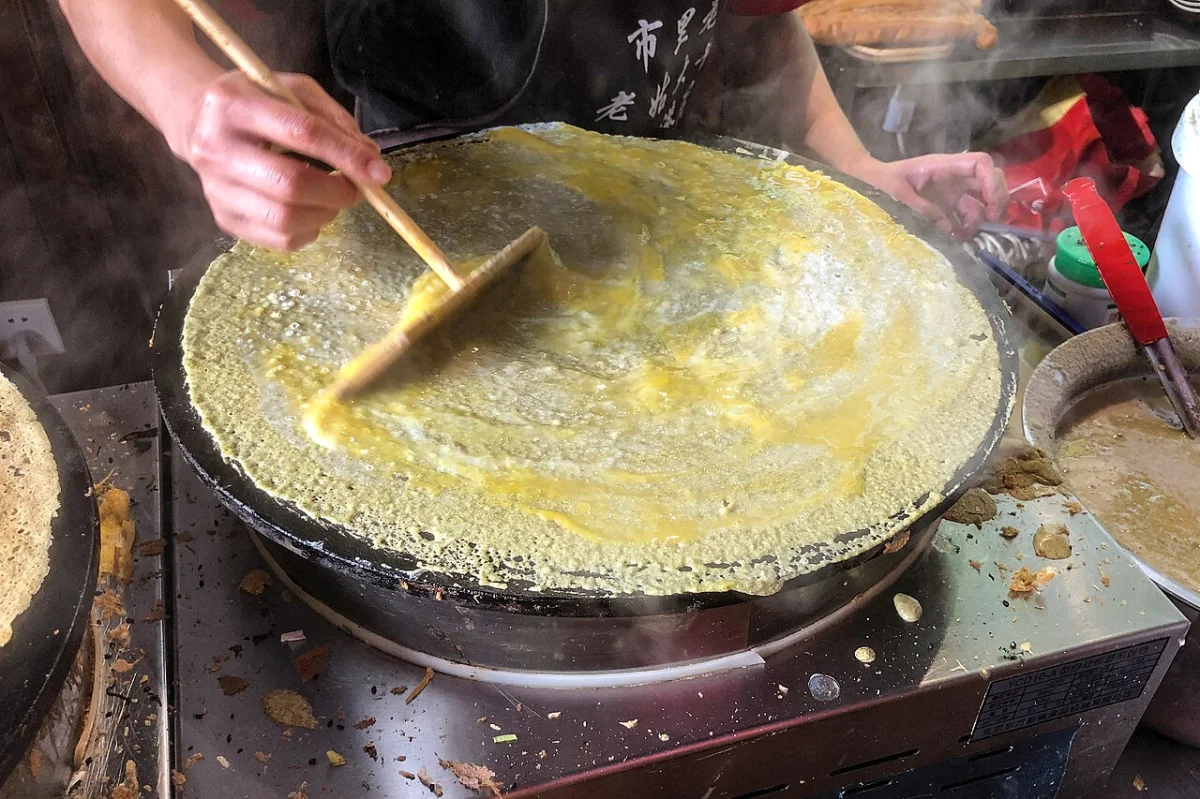
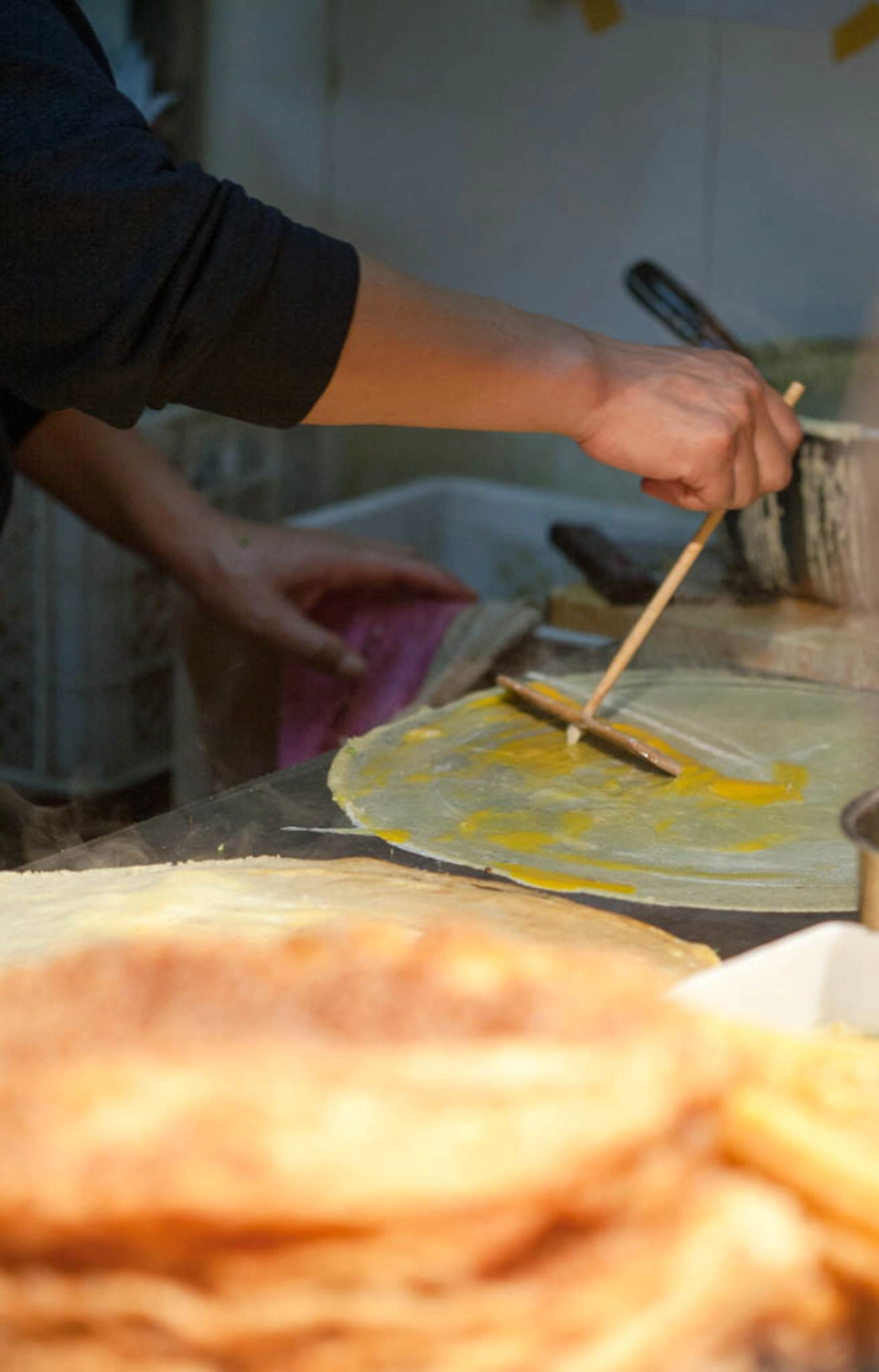
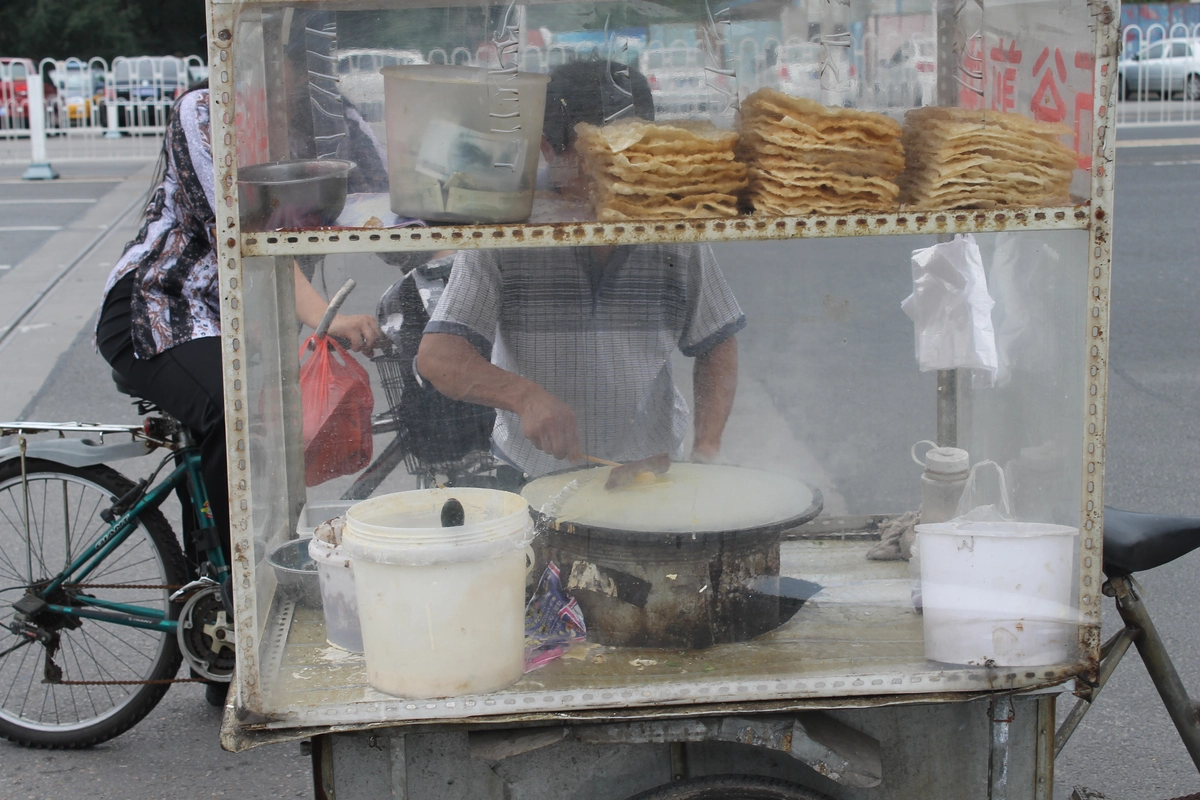
Watch the vendor before ordering. Good signs include batter spread thinly on a hot griddle, egg cooked to order, sauce brushed after the crepe sets, and baocui added near the end. The finished jianbing should be folded quickly and handed over hot.
Be cautious if several finished crepes are stacked and waiting. Jianbing is at its best right off the griddle. The baocui softens as steam builds inside the folded crepe, so even a good one loses texture if it sits too long.
How to order for better texture
A useful beginner order is simple: one egg, crisp cracker, normal sauce, light chili, scallion, and cilantro only if you like it. Eat it while standing nearby instead of carrying it for a long walk. Hold the folded edge firmly, take smaller bites at first, and let the cracker support the crepe rather than squeezing it flat.
For practical eating advice, read how to eat jianbing in Beijing. If you are still choosing where to try it, see where to eat jianbing in Beijing.
Where this fits in Beijing breakfast
Jianbing is one of the easiest Beijing breakfast foods for visitors because it is visible, made to order, and portable. But the difference between an average jianbing and a good one is often the baocui: fresh, crisp, and protected from too much sauce or steam.
For more morning-food context, browse the Jianbing topic, the Beijing Breakfast topic, and the Beijing Street Food topic.
References
Image references checked against Wikimedia Commons: Jianbing category.
Comments (0)