This guide focuses on the sauce and fillings. For the broader dish overview, start with Jianbing in Beijing. If you are planning a morning food route, pair this with the Beijing breakfast guide and the wider Beijing street food topic.
Why the Filling Balance Matters
A good jianbing should not taste like a random stuffed wrap. The crepe is thin, so every filling shows up quickly. Too much sauce makes it heavy. Too little sauce makes it flat. Too much chili hides the grain flavor of the crepe. A soft cracker turns the whole thing limp. The best versions feel layered: warm crepe outside, tender egg against the batter, crisp baocui in the middle, then sauce, herbs, and heat in small doses.
That balance is also why jianbing should be eaten right away. The crispy layer is the first thing to decline. If you carry it for ten or fifteen minutes, steam softens the cracker and the texture becomes closer to a folded pancake. It is still edible, but it loses the contrast that makes jianbing memorable.
Egg: The Filling That Holds Everything Together
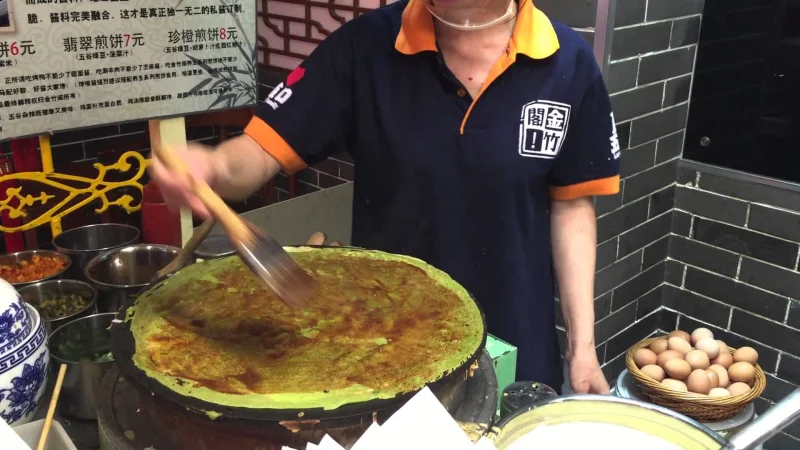
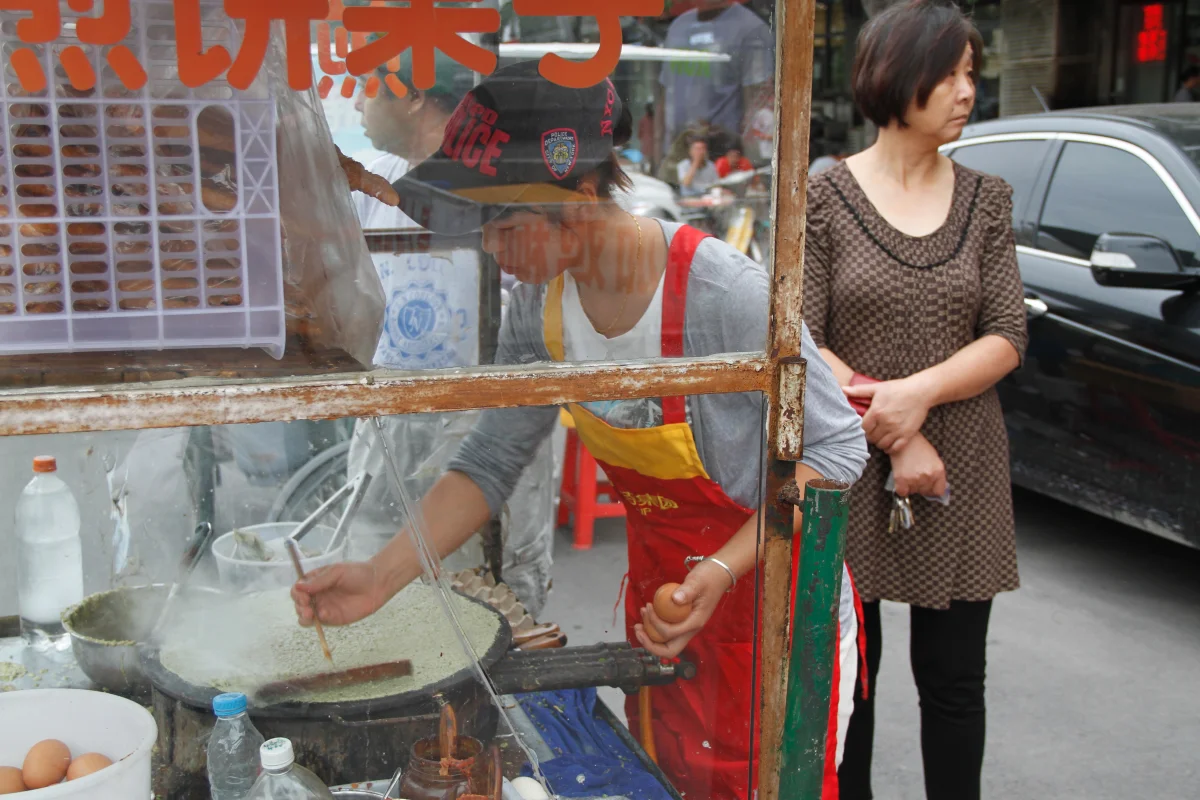
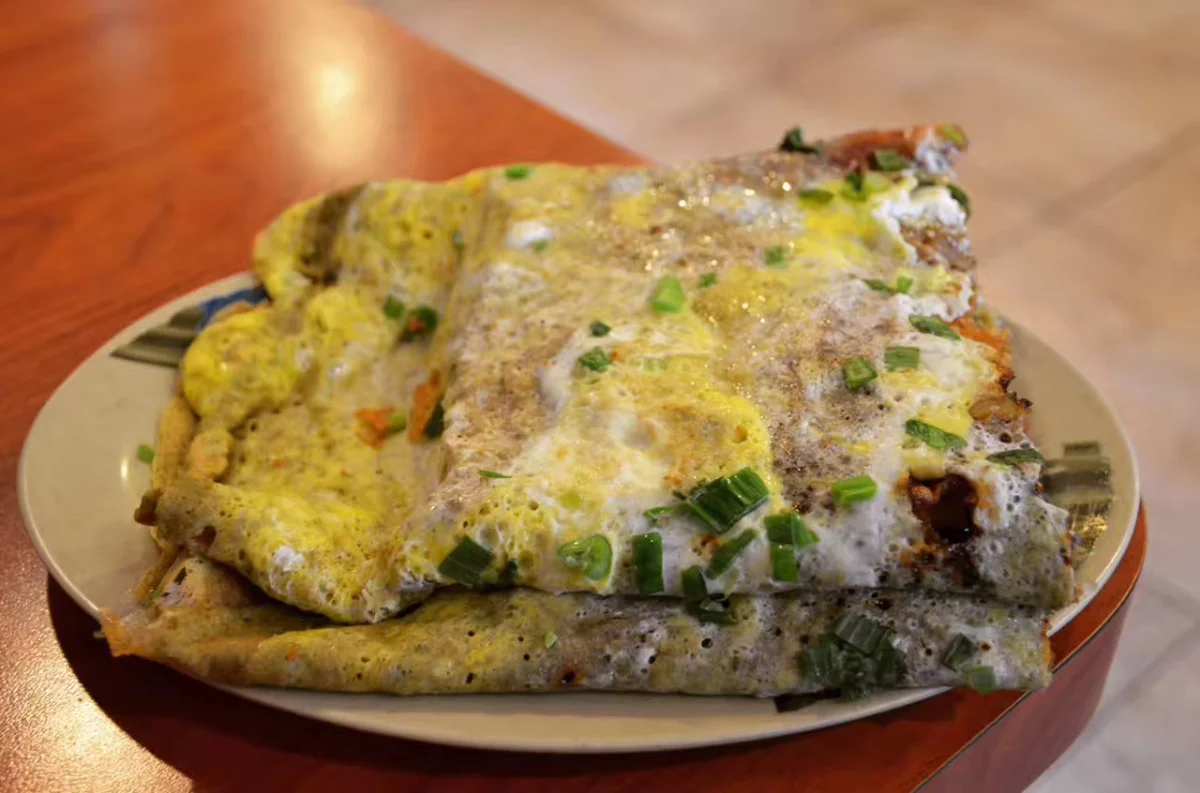
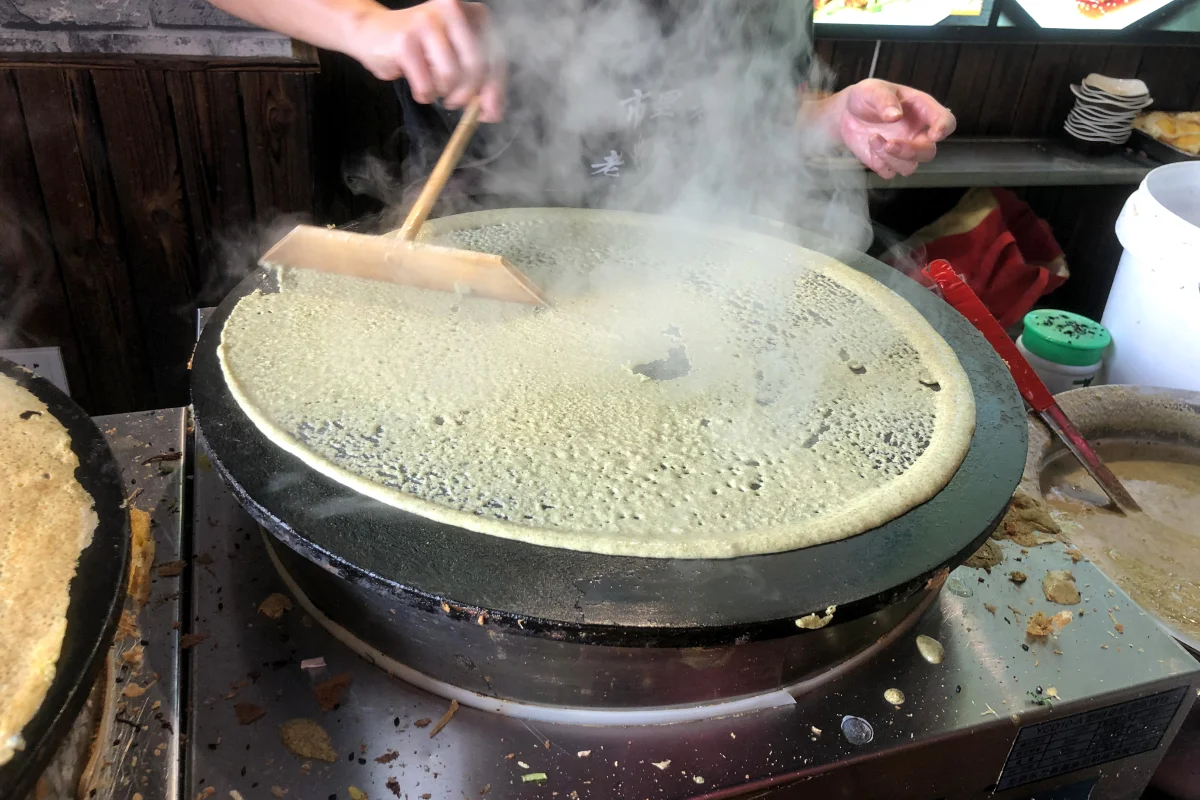
Egg is not just an optional extra in most Beijing-style jianbing. Vendors usually crack it directly onto the crepe while the batter is setting, then spread it thinly across the surface. This helps the egg bind to the crepe rather than sitting inside as a separate omelet.
One egg is the standard order. Two eggs make the jianbing richer and softer, useful if you want a more filling breakfast, but it can also make the wrap heavier. If you are trying jianbing for the first time, one egg gives the clearest sense of the usual balance.
- One egg: the normal choice, balanced and easy to eat while walking.
- Two eggs: richer, softer, and more filling, but less crisp overall.
- No egg: uncommon for a classic order and usually less satisfying unless you have a dietary reason.
Baocui: The Crispy Cracker Inside
The thin fried cracker inside jianbing is often called baocui. It is the ingredient that gives the wrap its snap. Without it, jianbing becomes mostly soft crepe, egg, and sauce. With it, each bite has a light crunch that keeps the breakfast from feeling dense.
Baocui is fragile by design. It should be crisp when the vendor folds the crepe around it. If the cracker has been sitting in a humid place, or if the finished jianbing waits too long before you eat it, the texture fades. When ordering, look for vendors who add the cracker near the end and fold quickly.
Some vendors use a long rectangular cracker, while others use smaller broken sheets. The shape matters less than freshness. A thinner cracker gives a cleaner crunch; a thicker one can feel more substantial but may make the wrap harder to fold neatly.
Sweet Bean Sauce: The Main Seasoning
The sauce most visitors notice first is the dark, savory-sweet bean sauce brushed onto the crepe. In English it is often described as sweet bean sauce or sweet flour sauce. It brings saltiness, fermented depth, and a little sweetness. It is not the same as hoisin sauce, though some English menus simplify it that way.
The sauce should season the whole jianbing without flooding it. A heavy hand can make the crepe taste sticky and one-dimensional. A lighter brush lets the egg, herbs, and grain flavor come through. If you prefer a milder first try, ask for less sauce rather than removing it completely.
Chili: Optional, But Important for Many Locals
Chili paste or chili sauce is usually optional. It gives sharpness and helps cut through the egg and bean sauce. The heat level depends on the vendor, so do not assume every jianbing is mild. If you are uncertain, ask for a little chili, not extra chili.
- No chili: best for tasting the basic sauce and egg clearly.
- A little chili: the safest order for most visitors.
- Extra chili: good only if you already know the vendor's chili is not too salty or overpowering.
Chili also changes how fresh the herbs taste. With a little heat, scallion and cilantro become brighter. With too much heat, the jianbing can lose the subtle sweetness of the bean sauce.
Scallion and Cilantro: Freshness, Not Decoration
Scallion and cilantro are small ingredients, but they do real work. Scallion adds a clean onion aroma. Cilantro adds a sharper herbal note. Together they keep the sauce and egg from tasting too heavy.
If you dislike cilantro, it is normal to ask for none. The order is still recognizable as jianbing. But if you can eat cilantro, try the standard version first. The herbs are part of the street-breakfast profile, especially when the jianbing is eaten hot beside the griddle.
Sausage, Ham, and Other Add-ons
Many modern vendors offer sausage, ham, extra cracker, lettuce, or other add-ons. These can be enjoyable, but they move the dish away from the clean breakfast balance. Sausage makes the wrap saltier and more filling. Lettuce adds freshness but can cool the crepe quickly. Extra cracker increases crunch but may make the jianbing break apart.
For a first Beijing order, keep it simple: one egg, normal sauce, a little chili if you want heat, scallion and cilantro, and one crisp baocui. After that, add sausage or an extra egg only if you want a heavier breakfast.
How to Order a Balanced Jianbing
A simple order works best:
- One egg for the standard texture.
- Normal sauce if you like savory-sweet flavor, or less sauce if you want it lighter.
- A little chili if you want heat without losing the other flavors.
- Scallion and cilantro unless you strongly dislike either herb.
- Eat immediately so the baocui stays crisp.
If you are ordering in Chinese, useful phrases include shao la for less chili, bu yao xiangcai for no cilantro, and jia yi ge ji dan if you want one extra egg. Even if you do not speak Chinese, pointing at the ingredient containers while the vendor assembles the crepe usually works.
Common Mistakes Visitors Make
The first mistake is treating jianbing like a burrito and adding everything. More fillings do not always make it better. A packed jianbing is harder to fold, harder to eat, and often less crisp.
The second mistake is waiting too long. Jianbing is a griddle food, not a packaged snack. Buy it when you are ready to eat, and do not save it for later unless you are willing to lose the texture.
The third mistake is assuming every version in China is the same. Tianjin-style jianbing guozi, Beijing street jianbing, and modern chain versions can differ in batter, cracker, sauce, and fillings. On this site, the focus is the Beijing visitor experience, especially the versions you are likely to meet at breakfast stalls and snack shops.
What to Eat With Jianbing
Jianbing can stand alone as breakfast, but it also fits into a broader Beijing morning. If you want a more old-school breakfast, compare it with douzhi and jiaoquan. Douzhi and jiaoquan are more traditional and more challenging for many visitors; jianbing is easier, faster, and more immediately familiar.
For a practical food day, jianbing works well as the first stop. Later, move to a more substantial Beijing dish such as Zhajiang Noodles or Beijing Hotpot. That gives you a better sense of how Beijing food moves from street breakfast to noodle shops and shared evening meals.
Final Ordering Advice
The best jianbing order is not the most complicated one. Start with the classic structure: thin crepe, one egg, bean sauce, a little chili, scallion, cilantro, and fresh baocui. Watch how quickly the vendor folds it, eat it while hot, and pay attention to the contrast between soft crepe and crisp center. That contrast is the point of the dish.
Once you understand that basic version, the add-ons make more sense. Extra egg makes it richer. Sausage makes it heavier. More chili makes it sharper. Less sauce makes it cleaner. Jianbing is easy to order, but the best version is still a careful balance.
Image Credits
Selected photos in this article are from Wikimedia Commons: Jianbing.jpg, Tianjin Street Life - Morning Jianbing Guozi.jpg, Jianbing Guozi 20170610.jpg, and Preparing Jianbing in Binhai, Tianjin.
Comments (0)