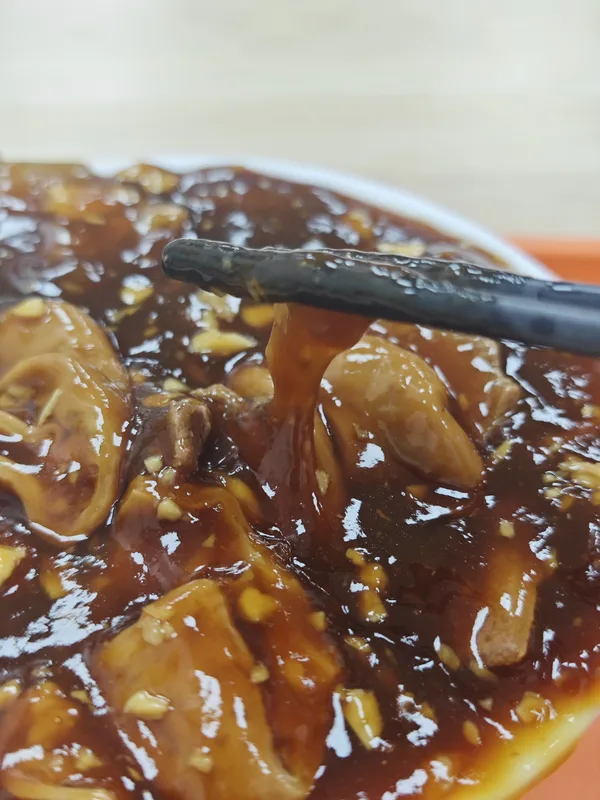
The first surprise about Chaogan is its texture. Despite the name, chaogan is not a dry stir-fry. In Beijing breakfast shops it is a thick, glossy stew built around pork liver, pork intestine, garlic, and a starch-thickened brown gravy. The second surprise is how naturally it pairs with Baozi.
This pairing is worth a separate guide because it explains a lot about local breakfast logic. Chaogan brings heat, garlic, salt, and a slippery sauce; baozi bring soft dough, steam, and filling. Together they are heavier than jianbing but more balanced than ordering only a bowl of stew.
Why the pairing works
- Texture balance: chaogan is glossy and spoonable, while baozi are soft but structured enough to hold their own.
- Flavor balance: garlic and organ-meat richness need plain wheat dough, not another aggressively seasoned item.
- Portion control: one bowl plus one or two buns can be a full breakfast without ordering too many separate snacks.
What chaogan should taste like
Good chaogan should taste garlicky before it tastes heavy. The gravy should be thick but not gluey; the liver should be tender rather than chalky; and the intestine should be cleanly prepared. The bowl often looks intense, but the best versions are controlled: rich, salty, warm, and aromatic, not muddy.
If this is your first bowl, start with the background guide to Beijing chaogan guide. It covers the basic ingredients, what to expect, and how to read the dish before ordering.
Which baozi go best with chaogan?
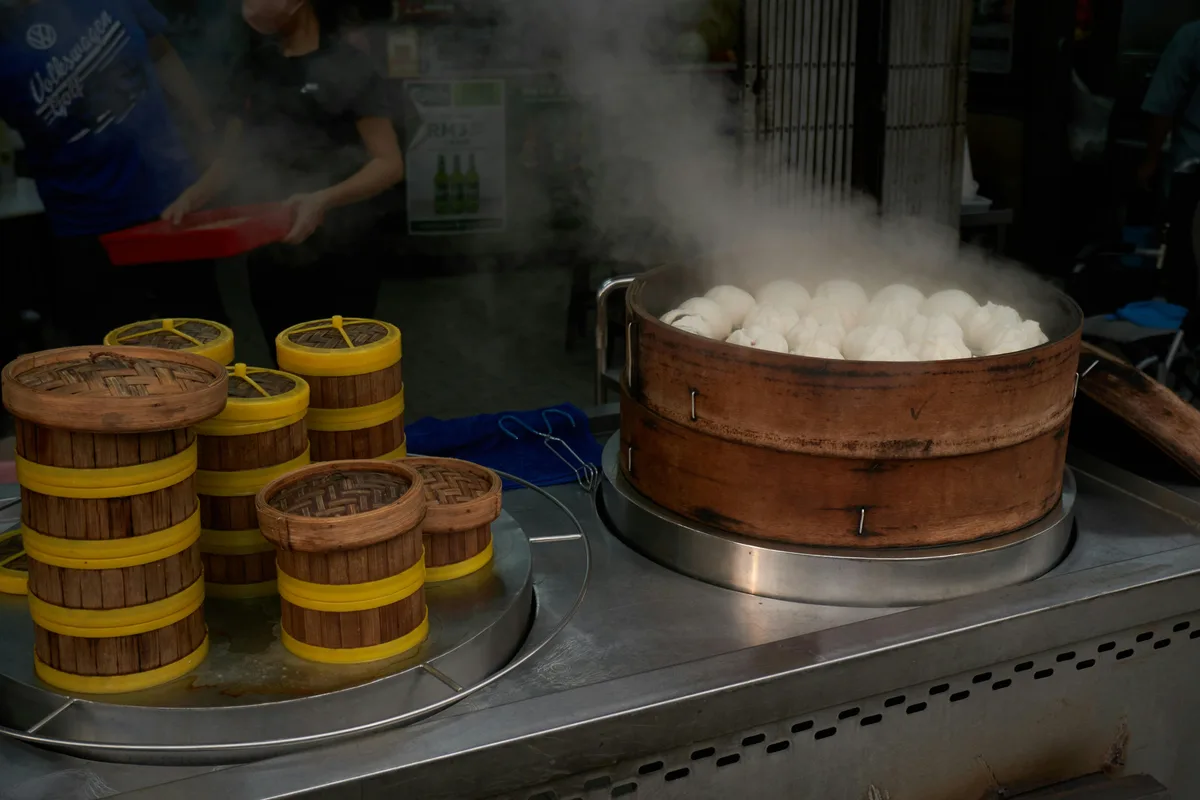
A plain pork baozi is the safest choice because it echoes the savory profile without fighting the garlic. Beef or lamb buns can also work, but they make the meal heavier. Vegetable baozi are useful if you want the chaogan to stay as the main flavor. Very sweet buns are usually a poor match.
If you are choosing from a steamer full of options, ask about fillings before ordering. The baozi fillings guide is useful because Beijing shops may offer several fillings that look similar from the outside.
How to eat the combination
- Eat a few spoonfuls of chaogan first so you understand the garlic level before adding other food.
- Take small bites of baozi between spoonfuls rather than dipping the whole bun into the bowl.
- If the bowl is very thick, use the bun to clean up the last gravy, but avoid soaking the bun too early.
Where this fits in Beijing breakfast
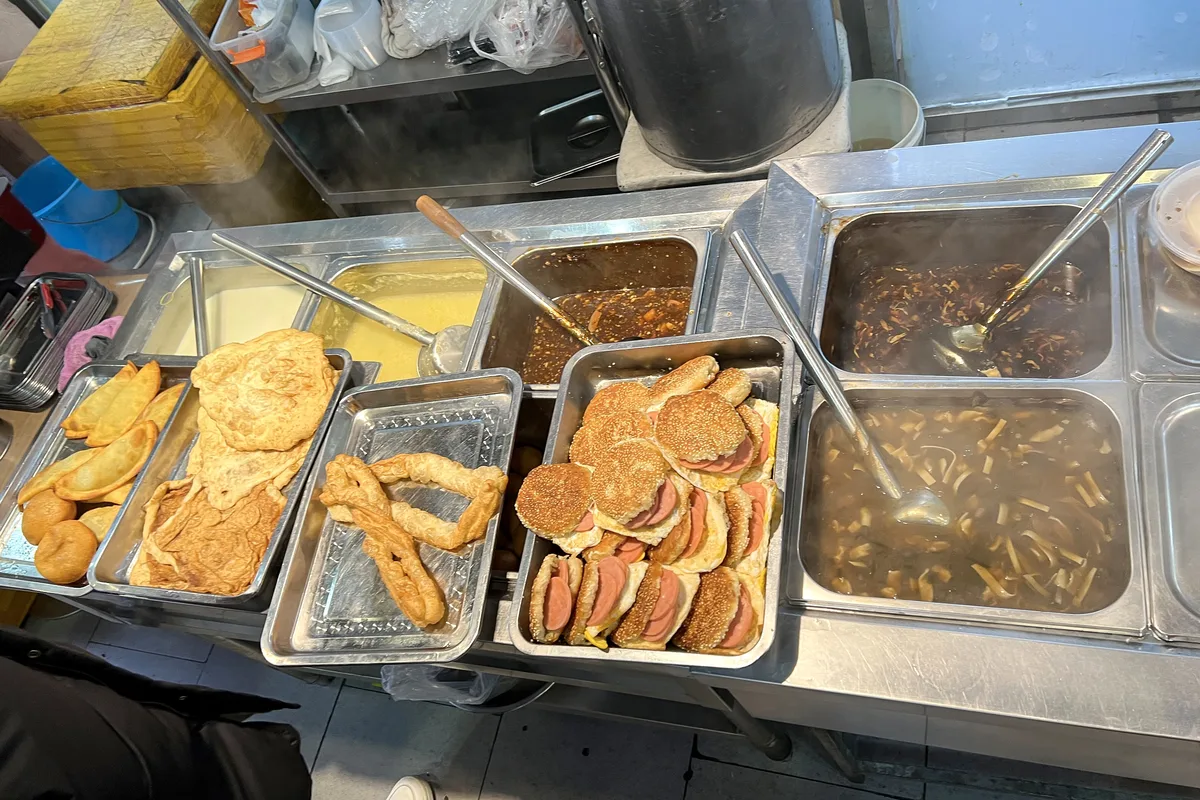
Chaogan and baozi sit on the hearty side of Beijing Breakfast. They are less portable than jianbing and less neutral than shaobing, but they offer a very local breakfast rhythm: sit down, eat hot food, then leave quickly. This is different from modern cafe-style breakfast and closer to the snack-shop habits that shaped old Beijing mornings.
For visitors, this pairing is also a good test of comfort with stronger local flavors. If douzhi feels too sour and organ-meat dishes feel too unfamiliar, chaogan with baozi can be the middle ground: traditional, garlicky, but still anchored by a familiar steamed bun.
Image credits
Wikimedia Commons chaogan photo; Pexels baozi steamer photo.
Comments (0)