Chaogan is one of the Beijing breakfasts that first-timers often misunderstand before the bowl even arrives. The English name is sometimes written as “fried liver,” but the dish is not a dry stir-fry. It is a thick, glossy stew built around pork liver, pork intestine, starch-thickened gravy, and a strong garlic aroma. The important question is not only whether you like liver; it is whether you enjoy the texture.
This guide focuses on the first bite: what the gravy should feel like, how the liver and intestine should taste, why garlic matters, and how to pair chaogan so it does not feel too heavy. For the basic overview, start with our Chaogan in Beijing guide. For practical counter ordering, see how to order chaogan in a Beijing breakfast shop.
Why texture matters more than appearance
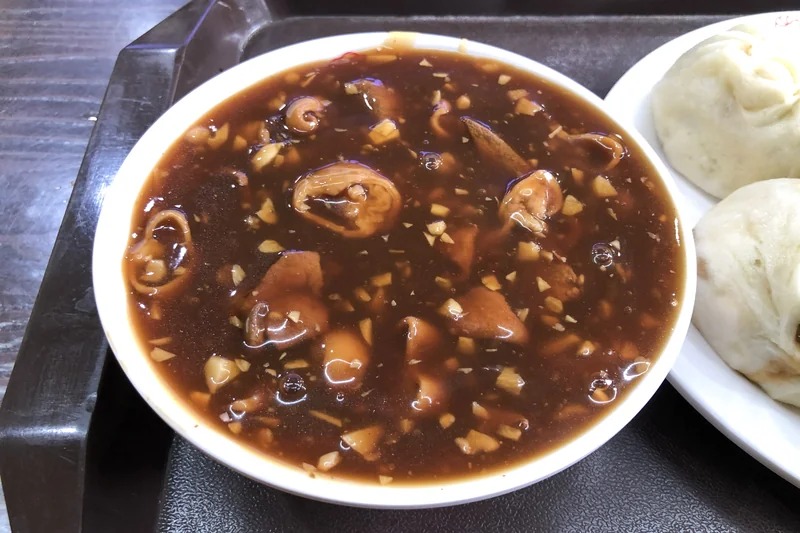
A bowl of chaogan may not look immediately inviting to every visitor. The gravy is dark, thick, and glossy. Pieces of liver and intestine sit inside a sauce that is closer to a heavy breakfast stew than a clear soup. But in Beijing food culture, that texture is part of the point. Chaogan should be smooth enough to spoon or sip, thick enough to coat the meat, and aromatic enough that garlic reaches you before the bowl does.
The Beijing municipal government describes chaogan as a featured local snack evolved from older pork liver and lung dishes, while Visit Beijing notes its connection with long-running fried-liver restaurants. Those official descriptions help explain why the dish feels old-fashioned: it belongs to a snack-shop tradition where offal, starch-thickened sauce, garlic, and wheat staples are normal breakfast materials, not novelty ingredients.
The gravy: thick, glossy, and garlic-forward
The gravy should not be watery. It should cling lightly to the spoon and coat the liver without becoming pasty. Starch gives chaogan its body, but a good bowl does not taste like plain thickener. You should still notice broth, soy-based seasoning, pork flavor, and garlic.
Garlic is the signature. Without it, chaogan can feel flat and heavy. With too much harsh raw garlic, it can feel sharp and unbalanced. The best bowls use garlic as a lift: it cuts through the richness of the liver and intestine, wakes up the gravy, and makes the dish feel more breakfast-like than dinner-like.
The liver: soft, not powdery
Pork liver should be tender and clean-tasting. It should not crumble into a dry powdery texture, and it should not feel rubbery. A slight mineral flavor is normal; that is part of liver. But if the liver tastes harsh, stale, or overcooked, the bowl will feel tiring quickly.
For first-timers, the liver is usually the easiest part to understand. It has a familiar shape and a clear bite. Try one piece by itself first, then try another with more gravy and garlic. The second bite is usually closer to how locals understand the dish: not just liver, but liver inside a thick garlic sauce.
The intestine: chewy, rich, and more challenging
The intestine is where many visitors decide whether chaogan is for them. It should be cleaned well, cooked tender, and still have some chew. It should not taste aggressively gamey. A small amount of richness is expected, because chaogan is an offal dish, but the gravy and garlic should keep it controlled.
If you are hesitant about offal, take a small first bowl and eat it with baozi or another bread. Do not force yourself to treat chaogan like a light soup. It is more useful to think of it as a thick breakfast stew eaten with a staple on the side.
Why baozi works so well
Chaogan is often paired with steamed buns because the bread absorbs the gravy and gives your mouth a break from the richness. That is why our guide to chaogan and baozi treats the pairing as more than a habit. The soft bun makes the gravy easier to handle, especially if you are new to the flavor.
A plain or lightly savory baozi works better than a very sweet side dish. You want something soft, warm, and wheat-based. The bun should support the bowl, not compete with it.
How to taste chaogan for the first time
Start with the gravy. Smell it first, then take a small spoonful. Notice whether the garlic feels lively or harsh. Then try a piece of liver. After that, try a piece of intestine with gravy. Finally, eat a bite with baozi or another staple. This sequence helps you understand the dish instead of reacting only to the strongest flavor.
Do not judge chaogan by the first second alone. The first impression can be thick and garlicky; the later impression is about warmth, starch, meat, and breakfast comfort. If you enjoy foods like luzhu huoshao or other offal-based Beijing snacks, chaogan will make more sense. If you prefer lighter breakfasts, compare it with chaogan vs douzhi before ordering a large bowl.
Freshness cues at the counter
Look for a busy breakfast period, steady turnover, and bowls being served hot. A good bowl should steam lightly and feel cohesive. If the gravy looks separated, dull, or overly congealed, it may have sat too long. If the shop is known for chaogan and the breakfast counter moves quickly, the texture is usually better.
Chaogan is not a dish that improves by sitting around. The gravy thickens as it cools, and the liver can feel heavier. Eat it soon after it arrives.
Common first-timer mistakes
The first mistake is expecting “fried liver” to be dry. The second is ordering a big bowl before you know whether you like offal. The third is eating only the meat pieces and ignoring the gravy. The fourth is skipping the bread or baozi, which can make the bowl feel too intense.
The fifth mistake is treating strong flavor as a flaw. Chaogan is supposed to be garlicky, thick, and old-school. The question is whether the bowl is balanced: clean liver, tender intestine, smooth gravy, enough garlic, and a warm staple to carry it.
Where this fits in Beijing breakfast
Chaogan sits on the hearty side of Beijing breakfast. It is very different from jianbing, baozi, soy milk, or shaobing, but it belongs to the same morning ecosystem of quick counters and regular customers. It also connects naturally with the wider Beijing food culture topic, because it shows how the city uses offal, wheat staples, garlic, and thick sauces in everyday food.
If you want the safest first experience, order a small bowl, add baozi, and taste slowly. If the gravy feels smooth and the garlic feels fragrant rather than harsh, you are tasting chaogan the way it is meant to work.
References
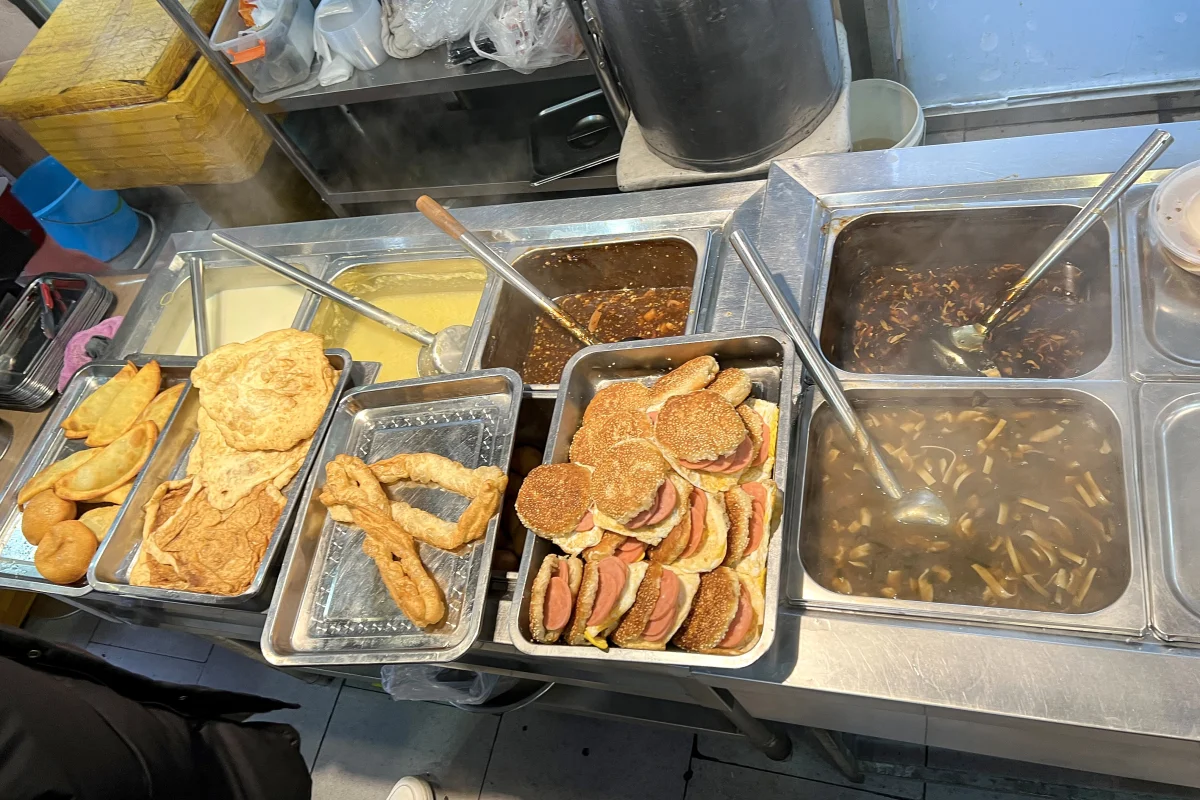
Photo credit:Breakfast selections at a restaurant near Wanshousi, Beijing by N509FZ, via Wikimedia Commons (CC BY-SA 4.0).

Comments (0)