Beijing Jiaoquan Guide: The Crispy Fried Ring Paired With Douzhi
A practical guide to Beijing jiaoquan, the crispy fried ring paired with douzhi, covering texture, taste, ordering tips, snack-shop culture, and how it differs from youtiao.
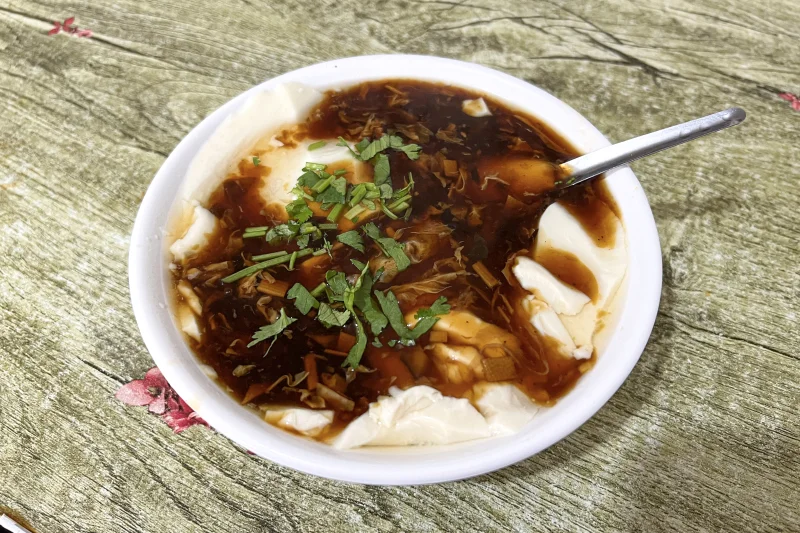
A practical guide to Beijing doufunao toppings, savory gravy, chili oil, cilantro, and breakfast pairings such as youtiao, jiaoquan, shaobing, baozi, and tea eggs.
Doufunao is one of the most approachable old-Beijing breakfast bowls, but the best version is not just soft tofu. The toppings and pairings matter: hot savory gravy, a little chili oil, fresh cilantro, fried dough, tea eggs, and wheat snacks all change how the bowl eats.
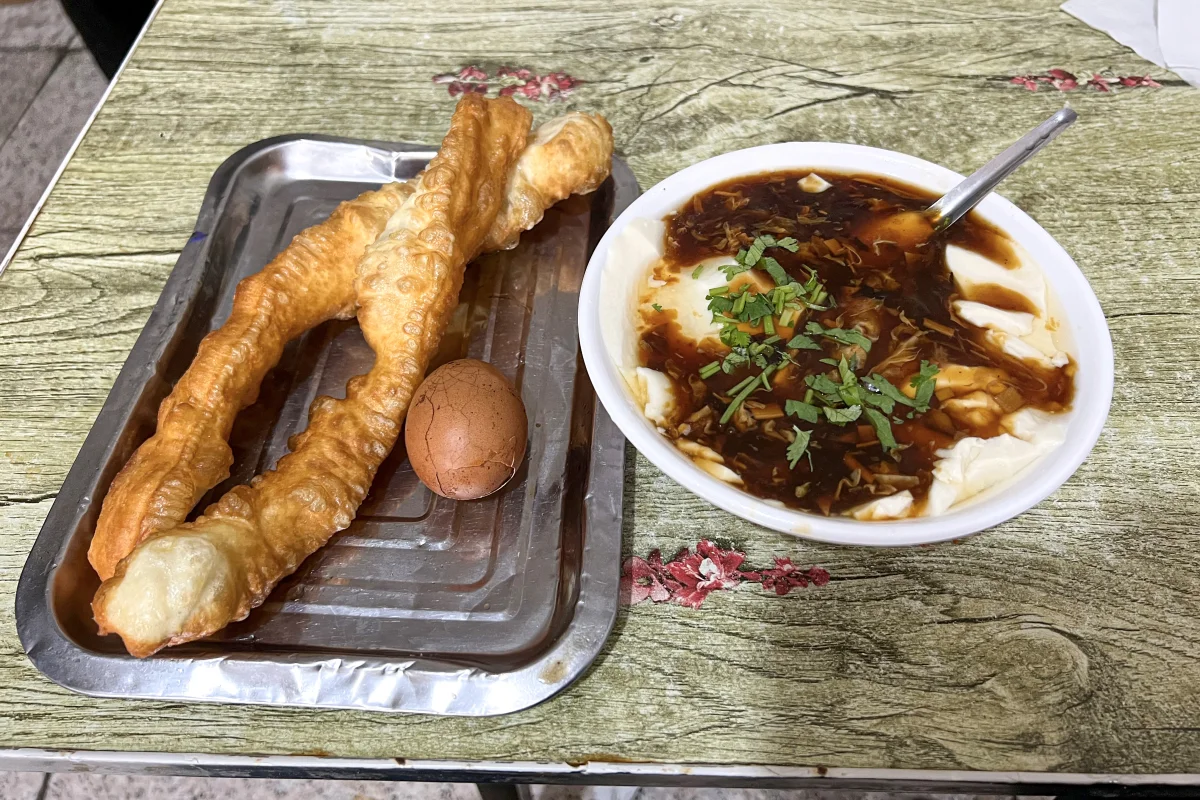
This guide focuses on how to order doufunao in a Beijing breakfast shop and how to build a balanced meal around it. If you need the single-dish introduction first, read the main Beijing doufunao guide. If you want to compare it with douzhi and soy milk, use the soy breakfast comparison guide.
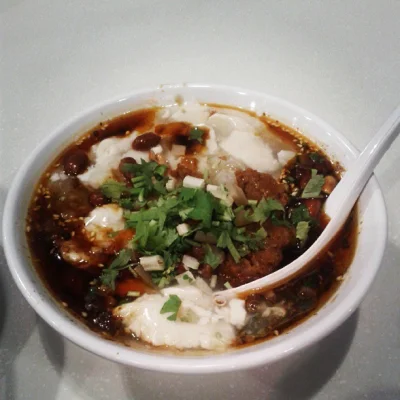
A typical Beijing-style doufunao bowl starts with soft tofu pudding. The tofu itself should be delicate, warm, and barely set. It is then covered with a savory sauce or gravy, often called lu. The exact gravy changes by shop, but it usually gives salt, aroma, and body to a dish that would otherwise taste very mild.
Common gravy elements may include soy sauce, starch-thickened broth, egg strands, mushroom, daylily, wood ear, or meat-based sauce in some halal breakfast shops. Not every shop uses the same recipe, so it is better to think of Beijing doufunao as a breakfast format rather than one fixed formula.
The soft tofu gives texture, but the gravy carries most of the flavor. A good bowl should not taste watery. The sauce should cling lightly to the tofu, so every spoonful has both soft curd and savory seasoning.
If the gravy is too thin, the bowl can feel bland. If it is too salty or too thick, the tofu disappears. The best breakfast shops keep the balance: gentle tofu first, warm savory depth second, and enough aroma to make you want a piece of fried dough beside it.
Many shops let you adjust the bowl with chili oil, vinegar, garlic, cilantro, or other condiments. First-timers should taste the plain bowl before adding too much. Doufunao is a soft breakfast dish, not a spicy hotpot, and heavy seasoning can cover the tofu texture.
A small spoon of chili oil is useful if the gravy feels flat. Cilantro adds freshness. Vinegar can brighten the bowl, but use it carefully because sourness changes the character of the dish. If the shop already serves a strong meat gravy, you may need less extra seasoning than expected.
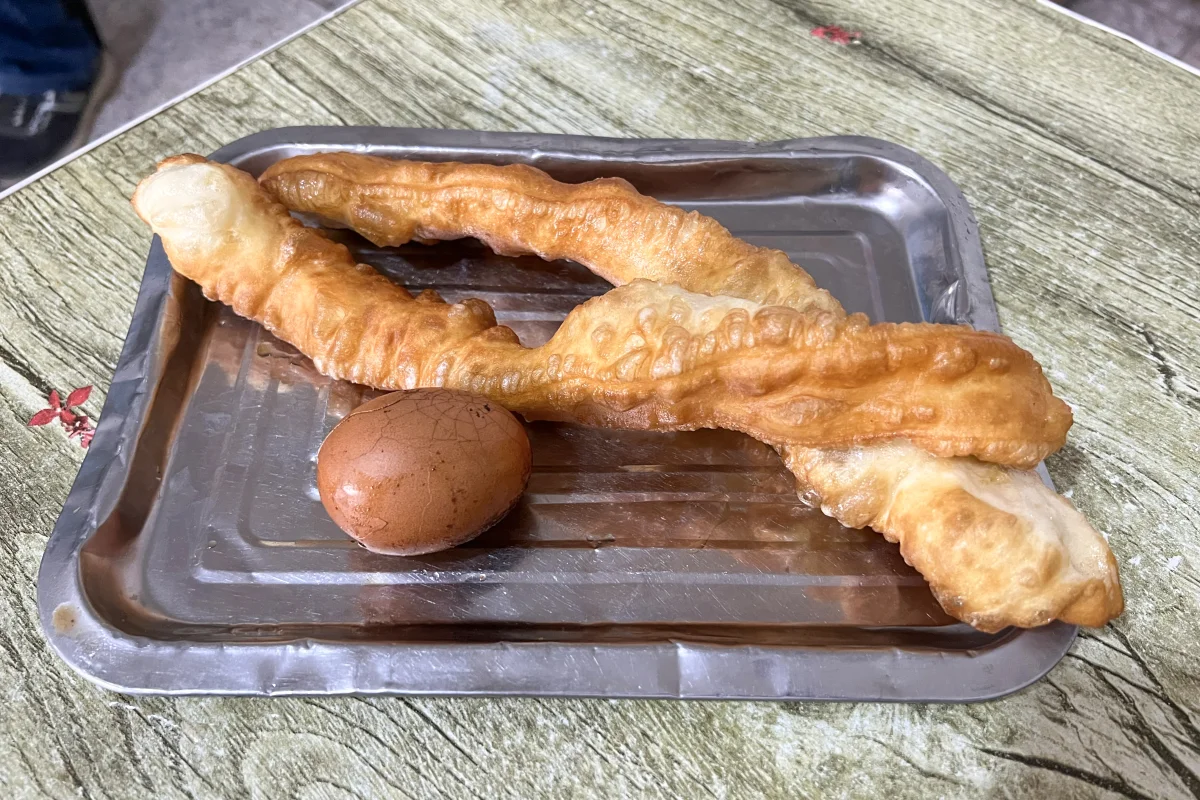
Youtiao is the classic practical pairing because it solves the texture problem. Doufunao is soft and spoonable; youtiao is crisp outside, airy inside, and oily in a good way. Dip a piece into the gravy and it absorbs flavor without turning the whole meal heavy.
This is also why doufunao is easier for many visitors than douzhi. Douzhi asks you to enjoy a sour fermented drink. Doufunao plus youtiao feels more familiar: warm tofu, savory sauce, and fried bread.
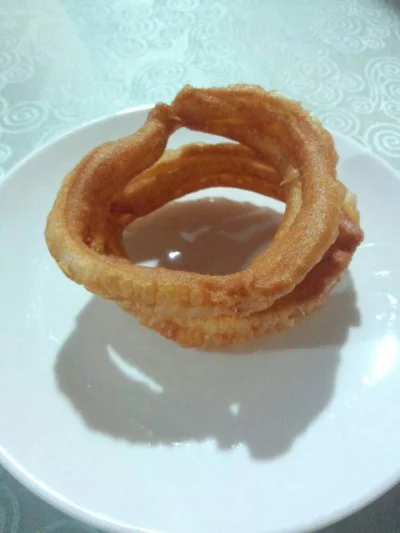
Jiaoquan is more closely associated with douzhi, but it can also work with doufunao if you want crunch without the thicker chew of youtiao. The ring shape fries quickly, creating a brittle texture that contrasts with the soft tofu.
If you are comparing breakfast pairings, order doufunao with youtiao once and with jiaoquan another time. Youtiao feels more filling. Jiaoquan feels crisp and snack-like. Both help the bowl feel complete.
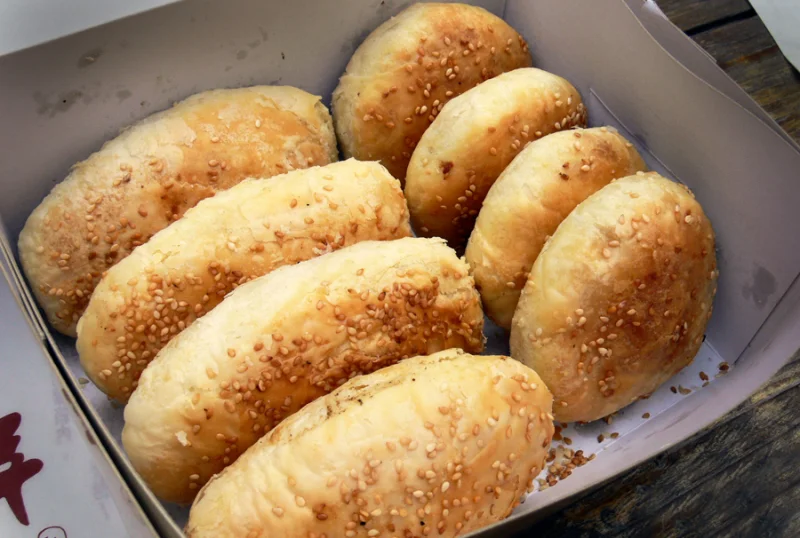
Shaobing gives a different balance. A sesame flatbread is dry, fragrant, and wheat-forward, so it works well when the doufunao gravy is rich. A small shaobing beside doufunao makes the meal feel less oily than youtiao.
Baozi can work too, especially if you want a more filling breakfast. Choose simpler fillings if the doufunao gravy is already strong. Tea eggs are a safe add-on: they bring protein and soy aroma without competing with the bowl.
Most breakfast shops move quickly. Decide on the bowl first, then the side. A practical order is “doufunao, yi gen youtiao” if you want tofu pudding with one youtiao. If you want less food, order doufunao with a tea egg. If you want a wheat snack, ask what shaobing or baozi is available that morning.
Do not over-order on the first visit. Doufunao looks light, but once you add fried dough or baozi, it becomes a full breakfast. A small bowl plus one side is usually enough for one person.
Look for turnover. Doufunao is best when the tofu and gravy are hot, fresh, and moving quickly. A shop with steady breakfast traffic is usually better than a quiet counter where the gravy sits too long.
Also look at the sides. Fresh youtiao should not look limp or greasy. Jiaoquan should look crisp, not dark and stale. Shaobing should have a toasted surface and sesame aroma. Good side dishes often tell you the breakfast counter is paying attention.
For most visitors, the best first order is doufunao with youtiao or doufunao with sesame shaobing. Add a tea egg if you want more protein. Use chili oil lightly, then adjust after a few spoonfuls.
After that, branch out. Try jiaoquan for a crisp old-Beijing pairing. Try baozi when you want a bigger breakfast. Try douzhi only when you are ready for a more challenging fermented flavor. Doufunao is the calm center of the breakfast table, and the side you choose decides how the meal feels.
Food background was checked against Beijing municipal tourism pages and licensed Wikimedia Commons image records. External links are provided for attribution and verification only.
Comments (0)