Doufunao Toppings and Pairings Guide: How to Order Beijing Savory Tofu Pudding
A practical guide to Beijing doufunao toppings, savory gravy, chili oil, cilantro, and breakfast pairings such as youtiao, jiaoquan, shaobing, baozi, and tea eggs.
A practical guide to Beijing shaobing fillings and pairings, covering sesame flatbread styles, meat fillings, egg, breakfast bowls, and how to order without confusing shaobing wit…
Shaobing looks simple: a baked or griddled wheat flatbread, often covered with sesame seeds. In Beijing breakfast shops, however, it can play several different roles. It can be plain bread for a hot bowl, a sesame-scented snack, a pocket for meat, or a filling breakfast item when paired with egg, soy milk, tofu pudding, or chaogan.
This guide focuses on how shaobing is actually used at the table. If you only need the basic dish introduction, start with Shaobing in Beijing. If you are comparing breakfast staples, read Shaobing vs Jianbing vs Baozi. This page goes deeper into fillings, pairings, and ordering choices.
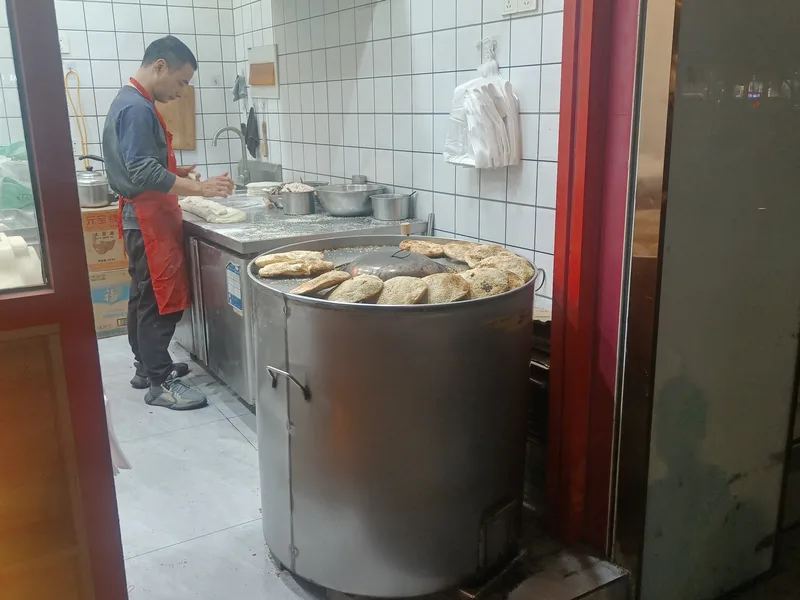
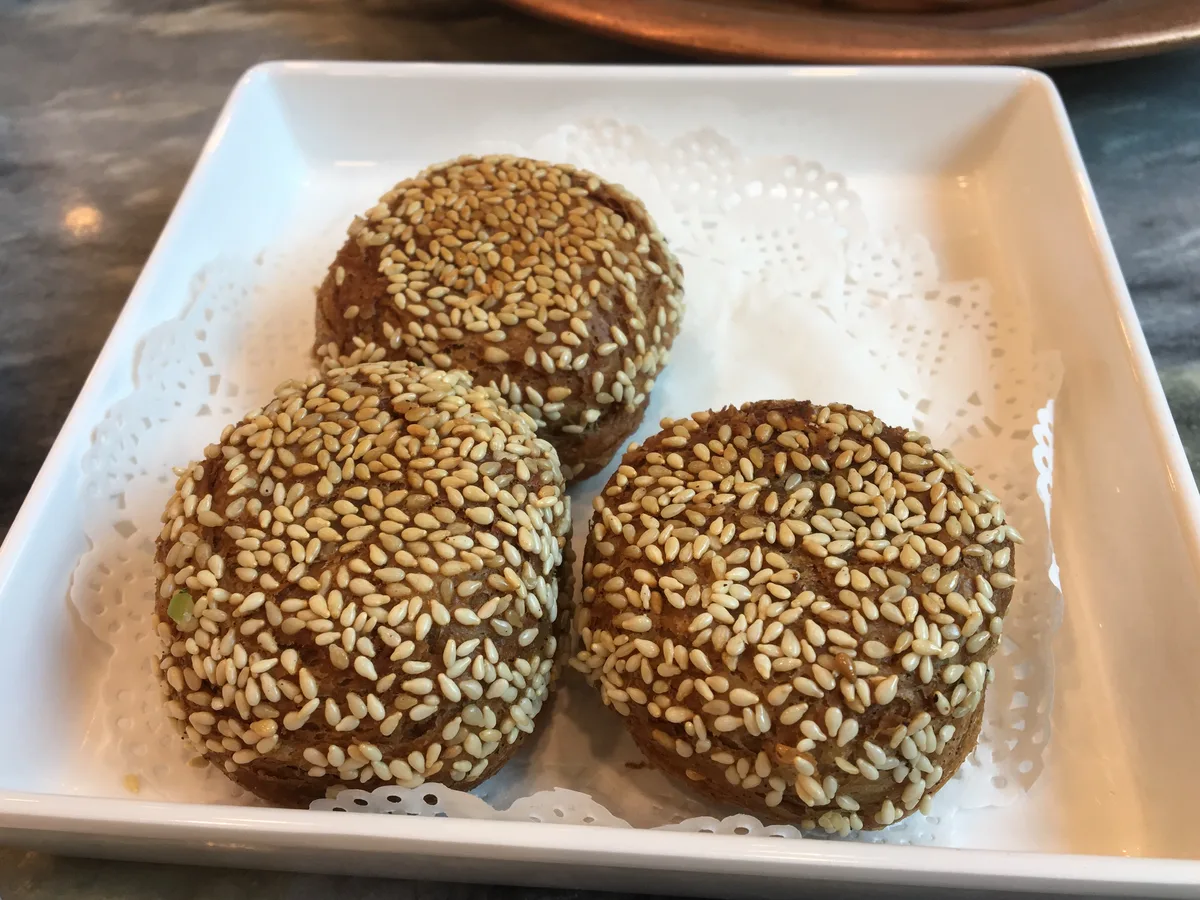
Shaobing is a wheat bread category rather than one single fixed item. The version visitors see most often in Beijing is a sesame flatbread: browned on the outside, layered or slightly flaky inside, and sturdy enough to hold a filling or sit beside a bowl of hot breakfast food.
The flavor is usually mild. Sesame brings nuttiness, the crust brings toastiness, and the interior gives the meal structure. That mildness is exactly why shaobing works with stronger foods. It can soften the garlic edge of chaogan, balance salty meat fillings, or sit beside a warm drink without competing with it.
The plain sesame version is the easiest one to understand. It is bread first, snack second. You can eat it by itself, but it is better when it supports something else.
In a breakfast setting, plain shaobing often works like a neutral side. It gives crunch, warmth, and wheat aroma to foods that are wetter, softer, or stronger. With soy milk or doufunao, it adds texture. With chaogan, it gives you something dry and plain between spoonfuls of thick garlic gravy. With a light bowl, it makes the meal feel complete.
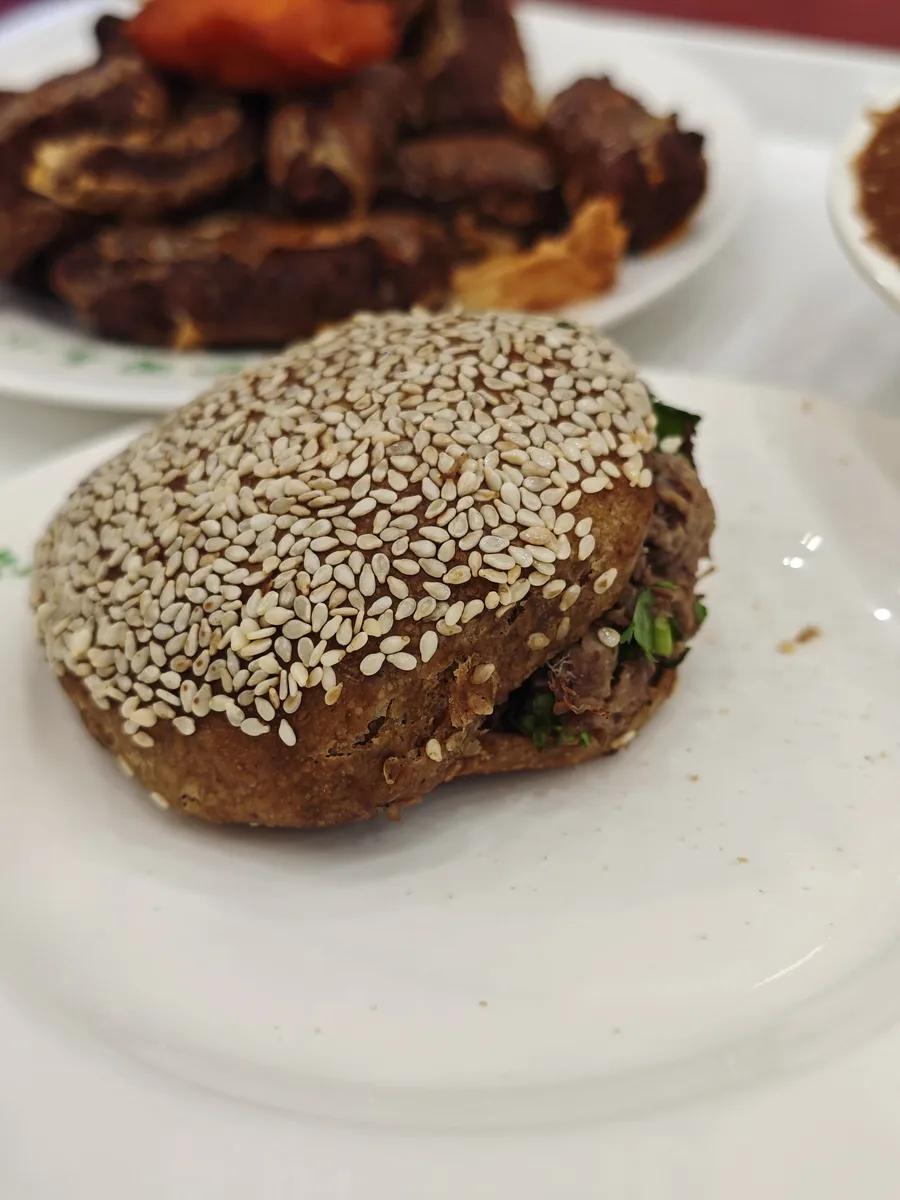
Meat-filled shaobing is heavier and easier for visitors to treat as a complete item. Depending on the shop, the filling may be beef, lamb, pork, or a seasoned minced meat mixture. The bread absorbs juices while the sesame crust keeps the outside from feeling too soft.
If you are choosing between plain and meat-filled shaobing, think about the rest of the meal. Meat-filled shaobing can stand alone with a drink. Plain shaobing is better if you are also ordering baozi, chaogan, doufunao, or another filling breakfast dish.
Some breakfast counters pair shaobing with egg, either as a simple add-on or as part of a more filling morning plate. Egg makes shaobing more approachable for visitors because the flavor becomes familiar: toasted bread, sesame, and warm egg.
This pairing also helps explain how shaobing differs from jianbing. Jianbing is built on a griddle as a crepe with egg, sauce, herbs, and a crisp cracker inside. Shaobing is bread-based. Even when egg is added, the center of the experience is still baked or griddled wheat bread, not a fresh crepe wrapper.
The best pairing depends on whether your shaobing is plain or filled.
For a first Beijing breakfast, a good order is one plain shaobing, one filled or egg version if available, one bowl or drink, and one stronger local item to compare. This lets you understand shaobing as part of a breakfast table rather than as an isolated pastry.
Visitors often group Beijing breakfast staples together because they all appear in the morning. The differences are clearer if you look at structure.
Baozi is steamed and filled. It is soft, moist, and closed. Jianbing is griddled and folded. It is sauced, layered, and usually eaten fresh from a stall. Shaobing is bread-like. It can be plain or filled, but its identity comes from the toasted wheat body and sesame crust.
This is why shaobing is more flexible than it first appears. It can be a side, a snack, or a main breakfast item depending on the filling and pairing.
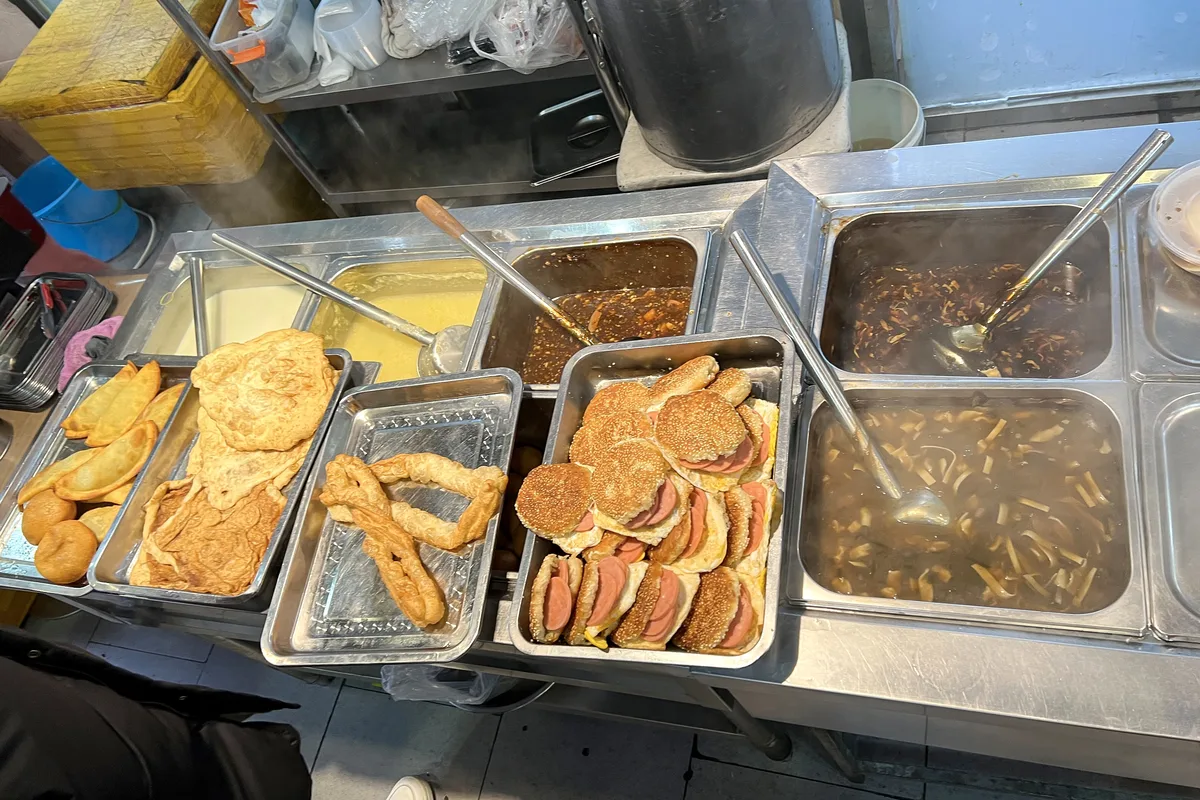
Look at what is being sold at the counter before ordering. If the shop has plain sesame rounds, filled breads, and hot bowls, choose the bread based on what else you plan to eat. If you are unsure, point to the style you want and ask for one. Breakfast shops are usually fast-moving, so simple orders work best.
If the bread is already made and sitting warm, it should still smell toasted and feel substantial. If it is cold, dry, or limp, the experience will be weaker. Shaobing depends on crust and warmth more than many visitors expect.
Do not expect every shop to offer every filling. Some sell only plain sesame flatbread. Some specialize in meat versions. Others treat shaobing as one item among many breakfast breads. The variety is normal.
Shaobing is not as internationally famous as Peking Duck and not as polarizing as douzhi, but it shows something important about Beijing food: wheat staples hold the meal together. Many Beijing breakfasts are built around bread, buns, noodles, fried rings, and other wheat-based foods that make strong flavors easier to eat.
That is why shaobing belongs in the same morning conversation as Beijing Breakfast, Baozi, Jianbing, and Chaogan. It may not be the loudest dish on the table, but it often makes the rest of the meal work.
Continue with Shaobing in Beijing for the core dish guide, then compare it with Jianbing and Baozi. For a broader morning route, use the Beijing Breakfast Guide.
This guide is original editorial content. The links below were used for factual cross-checking, old Beijing food context, breakfast terminology, and local dining culture; they are not copied source text.
Comments (0)