Ordering luzhu huoshao for the first time can feel more intimidating than ordering noodles or dumplings. The dish has several parts in one bowl: huoshao bread, pork intestines, pork lung, tofu, a dark braising broth, and optional seasonings such as garlic, fermented tofu, chili oil, and cilantro. If you do not know what to ask for, the easiest path is to order a standard bowl first and adjust only after tasting.
This guide focuses on the ordering moment. For the basic dish explanation, start with Luzhu Huoshao in Beijing. Here, the goal is practical: how to choose a bowl, what the counter may ask, what seasonings to use, and how to avoid making the dish too strong on your first try.
Start With the Standard Bowl
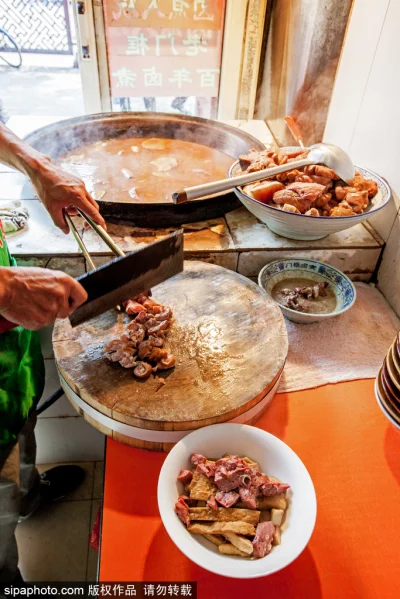
At a specialist shop, a standard bowl is usually the safest first order. It gives you the core structure of the dish without forcing you to decide every ingredient. You should expect chopped huoshao bread, braised pork offal, tofu, and broth. Some shops may offer larger portions, extra intestines, extra lung, or extra bread, but these are better after you know the base flavor.
If you are sharing, one standard bowl for two people can be a useful first taste. Luzhu huoshao is filling, and the broth-soaked bread makes it heavier than it looks. If you already know you like offal dishes, order your own bowl. If you are unsure, sharing prevents waste and lets you compare it with something lighter afterward.
What to Say or Point At
If you do not speak Chinese fluently, pointing at the standard bowl on the menu or at another customer’s bowl is normal in a casual shop. The phrase “luzhu huoshao” is usually enough at a specialist counter. If the shop asks about extras, keep it simple: standard bowl first, no extra offal, no extra bread. You can always return later for a stronger version.
Do not be embarrassed if the staff chops the ingredients quickly and serves the bowl without much explanation. Luzhu shops are often built around speed and routine. Watch how regular customers season the bowl, then copy slowly rather than adding everything at once.
Garlic, Fermented Tofu, Chili, and Cilantro
Seasonings are where many first-timers overdo it. Garlic gives the bowl sharpness. Fermented tofu adds depth and a slightly funky saltiness. Chili oil adds heat and color. Cilantro brightens the broth. These can all help, but the base broth should still be recognizable.
Start with a little garlic and cilantro if they are offered. Add fermented tofu more carefully because the broth is already savory. Chili oil is optional; it can make the bowl warmer, but too much hides the braised aroma. Stir from the bottom so the seasonings reach the bread and tofu, not just the surface.
How to Judge Whether the Bowl Is Good
A good luzhu huoshao bowl should be hot, savory, and clean-tasting. The bread should be soaked but not collapsed into paste. The intestine should be tender rather than rubbery. The pork lung should absorb broth but not feel dry. The tofu should soften the bowl and carry the flavor without turning greasy.
The broth matters most. It should taste long-cooked and aromatic, not stale or muddy. Because this is an offal dish, freshness and turnover are important. A busy shop is often a positive sign, especially when bowls move quickly and ingredients are not sitting exposed for too long.
Common First-Timer Mistakes
The first mistake is ordering too much. Extra bread and extra offal can be satisfying for regulars, but they can overwhelm a new eater. The second mistake is adding every condiment before tasting the broth. The third mistake is treating luzhu as a light snack. It is closer to a full meal.
Another mistake is judging the dish only by appearance. Luzhu huoshao is not designed to look delicate. It belongs to old Beijing snack-shop cooking, where flavor, heat, texture, and value matter more than presentation. If you want a gentle introduction to Beijing food before trying it, compare it with more approachable dishes in the Beijing Must Eat hub.
Best Time to Eat It
Lunch and dinner are both reasonable. Late meals can also work because the dish is warming and filling. It is less suitable right before a large dinner such as hotpot or Peking duck. Give it its own meal window, especially if you are trying it for the first time.
Cooler weather makes luzhu huoshao easier to enjoy, but good shops sell it year-round. The important thing is to arrive when the kitchen is active and the broth is moving. A quiet counter at the end of the day is less ideal than a shop with steady local turnover.
References
Comments (0)