Beijing has several famous dishes built around pork or beef offal, but they are not interchangeable. Luzhu huoshao, chaogan, and baodu all belong to old Beijing food culture, yet each dish has a different texture, sauce logic, and eating situation. Understanding the differences makes ordering easier and prevents the common mistake of assuming every offal dish tastes the same.
This guide compares the three from a practical visitor's point of view. It is not about ranking them. It is about knowing what you are likely to enjoy first, what each dish asks from the eater, and how to order without being surprised by texture or flavor.
Luzhu Huoshao: Braised Bowl With Bread
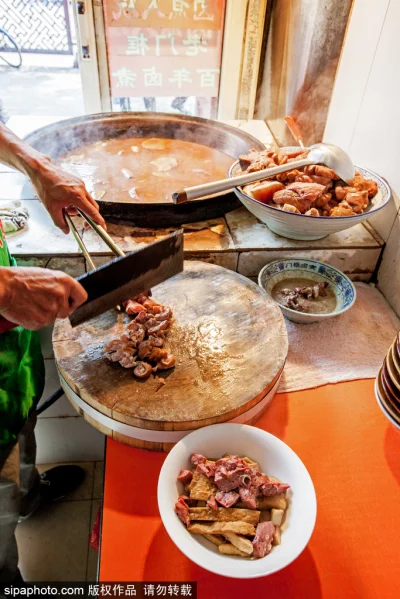
Luzhu huoshao is a chopped bowl of huoshao bread, pork intestines, pork lung, tofu, and dark braising broth. The bread is central. It absorbs broth and turns the bowl into a filling meal rather than a light soup. The flavor is savory, rich, and old-fashioned, especially when garlic, fermented tofu, or chili oil is added.
Among the three dishes, luzhu huoshao is usually the heaviest. It is best treated as lunch, dinner, or a serious snack, not as something to add casually before another large meal. For the full breakdown, start with the Luzhu Huoshao in Beijing guide.
Chaogan: Thick Garlic Gravy
Chaogan is often eaten in the morning, especially in old Beijing breakfast shops. It uses pork liver and pork intestine in a thick, glossy gravy with a strong garlic note. Compared with luzhu huoshao, chaogan is less bread-based and more gravy-based. You usually eat it with a spoon and pair it with baozi or another breakfast item.
The defining feature is garlic texture and thickness. A good bowl should be glossy and aromatic, not watery. If you are curious but cautious, chaogan may be easier to try in a smaller portion because it is often part of breakfast rather than a large standalone meal. The chaogan texture guide explains this in more detail.
Baodu: Texture and Dipping Sauce
Baodu is different again. It usually refers to quickly cooked tripe, often served with a dipping sauce rather than submerged in a heavy broth. The pleasure is in texture: crisp, springy, and clean when handled well. The sauce matters, but the tripe's bite is the main point.
For many visitors, baodu can be easier or harder depending on texture preference. It may taste cleaner than luzhu huoshao, but the tripe texture is more direct. If you dislike chewy or springy textures, baodu may be challenging. If you enjoy hotpot tripe or sesame dipping sauce, it can be very approachable.
Which One Should First-Timers Try First?
If you want the most complete old Beijing bowl, choose luzhu huoshao. If you want a breakfast-shop experience, choose chaogan. If you want texture and dipping sauce, choose baodu. The safest path for many travelers is chaogan first, luzhu huoshao second, and baodu when you are ready to focus on texture.
That said, personal taste matters more than sequence. Someone who likes braised, hearty foods may enjoy luzhu immediately. Someone who likes clean, quick-cooked textures may prefer baodu. Someone who loves garlic may understand chaogan fastest.
Flavor Comparison
Luzhu huoshao tastes braised and broth-soaked. Chaogan tastes garlicky and thick. Baodu tastes cleaner and more sauce-driven. Luzhu has bread inside the bowl; chaogan is usually paired with bread or buns; baodu depends on dipping sauce rather than soaked wheat.
This difference also affects how full you feel. Luzhu huoshao is the most filling because of the huoshao bread. Chaogan can be light or heavy depending on what you order with it. Baodu is often easier to share as part of a larger meal.
How to Use This Comparison
If you are building a Beijing food itinerary, do not schedule all three in one day unless you already love offal. They are culturally important, but they are strong dishes. Spread them across different meals and compare slowly. That gives each dish a fair chance.
For a broader old Beijing route, combine one offal dish with something more familiar, such as zhajiang noodles, baozi, or Peking duck on another day. This keeps the experience balanced and helps you understand how diverse Beijing food can be.
References
Comments (0)