Luzhu huoshao is easiest to understand when you break the bowl into parts. It is not just “offal soup,” and it is not simply bread in broth. The dish depends on the way pork intestines, pork lung, tofu, huoshao bread, and seasoned broth work together. Each ingredient has a different texture, and the bowl feels right only when those textures stay balanced.
This guide explains the ingredients one by one. If you need the broader introduction, read Luzhu Huoshao in Beijing first. If you already know the dish and want to order more confidently, this ingredient guide helps you understand what you are seeing in the bowl.
Pork Intestine
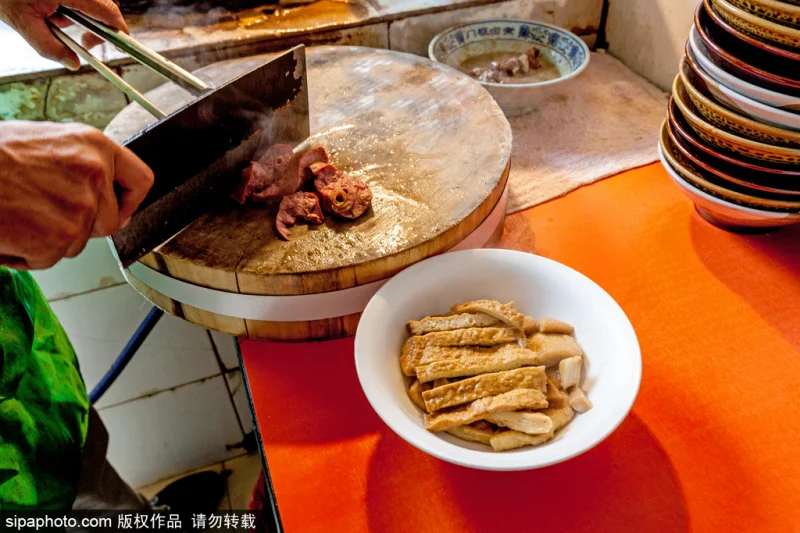
Pork intestine is one of the defining ingredients. In a good bowl, it should be tender, savory, and clean-tasting. It should not be rubbery, dry, or aggressively strong. Because intestine has its own aroma, the braising broth and seasonings need to be balanced carefully. Too little seasoning leaves the flavor flat; too much seasoning hides whether the ingredient was handled well.
For first-timers, intestine is usually the most noticeable part of the bowl. If you are unsure about offal, take a small piece with bread and broth rather than eating it alone. The bread softens the flavor and makes the texture easier to understand.
Pork Lung
Pork lung has a lighter, more porous texture than intestine. It absorbs broth quickly, so it can carry a lot of flavor. Some visitors notice the texture before the taste: it can feel springy, airy, and soft at the same time. In the bowl, lung helps prevent the dish from feeling only fatty or dense.
Not every eater loves this texture immediately. That is normal. Luzhu huoshao is an old Beijing dish built around ingredients that reward familiarity. If the lung tastes clean and the broth is hot, it is doing its job. If it tastes stale or dry, the bowl is weaker.
Huoshao Bread
Huoshao bread is essential. The bread is cut into pieces and soaked in broth, but it should keep some chew. This is why luzhu huoshao is more filling than a plain soup. The wheat bread absorbs the braised flavor while giving the bowl structure.
The best pieces are neither hard nor mushy. They should hold together when lifted with chopsticks or a spoon. If the bread has completely collapsed, the bowl can feel heavy and monotonous. If it is too dry, the broth has not reached the center. The middle ground is what makes the dish satisfying.
Tofu
Tofu gives the bowl a softer, cleaner note. It takes on the braising broth but does not have the strong flavor of offal. This helps balance the intestine and lung. In some bowls, tofu is the ingredient that makes the dish easier for first-timers because it offers a familiar texture between the stronger pieces.
Do not ignore it as filler. Tofu is part of the rhythm of eating luzhu huoshao: bread, offal, tofu, broth, then seasoning. The contrast keeps the bowl from becoming too one-dimensional.
The Broth
The broth connects everything. It should be savory, aromatic, and rich enough to flavor the bread. It may look dark, but it should not taste muddy. A clean broth lets the offal taste strong but controlled. A poor broth makes the whole bowl feel heavy.
Garlic, fermented tofu, chili oil, and cilantro can all change the final flavor. Add them gradually. Fermented tofu is especially powerful because it brings saltiness and depth. Garlic gives sharpness, while cilantro lightens the finish. If you are comparing Beijing dishes, this seasoning logic is different from chaogan's thick garlic gravy, even though both dishes can involve offal.
How the Ingredients Should Work Together
A balanced spoonful should include more than one texture. Bread gives chew, intestine gives richness, lung absorbs broth, tofu softens the bite, and soup carries the seasoning. If you eat only one ingredient at a time, the dish may feel too strong. Try mixing small pieces together.
This is why luzhu huoshao is worth treating as a complete bowl, not a collection of separate parts. The dish is old-fashioned, practical, and deeply local because it turns strong ingredients into a filling meal. That is also why it belongs in the wider Beijing Food Culture hub, not only in a list of unusual snacks.
References
Comments (0)