Finding a good bowl of luzhu huoshao is different from finding a famous roast duck restaurant or a busy noodle shop. This is an old Beijing snack-shop dish built around broth, bread, tofu, and pork offal, so the best experience usually comes from a specialist counter with steady turnover and a kitchen that cooks the same bowl all day.
This guide focuses on where and how to choose a place to try it. For the basic dish structure, start with Luzhu Huoshao in Beijing. If you already know the ingredients and want the ordering details, read how to order luzhu huoshao first, then use this page to judge the shop.
Choose a Specialist Shop, Not a Random Menu Item
Luzhu huoshao depends heavily on repetition. A shop that sells many bowls can keep the broth hot, the bread moving, and the offal tender without sitting too long. That matters because the dish can turn heavy or flat when the broth is tired, the bread is soaked in advance, or the chopped ingredients are not refreshed regularly.
Look for shops where luzhu is the center of the operation, not a minor item hidden among dozens of unrelated dishes. A specialist shop usually has a visible counter, a large pot or preparation area, quick chopping, and bowls assembled to order. The atmosphere may be plain, but the rhythm should feel practiced.
Why Menkuang Hutong Comes Up So Often
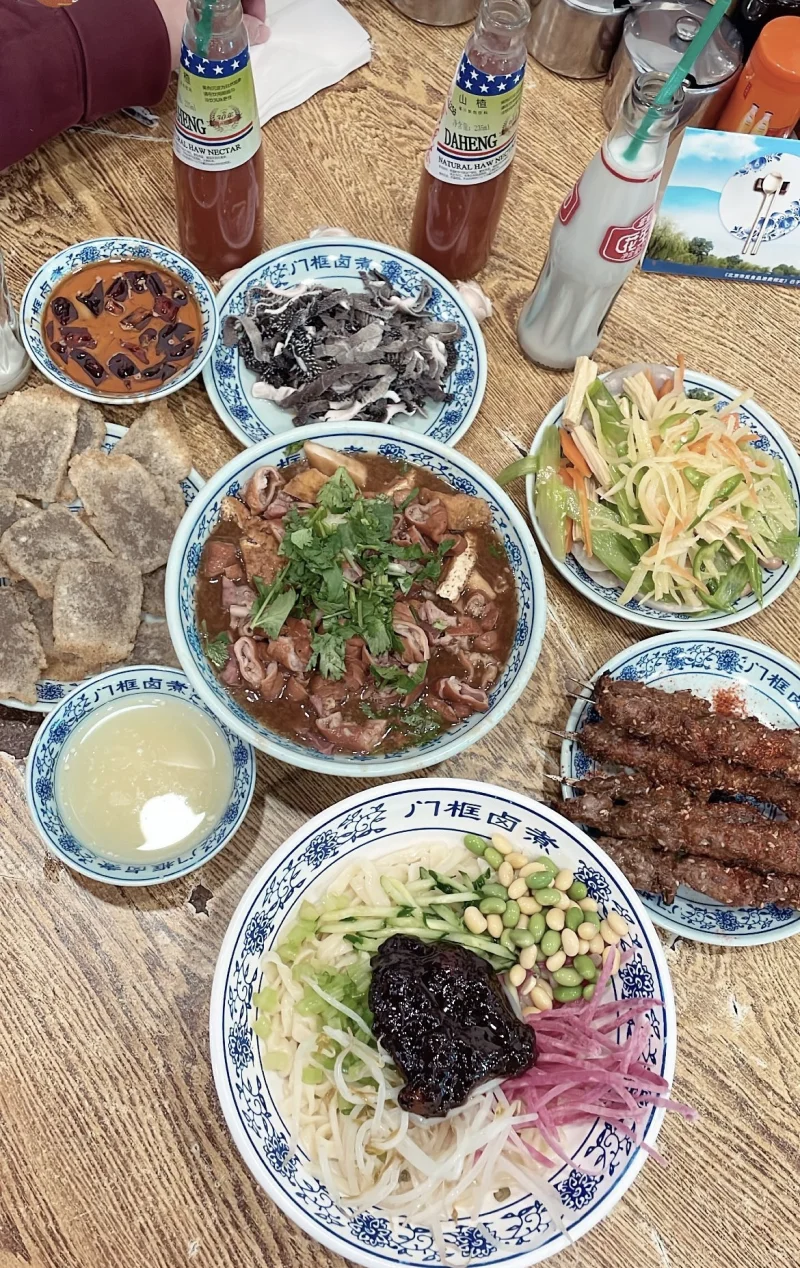
When Beijingers talk about luzhu huoshao, Menkuang Hutong is one of the names that often appears because it is closely associated with old Beijing snack-shop culture. It should not be treated as the only place to eat the dish, but it is useful as a reference point: casual setting, strong local flavor, quick service, and a menu built for people who already know what they came for.
For first-time visitors, the value of a place like this is not only the bowl itself. It shows how luzhu fits into a broader old Beijing eating style: shared tables, side dishes, strong garlic aroma, hot broth, and a practical meal rather than a polished restaurant experience. That context makes the dish easier to understand.
Signs of a Better Luzhu Huoshao Shop
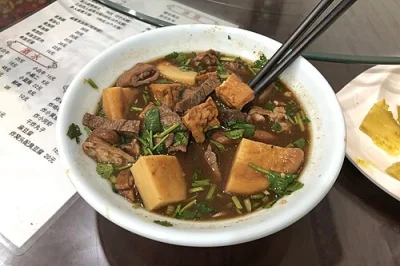
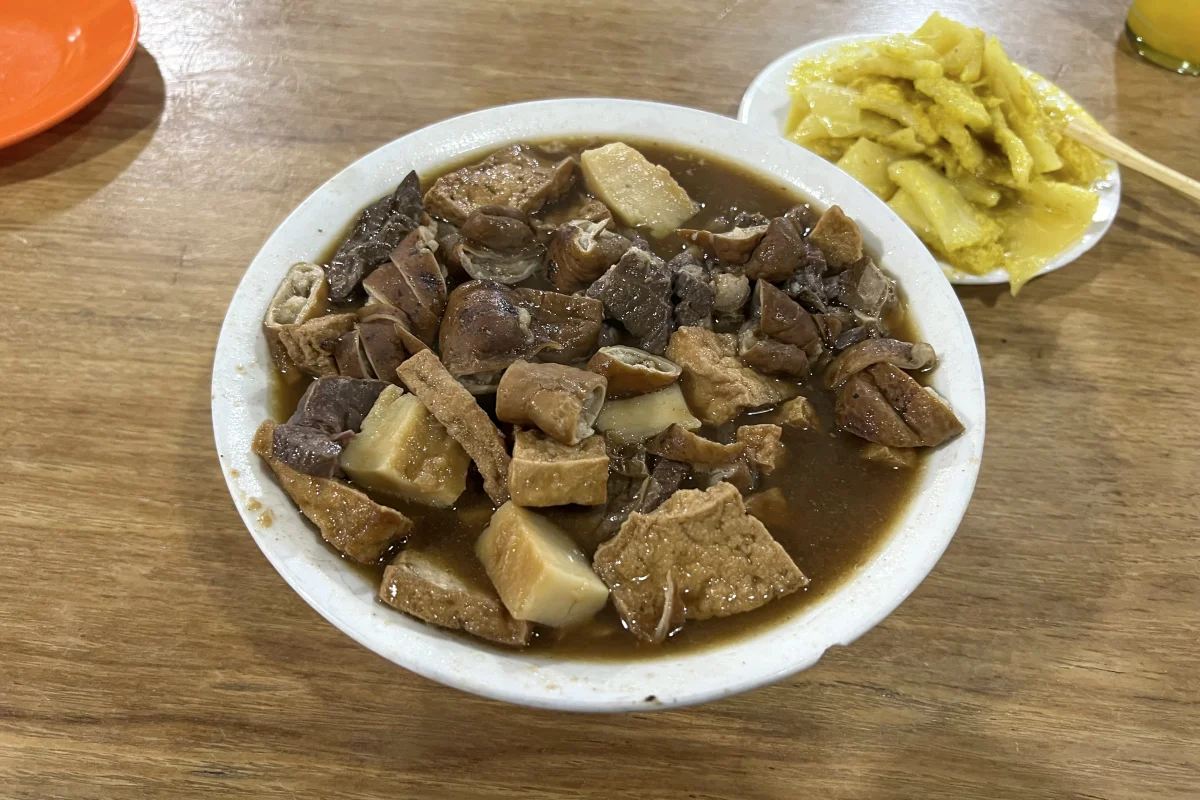
A good shop should smell savory and braised, not stale. The broth should be hot and active, the bread should be cut or added close to serving time, and the bowl should arrive with clear layers: broth, bread, tofu, offal, herbs, and seasonings. If the shop is busy at lunch or early dinner, that is usually a better sign than a quiet room with ingredients sitting around.
Watch how the counter handles the bread. Huoshao should absorb the soup while still keeping some structure. If it looks completely collapsed before the bowl reaches the table, the texture will probably be dull. The same logic applies to tofu and pork offal: tender is good, but mushy is not.
What to Order on a First Visit
Start with a regular bowl unless you already know you want extra intestines, lung, or bread. The standard bowl shows the balance the shop intends. Add garlic and chili gradually, because a heavy hand can hide the broth and make the first taste sharper than necessary.
If you are unsure about offal, share one bowl and order a side dish or another Beijing staple with it. Luzhu is filling, and the flavor is more direct than dishes like zhajiang noodles or Peking duck. Sharing lets you understand the dish without forcing yourself through a full bowl.
How to Read the Bowl
The first spoonful should tell you whether the broth has depth. It should taste braised, salty, and aromatic, with enough body to season the bread but not so much grease that it coats the mouth. The bread should carry the soup, tofu should soften the stronger offal notes, and cilantro or garlic should brighten the finish.
If you want to understand the components more carefully, use the luzhu huoshao ingredients guide. If you are deciding whether luzhu is the right offal dish for you, compare it with chaogan and baodu: luzhu is more filling and bread-based, chaogan is more gravy-like, and baodu is cleaner and more texture-focused.
Best Time to Go
Lunch and early dinner are usually safer than the very end of service because the shop is more likely to have turnover. A crowded counter can feel inconvenient, but it often means the pot is moving and bowls are being assembled frequently. If you arrive when the room is empty and the ingredients look tired, choose another place or come back earlier.
For a Beijing food day, keep the rest of the route lighter. Luzhu huoshao can sit heavily, especially if you add extra bread or pair it with fried sides. It works better as the main stop of a snack-focused meal than as a small bite before hotpot, roast duck, or a long banquet.
Quick Checklist Before You Sit Down
- The shop is known for luzhu or old Beijing snacks, not only a generic restaurant menu.
- The counter is active and bowls are assembled after ordering.
- The broth is hot, aromatic, and not visibly separated into heavy grease.
- The bread is added close to serving time and keeps some bite.
- Seasonings are available, but you can add them gradually.
Once you find a good bowl, luzhu huoshao makes much more sense. It is not delicate food, and it is not trying to be. Its appeal is in the hot broth, the chewy bread, the old snack-shop rhythm, and the feeling that you are eating something deeply tied to everyday Beijing rather than a dish redesigned for tourists.
References
For official Beijing food context, see the Beijing tourism food entry for luzhu huoshao and the Beijing tourism photo feature on old Beijing snack-shop food. Article images use publicly available Wikimedia Commons food photos; photo attribution is retained in the media records.
Photo credit:Luzhu Huoshao at Huangsi by N509FZ, via Wikimedia Commons (CC BY-SA 4.0).
Comments (0)