This guide looks at baodu as culture rather than as a basic “what is it” article. For first-time eating advice, start with Baodu in Beijing. For practical ordering, use how to order baodu in Beijing. Here the focus is why baodu became such a recognizable old Beijing snack.
A dish shaped by speed
Baodu is often translated as quick-fried tripe, but the cooking is closer to rapid blanching than pan-frying. The tripe is cleaned, sliced, dropped into boiling water, and lifted out quickly. That short cooking window is the dish’s identity.
The method makes baodu feel different from many braised Beijing dishes. It does not rely on a long-cooked broth or heavy sauce to create flavor. Instead, it depends on fresh prep, a confident hand, and a sauce that supports the texture without hiding it.
Hui and Muslim food roots
Official Beijing tourism descriptions identify baodu as an old Beijing local snack and also describe it as a Muslim food. This matters because beef and lamb, careful cleaning, and halal snack-shop traditions are central to how many classic baodu shops developed.
Beijing has long had important Muslim food communities, especially around beef, mutton, sesame sauce, grilled meats, and wheat-based staples. Baodu fits naturally into that world: clean tripe, quick heat, sesame paste, vinegar, cilantro, scallion, and a table style that feels closer to a snack shop than to a banquet restaurant.
Old Beijing snack shops, not just restaurants
Baodu is easiest to understand if you imagine it as a snack-shop dish. It can be eaten quickly, shared in small portions, and paired with sesame shaobing or another simple wheat staple. The setting is often practical: a counter, a narrow shop, a busy dining room, or a food street where people stop for one focused specialty.
This is different from treating baodu as a full meal centerpiece. Many locals value the dish precisely because it is narrow and exact. The shop does one difficult thing quickly, and the customer eats it while the texture is still alive.
Time-honored names and market memory
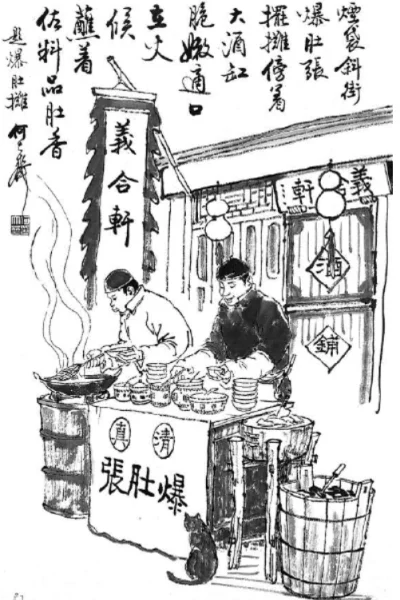
Official Beijing pages describe baodu as recorded as early as the Qianlong era and mention well-known names such as Baodu Zhang, Baodu Feng, Baodu Wang, Baodu Yang, and Baodu Man. These names point to a culture of specialist vendors rather than anonymous menu items.
Some stories connect baodu with areas such as Dong’an Market and Shichahai. Whether a visitor remembers every name is less important than understanding the pattern: a vendor becomes known for timing, freshness, sauce, and cut selection; regulars return because the texture is reliable.
Why the cook’s hand matters
Baodu looks simple enough that it is easy to underestimate. In practice, different stomach parts need different timing. A cut that is delicate can be ready in seconds. A thicker piece may need slightly longer. Too short can feel unfinished; too long can become tough.
This is why old Beijing baodu writing often emphasizes craft. The cook is not just boiling tripe. The cook is matching cut, thickness, heat, and timing. A good plate should feel crisp-tender rather than rubbery. For more detail on cuts, see the baodu cuts and texture guide.
Baodu as a drinking snack
Several old Beijing food descriptions connect baodu with a small drink, sesame shaobing, and sometimes sheep offal soup. The point is not that every visitor must copy that exact pairing. The point is that baodu historically fits a casual social table: a few bites, a strong sauce, wheat aroma, and conversation.
That table culture helps explain why baodu is not usually presented with luxury plating. It is valued for immediacy. The customer listens for texture, adjusts sauce, and eats before the plate cools.
The role of sesame sauce
Baodu sauce links the dish to other Beijing food habits, especially sesame paste used with hotpot and old snack-shop condiments. The base can include sesame paste, fermented tofu, chive flower sauce, vinegar, chili oil, cilantro, and scallion.
The sauce should not flatten every cut into one flavor. In a good baodu meal, the sesame paste gives body, vinegar gives lift, and fresh herbs make the tripe cleaner. The sauce side is covered in more depth in the baodu dipping sauce guide.
Why baodu still feels local
Many famous foods travel well because the recipe is easy to explain. Baodu travels less easily because so much depends on a local shop rhythm: fresh tripe, quick cooking, a familiar sauce, and customers who know to eat it immediately.
That is why baodu can feel more local than more internationally famous Beijing dishes. Peking duck is ceremonial and visible. Baodu is faster, smaller, and more textural. It rewards someone who pays attention to a narrow craft.
How to read a baodu shop
A baodu shop does not need to look fancy. Better signs are freshness, turnover, clear cut options, sauce that is mixed with care, and a kitchen that sends plates out quickly. If regulars eat immediately rather than letting plates sit, that is also a clue.
Look for the rhythm: order, blanch, serve, dip, eat. The shorter the gap between cooking and eating, the more the dish makes sense.
How this differs from tourist snack streets
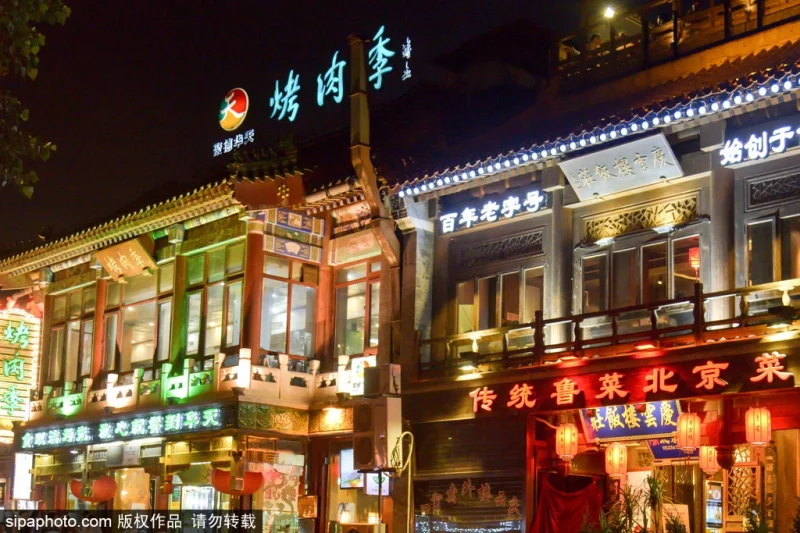
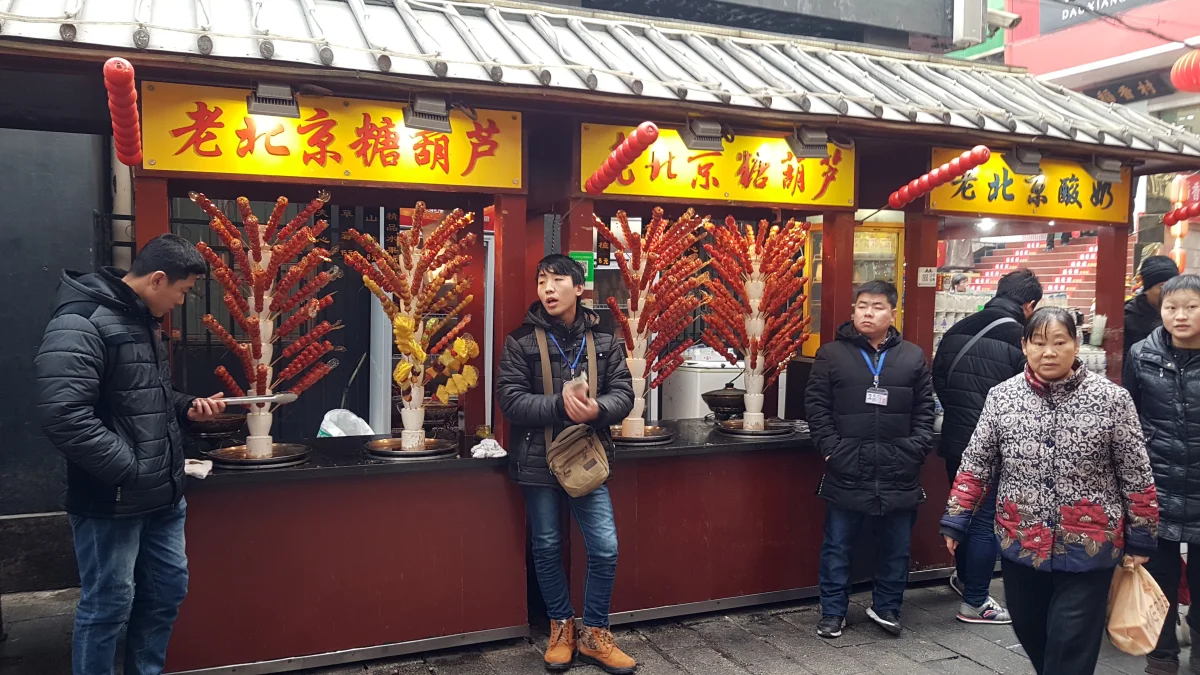
Tourist snack streets can introduce visitors to Beijing food culture, but baodu is not at its best when treated only as a novelty. The dish is less about spectacle and more about precision. It needs a shop that cares about cuts and timing.
That does not mean a visitor should avoid famous food areas. It means the goal should be a specialist plate, not just a quick photo. If you want baodu to make sense, choose a place where the dish is prepared as a real house specialty.
A practical way to appreciate the culture
Order a small mixed plate, taste the first piece lightly dipped, and eat while the tripe is hot. Notice whether the bite is crisp, springy, or tender. Then adjust the sauce and compare the next cut. This is how the culture becomes understandable on the plate.
Baodu’s value is not only that it is old. It is that the old method still creates a specific eating experience: fast, exact, textural, and very Beijing.
References and image sources
Food background and image attribution were checked against Beijing municipal tourism pages and licensed Wikimedia Commons image records. External links are provided for attribution and verification only.
Comments (0)