Baodu is one of Beijing’s most direct tests of texture. Thin pieces of tripe are quickly blanched or “exploded” in hot water, drained immediately, and served with a strong dipping sauce built around sesame paste, soy sauce, vinegar, chili oil, fermented tofu, chive flower sauce, and cilantro.
The dish looks simple, but timing decides everything. Good baodu should be clean, springy, and crisp-tender. Overcook it and the tripe turns tough. Undercook it and the texture feels unfinished. This guide explains what baodu is, what to order, how to eat it, and how it differs from other Beijing offal dishes such as luzhu huoshao and chaogan.
What is baodu?
Baodu literally means “exploded tripe,” but the name refers to speed rather than oil-frying. The tripe is sliced thinly and cooked very quickly in boiling water. It is then eaten immediately with a rich sesame-based dipping sauce.
In Beijing, baodu is strongly associated with Muslim snack-shop traditions and old Beijing street-food culture. Many classic versions use lamb or beef stomach parts, especially cuts that stay crisp after quick cooking. The most important feature is not strong meat flavor; it is texture.
The texture is the point
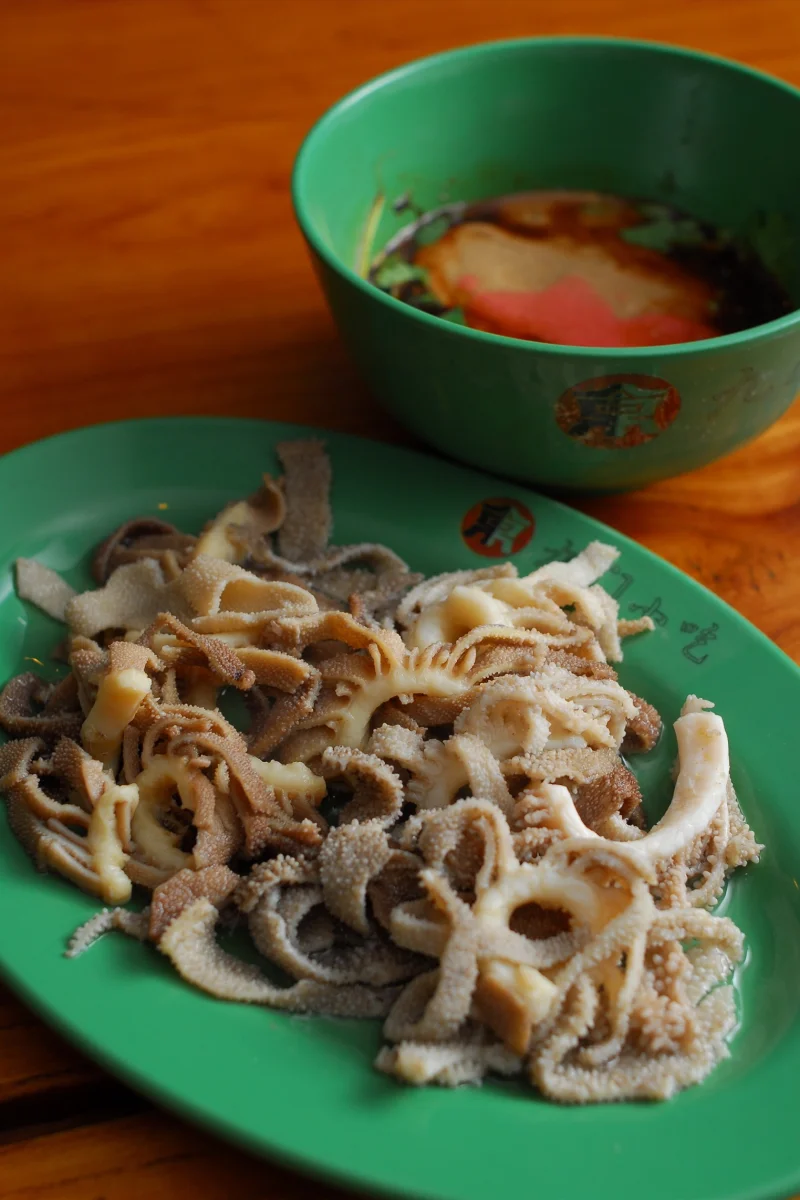
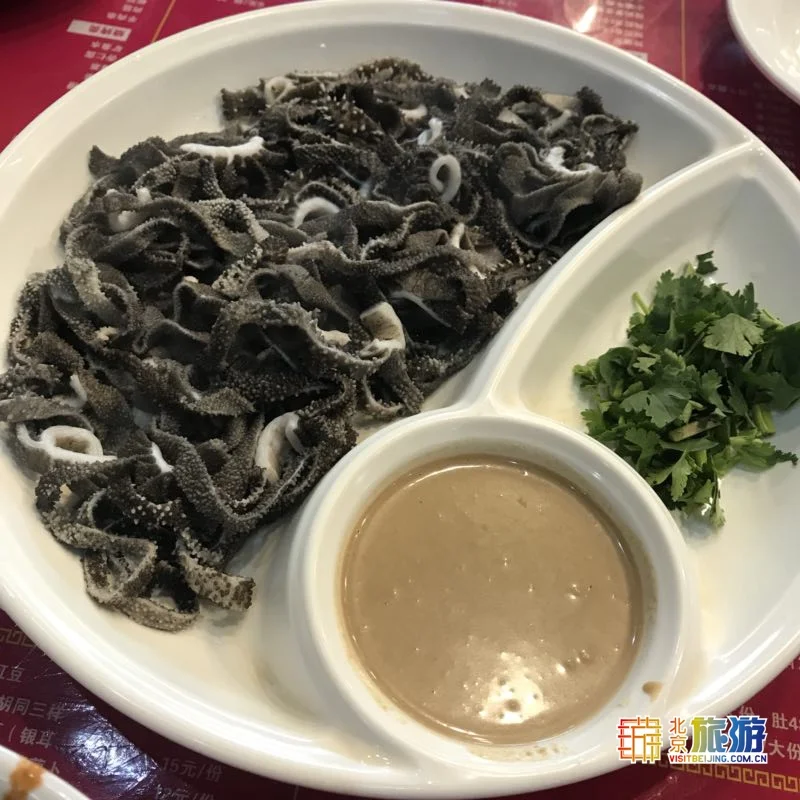
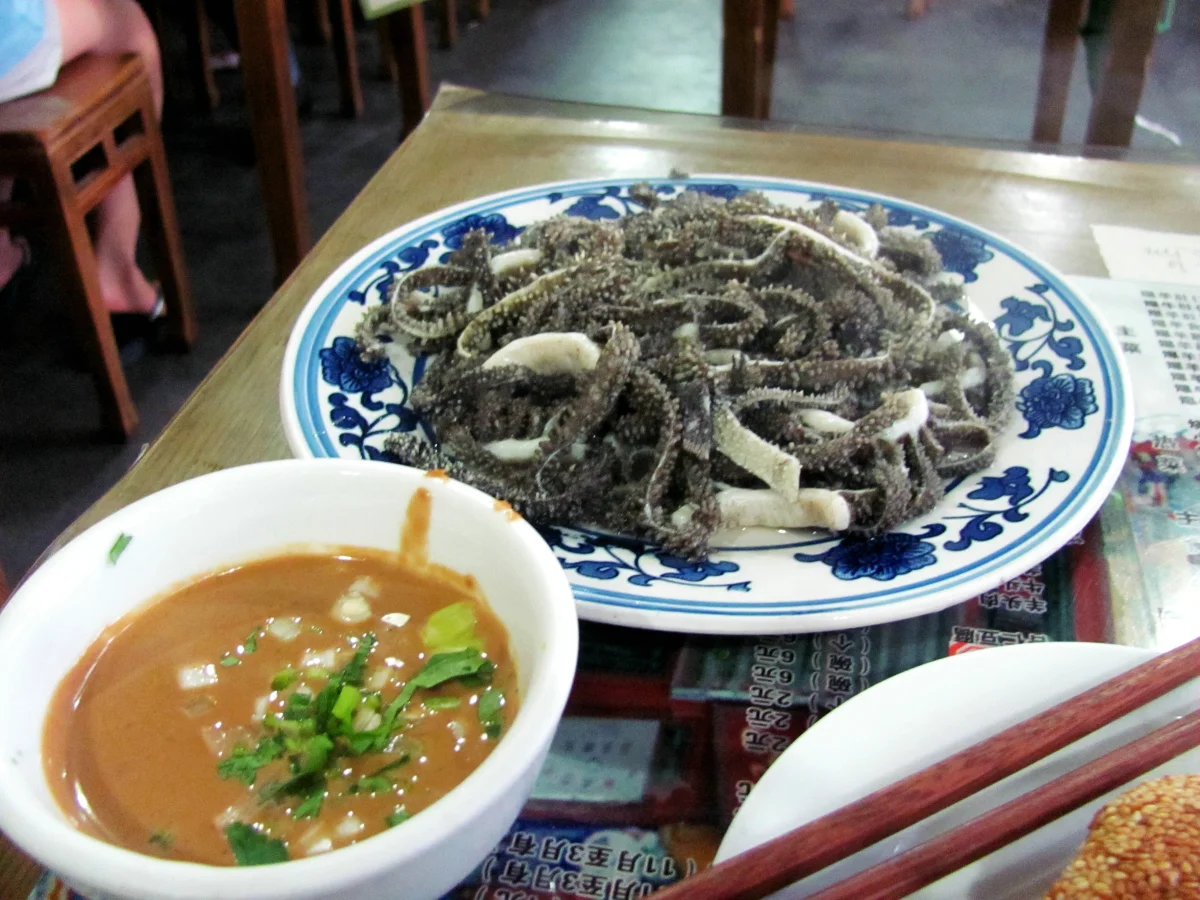
Baodu is not supposed to be soft like stew. It should have a gentle snap when you bite it. The pieces may look curled, ribbed, or honeycomb-like depending on the stomach part. A good plate should feel fresh and lively, not rubbery.
This is why baodu is usually eaten right away. It is not a dish to sit on the table for a long time while you talk through other courses. The longer it waits, the more the texture fades.
The sesame sauce matters almost as much
Baodu without sauce would taste plain. The dipping sauce brings the dish together. Beijing-style sesame paste gives body and nuttiness. Soy sauce and vinegar sharpen it. Fermented tofu and chive flower sauce can add old-Beijing depth. Chili oil gives warmth. Cilantro or scallion adds freshness.
If you already know Beijing hotpot dipping sauce, baodu sauce will feel familiar. The logic is similar to the sesame paste sauce in the Beijing hotpot dipping sauce guide, but baodu needs a slightly cleaner balance because the tripe itself is lean and texture-focused.
What cuts should you expect?
Menus may list different stomach parts, and English translations can be inconsistent. You may see general “tripe,” “beef tripe,” “lamb tripe,” “honeycomb tripe,” or specific Chinese cut names. The main difference is texture: some cuts are finer and crisp, while others are thicker or chewier.
For a first order, choose the house-recommended mixed plate if available. It lets you compare textures without needing to understand every cut name. If you already like honeycomb tripe, look for the cut with a visible ridged or honeycomb surface.
How to eat baodu
Eat baodu while it is hot. Pick up a small piece, dip it lightly in sesame sauce, and taste the texture first. Do not bury every piece under too much sauce at the beginning. The sauce is strong, and the point is to feel the tripe’s springy bite.
After the first few bites, adjust. Add more chili oil if you want heat. Use more vinegar if the sauce feels too heavy. Add cilantro for freshness. The best bite has crisp tripe, nutty sauce, a little acidity, and a clean finish.
What to order with it
Baodu often works better as a snack or shared dish than as a full meal by itself. Pair it with sesame shaobing, a simple cold dish, or another old-Beijing snack. Sesame shaobing is especially useful because it absorbs sauce and gives wheat aroma without fighting the tripe.
If you are building a larger Beijing food route, baodu pairs naturally with other texture-driven dishes. Try it before heavier stews such as luzhu huoshao. If you eat it after a heavy meal, the clean snap of the tripe may be harder to appreciate.
Baodu vs luzhu huoshao
Both dishes involve offal, but they are almost opposite in method. Baodu is quick, clean, and texture-led. Luzhu huoshao is braised, dark, and broth-led. Baodu asks you to notice timing. Luzhu huoshao asks you to accept deep braised flavor and bread soaked in broth.
If you are hesitant about offal, baodu can be the easier starting point because it is cleaner and less heavy. If you want a full old-Beijing bowl, luzhu huoshao is more filling.
Baodu vs chaogan
Chaogan is a thick garlic gravy with pork liver and intestine, eaten as a breakfast bowl. Baodu is a plate of quick-cooked tripe with dipping sauce. Chaogan is soft, thick, and spoonable. Baodu is crisp, separate, and dipped.
The two dishes show how broad Beijing offal cooking can be. One is about gravy and garlic. The other is about split-second texture and sesame paste.
How to judge a good plate
- Texture: crisp-tender, not rubbery.
- Temperature: warm and freshly cooked.
- Cut: clean slices with visible texture.
- Sauce: sesame-rich but not muddy or overly salty.
- Balance: vinegar, chili, fermented tofu, and herbs should support the tripe, not cover it completely.
First-timer ordering advice
Start with a small plate or a mixed plate. Ask for the house sauce, then adjust after tasting. If you are sensitive to offal, choose a crisp cut and use a little more vinegar. If you like sesame paste, order shaobing on the side and use it to finish the remaining sauce.
Do not expect baodu to taste like hotpot tripe cooked in spicy broth. Beijing baodu is cleaner and more restrained. Its confidence comes from freshness, timing, and sauce rather than heavy seasoning.
References and image sources
Food background and image attribution were checked against Beijing municipal tourism pages and licensed Wikimedia Commons image records. External links are provided for attribution and verification only.
Comments (0)