Doufunao is one of the gentler ways to start a Beijing breakfast. It is soft tofu pudding served hot, usually with a savory gravy rather than syrup. The texture is delicate, the sauce is thick enough to cling to the tofu, and the bowl is often eaten with youtiao, shaobing, tea egg, or other morning staples.
For visitors, the name can be confusing. Doufunao literally suggests “tofu brain,” but the dish has nothing to do with brains. The name points to the extremely soft, fragile texture of the tofu curd. In Beijing breakfast shops, it sits somewhere between soup, custard, and a light meal.
What doufunao is
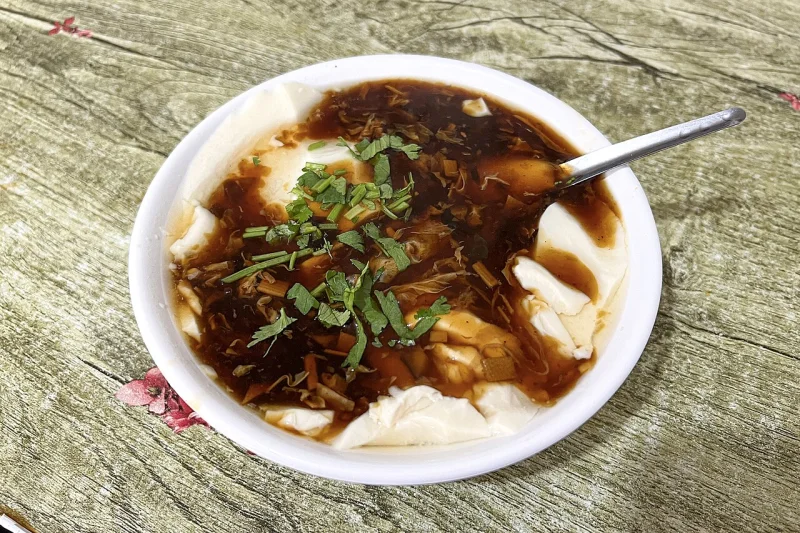
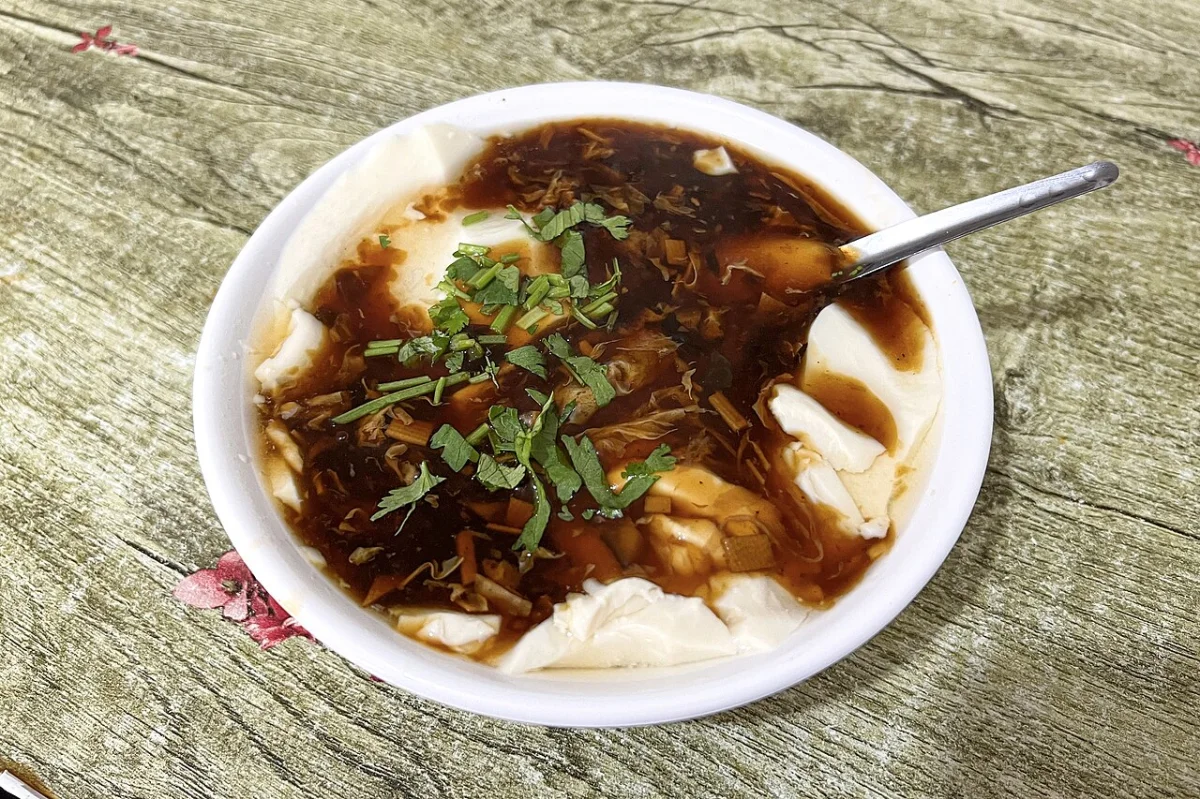
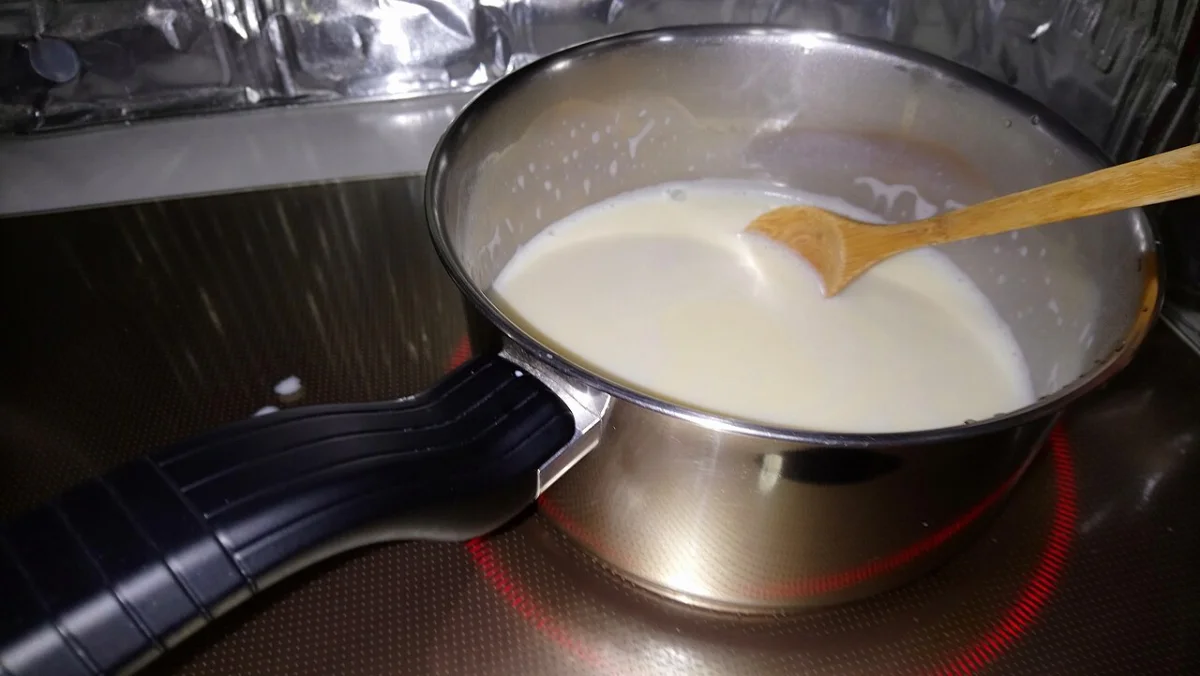
At its simplest, doufunao is fresh soy milk gently set into a very soft curd. The cook ladles the tofu into a bowl, then pours over a hot gravy. Beijing-style versions are usually savory. The gravy may include ingredients such as mushroom, daylily, wood ear, egg ribbons, starch-thickened broth, lamb or beef in halal shops, or a vegetarian base in some snack shops.
This makes doufunao different from the sweet douhua many travelers know from southern China, Taiwan, Hong Kong, or Southeast Asia. Sweet douhua is often served with syrup, peanuts, ginger, red beans, or chilled toppings. Beijing doufunao is usually a hot breakfast bowl with salt, umami, and a soft tofu base.
Why it works for breakfast
Beijing breakfasts often balance wheat, soy, egg, and hot soup-like dishes. Doufunao fits this pattern perfectly. It is warm and easy to eat, but it is not as heavy as a full noodle bowl. The tofu gives body, while the gravy adds flavor and warmth.
The bowl also works well with fried dough. A strip of youtiao can be dipped into the gravy, and a small shaobing can turn the bowl into a fuller breakfast. If you are building a morning route, doufunao sits naturally beside douzhi, jiaoquan, jianbing, and baozi.
How Beijing doufunao differs from laodoufu
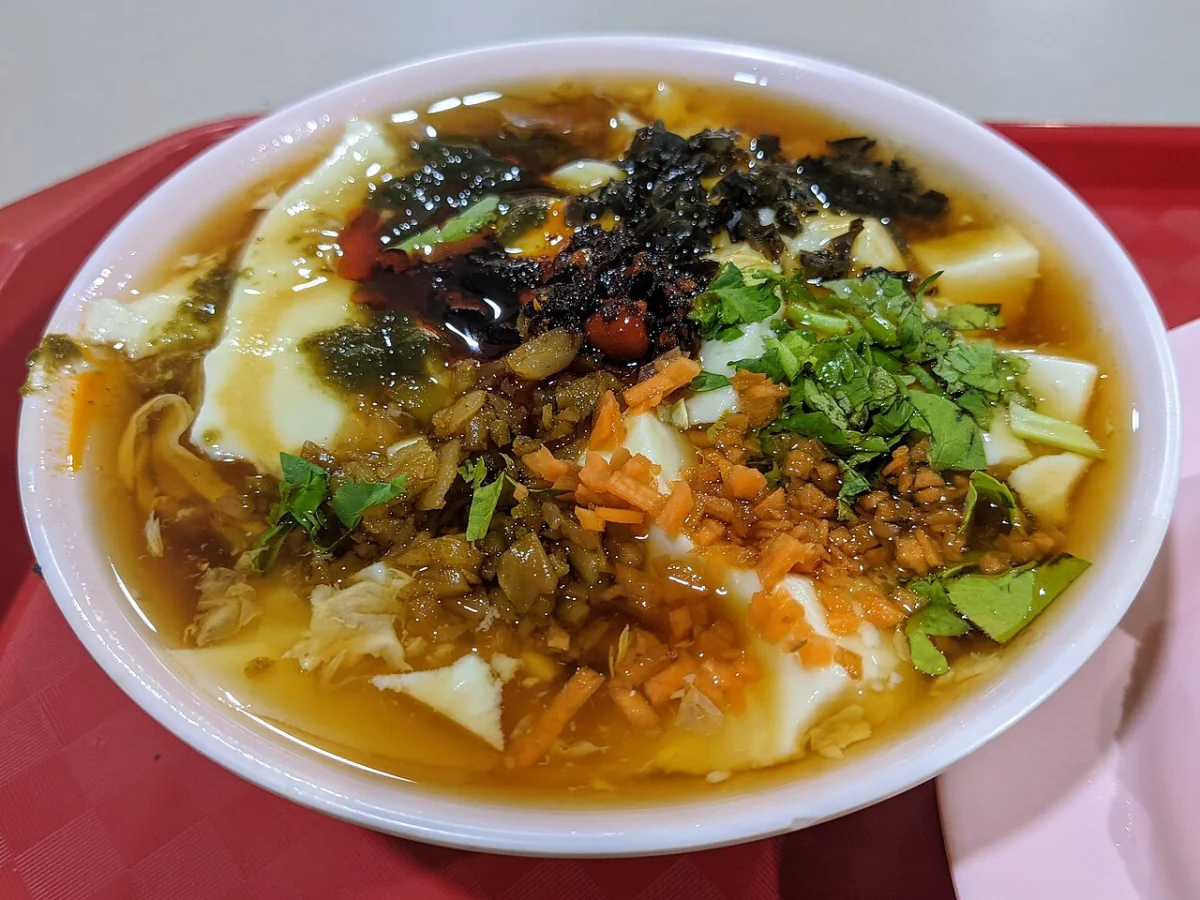
Doufunao and laodoufu are sometimes confused because both are soft soy-based dishes. In Beijing food writing, a common distinction is texture and seasoning. Doufunao is finer and softer, then covered with a gravy. Laodoufu is usually firmer and is often seasoned with items such as sesame paste, fermented tofu sauce, chive flower sauce, chili oil, soy sauce, vinegar, or aromatics.
For a first-time visitor, the easiest way to think about it is this: doufunao is a soft tofu pudding with a poured sauce, while laodoufu is a firmer old-style tofu bowl with condiments mixed in. Shops may vary, but this distinction helps you order without expecting the wrong texture.
Halal and vegetarian styles
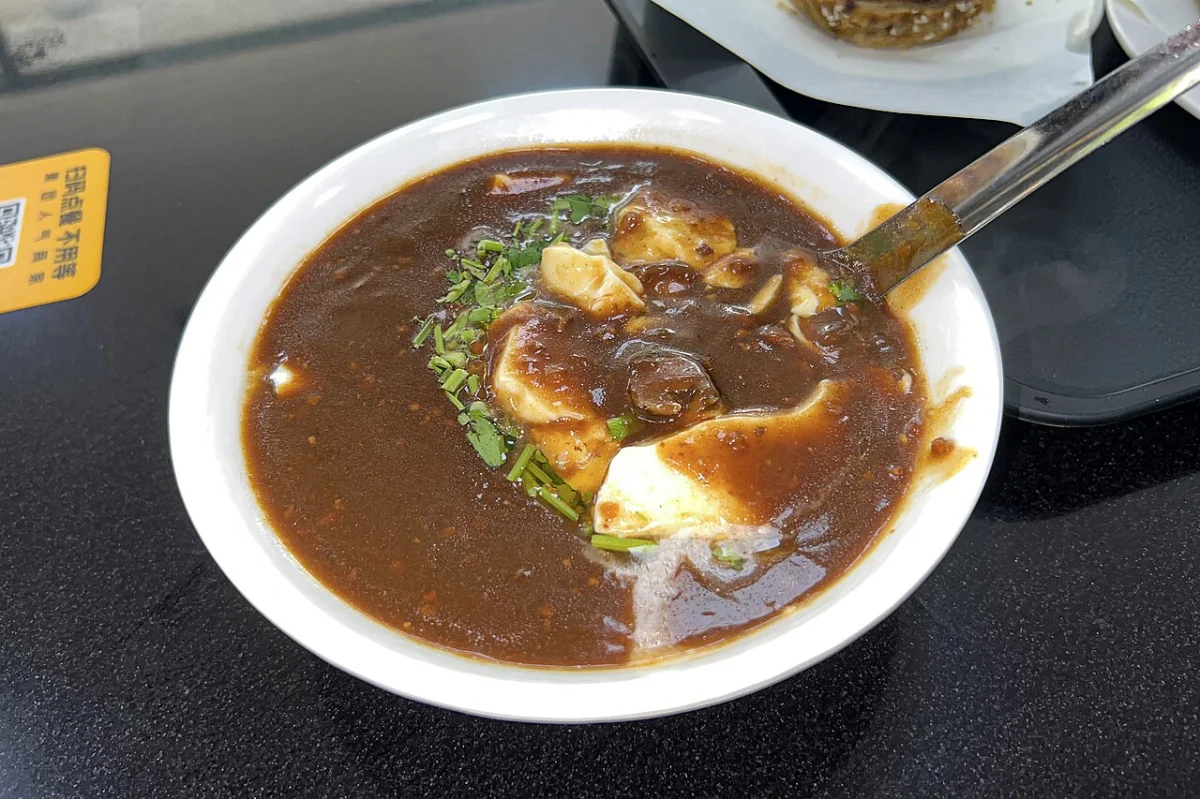
Beijing has a long tradition of halal snack shops, and doufunao appears naturally in that setting. Some bowls use beef or lamb-based gravy, sometimes with mushroom and starch-thickened broth. These versions are savory, warm, and slightly richer than a plain vegetarian bowl.
Vegetarian-style doufunao can be lighter, often leaning on mushroom, wood ear, daylily, egg, soy sauce, and aromatics. If you do not eat meat, ask clearly before ordering because the gravy, not the tofu, is where meat may appear.
How to order it
In a small breakfast shop, order simply: “yi wan doufunao” means one bowl of doufunao. If the shop has choices, you may be asked whether you want chili, cilantro, or a certain type of gravy. Some places serve only one house version, so the process is quick.
Do not stir too aggressively at first. The tofu is fragile, and the point is to keep some of the soft curd shape while letting the gravy flow around it. Use a spoon, take shallow scoops, and add chili or vinegar only after tasting the base bowl.
What to pair with doufunao
- Youtiao: the classic fried dough partner; dip lightly so it softens but does not collapse.
- Shaobing: useful when you want something baked and sesame-scented with the bowl.
- Tea egg: adds protein and a firmer bite beside the soft tofu.
- Baozi: turns the bowl into a more filling breakfast without needing noodles.
- Pickles: add acidity and crunch if the gravy tastes too mild.
Freshness signs
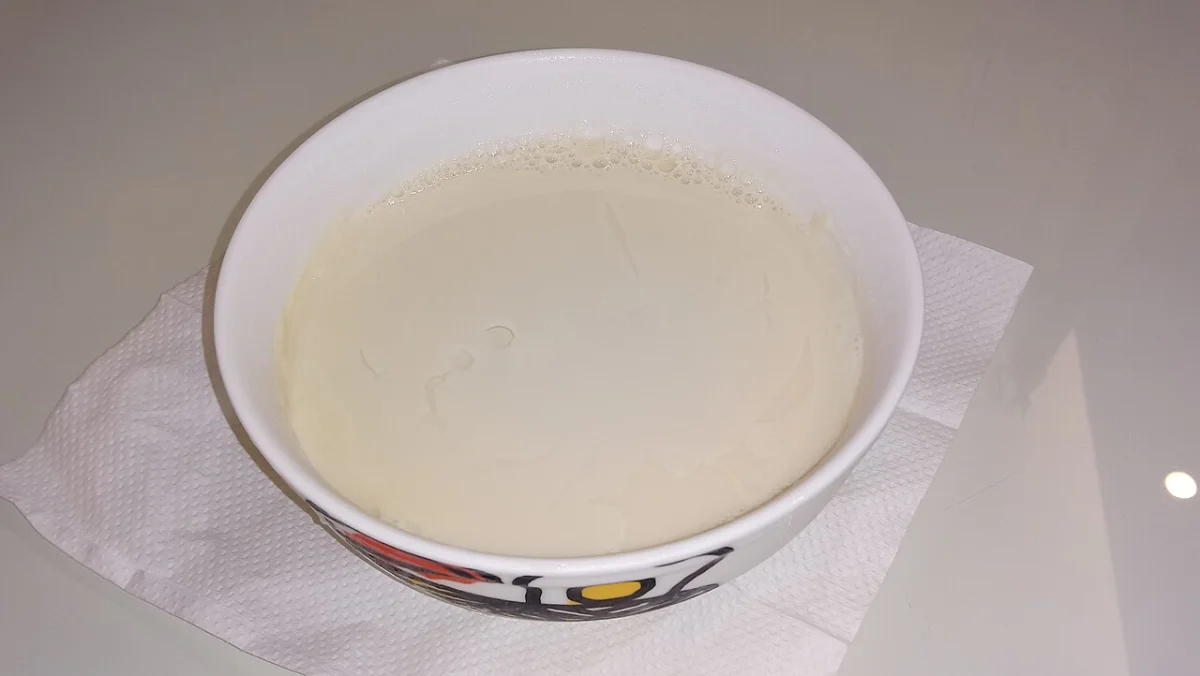
Good doufunao should look smooth and tender, with curds that break softly rather than crumble into grainy pieces. The gravy should be hot, glossy, and evenly thickened. If the bowl is lukewarm, watery, or split into thin liquid and starch clumps, the texture will feel less satisfying.
Morning turnover matters. A busy breakfast shop that keeps serving hot bowls usually gives a better result than a quiet counter where the tofu and gravy have been sitting too long. Doufunao is not a dish to save for later; it tastes best while hot.
First-timer advice
If you are cautious with strong flavors, doufunao is easier than douzhi. It is savory and mild rather than sour. Start with the house version, add only a little chili, and pair it with youtiao or shaobing. If you already enjoy tofu, hot soy milk, or egg-drop soup, the texture will probably feel familiar.
If you are comparing Beijing breakfasts, use doufunao as the soft, warm counterpoint to crisp fried foods and chewy wheat snacks. It is not the loudest dish on the table, but it explains a lot about how Beijing breakfast shops build balance from simple ingredients.
References and image sources
Food background was cross-checked against Beijing municipal tourism pages and licensed Wikimedia Commons image records. External links are provided for attribution and verification only.
Comments (0)